

More news on this day
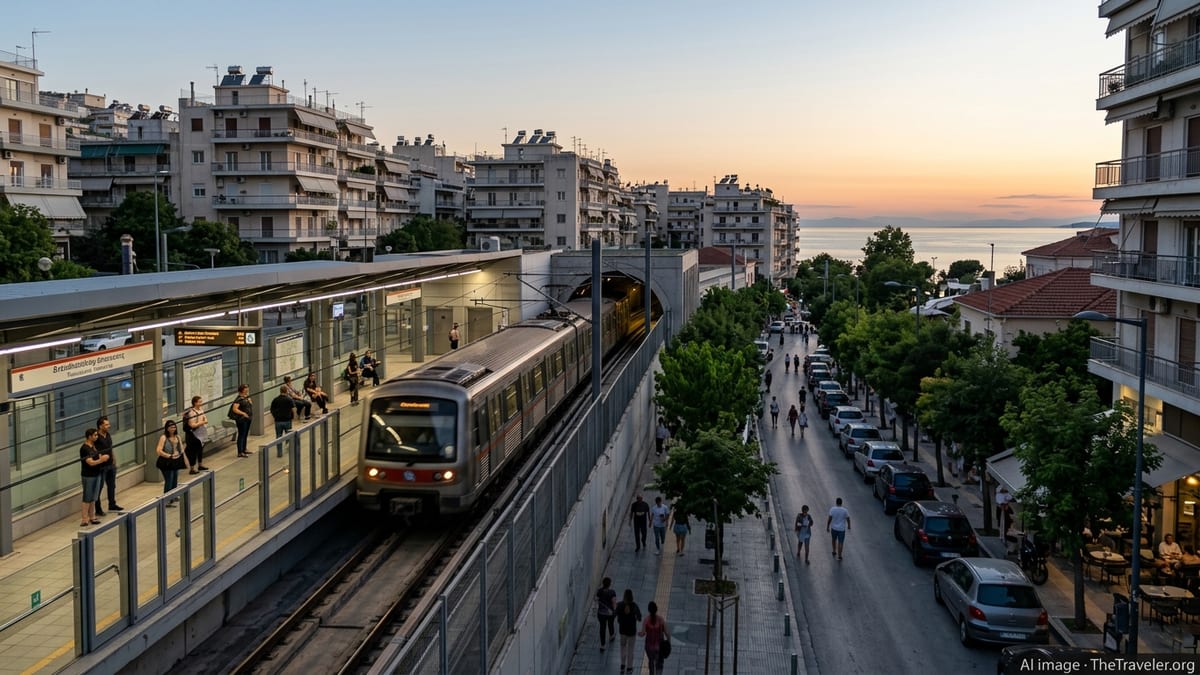
Thessaloniki is entering a new phase of urban transformation as work accelerates on the metro extension to Kalamaria, a 4.6‑kilometer link that local transport reports indicate is now targeting full operation by summer 2026 and is expected to reshape mobility and tourism along the city’s eastern waterfront.
Get the latest news straight to your inbox!
From Long-Delayed Vision to Network Expansion
The Thessaloniki Metro’s opening in late 2024 marked a turning point for Greece’s second-largest city after years of delays related to archaeology, financing and engineering complexity. Publicly available information shows that the current core line, often referred to as Line 1, now runs on a central east–west axis beneath some of the city’s busiest corridors, providing the backbone for future growth.
The Kalamaria extension, formally designated as Line 2 in many planning documents, is the first major expansion phase. According to project summaries and recent transport coverage, the extension will add approximately 4.6 to 4.8 kilometers of tunnel and five new underground stations, linking the existing Nea Elvetia area with the coastal municipality of Kalamaria and the Mikra district near the airport corridor.
The extension has experienced several timetable revisions, shifting from earlier expectations of late 2025 completion to a more cautious horizon in early 2026. Recent updates from Greek transport news outlets and technical reports now converge around a first-quarter to mid-2026 opening window, aligning with the city’s broader mobility and tourism strategies ahead of the peak summer season.
Engineering bulletins and international tunnelling reports indicate that civil works on stations and tunnels are largely advanced, with the current focus on systems integration, signaling, trial operations and safety certification. This phase is considered crucial for a driverless metro system, where automated train control, platform screen doors and central command functions must be rigorously tested before public use.
Five New Stations to Reshape Eastern Thessaloniki
The Kalamaria extension introduces five new stations that follow the urban spine of the eastern suburbs: Nomarchia, Kalamaria, Aretsou, Nea Krini and Mikra. Urban transport documentation describes this sequence as a gradual transition from dense residential quarters to the coastal zone and onward to key transport and service hubs.
Nomarchia is planned as a gateway for administrative offices and mixed-use neighborhoods, potentially relieving heavy surface traffic on main avenues that currently depend on buses and private cars. Published planning maps show Kalamaria and Aretsou stations serving some of the municipality’s most populated and commercially active streets, where retail, cafes and small businesses cluster close to the seafront.
Nea Krini station is expected to play a special role in tourism and leisure access. The surrounding district is known for its promenade, seafood tavernas and nightlife, and improved rail connectivity is anticipated to shift a portion of evening and weekend journeys from cars to metro trains. This could reduce congestion along the coastal ring roads that presently bear the brunt of seasonal traffic.
Mikra, at the southeastern end of the extension, is strategically positioned near Thessaloniki’s airport corridor and key road interchanges. While the station will not connect directly into the airport terminal at this stage, planning documents describe it as a future intermodal pivot, enabling transfers between metro services, airport buses and regional coaches serving Halkidiki and other tourist destinations.
Promises for Commuters: Faster, More Reliable Journeys
For daily commuters, the Kalamaria extension is expected to significantly cut travel times between eastern suburbs and the city center. Journey time estimates shared in transport studies suggest that trips that can currently take 35 to 50 minutes by bus in peak traffic may be reduced to around 15 to 20 minutes by metro, with headways designed to support frequent service across the network.
According to operational updates published after test runs began on the new section in late 2025, trial trains are already running along the extension to verify systems performance under near-commercial conditions. These tests include full-speed runs, emergency braking, platform door synchronization and responses to simulated service disruptions, all necessary steps before passenger operations can begin.
The driverless nature of the Thessaloniki Metro is central to its reliability ambitions. Technical presentations from the system’s operators highlight automated control and continuous monitoring as tools to maintain consistent intervals between trains, minimize delays and quickly recover from incidents. For residents of Kalamaria and neighboring districts, this is expected to translate into more predictable daily routines and a reduced need for private car ownership.
Parallel to the testing program, bus operators have been adjusting surface routes to prepare for the new metro reality. Transport announcements describe plans to reconfigure bus lines as feeder services connecting residential pockets that lie beyond walking distance of the stations, a step designed to extend the effective catchment area of the metro and provide seamless, integrated journeys.
Tourism and Waterfront Access Set for a Boost
Tourism analysts and local business associations have long viewed the eastern seafront as one of Thessaloniki’s most underleveraged assets in terms of visitor access. Currently, reaching Kalamaria’s marinas, coastal promenades and seaside dining areas often requires a combination of buses, taxis or rental cars, particularly during busy summer evenings when demand peaks.
The Kalamaria extension is widely expected to change this dynamic by providing a direct, rapid and weather-independent link from the historic core and central hotels to the waterfront. Travel coverage suggests that city-break visitors arriving by intercity rail at the New Railway Station will be able to use a single metro line to reach the eastern seafront, cutting out multiple transfers and exposure to traffic bottlenecks.
In addition, the new line is likely to influence how tourists move between Thessaloniki and wider regional attractions. With Mikra station positioned as a transfer hub for buses to Macedonia International Airport and the resorts of Halkidiki, travel planners anticipate more itinerary combinations that pair urban culture in Thessaloniki with coastal stays, all within one multimodal corridor.
Local cultural institutions and event organizers along the eastern coast may also benefit. Easier rail access to venues in Kalamaria and Nea Krini could encourage more residents and visitors to attend festivals, concerts and open-air events without relying on private vehicles, potentially extending activity beyond the high summer season.
Urban Development, Environment and Future Phases
City planners and urban researchers point to the Kalamaria extension as a catalyst for broader redevelopment and densification around station areas. Early real-estate analyses already note renewed interest in mixed-use projects and residential renovations within walking distance of the forthcoming stations, driven by expectations of improved accessibility and property values.
Environmental assessments referenced in public documentation highlight the potential for reduced car dependency and lower emissions, particularly if the extension succeeds in shifting a meaningful share of journeys from private vehicles to electric metro trains. This is especially relevant for Thessaloniki, where air quality and congestion along coastal roads and radial arteries have been persistent concerns.
The Kalamaria line also sets the template for subsequent stages of metro growth. Long-term plans presented in transport strategies envisage future extensions toward western districts and additional links to the airport, ports and industrial zones. By establishing a second operational corridor and demonstrating demand in the east, the extension is expected to strengthen the case for new funding rounds from national and European sources.
As summer 2026 approaches, the focus remains on completing testing, integrating the new section with the existing line and formalizing the operating timetable. While the project’s history shows that schedules can shift, the convergence of recent technical reports, trial operations and infrastructure milestones suggests that Thessaloniki is moving closer to a fully connected metro network that serves both everyday residents and the growing flow of visitors to the city.