

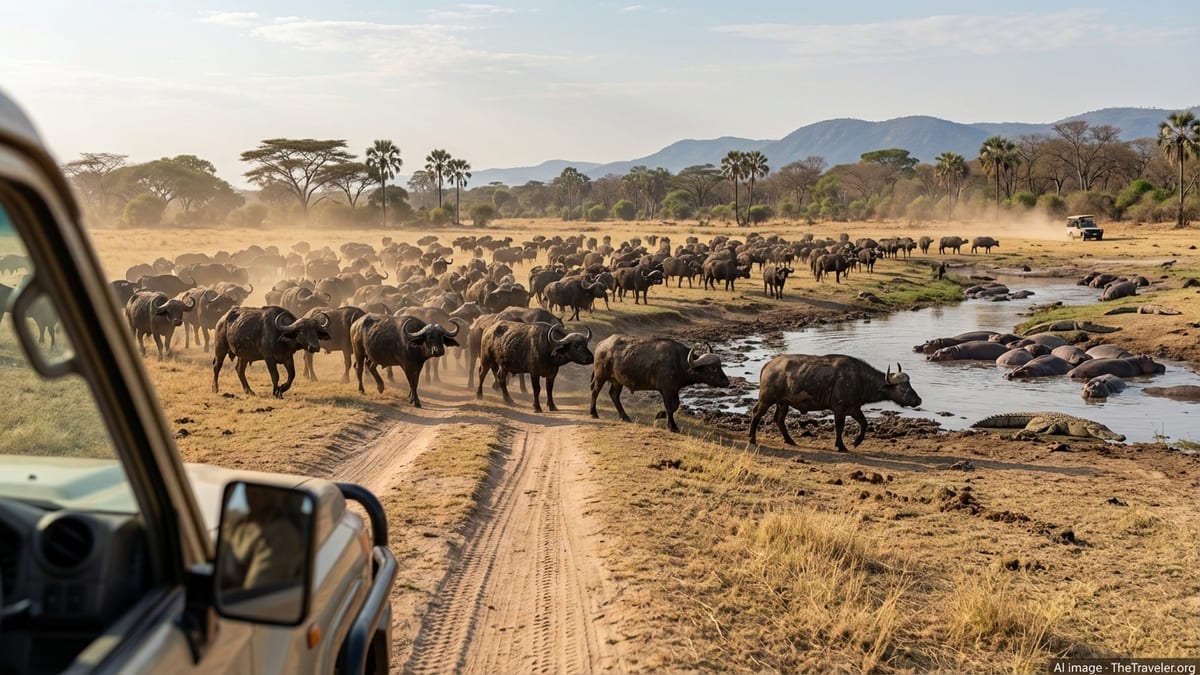
Remote, wild and largely untouched, Katavi National Park in western Tanzania is one of Africa’s last great crowd-free safari destinations. Its vast floodplains, huge buffalo herds and dramatic hippo and crocodile gatherings deliver an intense wilderness experience that feels far removed from the busy northern safari circuit.
That same remoteness, however, means Katavi is not a straightforward destination. From timing your trip around the floodplains to understanding safety, logistics, and costs, there are several important things you should know before you go.
Understanding Katavi’s Remoteness and What It Means for Your Trip
Katavi’s isolation is a major part of its appeal, but it also shapes almost every aspect of a visit, from how you get there to how much you pay and what level of comfort to expect. This is not a park where you casually add a night or two on a whim. Planning ahead and understanding what remoteness looks like in practice will make the difference between a frustrating trip and the life‑changing safari many travelers report.
Katavi Is One of Tanzania’s Most Remote Parks
Katavi lies in western Tanzania, far from the famous Serengeti–Ngorongoro–Tarangire circuit in the north. The nearest sizable town is Mpanda, and even that is a lengthy drive from the park gates. While this isolation keeps visitor numbers very low, it also means journeys are long, infrastructure is basic once you leave major hubs, and weather can quickly disrupt your plans.
You should expect very limited mobile coverage in much of the park, sporadic or slow internet even at lodges, and long distances between settlements. Fuel, mechanical assistance, pharmacies and banks are clustered in a few towns; inside the park there are no public services beyond what your camp or tour operator provides.
This is a destination best suited to travelers who are comfortable being “off the grid” for several days and who value wildness over convenience or nightlife. If you want cafés, shops and multiple lodge options in a compact area, Katavi is unlikely to suit you.
Access Is Possible by Road but Demanding
It is theoretically possible to drive to Katavi from various directions: Dar es Salaam via Mbeya and Sumbawanga, Kigoma along the fringes of Lake Tanganyika, or through Tabora and Mpanda. Distances typically involve at least one overnight stop and, in many cases, two. Road surfaces range from paved highways in parts of the journey to long stretches of gravel, corrugations and seasonal mud.
Travel times of 8 to 12 hours per day are common on these routes, and a robust 4×4 is essential, particularly in or near the rainy season when sections can become sticky or even impassable. Mechanical issues or storm damage can add unscheduled delays, and self-drivers must carry recovery gear, spare parts and plenty of water.
For experienced overlanders, this is part of the adventure: you traverse wide miombo woodlands, traditional villages and landscapes that see very few foreign visitors. For most travelers, though, overland access is better arranged through a reputable safari operator who can manage vehicle quality, routing, fuel and contingency planning.
Flying Is the Practical Choice for Most Visitors
For many travelers, flying into Katavi is the most realistic and time‑efficient option. During the main dry season (typically June to October), several regional carriers and safari aviation companies operate scheduled or semi‑scheduled flights linking Katavi with hubs such as Dar es Salaam, Arusha, Ruaha, and sometimes Mahale Mountains or the Serengeti. Aircraft are usually small bush planes landing on airstrips such as Ikuu or airfields serving Mpanda and the wider region.
Flight schedules are often limited to a few days per week and may be consolidated if passenger numbers drop, so your itinerary will need to work around these patterns. Chartering a private flight is an option if you’re traveling in a group or on a larger budget, offering flexibility but at a premium cost.
Because flights are relatively expensive and not daily year‑round, Katavi tends to attract travelers on longer, carefully planned safaris rather than spontaneous weekend visitors. You should coordinate flights with your camp or operator well in advance and avoid tight same‑day international connections on departure, leaving a buffer in Arusha or Dar es Salaam.
Best Time to Visit: Seasons, Wildlife and Weather
Katavi is a highly seasonal park. The same floodplains that turn into wildlife magnets late in the dry season can be expansive wetlands after the rains, with animals dispersed into woodlands and roads challenging or closed. When you choose to visit will shape not only what you see, but how easy it is to move around and which camps are open.
Dry Season (June to October) Offers the Classic Katavi Spectacle
The consensus among operators and wildlife experts is clear: the heart of the dry season, roughly July to October, is the premier time for a first visit to Katavi. During these months, the Katuma River and associated floodplains shrink into a network of shallow waterholes and muddy channels. This concentration of water in an otherwise parched landscape draws in huge herds of buffalo, elephant, zebra and assorted antelope.
Katavi is especially famous for two dramatic phenomena at this time of year. The first is the massive herds of buffalo, sometimes exceeding a thousand animals, moving across Chada and Katisunga plains. The second is the extraordinary gatherings of hippos and large Nile crocodiles forced into dwindling pools. These dense hippo pods can become highly stressed, leading to frequent jostling, aggressive displays and occasionally lethal fights, while crocodiles lurk in the remaining water or bask on banks and in mud.
Predator sightings, particularly lions and hyenas, tend to peak as hunting becomes easier around these chokepoints. Vegetation is sparse, so animals are easy to spot, and skies are generally clear, offering excellent light for photography. Daytime temperatures are hot but usually manageable, with cooler nights.
Wet Season Changes the Park’s Character and Logistics
From around November, the first significant rains usually arrive, building into heavier downpours through the early months of the year. The plains green up spectacularly, water levels rise, and animals spread out across a wider area. This can be a beautiful, atmospheric time in Katavi, particularly for birders who come for the influx of migratory species and the lush, vibrant landscapes.
However, the wet season introduces practical challenges. Roads can become muddy and deeply rutted; some tracks may be temporarily impassable. Several seasonal camps either close or operate with reduced capacity during the wettest months, particularly around March and April. Game viewing is often more difficult as animals are less concentrated and grasses grow tall.
For travelers who prioritize dramatic game densities and easier spotting, the wet season is rarely ideal for a first Katavi trip. It may suit repeat visitors, photographers seeking green landscape shots, or birdwatchers willing to trade big mammal concentrations for avian diversity and a quieter, softer rendition of the park.
Shoulder Months Can Offer Balance but Require Flexibility
The transition months, such as early June and late November or early December, can present a good compromise for some travelers. In June, the rains have typically ended, roads are drying out, and landscapes still have a touch of green, while wildlife starts to congregate as water recedes. Later in the year, during certain windows in November and December when rains are present but not yet at their heaviest, you may find fewer visitors, lower rates at some properties, and decent wildlife viewing.
These periods, however, also come with unpredictability. In some years, late rains or an early downpour may affect road access or visibility more than expected. It is important to book with an operator that knows Katavi intimately, can advise on likely conditions for your specific travel dates, and is prepared with contingency plans if weather shifts.
Whichever month you choose, build some flexibility into your schedule. Internal flight dates, connecting overnights in Arusha or Dar es Salaam, and any extensions to places like Mahale Mountains should be spaced to absorb minor delays without derailing your entire itinerary.
Wildlife, Safari Style and What to Expect on the Ground
Katavi delivers some of the most intense wildlife spectacles in East Africa, yet the style of safari here feels very different from the busier northern parks. Understanding the animals you are likely to see, the pace of activities, and the role of your camp and guide will help set realistic expectations and enhance your time on the floodplains.
Expect High Densities of Big Game, Not a Species Checklist
Rather than offering endless variety, Katavi is about drama and density in a largely unpeopled environment. You are likely to encounter substantial numbers of African buffalo, elephant, hippo, crocodile, giraffe, zebra, topi, hartebeest and various antelope. Lions are present and often seen, along with spotted hyenas and, more occasionally, leopards and wild dogs.
Because the park sees so few visitors, you may spend long stretches of a game drive without seeing another vehicle. When you find a significant sighting, it is common to have it entirely to yourself, a luxury that can be hard to imagine if you have experienced crowded sightings elsewhere. This solitude intensifies encounters with large herds or predator activity and allows you and your guide to sit quietly and observe behaviors without pressure to move on.
At the same time, Katavi is a true wilderness. There is no guarantee of ticking off every large mammal species in a few days. Some animals remain elusive in dense woodlands, and conditions vary by year and by month. Patience, multiple nights in the park, and an experienced guide are crucial.
Safaris Are Typically Camp‑Based and Intimate
Accommodation in Katavi is limited to a small handful of permanent and seasonal camps and lodges, most of them relatively small, with a strong emphasis on nature immersion. Classic tented camps with only a few spacious tents, open‑sided mess areas and simple but comfortable furnishings are common. High‑end properties offer polished service and good food, but everything must be flown in or transported overland, so you should not expect the sheer variety found in urban hotels.
Because camps are few and beds limited, the atmosphere is usually quiet and personal. Guides often spend multiple days with the same guests, learning your interests and tailoring drives or walks. It is not unusual to see elephants, hippos or other animals wandering close to camp; staff will escort guests after dark and provide clear safety briefings.
Activities in Katavi revolve primarily around vehicle‑based game drives, usually in the early morning and late afternoon. In some camps, and subject to park regulations and conditions, guided walking safaris or short bush walks may also be offered, providing an intimate perspective on tracks, vegetation and smaller creatures.
This Is Prime Territory for Photographers and Serious Safari Enthusiasts
The combination of striking light, dust hanging over the plains in the dry season, concentrated wildlife and very few other vehicles make Katavi an outstanding photographic destination. Long lenses are valuable for capturing predator action and hippo confrontations at waterholes, while wide‑angle lenses excel for herds moving across the plains and dramatic cloudscapes at sunrise and sunset.
Because the scene can change quickly as animals move around limited water sources, having several days in the park is strongly recommended. Many experienced safari travelers suggest a minimum of three to four nights to do Katavi justice, longer if you are combining it with a second wilderness destination such as Mahale Mountains on Lake Tanganyika.
Photographers should prepare for dusty conditions in the dry season by carrying lens cloths, camera covers and sensible packing systems. Charging capacity for batteries may be limited at smaller camps that rely on solar power or generators, so bring spare batteries and ask ahead about charging schedules.
Costs, Accommodation and Booking Practicalities
Katavi is not a budget destination in the way more accessible parks can be. The combination of remote flights, limited competition and high logistics costs means that even simple itineraries tend to be more expensive than standard safaris in the north or near the coast. Understanding these costs and making strategic choices about where and when to spend will help you plan a trip that offers value while recognizing the realities of such an out‑of‑the‑way park.
Expect Higher Overall Costs but Excellent Value in Wilderness
Flights to and from Katavi are often the single most expensive component of a trip. Seats on small aircraft command premium rates, and there may be minimum passenger thresholds or fixed departure days. Camps also factor the remoteness and limited seasonality into their pricing. As a result, nightly rates in the dry season are frequently higher than in more frequented parks, even when service levels are comparable.
Those higher prices, however, effectively buy two things: space and exclusivity. Visitor numbers in Katavi are tiny compared with the Serengeti or Ngorongoro, and large sections of the park may have no vehicles at all on any given day. If your idea of value focuses on solitude, intense immersion in nature and the chance to witness wildlife behavior without an audience of other tourists, Katavi can deliver superb returns on your investment.
To moderate costs, you might consider:
- Traveling in early or late dry season when some camps offer shoulder‑season rates.
- Combining Katavi with a more accessible park on the same flight network to spread aviation costs across several stops.
- Selecting a mid‑range tented camp that prioritizes guiding and location over ultra‑luxury furnishings.
Choosing the Right Camp and Operator
Because options are limited, the specific camp and operator you choose will have an outsized influence on your experience. Some camps focus on classic tented safari style with strong guiding and simple but comfortable setups. Others tilt toward higher‑end amenities, with larger tents, more elaborate dining and added touches such as plunge pools or in‑room charging points.
An experienced safari operator who regularly sends guests to Katavi can advise which property best suits your style, whether that is rustic‑chic, understated and traditional, or polished luxury. They can also construct itineraries that route you efficiently through western Tanzania, potentially linking Katavi with Ruaha, Nyerere (Selous) or Mahale Mountains using scheduled circuits or charter sectors.
Availability in the prime dry season can be tight, especially in smaller camps. Booking six to twelve months in advance is wise if you are locked into specific dates, particularly during school holidays or key months such as August and September.
Health, Safety and Responsible Travel Considerations
Any trip to a remote African national park requires attention to health and safety basics, and Katavi is no exception. From disease prevention to understanding the wider security environment and respecting local laws and norms, good preparation will help you stay well and travel responsibly.
Health and Medical Preparedness
Western Tanzania is a malaria zone, and mosquito exposure is higher around wetlands and during and after the rains. Most travelers are advised to consult a travel medicine specialist six to eight weeks before departure to discuss antimalarial medication, vaccinations and any personal risk factors. Standard recommendations for East Africa often include up‑to‑date routine immunizations and, depending on your itinerary, coverage for illnesses such as typhoid or hepatitis A.
Inside Katavi, medical facilities are extremely limited. Camps typically maintain first‑aid supplies and have access to regional air evacuation arrangements, but serious issues may require transport to larger hospitals in cities such as Dar es Salaam. You should travel with comprehensive travel insurance that specifically covers evacuation from remote areas by air, along with any pre‑existing conditions you may have.
Basic hygiene precautions, including careful handwashing or sanitizer use, bottled or treated drinking water, and sensible sun protection, are important. Daytime temperatures can be high, especially late in the dry season, so staying hydrated, using broad‑spectrum sunscreen and taking breaks from direct sun are essential.
Security, Laws and LGBTQ+ Considerations
Tanzania’s overall security environment periodically changes, and foreign governments update their travel advisories accordingly. These advisories often highlight risks that apply nationwide or more heavily to certain regions, including crime, occasional unrest or terrorism concerns. They also consistently note that Tanzanian law criminalizes same‑sex sexual activity, and that LGBTQ+ travelers may face discrimination, harassment or legal risk.
Before traveling, you should review the latest travel advisories issued by your home government and carefully consider their guidance. While many visitors travel to Tanzania’s parks, including remote ones such as Katavi, without incident, it is prudent to remain alert to your surroundings, keep valuables secure, follow local news through reliable outlets, and maintain a low public profile, particularly in urban areas and transport hubs.
LGBTQ+ travelers in particular should be aware that public displays of affection, especially between same‑sex couples, can attract unwanted attention and may carry legal and personal safety implications. Discretion, awareness of local norms, and consultation with experienced tour operators who understand the current climate on the ground are important parts of trip planning.
Wildlife Safety and Camp Protocols
Katavi is genuinely wild. Animals move freely through and around camps, and encounters can happen unexpectedly. While serious incidents are rare, it is critical to follow all safety guidance from camp staff and guides. This typically includes walking only on designated paths, accepting escorts after dark, avoiding food in tents that might attract wildlife, and remaining inside your accommodation at night unless accompanied.
On game drives, you will be asked to keep arms and bodies inside the vehicle, remain seated near wildlife, keep noise levels low and follow your guide’s instructions at sightings. Feeding animals or attempting to approach them on foot outside of organized walks is dangerous and strictly prohibited.
Simple precautions, such as using a flashlight after dark, zipping tents fully, and not leaving shoes or clothing outside where scorpions or insects might shelter, add extra layers of safety and comfort in this remote environment.
Essential Logistics: Visas, Park Fees and What to Pack
Because Katavi is often part of a broader Tanzanian itinerary, many of the administrative details and packing decisions you make will apply to other stops as well. However, the park’s remoteness and the lack of nearby shops or services make it especially important to arrive prepared.
Visas, Park Fees and Entry Requirements
Most visitors to Tanzania require a visa, which may be obtained in advance or, for some nationalities, on arrival at major points of entry. Rules can change, so you should check the latest visa policies from Tanzanian authorities or your nearest Tanzanian diplomatic mission before travel.
Separate from immigration formalities, daily conservation fees and concession charges apply to stays in Katavi. These are usually included in package prices quoted by safari operators and camps, covering park entry, vehicle access and other levies. It is still worthwhile to ask for a full breakdown of what is included in your rate: some packages bundle flights, transfers, guiding and drinks, while others price these elements separately.
You should also carry a copy of your passport, travel insurance policy details and any necessary vaccination certificates, especially if you are transiting via countries that require proof of yellow fever vaccination for onward travel.
Packing for a Remote, Seasonal Wilderness
Once you are in Katavi, it is difficult or impossible to buy additional gear. Packing carefully is essential. In the dry season, light but durable clothing in neutral colors (khaki, olive, beige) will help you stay cool while blending into the environment. A wide‑brimmed hat, sunglasses and high‑SPF sunscreen are indispensable. Early mornings and evenings can be cooler, so a lightweight fleece or jacket is useful.
In the wetter months or shoulder periods, a compact rain jacket, fast‑drying clothing and sturdy, closed shoes that can cope with mud are sensible. Regardless of season, you should pack:
- Any prescription medications, plus a basic personal medical kit.
- Insect repellent, ideally containing DEET or another proven active ingredient.
- Spare glasses or contact lenses if you use them.
- Camera gear, spare batteries, memory cards and protective pouches.
- A small daypack for game drives, with space for water, a camera and layers.
Most bush flights into Katavi enforce strict baggage weight limits and often require soft‑sided duffels rather than hard suitcases. Confirm limits and dimensions in advance and pack accordingly. Many camps provide laundry services, which allows you to travel with fewer clothes than you might otherwise think necessary.
The Takeaway
Visiting Katavi National Park is not like dropping into a well‑trodden safari hub for a quick glimpse of lions before moving on. It is a deliberate journey into one of East Africa’s least disturbed big‑game landscapes, where the combination of massive buffalo herds, crowded hippo pools, sparse visitor numbers and big skies creates an experience that many seasoned safari travelers rank among their most memorable.
To get the best from Katavi, you need to embrace its remoteness and plan around it. That means choosing the right season, being realistic about costs and access, working with experienced operators and arriving prepared for both the privileges and the constraints of a frontier park. If you can do that, Katavi will reward you with a sense of space, solitude and raw wildlife spectacle that is increasingly rare in the modern world.
FAQ
Q1. How many days should I spend in Katavi National Park?
Most travelers find that three to four nights in Katavi is the minimum to justify the effort and cost of reaching such a remote park, with five or more nights ideal for photographers or those combining it with nearby destinations like Mahale Mountains.
Q2. Is Katavi suitable for a first‑time safari traveler?
Yes, but it is best suited to first‑timers who are comfortable with remoteness and who value wilderness and solitude over extensive lodge choices or easy logistics; many people pair Katavi with a more accessible park earlier in their trip to ease into the safari experience.
Q3. Can I visit Katavi during the rainy season?
You can, as the park is technically open year‑round, but heavy rains from about March to April can make roads difficult, some camps close, and wildlife becomes more dispersed, so the experience is very different from the concentrated game viewing of the dry season.
Q4. How do I get to Katavi from Dar es Salaam or Arusha?
The most practical option is to take a scheduled or chartered bush flight from Dar es Salaam, Arusha or another safari hub to airstrips serving Katavi, often Ikuu or an airfield near Mpanda, with your camp arranging ground transfers from there.
Q5. What wildlife is Katavi best known for?
Katavi is renowned for its huge dry‑season buffalo herds, spectacular concentrations of hippos and crocodiles in shrinking waterholes, healthy populations of elephants and plains game, and strong predator activity, particularly lions and hyenas.
Q6. Is Katavi a good destination for families with children?
It can be, especially for older children and teenagers who enjoy nature and understand basic safety rules, but the remoteness, long travel times and lack of nearby medical facilities mean that many families with very young children opt for more accessible parks.
Q7. What kind of accommodation is available in Katavi?
Accommodation is limited to a small number of camps and lodges, mostly intimate tented properties that range from comfortable mid‑range to high‑end, with a focus on guiding, location and immersion in the wilderness rather than extensive resort‑style facilities.
Q8. Do I need to worry about malaria and other health risks?
Katavi lies in a malaria zone, so most visitors are advised to take antimalarial medication and use mosquito precautions, and you should also ensure your routine vaccinations are current and travel with comprehensive insurance that covers medical evacuation from remote areas.
Q9. Is Katavi safe for LGBTQ+ travelers?
Tanzania criminalizes same‑sex sexual activity and attitudes toward LGBTQ+ people can be conservative, so LGBTQ+ travelers should be discreet, avoid public displays of affection and consult up‑to‑date travel advisories and experienced tour operators when planning their visit.
Q10. What should I pack specifically for Katavi?
Pack light, neutral‑colored clothing, a warm layer for early mornings, a wide‑brimmed hat, strong sunscreen, insect repellent, any personal medications, soft‑sided luggage suitable for bush flights, and essential camera gear, remembering that shops and medical facilities are far away once you reach the park.