

When I first stepped off the bus into the bright chaos of Tirana’s central square a few summers ago, Albania felt like a traveler’s secret. Cafes were full, prices were low, and everyone seemed mildly surprised that foreigners had finally discovered this slice of the Balkans. When I returned in late 2025, the surprise was gone. The crowds were bigger, the hotels shinier, and the prices noticeably higher. Albania is still one of Europe’s best value destinations, but the days of dirt-cheap everything are ending fast.
The Moment Albania Stopped Being a Secret
I realized something had shifted before I even left the airport. Tirana International Airport used to feel provincial, with a modest flow of flights and a sleepy passport queue. On this last trip, the arrivals hall was packed with budget-airline passengers wheeling identical hard-shell suitcases, announcements crackling in Italian, German, and English. Airport staff told me that passenger numbers had more than doubled in just a few years, with traffic passing the 10 million mark in 2024. Albania was no longer a hidden gem. It was a full-blown European hotspot.
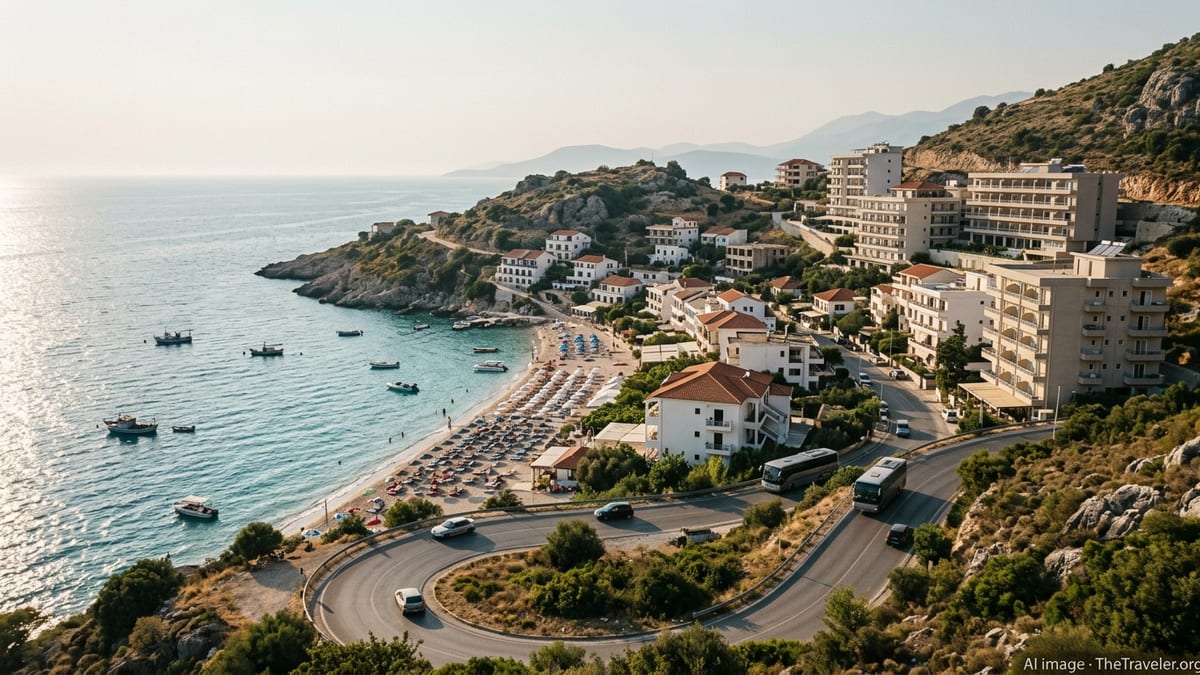
That shift is visible everywhere along the coast. Sarandë, once a slightly scruffy ferry port opposite Corfu, now bristles with cranes and new apartment blocks. Ksamil, whose tiny coves and turquoise shallows have starred on social media, feels more like a Mediterranean resort than the low-key beach village I remembered. In 2018, I could show up in July and find a room on the same day. In 2025, even shoulder-season weekends were close to sold out.
Official visitor numbers tell the same story. Albania has racked up year after year of record tourism, drawing more than ten million foreign visitors annually and climbing. Coastal infrastructure is racing to catch up: a new international airport at Vlorë is under construction, and the Llogara Tunnel, opened to traffic in 2024, has shortened the dramatic but slow coastal drive between the northern and southern Riviera. All of this makes Albania easier to reach than ever, but also accelerates the shift from backpacker bargain to mainstream destination.
What “Cheap” Used to Mean Here
To understand how much has changed, it helps to remember what Albania was like not so long ago. On my first visit, I spent the equivalent of a hostel dorm bed in western Europe on a private room with a balcony in Vlorë, breakfast included. A plate of grilled sardines, salad, and a beer at a seafront restaurant in Durrës cost about as much as a single coffee in Paris. A three-hour bus ride across the country might set you back the price of a sandwich in London.
Budget travelers could comfortably drift along on 25 to 30 euros a day if they were careful, and 40 euros felt almost extravagant. I met backpackers who boasted of spending less in two weeks in Albania than they had burned through in three days in neighboring Greece or Italy. Coffee was usually around 70 to 80 cents in local bars, and a simple byrek pastry from a bakery in Tirana often cost less than a bottle of water.
That price gap is exactly what turned Albania into a budget favorite. As neighboring destinations along the Adriatic and Ionian coasts grew more expensive, word spread quickly that you could get the same translucent water, rugged mountains, and stone villages in Albania for a fraction of the price. Social media helped, of course: photos of Ksamil’s Caribbean-blue shallows and the mountain valleys of Theth and Valbonë started appearing on “cheapest places in Europe” lists, usually with Albania near the top.
Sticker Shock on the Riviera
The first real jolt of sticker shock on my latest trip came in Ksamil. I walked past a beachfront restaurant where I’d eaten grilled fish a few years earlier. Back then, a whole sea bream with sides cost around 8 to 10 euros. This time, the same restaurant’s chalkboard menu listed similar dishes for closer to 15 to 18 euros, with cocktails at prices that would not be out of place on the Croatian coast. Beach loungers, once almost laughably cheap, were now advertised at 15 to 25 euros for a pair with an umbrella at popular spots in peak season.
Accommodation has followed a similar trajectory. In Sarandë, I compared an old booking screenshot on my phone with current prices. A basic but spotless seafront guesthouse that used to charge 25 euros a night in July was now asking 45 to 60 euros for the same dates, with many newer properties around 80 euros and up. In some parts of the Riviera, particularly in August, coastal rooms that once felt like a steal now brush shoulders with mid-range Greek prices.
Even small daily purchases tell a story. In 2020, a macchiato in a neighborhood café in Tirana often cost around 50 to 70 lek. On this recent trip, it was more common to pay 120 to 150 lek in trendier parts of the capital. A casual lunch of grilled meat, salad, and a drink that once reliably came in under 400 lek might now land closer to 700 or 800 lek, especially in touristy areas. For locals, whose salaries have not risen nearly as quickly, those increases feel sharp.
Some of the fastest jumps are tied to tourism hotspots. Along the Albanian Riviera, hotel owners and restaurateurs talk frankly about “European prices” in July and August. A few admit that high demand and limited capacity have encouraged them to push prices as far as the market will bear. For visiting travelers, the change often shows up as a nagging sense that Albania is still cheaper than Italy or Croatia, but no longer startlingly so.
Behind the Rising Prices
Albania is hardly alone in this story. Across Europe, travel demand rebounded strongly after the pandemic, and 2024 and 2025 saw international arrivals hit new highs. But Albania stands out because it is climbing from a much lower base. Until recently, this was one of the poorest countries on the continent. Rapid growth in visitor numbers has collided with a housing market already under stress and a limited supply of quality hotels and restaurants along the coast.
Inflation has played a major role. Like much of Southeast Europe, Albania has faced steep increases in the cost of food and basic consumer goods in recent years. Local media and regional analyses describe double-digit inflation since 2021, with particularly sharp rises in groceries and energy. That filters directly into restaurant menus, hotel operating costs, and the price of everything from fuel for intercity buses to the flour that goes into those flaky byreks.
There is also a simple supply-and-demand issue in the most popular areas. While major projects like the Llogara Tunnel and a new airport at Vlorë aim to boost capacity, construction takes time and often targets higher-spending visitors. Developers are focusing on resorts, luxury hotels, and branded properties, especially along the Riviera and around Tirana. Those investments raise the overall profile of Albanian tourism but can also drag average prices upward, especially in small towns where a handful of high-end openings quickly become the benchmark.
For Albanians themselves, the perception that their once-cheap country is becoming expensive has sparked frustration. In early 2025, consumer groups and social media campaigns criticized rising supermarket prices and service charges, arguing that basic costs were growing much faster than wages. Many locals now talk about Ksamil and parts of the south as places they visit outside peak season, when prices and crowds are slightly more manageable.
How to Keep Albania Affordable
Despite the headlines and the growing pains, it is still entirely possible to travel in Albania on a reasonable budget. The key is to accept that some coastal hotspots have moved into a new price bracket, and then plan your route and timing accordingly. When I shifted just a little off the most photographed locations, my daily spending dropped noticeably without any loss of atmosphere or beauty.
Season matters more than ever. In August, even midrange hotels in Ksamil and Dhërmi charge rates that can surprise budget-conscious travelers. In late May or early October, by contrast, I found double rooms in family-run guesthouses in coastal towns like Himarë for 30 to 40 euros, with breakfast included and the beaches half-empty. Restaurant prices eased too: grilled fish in shoulder season often cost 10 to 12 euros rather than high-season rates that creep much closer to 20.
Location within each destination makes a difference. In Tirana, a cappuccino on the main pedestrian street might be 200 lek, while a café two blocks away charges 120. In Sarandë, waterfront restaurants along the main promenade tend to post higher prices in euros, especially when cruise passengers are in town. Walk a few streets inland and menus are more likely to list prices in lek at levels closer to what locals pay.
Public transport remains one of Albania’s great bargains. Intercity buses and minibuses are still remarkably cheap by European standards. I paid the equivalent of around 6 to 8 euros to travel several hours between Tirana and the southern coast. Shared taxis, especially between nearby towns, can also be good value if you are splitting the fare. As fuel and maintenance costs rise, these prices may inch upward, but they are likely to remain far below what travelers are used to in western Europe.
Where the Value Still Shines
If the coastal hotspots feel squeezed by their own popularity, other parts of Albania still deliver that old-school bargain feeling. In the north, the mountain villages of Theth and Valbonë have grown busier, but they remain refreshingly divorced from Riviera-style pricing. In Valbonë, I stayed in a guesthouse where a hearty home-cooked dinner of soup, salad, grilled meat, and dessert, plus breakfast the next morning, was bundled with my room for around 30 to 35 euros. The owner shrugged when I asked about raising prices, saying, “People come here for nature, not luxury.”
In the east, the lakeside city of Pogradec and the surrounding villages on the Albanian shore of Lake Ohrid offer a slower, less commercial experience than the coast. Here, I found lakeside cafés with coffee still under 1 euro and fish restaurants favored by locals where a shared platter of koran trout, salad, and wine for two could come in under 25 euros. The same was true in the historic city of Korçë, where boutique-style guesthouses charge modest rates compared with similar properties in western Europe.
Even in Tirana, value hides in plain sight. The capital has seen a boom in trendy bars and restaurants, and prices in the Blloku neighborhood can feel closer to central Europe than to a “budget” destination. But in residential districts just beyond the nightlife strip, traditional eateries serve generous plates of qofte, fërgesë, and seasonal vegetables at prices that still make long-term travelers smile. A simple lunch with a drink often costs less than a takeaway sandwich in Berlin or Amsterdam, provided you are willing to sit among office workers and families instead of tourists.
Perhaps the biggest value lies in the experiences that cost almost nothing: hiking in the Accursed Mountains, wandering Ottoman-era streets in Gjirokastër and Berat, swimming in rivers and mountain lakes, or joining locals for an evening stroll on a town promenade. These are the moments that made Albania beloved in the first place, and they remain mercifully untouched by inflation.
The Takeaway
Albania’s rapid rise from “Europe’s best-kept secret” to headline-grabbing host country for major travel fairs was always going to change the equation. The country is still a strong choice for travelers watching their euros, especially compared with many Mediterranean neighbors, but the era of ultra-cheap everything is fading. Coastal hotspots now behave like the in-demand resorts they effectively are, while inland and off-season travel continues to offer the kind of value that drew adventurers here a decade ago.
For visitors, the lesson is not to cross Albania off the list, but to approach it with updated expectations. Budget travelers who once planned on 25 euros a day may need to aim closer to 40 or 50, especially if they want private rooms and restaurant meals along the coast in summer. At the same time, those who are flexible with timing, willing to explore beyond the Riviera, and comfortable eating where locals do can still experience Albania as an affordable, generous destination.
Prices will likely keep shifting as new airports open, infrastructure expands, and more high-end resorts claim slices of shoreline. But underneath the cranes and new hotels, the things that made Albania a budget favorite remain: big-hearted hospitality, dramatic landscapes, and a sense that you are watching a country in the midst of reinvention. The trick now is to travel a little smarter, arrive a little earlier or later in the season, and remember that sometimes the best value is not in the trendiest village on the coast, but in the less photographed corners just over the next mountain pass.
FAQ
Q1. Is Albania still a cheap country to visit in 2026?
Albania is still good value compared with much of western Europe, but it is not as extremely cheap as it was a few years ago, especially on the popular Riviera.
Q2. How much should I budget per day for a trip to Albania?
A realistic midrange budget in 2026 is roughly 40 to 70 euros per person per day, depending on season and how often you eat in tourist-focused restaurants.
Q3. Which parts of Albania have seen the biggest price increases?
The southern coast, especially Ksamil, Sarandë, and parts of the Albanian Riviera, has seen the sharpest jumps in accommodation and restaurant prices during peak summer.
Q4. When is the best time to visit Albania for lower prices?
Late May, June, September, and early October usually offer milder weather, fewer crowds, and noticeably lower accommodation and beach prices than July and August.
Q5. Are food and drink still affordable in Albania?
Yes, if you eat where locals do. Neighborhood eateries and bakeries remain inexpensive, while seafront and trendy venues now charge closer to broader Mediterranean prices.
Q6. How expensive is transport within Albania?
Intercity buses and minibuses remain very cheap by European standards, with many multi-hour routes costing under 10 euros, though prices may rise gradually with fuel costs.
Q7. Can I still travel Albania on a backpacker budget?
It is possible, but you will need to avoid peak-season Riviera prices, use public transport, stay in guesthouses or hostels, and focus more on inland and northern regions.
Q8. Are northern areas like Theth and Valbonë getting more expensive too?
Visitor numbers are rising, but many guesthouses in Theth and Valbonë still offer bundled room and home-cooked meals at prices well below coastal summer rates.
Q9. Do I need to book accommodation far in advance now?
For August on the Riviera and popular holidays, yes, advance booking is wise. Outside peak season or in less touristy towns, you still have more flexibility.
Q10. Will Albania remain a budget-friendly destination in the coming years?
Prices are likely to keep increasing in the most popular areas, but as infrastructure spreads and more regions develop tourism, value should remain strong away from the main hotspots.