

Mexico rewards travelers who slow down and connect the dots between its inland cultural hubs and its dramatic Pacific shoreline. This flexible route, linking Mexico City, Puebla, Oaxaca City, and the beaches around Puerto Escondido and Mazunte, is designed for travelers who want more than a fly-and-flop vacation. It weaves together walkable historic centers, market-driven cuisine, and low-key beach towns, creating a trip that feels both restorative and deeply rooted in place.
Why This Route Works So Well
Travelers often face a familiar dilemma in Mexico: chase culture and food in the interior, or head straight to the coast and stay put. This itinerary solves that tension by moving logically from the capital through smaller colonial cities and finally to the Pacific, so each leg adds new flavors, landscapes, and rhythms without exhausting long jumps.
The backbone of the trip runs from Mexico City to Puebla to Oaxaca City, three destinations frequently highlighted in current travel coverage for their museums, markets, and contemporary culinary scenes. From there, improved road connections and frequent domestic flights bring the beaches of Oaxaca, particularly around Puerto Escondido and the smaller coves near Mazunte and San Agustinillo, comfortably within reach for a combined journey that feels coherent rather than rushed.
Because many of these places have year-round tourism, solid transport infrastructure, and a broad range of accommodations, this route works for first-time visitors as well as more experienced travelers looking to dig deeper into regional food and daily life. It is also easy to adapt the length: around 10 days is a comfortable minimum, while two weeks allows for extra nights on the coast or side trips into nearby valleys and villages.
Finally, by traveling overland for much of the route instead of hopping between disconnected resort areas, you get a clearer sense of Mexico’s geography and the diversity between the central highlands and the coastal Pacific. That gradual transition is part of what makes this journey so satisfying.
Mexico City: An Urban Jumping-Off Point
Starting in Mexico City anchors the trip in one of the most dynamic capitals in the Americas. The historic center, leafy neighborhoods like Roma and Condesa, and the canals of Xochimilco offer a concentrated introduction to the country’s history and contemporary culture. Museums ranging from the National Museum of Anthropology to smaller design and art spaces help put the rest of the route in context, especially if you plan to visit archaeological sites later.
Food in the capital sets a high bar. Street stands turn out tacos al pastor and tlacoyos, while markets like Mercado Roma and traditional fondas serve daily menus built around regional specialties. In recent years, a wave of chefs has focused on modern Mexican cooking that highlights small producers from states like Oaxaca and Puebla, making the city an ideal place to taste countrywide influences before you encounter them at the source.
Because Mexico City is well connected with international flights, it typically makes sense to arrive here, spend at least two or three nights overcoming jet lag, and then move on. The city’s extensive bus and air connections also make it easy to adjust plans: if you are short on time, you can skip overland segments later in the trip in favor of a short flight down to Oaxaca or the coast.
For a smoother transition to the next stops, overnight in a central but residential neighborhood, where you can walk to cafés, bakeries, and casual restaurants. This helps balance the city’s intensity with slower, more local-feeling mornings and evenings.
Puebla: Volcanic Backdrop and Market Kitchens
From Mexico City, Puebla lies about two hours away by road, making it a logical second stop. The city has long been recognized for its historic center, tiled facades, and dramatic views of nearby volcanoes on clear days. Its scale is more manageable than the capital’s, with a grid of walkable streets, plazas, and churches that can comfortably be explored over a couple of days.
For many travelers, Puebla’s biggest draw is its food. The city is closely associated with dishes such as mole poblano and chiles en nogada, which appear frequently in restaurant menus and home kitchens, especially during their respective seasons. Markets and small fondas surrounding them remain among the most atmospheric places to sample these dishes, where recipes are often passed down within families.
Beyond main meals, Puebla is known for sweets and snacks. Local bakeries and candy shops sell treats like camotes, while street vendors specialize in antojitos such as cemitas and pelonas. Spending a full day grazing between markets, sit-down meals, and casual snacks can be one of the most rewarding ways to experience the city, especially if you enjoy tracing how regional ingredients are used in different formats.
Logistically, Puebla functions as a comfortable pause between the capital and the longer journey south. Bus connections back to Mexico City and onward to Oaxaca are frequent, allowing you to arrive without a car and continue the route easily. Two nights is often enough to appreciate the city’s highlights without feeling pressed for time.
Oaxaca City: Culture, Craft, and Serious Cuisine
Continuing south to Oaxaca City brings you into one of Mexico’s most celebrated cultural hubs. Recent travel reporting has emphasized its combination of historic architecture built in green-toned volcanic stone, contemporary galleries, and a thriving street life centered around squares and pedestrian streets. The atmosphere is compact and highly walkable, which encourages wandering between museums, cafés, markets, and mezcal bars.
Oaxaca’s markets remain at the heart of its culinary identity. Halls lined with produce, chiles, chocolate, and dried goods give way to smoky sections where vendors grill meats for tlayudas and other traditional dishes. Visitors increasingly seek out both these informal spaces and a newer generation of restaurants that reinterpret classic recipes using seasonal, locally sourced ingredients. Together, they make Oaxaca one of the most engaging food destinations in the country.
The city is also a gateway to surrounding valleys and villages known for textiles, ceramics, and carved wooden figures. Day trips to weaving towns or pottery centers not only offer insight into artisan processes, but also show how food and mezcal production fit into broader rural life. Many small-scale mezcal producers, for example, invite visitors to tour their palenques and taste different agave expressions while learning about their methods.
Given the density of things to see and taste, at least three full days in Oaxaca City is advisable. This allows time for a mix of markets, archaeological sites such as Monte Albán, and relaxed evenings in courtyards and roof terraces. It also helps break up the journey before you continue toward the coast.
Down to the Pacific: Reaching Puerto Escondido
Reaching the Oaxacan coast from the city has become more straightforward in recent years. Improved road connections and ongoing coverage by local media have highlighted a newer toll highway that shortens driving times from the interior to the Pacific. Travel times can still vary based on weather and road conditions, so it is sensible to build in some flexibility and follow current local advice from bus companies or accommodation hosts.
Travelers can choose between a domestic flight, which quickly connects Oaxaca City and Puerto Escondido, or an overland journey that winds through mountains and small towns. Buses and shared vans operate the traditional route, which has long been known for its curves and potentially challenging sections for those prone to motion sickness. Private drivers are an option for travelers who want more comfort and the ability to stop in artisan villages and viewpoints along the way.
For those who enjoy turning the journey into part of the experience, breaking the trip with one or two overnights in smaller highland towns can be rewarding. Such stops provide an opportunity to see rural markets, sample regional cheeses and simple stews, and walk quiet plazas that see relatively few international visitors. This slower approach transforms the move from city to beach into a narrative rather than a simple transfer.
However you arrive, planning to reach the coast in the morning or early afternoon allows you to get oriented in daylight, settle into your accommodation, and enjoy a first walk on the sand before dinner.
Puerto Escondido: Surf, Sunsets, and Beachfront Dining
Puerto Escondido is now firmly on the radar for travelers seeking a blend of surf culture, relaxed beaches, and approachable nightlife. Coverage in Mexican and international outlets frequently points to its series of distinct beaches, each with a particular character, from advanced surf breaks to gentler coves suitable for swimming and families. The town’s relatively low-rise profile and mixture of neighborhoods still give it a more laid-back feel than many larger resort destinations.
Food on the coast naturally leans into seafood. Beachfront palapas and more polished restaurants serve fish grilled over charcoal, aguachiles, ceviches, and whole red or white fish prepared with garlic or chile sauces. In recent years, chefs have been drawing on both Oaxacan inland traditions and coastal ingredients, resulting in menus that might feature tlayudas alongside octopus or dishes that combine mezcal-based sauces with fresh catch.
Because Puerto Escondido has grown in popularity, it now offers a wide range of accommodations, from simple guesthouses to boutique hotels and villas. Different beach areas attract different crowds, with some stretches leaning quieter and others known for live music and late-night bars. Choosing a base aligned with your priorities, whether early-morning surf lessons or sunset cocktails, helps keep the experience balanced.
Many travelers use Puerto Escondido as a hub for side trips along the coast. Boat excursions may include dolphin and whale watching in season or visits to quieter beaches east and west of town. Inland, lagoons and mangroves host bioluminescence tours and birdwatching, broadening the sense of what the coastal environment can offer beyond sunbathing.
Mazunte and San Agustinillo: Slow Days on Smaller Beaches
About an hour or two from Puerto Escondido by road, depending on specific beaches and conditions, lie smaller coastal communities such as Mazunte and San Agustinillo. These once-sleepier villages have gained attention for their relaxed scale and scenic bays, drawing travelers who want calmer swimming conditions, intimate hotels, and evenings spent under the stars rather than in nightclubs.
Mazunte is known for its crescent-shaped beach and nearby lookouts that offer far-reaching views of the Pacific. It has developed a reputation for yoga retreats, small guesthouses, and informal eateries where the menu changes with the daily catch. San Agustinillo, just along the shore, tends to feel even quieter, with a short strip of sand lined by low-key restaurants and simple rooms overlooking the water.
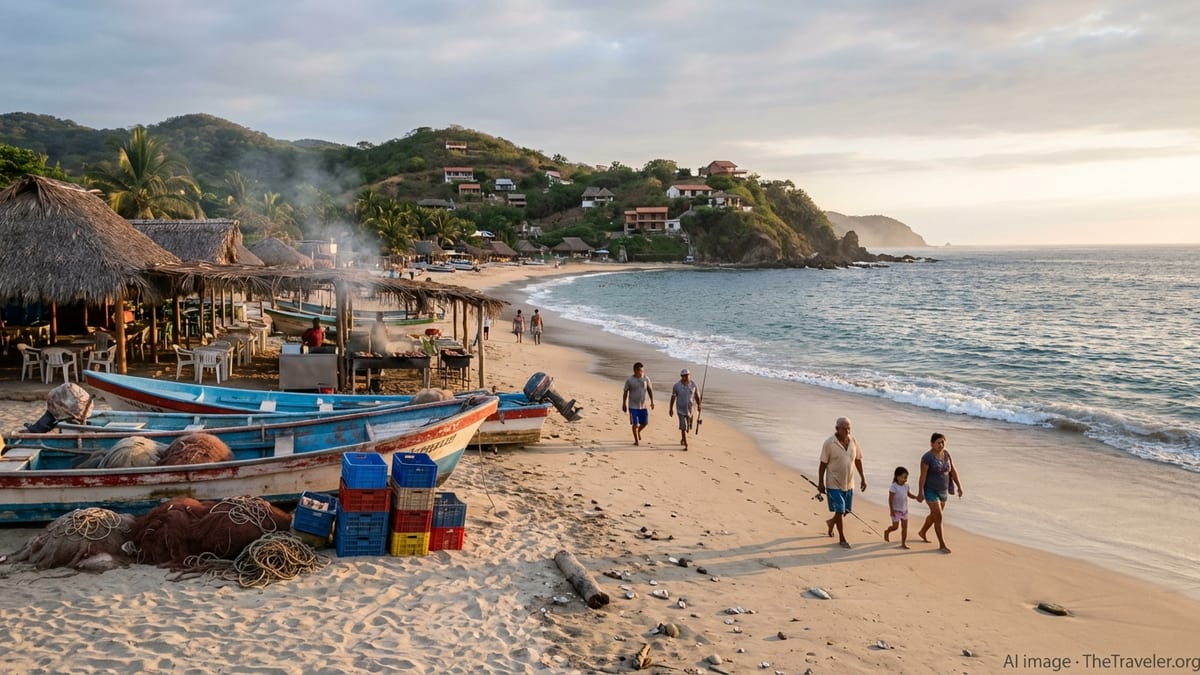
In both places, the focus is on unhurried days. Many visitors fall into a rhythm of early swims, leisurely breakfasts, and afternoons reading or walking the length of the beach. At sunset, fishermen often pull in their boats and nets, and some offer short outings to look for turtles, rays, or dolphins at dawn. When the Pacific is calm, these trips can be a memorable way to experience the coastline from the water.
These communities also form a useful contrast to Puerto Escondido. Where the larger town offers more dining variety and nightlife, Mazunte and San Agustinillo prioritize a softer, slower pace. Spending three or four nights here, perhaps after a shorter stay in Puerto Escondido, can be an effective way to end the trip on a restorative note.
Planning Your Time, Seasons, and Safety
For most travelers, 10 to 14 days allows this route to unfold without constant rushing. One common structure is two or three nights in Mexico City, two in Puebla, three in Oaxaca City, and four or more split between Puerto Escondido and the smaller beaches. If you have additional time, consider adding nights in Oaxaca to explore surrounding villages, or on the coast to unwind fully after the more urban sections.
Seasonality matters. The Pacific coast generally experiences a dry season that runs roughly from late fall into spring, with hotter, more humid conditions and increased rainfall later in the year. Shoulder seasons can offer a good balance of manageable weather and fewer crowds, though coastal storms or heavy rain can occasionally disrupt road travel. In the highland cities, evenings may feel cool in winter, while summer afternoons can be warm but often tempered by elevation.
As with any trip, staying informed about local conditions is important. Before traveling between cities, particularly across mountain routes or during the rainy season, it is wise to check recent updates from your accommodation, local transport providers, or regional news outlets. Roadworks, protests, or weather events can alter timetables or recommended routes.
General safety practices are similar to those used in other large countries: choose reputable transport providers, keep valuables out of sight in busy areas, and avoid isolated places late at night. Tourist-focused neighborhoods in Mexico City, Puebla, Oaxaca, and the Oaxacan coast are accustomed to international visitors, and most trips proceed smoothly when travelers combine common-sense precautions with attention to local advice.
The Takeaway
This Mexico route succeeds because it respects the country’s diversity instead of trying to compress it into a single type of destination. By starting in the capital, stepping down through a mid-sized colonial city, then immersing yourself in Oaxaca’s markets and mezcal, you build a narrative that culminates naturally on the Pacific coast, where days slow and focus shifts to waves and sunsets.
Along the way, you encounter some of the country’s most compelling strengths: deep-rooted culinary traditions, crafts sustained by local communities, and landscapes that range from highland valleys to tropical beaches. Rather than forcing a choice between culture, food, and relaxation, the itinerary threads them together so that each phase of the journey informs and enriches the next.
Whether you have ten days or two weeks, this route offers a framework that can be tailored to your interests, budget, and appetite for movement. Add extra time in the places that speak to you, skip segments if you prefer to fly, or reverse the order entirely. The core idea remains the same: let Mexico’s cities and coasts complement, rather than compete with, one another.
FAQ
Q1. How long do I need for this Mexico route?
Most travelers find that 10 to 14 days allows a comfortable balance between city exploration and beach time without feeling rushed.
Q2. In what order should I visit the destinations?
A practical sequence is Mexico City, Puebla, Oaxaca City, Puerto Escondido, then Mazunte or San Agustinillo, finishing with several slow days on the coast.
Q3. Can I do this trip without renting a car?
Yes. Reliable intercity buses, shared vans, and domestic flights connect all the main stops, and local taxis or rideshares work well within cities and towns.
Q4. When is the best time of year to travel this route?
Generally, late fall through spring offers drier, more predictable weather, with coastal humidity and rainfall increasing as summer progresses.
Q5. Is this itinerary suitable for first-time visitors to Mexico?
It works well for first-timers because it combines well-established destinations, varied experiences, and straightforward transport options between each stop.
Q6. How far in advance should I book accommodations?
Booking several months ahead is recommended for holiday periods and popular beach weeks, while shoulder-season travel can be more flexible.
Q7. Are the beaches around Puerto Escondido safe for swimming?
Some coves are suitable for swimming, while others have strong surf. Always follow local advice and posted flags before entering the water.
Q8. Can I work remotely while following this route?
Major cities and larger coastal towns generally offer reliable internet, but smaller beach villages may have slower or less consistent connections.
Q9. How can I make this trip more sustainable?
Consider using buses instead of frequent flights, supporting small locally owned businesses, and choosing tours that emphasize low-impact practices.
Q10. Is it easy to extend this route to other parts of Mexico?
Yes. From Mexico City you can connect to many regions by air or bus, and from the Oaxacan coast you can fly to other beach areas or back to the capital.