

Thousands of air travelers across the United States are facing another difficult day as major carriers including Southwest, SkyWest, United and American grapple with 192 cancellations and 3,410 delays, snarling operations at key hubs from Denver and Chicago to Miami, New York and Orlando.
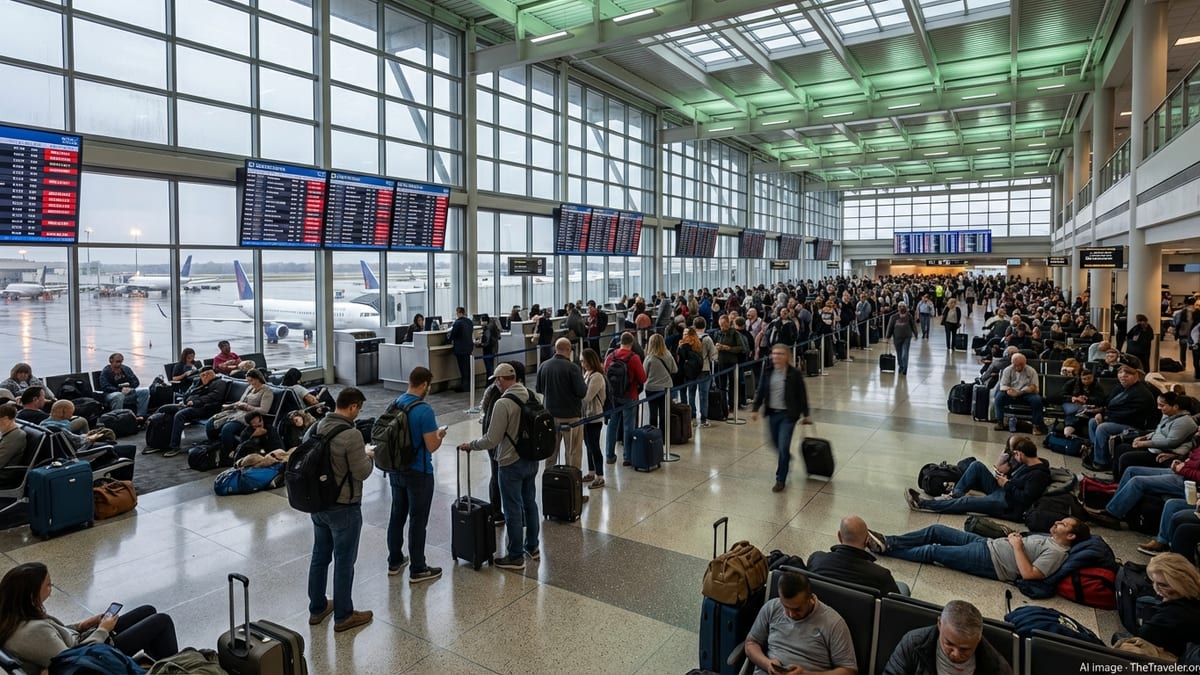
Major U.S. Hubs Struggle With Another Day of Disruption
Airports across the country have once again become choke points for domestic and international travel, with fresh data showing more than 3,400 delayed flights and just under 200 cancellations nationwide. The worst of the disruption is concentrated at high-volume hubs serving business and leisure travelers alike, including Chicago O’Hare, Orlando International, Miami International, Denver International, and the New York area airports.
At Chicago O’Hare alone, operations today have been hampered by nearly 400 delays and multiple cancellations, affecting flights to and from major markets such as New York, Los Angeles, Minneapolis, Detroit and Miami. Similar scenes are playing out in Florida, where Orlando and Miami are each reporting hundreds of delayed movements, as airlines work to reset their schedules after a period of volatile weather and tight capacity.
Denver International, a critical mid-continent connecting hub, has also reported more than 200 delays and several cancellations, further compounding the strain on national routings. Combined, these bottlenecks are rippling outward to dozens of secondary airports, pushing missed connections higher and stretching airline customer-service operations.
Although today’s figures are lower than the peak chaos seen during major winter storms earlier this year, they underscore how fragile airline networks remain in the face of adverse weather, staffing challenges, and congested airspace. For travelers, the result is yet another day of long queues, rolling departure times and last-minute itinerary changes.
Which Airlines Are Bearing the Brunt
The latest disruption wave is hitting some carriers harder than others, with large network airlines and major low-cost operators recording the highest numbers of delayed and canceled flights. Southwest Airlines, with its extensive domestic point-to-point network, is again prominent in delay tallies, particularly at Denver, Orlando and several busy leisure-focused destinations.
United Airlines, whose hub strategy heavily relies on Chicago O’Hare and Denver, is also experiencing substantial operational strain. Dozens of United departures and arrivals at O’Hare and Denver have been pushed back, forcing the airline to juggle aircraft rotations and crew assignments to protect long-haul and hub-to-hub services.
Regional operator SkyWest, which flies under the banners of several big carriers, is another key contributor to the day’s disruption numbers. At O’Hare alone, SkyWest is linked to more than a hundred delays, along with several cancellations, affecting passengers booked on United, American and Delta codeshare services.
American Airlines is reporting significant delays at Chicago, Miami, New York and Orlando, reflecting both the knock-on effect of earlier winter storms and ongoing congestion at large hubs. Low-cost and leisure-focused carriers, including Spirit and Frontier, are also in the mix, especially at Florida airports and western gateways such as Las Vegas and Los Angeles.
Denver, Chicago, Miami, New York and Orlando at the Center
Denver International has emerged as one of today’s most affected airports, combining its role as a transcontinental connection point with local weather sensitivities that frequently slow arrivals and departures. More than 200 flights are delayed at Denver, alongside a smaller number of cancellations, with Southwest, Frontier, United and SkyWest all reporting disrupted operations.
Chicago O’Hare remains another focal point, registering close to 400 delays and multiple cancellations. Regional feeder operations are particularly stressed, with numerous flights between O’Hare and midwestern and east-coast cities experiencing extended departure holds. Those regional disruptions cascade into missed connections for travelers heading onward to West Coast, Florida and international destinations.
In Florida, Orlando International and Miami International are each grappling with hundreds of delayed flights. Orlando, one of the busiest vacation gateways in the country, continues to feel the combined effect of winter-weather knock-on delays from other regions, heavy passenger volumes, and staffing constraints. Miami, a key international and Caribbean hub, is battling its own queue of late-arriving aircraft, which in turn delays outbound operations and tightens available aircraft turnaround windows.
New York’s major airports, including John F. Kennedy and LaGuardia, are also reporting significant delay volumes as they connect into Chicago, Florida, the Midwest and the West Coast. Even when local conditions are relatively calm, congestion in the Northeast corridor and flow-control measures can quickly push departure and arrival times later into the day, feeding into the national tally.
Weather Hangover and Structural Strain on Airline Networks
While there is no single dramatic storm driving today’s disruptions, industry analysts point to what they describe as a weather hangover effect. A series of winter systems over recent weeks has forced thousands of cancellations and delays, leaving aircraft and crews out of position and compressing already tight schedules at major hubs.
When airlines operate on thinner buffers, minor operational hurdles can quickly escalate. A morning ground stop, fog bank or de-icing delay at one busy airport can reverberate through dozens of flights as aircraft arrive late to their next legs. This dynamic is especially pronounced at complex hubs such as Chicago O’Hare, Denver and New York, where high traffic volumes leave little margin for recovery.
Staffing remains another pressure point. Although carriers have rebuilt much of their workforce since the height of the pandemic, they continue to face shortages in certain specialized roles, including pilots on specific aircraft types, maintenance technicians and ground-handling teams. Any absence caused by illness or weather-related commuting issues can slow operations during peak periods.
Air traffic control capacity is also under scrutiny. Controllers in some high-volume markets have reported sustained workload and staffing challenges, leaving the system more vulnerable to weather-related flow restrictions. When the Federal Aviation Administration orders temporary traffic management programs to ensure safety, airlines must slow or reroute flights, adding minutes and sometimes hours to already packed schedules.
How the Disruptions Are Affecting Travelers
For passengers, the headline numbers of 192 cancellations and 3,410 delays translate into long check-in lines, crowded gate areas and uncertainty about arrival times. Families heading to Orlando’s theme parks, business travelers shuttling between Chicago and New York, and international visitors transiting through Miami all face the risk of missed connections and extended layovers.
At Chicago O’Hare, travelers have described lines snaking through terminal corridors as airline agents attempt to rebook disrupted passengers and respond to a flood of questions. Gate areas are filled with travelers refreshing their mobile apps for updated departure times, while airport public-address announcements repeatedly urge passengers to stay in close contact with their airlines.
Denver and Orlando are seeing similar scenes, with some passengers opting to switch to later flights or reroute through alternative hubs to avoid the heaviest congestion. Others, particularly those traveling in large groups or with checked baggage, have little choice but to wait out rolling delays and hope that their aircraft and crews arrive as rescheduled.
For those connecting internationally through hubs such as Miami or New York, delays on inbound domestic segments can have outsized consequences. A late-arriving flight from Chicago or Denver can force passengers to overnight unexpectedly or reroute through different continents, as long-haul international flights typically operate on less flexible schedules and are more difficult to rebook at short notice.
What Airlines Are Doing to Recover Schedules
Airlines are deploying a range of tools in an effort to stabilize their networks and limit further disruption. Key strategies include consolidating underbooked flights, proactively canceling a small number of departures to protect the rest of the schedule, and repositioning aircraft and crews overnight to restore normal rotations in the coming days.
Carriers such as United, American and Southwest often prioritize their long-haul and hub-to-hub routes when conditions are tight, seeking to maintain connectivity between major centers like Chicago, Denver, Dallas, Atlanta, Miami and New York. Shorter feeder flights to smaller markets are sometimes sacrificed or retimed, which can further frustrate travelers in regional cities but helps limit cascading disruption at the national level.
Many airlines are also expanding flexibility in their customer policies, waiving change fees on affected routes and encouraging travelers who can delay their trips to rebook for off-peak days. This helps reduce pressure on today’s constrained operations while offering some relief to passengers who have the option to adjust their travel plans.
Behind the scenes, control centers staffed by operations planners, dispatchers and crew schedulers work around the clock, monitoring weather radar, air traffic control advisories and airport conditions. Their decisions on which flights to operate, delay or cancel play a critical role in determining how quickly the system can recover from a day of heavy disruption.
Advice for Passengers Caught in the Disruptions
Travel experts emphasize that in volatile conditions like today’s, preparation and real-time information are essential for passengers hoping to minimize inconvenience. The most important step, they say, is to check flight status frequently, beginning several hours before leaving for the airport and continuing up to boarding time. Because schedules can change rapidly, relying on printed or early-morning information can leave travelers exposed to unexpected shifts.
Passengers are also urged to keep airline apps and notifications switched on throughout their journey. Mobile alerts often deliver rebooking options and gate changes faster than terminal displays or public announcements, and can give travelers a head start in securing alternate flights when seats are scarce.
For those with tight connections at major hubs such as Chicago O’Hare, Denver, Miami or New York, building extra time into itineraries can help absorb unexpected delays. In some cases, accepting an earlier departure that includes a longer planned layover may be preferable to risking a missed connection during periods of widespread disruption.
At the airport, travelers are encouraged to seek assistance early if they suspect they will miss a connection, and to consider alternative routings via less congested hubs when available. While customer-service lines can be long at physical desks, many airlines now allow same-day changes through apps or call centers, which can save valuable time when seats are limited.
Broader Implications for U.S. Air Travel
The latest spate of delays and cancellations highlights the broader question of resilience in the U.S. air travel system. While extreme weather events and seasonal storms have always caused disruption, the frequency and scale of recent episodes are prompting renewed debate about how much slack airlines and regulators should build into schedules at the nation’s busiest airports.
Industry analysts note that airlines have optimized their networks for efficiency, tightly scheduling aircraft and crews to maximize utilization. This approach keeps fares more competitive but leaves less room to absorb shocks, whether from storms, equipment issues or air traffic control constraints. When disruptions occur simultaneously at multiple hubs, as they have today in Denver, Chicago, Miami, New York and Orlando, the system’s vulnerabilities become more visible.
Regulators and policymakers are watching closely, particularly in light of passenger complaints about chronic delays and cancellations in certain peak seasons. Proposals under discussion range from increased investment in air traffic control technology and staffing to encouraging carriers to maintain greater schedule buffers and reserve capacity.
For travelers, the immediate concern remains simple: getting where they need to go. But as thousands more confront long waits and changing itineraries in the wake of today’s 192 cancellations and 3,410 delays, pressure is likely to mount on the industry to deliver not only record passenger volumes, but also a more reliable and resilient travel experience.