

More news on this day
Air travel across the United States faced another bruising day as flight-tracking data showed 4,722 delays and 307 cancellations affecting major hubs from Atlanta and Chicago to New York, Houston, Las Vegas, Minneapolis and Philadelphia, disrupting operations at Delta Air Lines, United Airlines, American Airlines, Spirit Airlines, regional carriers and others.
Get the latest news straight to your inbox!
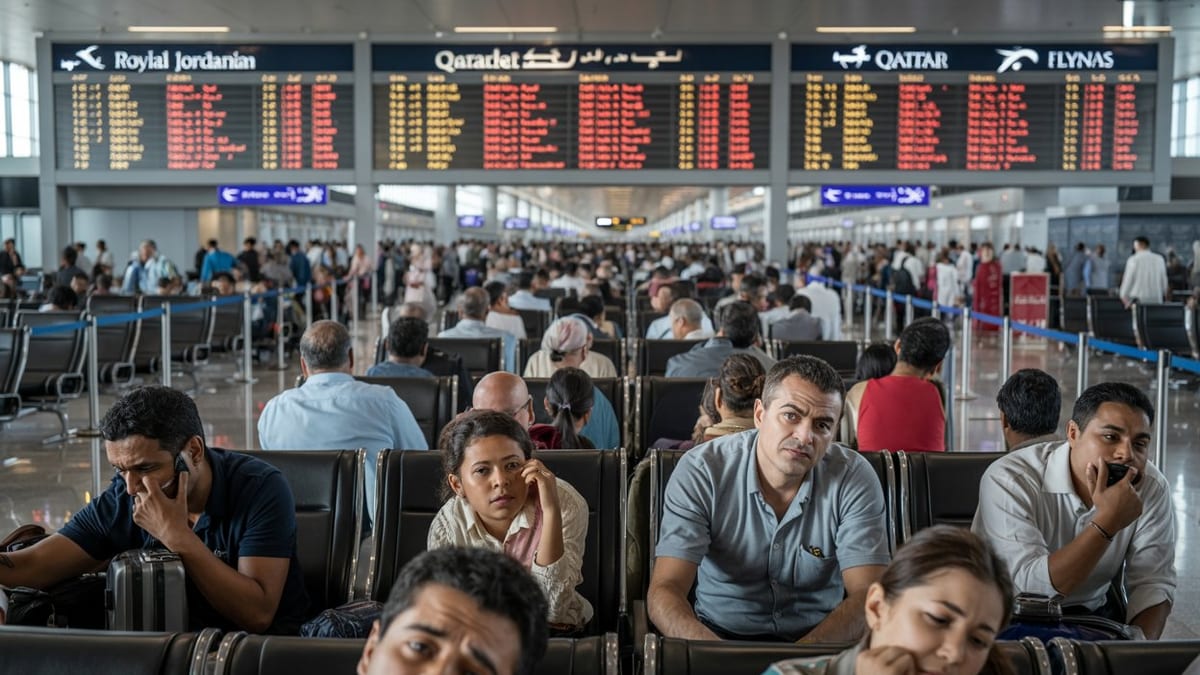
Major Hubs From Coast to Coast Struggle to Keep Schedules Moving
Publicly available disruption tallies for Monday, April 6, 2026, indicate that the latest wave of delays and cancellations is clustered around some of the country’s busiest hubs, including Hartsfield-Jackson Atlanta International Airport, Chicago O’Hare, New York’s trio of airports, Houston Bush Intercontinental, Las Vegas Harry Reid International, Minneapolis–Saint Paul and Philadelphia International. While the precise distribution of the 4,722 delayed flights and 307 cancellations varies by airport, the pattern reflects the central role these hubs play in the national network.
Earlier in the Easter travel period, similar disruption maps showed Chicago, Dallas, Atlanta and Orlando bearing the brunt of severe delays and cancellations as storms crossed key flight corridors during one of the busiest travel weekends of the year. Those bottlenecks created residual issues that continued into Sunday, April 5, with more than 100 cancellations and hundreds of delays recorded nationwide. The latest figures suggest that the system has not yet fully recovered, with Monday bringing another round of operational strain for airlines and airports already operating close to capacity.
Reports indicate that even airports not at the top of the delay charts are experiencing knock-on effects as crews, aircraft and passengers struggle to reposition through a congested system. With tight connection windows and high load factors, a disruption in Atlanta or Chicago can quickly translate into late arrivals and missed connections in smaller markets across the Midwest, South and Mountain West. The cumulative impact of many modest delays often proves as damaging to traveler plans as a smaller number of headline-grabbing cancellations.
Data compiled in recent federal analyses underscores just how sensitive these large hubs are to operational shocks. Airports such as Atlanta, Philadelphia, Minneapolis and Las Vegas consistently rank among the leaders in total delay minutes over recent years, reflecting dense schedules and limited spare capacity. Against that backdrop, a single busy holiday period with adverse weather or airspace constraints can rapidly tip the system into rolling disruption.
Airlines From Legacy Giants to Low Cost Carriers See Operations Disrupted
The latest disruption figures cut across nearly every segment of the U.S. airline industry, touching large network carriers, low cost and ultra-low-cost operators and regional affiliates alike. Published coverage over the Easter period highlights Delta Air Lines, United Airlines and American Airlines appearing prominently in daily delay and cancellation tables, reflecting their dominant presence at major hubs such as Atlanta, Chicago, New York and Dallas.
Low cost and ultra-low-cost carriers, including Spirit Airlines, have also faced elevated levels of disruption, particularly on leisure-heavy routes into Florida, Nevada and the Southwest. These airlines often operate tight turnarounds and rely on high aircraft utilization, which can magnify the impact of any single delay. Once an early departure runs late, the same aircraft may remain behind schedule for the rest of the day, compounding problems across multiple cities.
Regional carriers that operate under the banners of the large network airlines have been a recurring feature of disruption reports. Operators such as SkyWest, Envoy and Republic frequently record large shares of cancellations on days when weather or airspace issues affect multiple hubs, in part because their shorter routes and smaller aircraft give airlines fewer options for recovering schedules. When aircraft or crews fall out of position, entire sequences of regional flights can be curtailed.
Investors and industry analysts are watching these patterns closely, as a sustained period of irregular operations can increase costs through overtime, repositioning flights and compensation outlays. Recent market commentary has noted that persistent disruption at key hubs risks eroding traveler confidence among both business and leisure passengers, particularly if delays and cancellations appear to be concentrated at specific airlines or alliances.
Weather, Congested Airspace and Tight Schedules Combine to Drive Disruption
While each individual delay or cancellation can have a unique cause, publicly available data from flight-tracking platforms and meteorological agencies suggest a familiar combination of factors behind the current wave of disruption. Lingering spring storms, low clouds and convective weather over parts of the Midwest, Northeast and South have periodically reduced arrival and departure rates at major hubs, triggering ground delay programs and flow restrictions that ripple through the system.
At the same time, the Easter and early spring travel surge has left many flights operating near or at capacity, limiting airlines’ ability to rebook disrupted passengers quickly. With fewer empty seats available on later flights, even a relatively small number of cancellations can strand large numbers of travelers or force significant itinerary changes. In cities such as Atlanta, New York and Chicago, where multiple airlines share crowded runways and taxiways, congestion alone can add minutes to every departure, gradually building into widespread delays.
Structural factors also play a role. Federal analyses of delay data show that a significant share of total delay minutes at major hubs is classified as unscheduled, reflecting the real-time impact of weather, air traffic management interventions and operational issues such as maintenance or crew availability. In environments where airlines schedule aircraft and crews tightly to maximize utilization, these unscheduled shocks leave little margin for recovery, particularly during holiday peaks.
The result is a system prone to cascading effects. A thunderstorm cell that slows departures in Atlanta or New York for an hour can leave aircraft and pilots out of position for the rest of the day, affecting flights as far away as the West Coast or small regional communities in the Upper Midwest. The current counts of 4,722 delays and 307 cancellations fit into a broader pattern in which even modest disruptions at the wrong time and place can generate nationwide impacts.
Travelers Face Long Lines, Missed Connections and Tough Choices
For passengers, the operational statistics translate into very personal frustration in the form of long security and check-in lines, crowded gate areas and missed connections. Over the past several days, published reports from across the country have described travelers sleeping in terminals, scrambling to rebook on other airlines and racing to connect to final destinations after rolling delays compressed connection windows.
Consumer guidance shared across multiple outlets emphasizes the importance of monitoring flight status closely via airline apps and flight-tracking tools, particularly in the 24 hours before departure and again before leaving for the airport. With disruption so widespread at major hubs, some travel experts recommend scheduling critical trips with additional buffer time or considering earlier departures in order to build resilience into itineraries.
Passenger rights have also come under renewed attention in light of the recent disruptions. Existing consumer protection rules indicate that travelers whose flights are canceled by the airline and who choose not to travel are generally entitled to a refund, even on nonrefundable tickets. Compensation or meal and hotel vouchers for delays vary by carrier and circumstance, and passengers are often advised to consult their airline’s published policies and any applicable government guidance when seeking assistance.
For travelers already en route as delays mount, practical steps can include contacting airlines through multiple channels at once, such as mobile apps, call centers and airport customer service desks, to secure the earliest possible rebooking options. In hub airports with multiple daily flights on the same route, persistence can make the difference between arriving the same day or facing an overnight stay.
Broader Questions About Resilience in the U.S. Air Travel System
The latest day of mass delays and cancellations arrives against a backdrop of broader debate about the resilience of the U.S. air travel system. The combination of aging infrastructure, increasingly volatile weather patterns and airlines’ reliance on tightly packed schedules has produced several high-profile meltdowns over recent years, from winter storms to technology failures and holiday surges.
Analysts note that major hubs such as Atlanta, New York, Chicago, Houston, Las Vegas, Minneapolis and Philadelphia sit at the center of this discussion because of their outsized influence on nationwide connectivity. When these airports encounter even modest reductions in capacity, there are limited alternative pathways for rerouting passengers, particularly on short notice and during peak seasons.
Policy discussions in recent months have touched on the potential role of airspace modernization, improved staffing levels in air traffic control, and incentives for airlines to build more slack into schedules during historically vulnerable periods. However, such changes take time to implement, and in the near term, passengers remain exposed to the compounding effects of weather, congestion and operational complexity.
The 4,722 delays and 307 cancellations recorded across the United States on Monday serve as another reminder of how quickly strain can build within the interconnected aviation system. For now, travelers heading through major hubs are being urged by travel industry commentary to plan cautiously, stay informed and be prepared for last-minute adjustments as airlines and airports work to restore normal operations.