

More news on this day
Thousands of travelers across Europe are facing missed connections, overnight stays and disrupted holiday plans after aviation data for Monday showed 1,475 flights delayed and 172 cancelled at airports from Scandinavia to the Mediterranean.
Get the latest news straight to your inbox!
Disruptions ripple across key European hubs
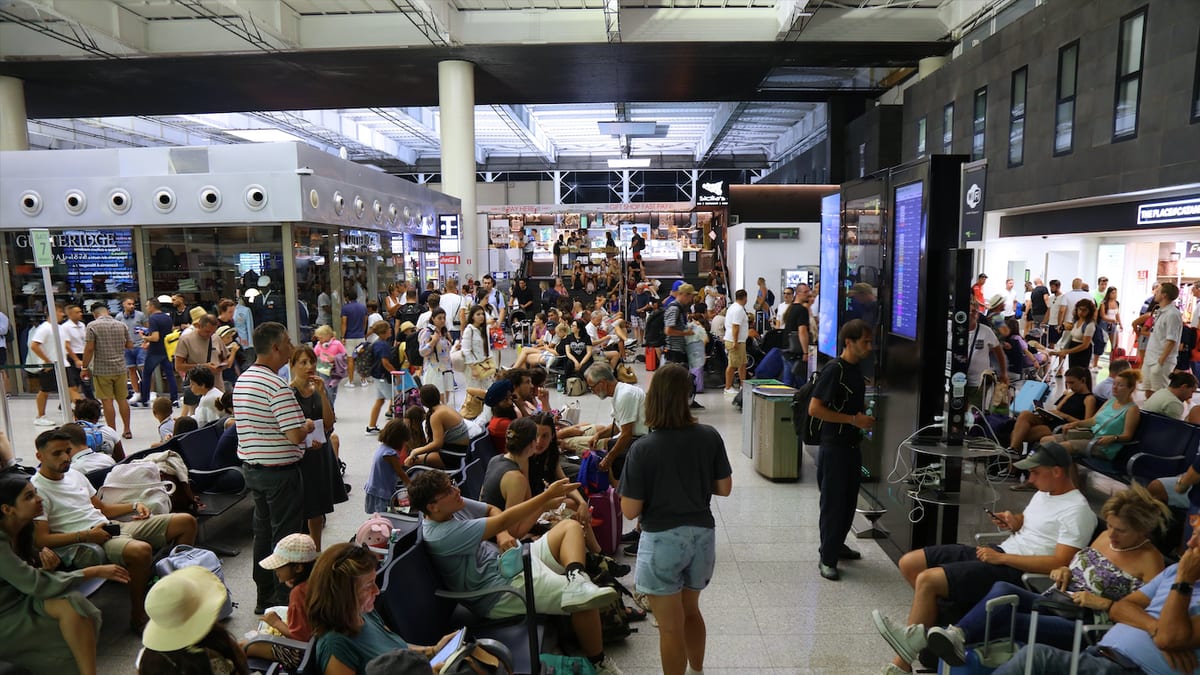
Publicly available flight-tracking data for Monday indicate that the latest wave of disruption has concentrated around some of Europe’s busiest hubs, with delays and cancellations stacking up through the day. Major airports in France, Germany, Italy, the United Kingdom and the Nordic region have collectively recorded 1,475 delayed services and 172 cancellations, leaving terminals crowded with waiting passengers and departure boards dominated by orange and red alerts.
Published coverage from European travel and aviation outlets describes knock-on effects at Paris Charles de Gaulle, Frankfurt, Oslo Gardermoen and Helsinki-Vantaa, where stranded travelers are contending with long queues at customer-service desks and limited same-day rebooking options. In several cases, passengers arriving late into Europe have missed long-haul connections to North America, the Middle East and Asia, forcing airlines to arrange hotel stays or alternative routings on later dates.
Regional and secondary airports have not been spared. Reports from Greece highlight delays and cancellations affecting Athens Eleftherios Venizelos and connections to island destinations, while earlier disruptions at Amsterdam Schiphol over the weekend continue to reverberate through airline schedules. Together, these scattered problems are combining into a continent-wide challenge for carriers already operating near capacity during the busy Easter and spring travel period.
Travel industry analysts note that while the absolute number of outright cancellations remains lower than during major strike actions or airspace shutdowns, the high volume of delayed flights is having a significant operational impact. Late-arriving aircraft and crew time limits are forcing airlines to reshuffle rotations, which can quickly translate into additional cancellations late in the day.
Weather, airspace constraints and cyber issues converge
Reports from meteorological agencies and national aviation bodies point to unsettled spring weather as one of the main triggers behind the current disruption, with strong winds, low cloud ceilings and storms affecting several key flight corridors. Capacity restrictions linked to adverse conditions have been in place at times in northern and western Europe, slowing arrivals and departures and pushing delays into the 60 to 90 minute range at some hubs.
In addition to weather, airspace constraints linked to ongoing geopolitical tensions are continuing to compress traffic into narrower corridors, particularly on routes between Europe, the Middle East and Asia. Airlines have been required to reroute around closed or restricted airspace in recent weeks, lengthening flight times and reducing the flexibility of the network when irregular operations occur.
Technical vulnerabilities have also come under renewed scrutiny. Local media in several countries have highlighted the impact of a recent cyber incident involving a major aviation technology provider, which temporarily affected systems at multiple European airports and ground-handling firms. Although core services have largely been restored, residual issues and workarounds are contributing to longer turnaround times and slower recovery when flights fall out of schedule.
Aviation data from earlier days of the Easter period already showed elevated levels of disruption, suggesting a system operating with limited spare capacity. With aircraft and crew already stretched, even modest new weather systems or technical issues can quickly cascade into widespread delays, particularly when they affect early-morning waves of departures.
Stranded passengers face long waits and scarce alternatives
For travelers, the statistics translate into long lines, uncertain departure times and, in many cases, unplanned overnight stays. Passenger accounts compiled by European news outlets describe terminals packed with travelers seeking rebooking or information, with some reporting waits of several hours to reach airline service desks. At busy hubs, hotel capacity near the airport is being strained, particularly for families and elderly passengers.
Publicly available information from airlines shows that digital channels are carrying a growing share of the load. Carriers are urging passengers to use mobile apps and websites to accept alternative itineraries, update contact details and track real-time departure changes. Nevertheless, high demand on call centers and online systems means that some customers continue to prefer speaking to staff at the airport, further lengthening queues.
Rail and coach operators in several countries have seen increased demand from travelers seeking overland alternatives for short-haul journeys. Routes such as Paris to Brussels, Frankfurt to Cologne and Milan to Turin are proving popular fallback options when flights are heavily delayed or cancelled. However, late-booking passengers may find limited availability and higher prices on key departures, particularly in the wake of multiple disrupted days.
For those already in transit, the most acute issues are arising around missed connections. Passengers arriving late into European hubs from long-haul origins often face limited same-day choices, with onward flights fully booked. Travel insurance and flexible tickets can soften the financial blow, but many travelers still incur additional food and accommodation costs, especially when disruptions are classified as beyond the airline’s control.
What EU rules mean for compensation and care
The current wave of disruption is once again drawing attention to Europe’s strong passenger protection framework. Under Regulation (EC) No 261/2004, commonly referred to as EU261, eligible travelers departing from an EU or EEA airport, or flying to the region on an EU carrier, may be entitled to care and compensation when flights are significantly delayed or cancelled. Eligibility depends on factors such as the length of delay, the distance of the flight and whether the cause is considered within the airline’s control.
Consumer-rights organizations across Europe emphasize the distinction between compensation and duty of care. Even when airlines are not required to pay financial compensation because the root cause is deemed an extraordinary circumstance, such as severe weather or certain air traffic control restrictions, carriers are typically still obliged to provide assistance. That can include meals and refreshments, hotel accommodation where an overnight stay becomes necessary, and transport between the airport and the hotel.
Practical guidance from passenger advocates recommends that travelers keep boarding passes, booking confirmations and receipts for additional expenses, as documentation can be essential when submitting claims. Many airlines now offer online forms or dedicated portals for EU261-related requests, but processing times can vary, especially after large-scale disruption affecting thousands of passengers.
Travel lawyers note that disputes often arise around whether a specific incident qualifies as extraordinary. Mechanical issues and some technical failures within the airline’s own operation are frequently treated as within its control, while lightning strikes, sudden runway closures or broader air traffic control failures are more likely to fall into the extraordinary category. The current mix of severe weather, airspace constraints and third-party technical problems is likely to generate a broad range of case-by-case decisions in the weeks ahead.
How travelers can navigate ongoing disruption
With aviation data and published forecasts suggesting that unsettled weather may persist in parts of Europe over the coming days, travel experts advise passengers to build additional resilience into their plans. That can mean allowing longer connection times, especially when changing planes at major hubs, and avoiding the last flight of the day on critical sectors when feasible.
Public information from airlines and airports consistently highlights the importance of checking flight status before leaving for the airport and enrolling in notification services through mobile apps. Real-time alerts can provide earlier warning of creeping delays or aircraft swaps, giving travelers a better chance of securing alternative options before flights become fully booked.
For those yet to travel, choosing routes with multiple daily frequencies or alternative carriers can also offer more flexibility if a particular flight is cancelled. Passengers whose journeys are time-sensitive, such as business travelers or those connecting to cruises and tours, may wish to consider arriving a day early at their final departure point to protect against missed departures caused by upstream disruption.
As Europe’s aviation network continues to operate under pressure from weather systems, constrained airspace and lingering technical issues, industry observers expect intermittent disruption to remain a feature of the spring travel season. For now, the 1,475 delays and 172 cancellations recorded in a single day illustrate how quickly small operational stresses can add up, leaving thousands of travelers across the continent waiting for their journeys to resume.