

More news on this day
Thousands of airline passengers across the United States faced cascading disruptions on Saturday as Delta Air Lines, United Airlines, Spirit, Frontier, SkyWest and other carriers reported more than 130 flight cancellations and over 2,500 delays, snarling travel at key hubs including Atlanta, Orlando, New York, Seattle and Detroit.
Get the latest news straight to your inbox!
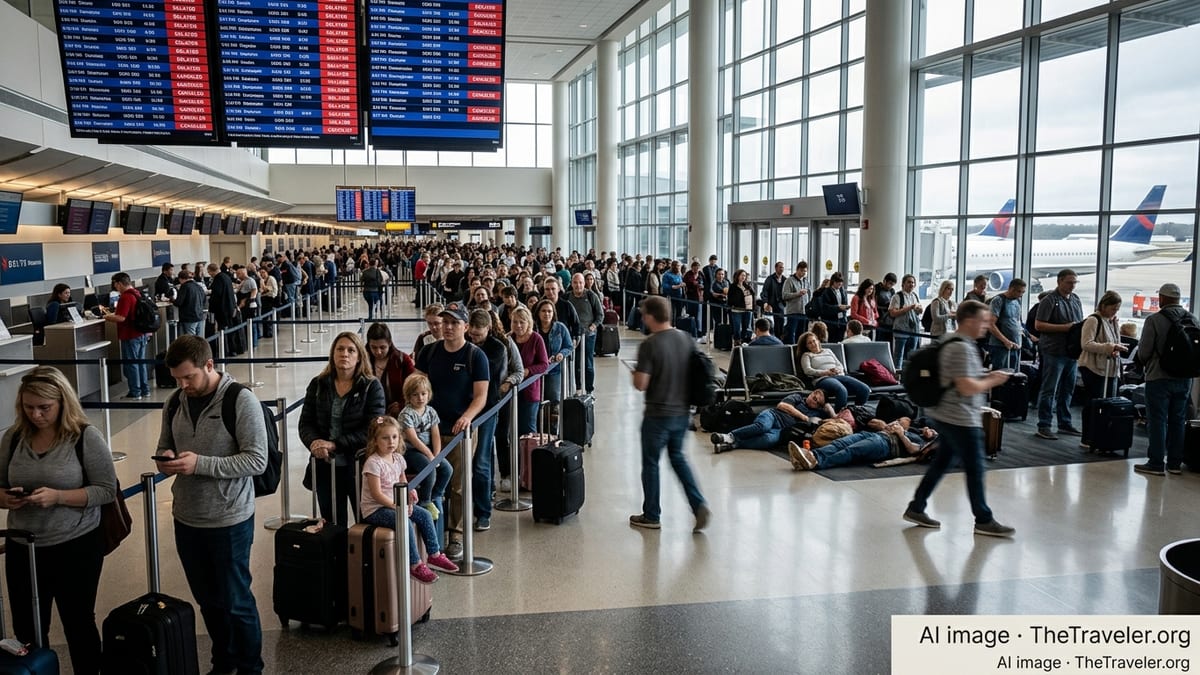
Busy Spring Weekend Turns Chaotic at Major Hubs
Publicly available tracking data for Saturday indicates that at least 136 flights were canceled and around 2,586 were delayed nationwide, with operational pressure concentrated at some of the country’s busiest airports. The interruptions hit as spring-break travel ramps up and airports were already managing elevated passenger volumes.
Atlanta’s Hartsfield-Jackson, consistently among the world’s busiest airports and a central hub for Delta and several regional partners, reported dense clusters of delayed departures and arrivals stretching across much of the day. In Orlando, a key gateway for theme park and cruise traffic, prolonged queues and rolling delay notices emerged as low-cost carriers contended with congested schedules and earlier disruptions.
New York–area airports, including John F. Kennedy International and LaGuardia, also saw rising delay totals as the day progressed, with knock-on effects visible in Detroit and Seattle. Those hubs serve as critical nodes for Delta, United and SkyWest, so relatively small schedule shifts quickly rippled across connecting flights nationwide.
While overall cancellation figures were lower than during major storm or IT failure events earlier in the season, the sheer volume of delays significantly lengthened travel days for passengers, many of whom reported spending long hours in terminals waiting for updated departure times.
Delta, United, Spirit, Frontier and SkyWest Under Strain
Operational data and published coverage show that Saturday’s disruptions were spread across multiple carriers rather than isolated to a single airline. Delta and United, two of the largest U.S. network airlines, each recorded clusters of delayed services at their main hubs, while regional operator SkyWest, which flies under brands such as Delta Connection and United Express, added to the totals as it adjusted schedules and aircraft rotations.
Spirit and Frontier, both ultra-low-cost carriers with dense schedules and tight turnaround times, showed notable delay percentages on routes into and out of Orlando, Atlanta and several secondary markets. For travelers, that meant an elevated risk that even minor schedule adjustments could erode connection buffers or push late-evening flights into the early hours of the next day.
Recent federal data on airline performance indicates that carriers such as SkyWest, Frontier and Spirit already manage higher-than-average delay and cancellation rates compared with the largest legacy airlines in normal conditions. When combined with peak-period demand and residual weather and staffing challenges, those structural vulnerabilities can translate quickly into widespread disruptions.
Observers note that the current pattern fits broader industry trends in which day-of-operations disruptions are increasingly distributed across several airlines at once, rather than producing a single headline-grabbing meltdown at one carrier.
Weather Hangover and System Congestion Feed Disruptions
Saturday’s problems did not emerge in isolation. The latest interruptions followed a series of strong storm systems and a recent multi-day weather event that swept across the Midwest and East Coast between March 13 and March 17, bringing heavy snow, high winds and extensive power outages. Published reports from earlier this week documented thousands of cancellations and delays tied directly to those conditions.
Although the most severe weather has moved on, the U.S. aviation network often experiences a “hangover” effect after major storms. Aircraft and crews can remain out of position for days, as carriers work to reassemble normal rotations while simultaneously operating nearly full schedules during busy travel periods.
In addition to residual weather impacts, the national air traffic system continues to face periodic congestion. When traffic volumes are high, even localized thunderstorms, temporary ground stops or staffing constraints at air traffic control facilities can cascade into longer taxi times, missed slots and rolling delays. Those incremental setbacks accumulate across a network that is already operating close to capacity.
Industry analysts have repeatedly noted that, in this environment, a day with a few hundred cancellations blended with several thousand delays can be particularly frustrating for travelers. While many flights eventually depart, the extended queues and compressed connections can still leave passengers stranded overnight or forced to seek last-minute alternatives.
Passengers Face Long Lines, Missed Connections and Costly Workarounds
Across social media and traveler forums, accounts from Saturday described crowded gate areas, long customer service lines and families searching for scarce rebooking options. In Orlando, passengers reported heavy crowds near the Spirit and Frontier counters as multiple departures shifted later into the day. Similar scenes played out at Atlanta and New York–area airports, where rebooked travelers queued for assistance after missing connections.
Some stranded passengers described opting for long-distance car rentals or overnight drives to reach destinations in time for work, cruises or family events, echoing patterns seen during previous disruption episodes. Others reported paying significantly higher last-minute fares on alternative airlines when same-day rebooking options with their original carrier were unavailable.
Consumer advocates frequently highlight that, under current federal rules, airlines are not generally required to provide compensation for delays or cancellations caused by weather or air traffic control constraints. Travelers facing such disruptions often must navigate each carrier’s internal policies on meal vouchers, hotel accommodations and refunds, which can differ considerably and may be updated frequently.
For many passengers, the experience underscores the value of monitoring flight status early and often, building additional buffer time for connections and reviewing ticket conditions, including change fees and refund eligibility, before travel.
Broader Questions About Airline Resilience
Saturday’s wave of disruptions arrives against a backdrop of heightened scrutiny of airline reliability following several large-scale operational breakdowns over the past few years, including events driven by severe winter storms and high-profile technology outages. In those cases, tens of thousands of flights were canceled over multiple days, prompting federal attention and renewed public debate over passenger protections.
Transportation statistics published over the last year indicate that, while overall cancellation rates have improved from the most disruptive phases of the pandemic era, day-to-day volatility remains a significant feature of U.S. air travel. Factors such as constrained staffing, aging technology systems, dense hub schedules and more frequent extreme weather events combine to keep operations fragile.
Travel experts note that the blend of moderate cancellation counts and high delay volumes seen on Saturday is increasingly common. Rather than a single catastrophic failure, passengers encounter a recurring pattern of extended waiting, late arrivals and missed connections, particularly at large hubs such as Atlanta, New York, Orlando, Seattle and Detroit.
With spring-break and early summer travel approaching, travelers and industry observers alike will be watching closely to see whether airlines can bolster resilience and reduce the frequency of days when thousands of passengers find themselves unexpectedly stuck in terminals across the country.