

More news on this day
Thousands of U.S. air travelers faced unexpected overnight stays and missed connections over the first April weekend as American Airlines and United Airlines canceled dozens of flights and delayed many more during one of the busiest spring travel periods so far this year.
Get the latest news straight to your inbox!
Weather Turbulence Triggers Fresh Wave of Cancellations
The latest round of disruption unfolded between Friday, April 3, and Sunday, April 5, 2026, when a mix of thunderstorms and residual winter weather systems slowed operations at several major hubs from Chicago and Houston to New York. Flight tracking data compiled in published coverage shows that U.S. airlines collectively logged thousands of delays and hundreds of cancellations on each of the peak days, snarling airport operations nationwide.
Within that broader chaos, American Airlines and United Airlines emerged among the hardest hit large carriers. Recent reports indicate that both airlines scrubbed dozens of flights over the weekend as storm cells parked over key hubs at Chicago O’Hare, Houston George Bush Intercontinental, and New York area airports. Those cancellations rippled outward across domestic and international networks, leaving travelers stranded far from their final destinations.
Published flight statistics for the early April period point to a pattern of sustained strain rather than a single isolated incident. Multiple outlets have documented that delays climbed into the thousands across the country on consecutive days, creating dense backlogs of passengers waiting for open seats. For many travelers, the combination of rolling storms and fully booked spring schedules meant there were few immediate alternatives once a flight disappeared from the departure boards.
The timing compounded the impact. The first weekend of April coincided with Easter travel peaks and school holidays in many states, pushing planes close to capacity before weather problems began. With so little slack left in airline schedules, even a relatively small number of cancellations on American and United translated into thousands of disrupted trips.
Major Hubs Buckle Under Strain
Disruption was most visible at the big connecting airports that anchor American and United’s networks. Publicly available data and industry coverage highlight Chicago O’Hare, Dallas Fort Worth, Houston Intercontinental, and New York’s LaGuardia and JFK as particularly affected, with waves of late arrivals, missed crew connections, and equipment out of position feeding into additional cancellations.
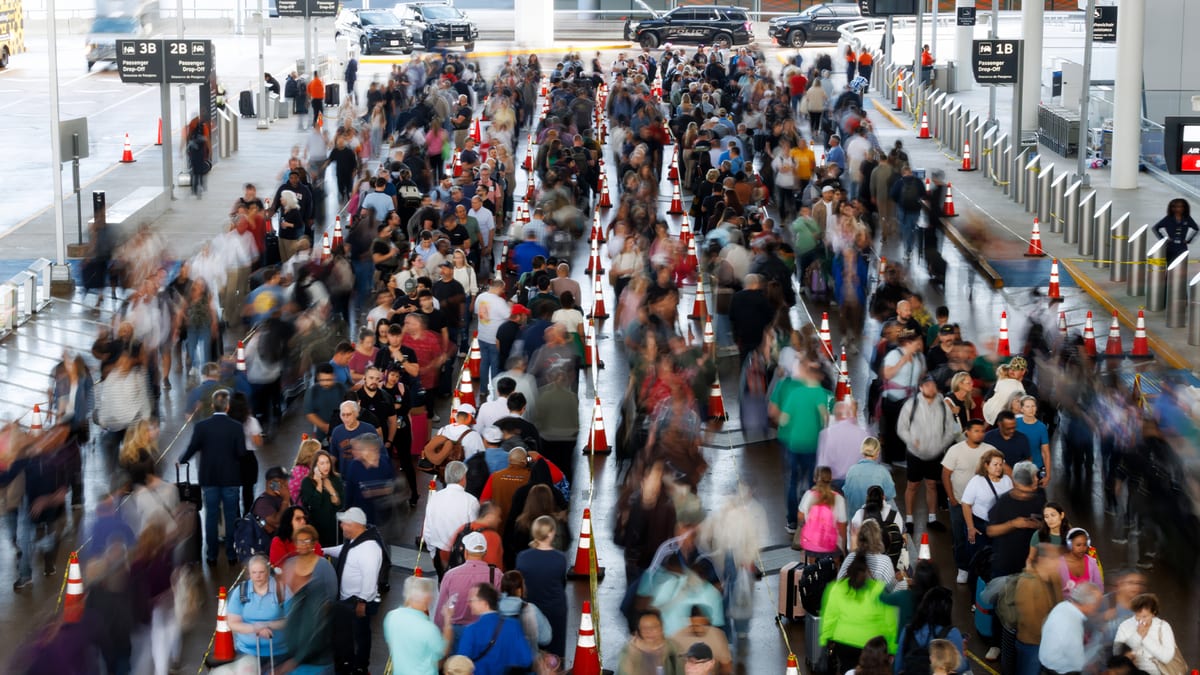
At some airports, the number of delayed flights vastly exceeded the cancellations but still contributed to passengers being stranded when missed connections could not be rebooked the same day. Reports from travel industry outlets describe crowded concourses, long customer service lines, and departure boards that remained heavily orange and red with delay codes well into the evening hours.
Regional affiliates that operate flights under the American Eagle and United Express brands added another layer of complexity. When thunderstorms or low visibility conditions tightened capacity at congested hubs, smaller regional flights were often among the first to be cut, a common practice used to preserve long haul operations. That left travelers in mid sized and smaller cities with limited alternative options and, in many cases, overnight stays.
Travel data services continue to show lingering knock on effects into Monday, April 6, with early morning departures constrained by aircraft and crew that did not end up where they were scheduled to be. As airlines work through those imbalances, some passengers are still arriving at their destinations a day or more behind schedule.
American and United Under Fresh Reliability Scrutiny
The weekend’s cancellations have renewed scrutiny on operational reliability at both American and United, which had already been navigating a volatile start to 2026. Earlier in the year, Winter Storm Fern in late January and a subsequent February blizzard forced widespread schedule cuts across the industry, with American and United each canceling thousands of flights over several days. While the current episode is smaller in scale, travelers are increasingly sensitive to even short lived disruptions.
Analysts cited in recent coverage point out that the two carriers rely heavily on tightly banked hub schedules and complex regional feeder networks. That structure helps maximize connectivity under normal conditions but can magnify the impact of severe weather when multiple hubs are affected within a short time frame. The result is a wave of missed connections and limited spare capacity to absorb displaced passengers.
American has promoted new digital tools this year aimed at giving customers faster visibility into disruptions and self service rebooking options through its app. United, meanwhile, has spent months adjusting schedules at congested airports such as Newark to reduce pressure on operations amid chronic air traffic control staffing constraints. The latest cancellations will test how well those efforts translate into a smoother recovery when large numbers of flights are disrupted.
For many travelers stranded over the weekend, however, the immediate experience was still defined by long waits for assistance, difficulty finding available seats on alternative flights, and uncertainty over when they would reach their destinations. Social media posts and consumer forums on Sunday and Monday reflected mounting frustration, especially among passengers caught by last minute cancellations.
Knock on Effects for International and Connecting Travelers
The impact was felt most acutely by connecting passengers and those traveling internationally on American and United. Once domestic feeder legs into major hubs were canceled, travelers bound for Europe, Latin America, or Asia often found that their long haul segment departed without them, even if that flight remained on schedule.
In some cases, published reports show that American and United have already been thinning or adjusting certain long haul routes in response to global geopolitical tensions and airspace restrictions, particularly in the Middle East region. That has reduced the number of alternative routings available to rebook stranded travelers when domestic legs fail to operate as planned.
For international passengers originating outside the United States, weekend cancellations of inbound segments also led to missed onward connections on U.S. domestic networks. With many transcontinental and cross border flights already heavily booked for the holiday period, airlines had limited flexibility to accommodate all affected travelers within a short time frame.
Some travelers chose to abandon or significantly reroute their trips, particularly when the disruption cut too deeply into already short vacations. Others accepted multi stop itineraries and overnight airport stays as airlines sought to piece together itineraries using scattered open seats across multiple days.
What Stranded Passengers Can Expect Next
As operations gradually normalize, passengers still stuck in the system can expect a continued focus on reaccommodation and, in some cases, refunds. Publicly available consumer guidance from regulators and airline customer service pages emphasizes that travelers whose flights are canceled within the United States are entitled to a refund if they choose not to travel, even on nonrefundable tickets.
For those who still need to reach their destination, airlines typically offer rebooking on the next available flight on their own network at no additional cost. However, when schedules are heavily constrained, the next available seat may not be until the following day or later, particularly from smaller regional airports where American and United have limited frequencies.
Travel experts quoted in recent coverage continue to recommend several practical steps when widespread cancellations hit. These include using airline mobile apps or websites rather than airport kiosks as a first line of rebooking, monitoring alternative nearby airports where more seats may be available, and, when feasible, considering ground transportation for shorter segments to bypass the most congested hubs.
With spring break traffic still in full swing and the busy summer season approaching, the latest disruptions underline how quickly conditions can deteriorate for travelers when weather and capacity constraints collide. For now, thousands of passengers affected by the weekend cancellations on American and United are focused on one priority: finding a way home or finally starting trips that were supposed to begin days ago.