

More news on this day
Thousands of airline passengers across the United States are facing cancellations, rolling delays and unexpected overnight stays after American Airlines and United Airlines scrubbed dozens of flights at key hubs during the busy early April travel period.
Get the latest news straight to your inbox!
Weather turbulence collides with peak spring demand
Publicly available flight-tracking data and recent travel coverage indicate that the latest wave of disruption has built over several days, as powerful storm systems swept through major aviation corridors just as spring and Easter travel peaked. Reports show that from April 2 through April 5, a combination of thunderstorms, low clouds and strong winds repeatedly interrupted operations at large hubs in Texas, the Midwest and along the East Coast.
American and United, which rely heavily on complex hub-and-spoke networks, have been particularly exposed when those hubs slow down or temporarily shut. Data referenced in recent industry reports for April 5 point to more than 400 cancellations and several thousand delays across U.S. carriers in a single day, with American and United among the mainline airlines trimming their schedules to cope with weather and airspace constraints.
Travel news outlets and financial analysis sites covering airline performance note that these disruptions follow an already strained March, when earlier storms and air traffic control restrictions triggered several thousand cancellations nationwide. With airlines forecasting record passenger volumes for March and April, the system has little slack when multiple major hubs face weather challenges at once.
Although the overall number of canceled flights remains lower than in some past holiday meltdowns, the timing and concentration of the latest disruptions at American and United hubs has magnified the impact on travelers who were counting on tight connections and fully booked routes.
American and United hubs hit by cascading cancellations
Operational data summarized in recent travel-industry reporting highlight how quickly local weather problems at a handful of airports can spread through the networks of American and United. Dallas Fort Worth, Chicago, Houston and New York-area airports have all reported waves of delays in recent days, with some flights ultimately canceled when crews or aircraft could not be repositioned in time.
At United, disruptions have been especially evident at Newark Liberty and Chicago O’Hare, where travel-news reports describe departure boards filling with delayed and canceled flights as storms and low visibility rolled through. One recent account from Newark pointed to hundreds of delays and more than a dozen cancellations in a single morning affecting United and other major carriers, leaving long lines at rebooking counters and crowded gate areas.
American has faced its own set of problems at Dallas Fort Worth and other focus cities, where storm-related ground stops and air traffic control flow restrictions forced the carrier to cancel selected departures to preserve limited takeoff and landing slots. A recent analysis of early April operations cited American among the mainline carriers with comparatively modest cancellation counts but very high delay volumes, a pattern that often strands passengers late in the day when missed connections pile up.
Because both airlines operate extensive regional networks through partners, cancellations of shorter feeder flights can ripple outward, cutting off connections to long-haul services even when those longer flights are still scheduled to depart.
Thousands of passengers stranded or facing major detours
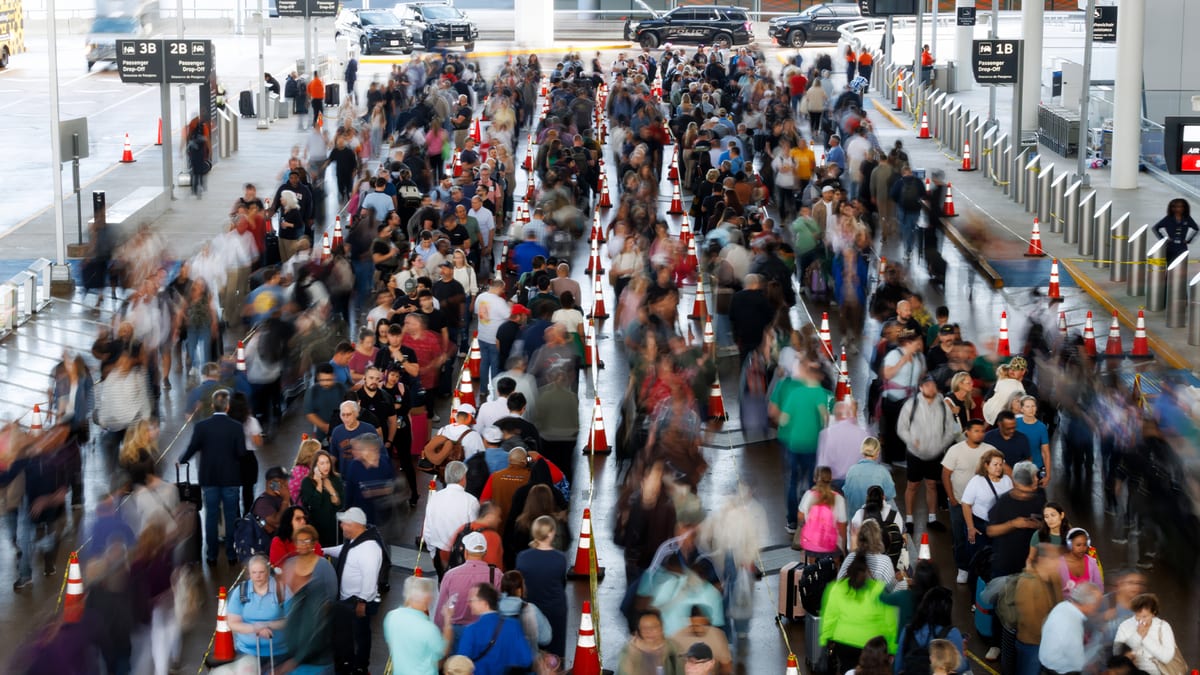
The practical effect of these schedule cuts is being felt most acutely by travelers stuck at hubs far from home. Coverage of the disruptions describes passengers at airports such as Newark, Chicago and Dallas facing hours-long waits for new itineraries after their original American or United flights were canceled with little room left on remaining services.
With planes running near capacity during the spring travel surge, rebooking options are limited. Many travelers whose flights were canceled over the weekend have been offered next-day or even multi-day rebookings, sometimes involving connections through secondary hubs or overnight layovers. Some are choosing to abandon air travel altogether on shorter routes, turning instead to rental cars, trains or intercity buses when seats are available.
Travel reports from previous disruption waves show that when cancellations cluster late in the afternoon or evening, large numbers of passengers can become stranded overnight as airports struggle to secure enough hotel rooms and ground transport. Similar patterns are emerging in the current episode, with social media posts and local coverage describing long lines at customer-service desks and crowded seating areas late into the night.
International travelers are also feeling the impact. Missed connections at U.S. hubs have led to broken itineraries for passengers heading to or from Europe, Latin America and Asia on American and United, requiring last-minute reroutes or long waits for the next available transatlantic or transpacific departure.
Underlying system strains: crews, schedules and airspace
While adverse weather is the immediate trigger for many of the cancellations, recent analytical pieces on U.S. aviation stress that deeper structural pressures are amplifying each storm system’s impact. Airlines including American and United are operating with tightly tuned schedules that depend on aircraft turning quickly at the gate and crews remaining within strict duty-time limits.
When thunderstorms or ground stops halt departures for even an hour or two, those assumptions break down. Aircraft can end up in the wrong place at the wrong time, and pilots or flight attendants can “time out” before they are able to operate their next planned leg. Publicly available commentary on airline operations notes that this can force carriers to proactively cancel later flights in order to rebuild buffers and avoid safety or regulatory violations.
Air traffic control capacity issues in key corridors, particularly along the East Coast and around busy metropolitan areas, further constrain the system. Industry data and previous government assessments have highlighted chronic staffing challenges at some facilities, which limit the ability to route traffic around storms or handle surges in demand when weather windows briefly improve.
Analysts tracking airline reliability say that while completion rates at American and United are generally high on normal days, the combination of heavy demand, constrained airspace and frequent spring storms has left very little resilience. The current disruption is being viewed as another stress test for the network as carriers push toward record volumes with infrastructure that has not expanded at the same pace.
What stranded travelers can do right now
Consumer advocates and travel experts consistently recommend that passengers caught up in mass cancellations act quickly and use every available channel. Guidance shared in recent travel coverage emphasizes checking an airline’s mobile app for automatic rebooking, confirming options on the carrier’s website and then calling customer-service centers or visiting airport agents only if necessary.
For American and United customers whose flights are canceled, publicly available consumer-rights information from the U.S. Department of Transportation explains that passengers are generally entitled to a refund if they choose not to travel, even on nonrefundable tickets, when the airline cancels a flight or makes a significant schedule change. Separate compensation or vouchers for meals and hotels depend on airline policy and the cause of the disruption, and are more common when problems stem from controllable operational issues rather than severe weather.
Travel advisors also suggest exploring same-day options on other airlines, particularly on competitive routes where multiple carriers serve the same city pair. However, with many flights going out full during peak periods, seats on alternative services can be scarce or expensive at short notice.
Looking ahead, recent commentaries on the Easter and spring disruption pattern argue that travelers may need to build more flexibility into their plans. Booking earlier departures, allowing longer connection times and avoiding the last flight of the day on weather-prone routes are all strategies being highlighted as ways to reduce the risk of becoming stranded when American, United or any other major carrier is forced to cancel dozens of flights at once.