

More news on this day
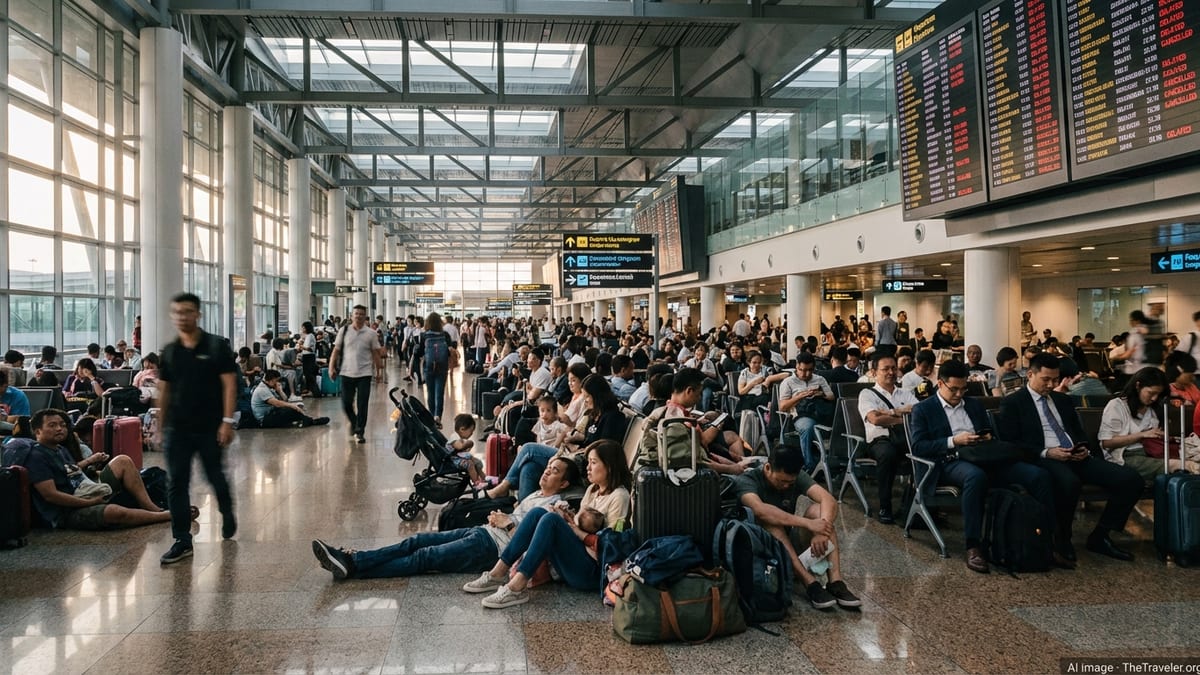
Thousands of travelers across Asia faced hours-long waits and missed connections as airports in Japan, South Korea, Singapore, China, the Philippines, and Hong Kong reported 3,072 delayed flights and 154 cancellations in a single day, disrupting operations for carriers including Cathay Pacific, Korean Air, Japan Airlines, Air China, All Nippon Airways, and others.
Get the latest news straight to your inbox!
Major Asian Hubs Buckle Under Heavy Disruption
Publicly available airport and aviation data for the day indicate that the heaviest disruption was concentrated in some of Asia’s busiest hubs. Tokyo Haneda alone recorded 379 delays and 11 cancellations, while nearby Narita saw 163 delayed departures. In South Korea, Seoul Incheon registered more than 230 delays and at least one cancellation, contributing to a ripple effect across regional networks.
In Greater China, multiple airports experienced significant operational strain. Hong Kong International Airport reported 282 delayed flights, while large mainland hubs such as Guangzhou, Shenzhen, Hangzhou, Beijing Capital, Beijing Daxing, Kunming, and Chengdu collectively accounted for hundreds of additional delays and dozens of cancellations. This cluster of bottlenecks amplified schedule disruptions for airlines relying on China’s dense network of domestic and international connections.
Further south, Singapore Changi recorded 136 delays and several cancellations, underscoring how even highly rated, well-resourced airports can struggle when regional conditions deteriorate simultaneously. Manila’s Ninoy Aquino International Airport registered close to 140 delayed departures, adding to long-standing concerns over congestion and infrastructure limitations at the Philippine capital’s main gateway.
Secondary airports were not spared. Data show elevated disruption levels at regional fields such as Urumqi, Lanzhou, Changsha, Xi’an, Wuxi, Dalian, Tianjin, and New Chitose, illustrating how delays originating at major hubs can spread quickly throughout airline networks, particularly where aircraft and crew rotations are tightly scheduled.
Flag Carriers And Regional Airlines Hit Across The Board
The day’s disruption pattern affected a mix of full-service and low-cost airlines, with several well-known brands reporting operational challenges. Hong Kong based Cathay Pacific, operating an extensive network through its primary hub, experienced knock-on delays on services linking Hong Kong with Japan, South Korea, Southeast Asia, and long haul destinations. Travelers reported missed connections and extended layovers as the airline attempted to reassemble its schedules.
In Japan, All Nippon Airways and Japan Airlines contended with congestion at both Haneda and Narita. Public flight information boards showed banks of delayed departures on key regional routes to Seoul, Hong Kong, and major Chinese cities, as well as on select long haul services. While many flights eventually departed, late pushbacks eroded the carefully timed wave patterns that normally underpin these carriers’ hub operations.
Korean Air, based at Seoul Incheon, also felt the impact as delays compounded during peak departure banks to Japan, China, Southeast Asia, and North America. Because many itineraries depend on smooth same day connections through Incheon, even moderate schedule disruptions resulted in missed onward flights and rebooking challenges.
Chinese carriers including Air China were similarly affected, particularly on routes connecting large mainland hubs with Tokyo, Seoul, Hong Kong, Singapore, and Manila. These disruptions come on top of previously reported capacity adjustments on China Japan routes in early 2026, meaning that today’s cancellations were layered onto a network that was already operating with reduced flexibility.
Weather, Congestion, And Wider Network Strains
Published coverage and aviation analytics point to a combination of factors behind the spike in delays and cancellations. Weather related constraints in parts of East Asia, including periods of low visibility and localized storms, limited the number of arrivals and departures that air traffic control could safely handle at certain airports. Even short windows of reduced capacity can quickly translate into extended queues when runways are heavily scheduled.
At the same time, chronic congestion and infrastructure limitations at key hubs such as Manila and some Chinese airports magnified the operational challenges. With terminals and taxiways already running close to capacity, any disruption to normal patterns can leave aircraft waiting for stands, gates, or departure slots, lengthening turnaround times and forcing airlines to reshuffle aircraft assignments.
Industry reports also highlight the lingering effects of broader network stresses. Rising fuel and insurance costs, airspace restrictions in parts of the Middle East and surrounding regions, and ongoing fleet and staffing adjustments have reduced the margin for error across many Asian carriers. When disruptions occur, airlines have fewer spare aircraft and crew to deploy, making it more difficult to absorb shocks without impacting passengers.
Over recent months, regional bodies such as the Association of Asia Pacific Airlines and the International Air Transport Association have drawn attention to the vulnerability of Asia Pacific connections to external shocks. Cancellations and reroutings tied to geopolitical tensions and airspace closures have forced some airlines to shift traffic flows through alternative hubs, adding extra strain to airports already managing high passenger volumes.
Impact On Passengers From Tokyo To Manila
For travelers, the statistics translated into long queues, crowded terminals, and disrupted itineraries across multiple countries. In Tokyo, passengers at Haneda and Narita faced extended waiting times at check in, rebooking counters, and security checkpoints as airlines processed waves of delayed flights. Similar scenes were reported at Seoul Incheon, where transfer passengers in particular struggled to secure alternative onward flights on already busy routes.
In Hong Kong and Singapore, both major transit hubs, travelers encountered re-timed departures, overnight layovers, and luggage delays as airlines attempted to reconnect fragmented parts of their networks. Hotels near the airports reported increased demand from stranded passengers seeking last minute accommodation, while airport amenities such as lounges and food outlets experienced crowding during peak disruption hours.
Manila’s main airport, which has frequently drawn attention for capacity and reliability concerns, saw its own share of operational pressure. With more than one hundred flight delays recorded, passengers on both international and domestic services reported knock on impacts, including missed provincial connections and additional costs for ground transportation and overnight stays.
Travel forums and social media posts from recent weeks suggest that some passengers have become increasingly cautious about tight connection times on multi leg itineraries through Asia. The latest wave of delays and cancellations is likely to reinforce that trend, with more travelers opting for longer connection windows or favoring itineraries that avoid congestion prone airports where possible.
What Travelers Can Expect In The Coming Days
Based on recent disruption patterns and ongoing operational pressures, analysts expect some residual delays to persist as airlines work to reposition aircraft and crew. Once large numbers of flights run late or are cancelled within a short period, schedules can remain out of alignment for several days, particularly on long haul routes where aircraft cycles are complex.
Publicly available guidance from airlines and airports across the region continues to emphasize the importance of checking flight status frequently, using carrier apps or airport information channels before leaving for the airport. Passengers with tight onward connections or separate tickets are being encouraged by travel advisers to consider allowing additional buffer time or, where feasible, consolidating bookings on a single carrier or alliance.
For now, the day’s tally of 3,072 delayed flights and 154 cancellations underscores how interconnected Asia’s aviation system has become. Disruptions in Tokyo, Seoul, Hong Kong, Singapore, and major Chinese and Philippine hubs no longer remain local events; instead, they ripple quickly through global networks, affecting travelers far beyond the region.
With demand for international travel remaining strong in early 2026 and airlines facing persistent cost and operational challenges, industry observers suggest that similar episodes of concentrated disruption cannot be ruled out. Travelers planning complex itineraries through Asia’s major hubs in the coming weeks may need to factor in an elevated risk of delay as carriers and airports continue to navigate a fragile operating environment.