

More news on this day
Thousands of airline passengers have been left stranded or scrambling for alternative routes after a wave of delays and cancellations rippled across Europe and beyond, disrupting schedules at major hubs from London and Munich to Chicago and Bahrain and affecting services by British Airways, Delta Air Lines, Qatar Airways, Emirates, KLM and other global carriers.
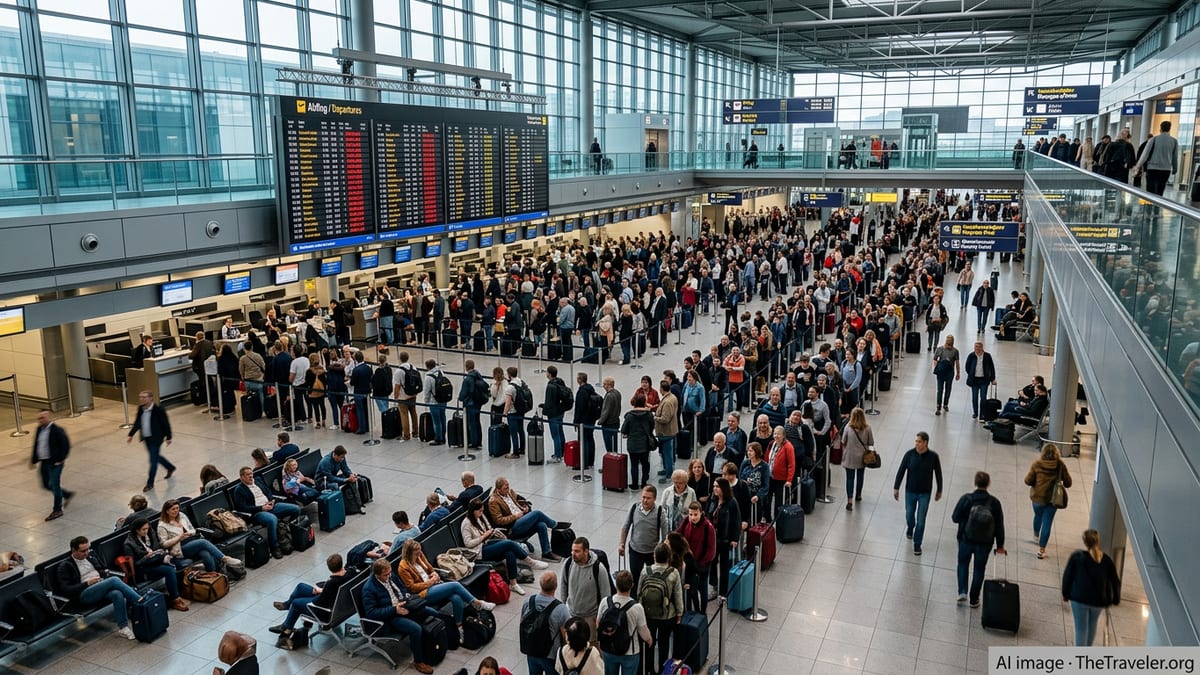
Wave of Disruption Hits European and Global Hubs
Officials and airport operators across the United Kingdom, Germany, the Netherlands, France, Spain and Italy reported a sharp spike in operational disruption, with 1,228 flights delayed and 182 cancelled over a compressed period, throwing airline timetables into disarray. The knock-on effects quickly spread beyond Europe, snarling traffic on key long haul routes and leaving passengers facing hours of uncertainty in congested terminals.
At major hubs including London Heathrow, Frankfurt, Amsterdam Schiphol, Paris Charles de Gaulle, Madrid Barajas and Rome Fiumicino, long queues formed at check in, security and customer service desks as travelers tried to rebook flights or secure hotel vouchers. Airport information boards showed long strings of delayed services, while cancellations were concentrated on short haul European sectors that feed larger intercontinental connections.
The disruption radiated outward to international gateways such as Chicago, Bahrain, Munich, Manchester and Edinburgh, where inbound and outbound flights were either held on the ground or scrubbed from schedules. Aviation analysts said the pattern suggested a combination of air traffic control constraints, crew and aircraft positioning problems and local weather or capacity pressures coalescing into a wider operational crunch.
Carriers warned that recovery would take time as aircraft and crews were repositioned and backlogs cleared. Passengers were urged to check their flight status before heading to the airport, use airline apps where possible, and be prepared for extended waits as ground teams worked through queues.
Major Airlines Forced to Ground and Reroute
The wave of disruption forced leading global airlines to cancel or heavily delay dozens of services. British Airways cut a portion of its short haul network linking London with European capitals, a move that in turn affected connecting travelers bound for North America, the Middle East and Asia. Delta Air Lines reported delays and equipment swaps on transatlantic services linking its US hubs with London, Amsterdam and other European cities.
Gulf carriers including Qatar Airways and Emirates also faced irregular operations, particularly on flights threading through Bahrain and other Middle Eastern waypoints that connect Europe with Asia and Africa. Aircraft arriving late from European cities triggered further schedule slippage on onward legs, magnifying the disruption for travelers on multi segment itineraries.
In the Netherlands, KLM struggled with a combination of congested ground handling operations and inbound aircraft arriving outside of scheduled slots. That forced the airline to consolidate some frequencies and rebook passengers onto later departures, especially on routes to the United Kingdom and Germany where multiple daily services normally offer flexibility.
While the bulk of cancellations were concentrated in Europe, the global nature of airline networks meant that airports as far away as Chicago reported banks of delayed inbound flights from London and continental hubs. This in turn affected domestic connections, with some US travelers experiencing missed onward links to secondary cities.
Passengers Face Long Queues, Missed Connections and Unclear Timelines
For passengers, the greatest frustration came from the combination of long queues and shifting information. Travelers at Manchester, Edinburgh and Munich reported waiting for hours in line to speak with airline staff as automated rebooking systems struggled to keep up with the volume of changes. Many customers turned to social media to seek updates, share experiences and ask for guidance on their rights to compensation or refunds.
Families on holiday routes to Spain and Italy were particularly hard hit, with some reporting overnight stays on airport floors or hastily arranged budget hotels far from terminals. Business travelers connecting through European hubs to long haul destinations described racing between gates only to find new delays posted or last minute gate changes announced over crowded public address systems.
At Chicago and Bahrain, where transatlantic and intercontinental flights from Europe were arriving late or out of sequence, airport staff attempted to triage passengers with tight onward connections. However, complex security and immigration procedures limited the ability to fast track many travelers, leading to missed flights and rebookings stretching into the following day.
Despite visible efforts by airline staff to manage the situation, many passengers complained of limited proactive communication about expected delay durations, availability of meal vouchers or accommodation options. Consumer advocates said the incident would likely renew calls for clearer, harmonized rules on passenger rights in the event of mass disruption across borders.
Operational Strain Exposes Fragility of Airline Networks
Aviation experts said the latest bout of disruption underlined how tightly wound modern airline networks have become, with even moderate shocks quickly cascading across regions. Carriers often operate aircraft and crew on complex rotations that span several countries in a single day, leaving little margin for error when air traffic control restrictions, localized storms or staffing gaps occur.
In Europe, a patchwork of national air traffic control providers and varying airport capacity limits can make it difficult to absorb peaks in demand or weather related reroutings. Once delays begin to accumulate early in the day, subsequent departures are pushed back as aircraft and flight crews struggle to return to planned positions. If departure slots are then missed, airlines can be forced to cancel services outright to avoid further knock on effects.
Industry bodies have repeatedly warned that without investment in modernized air traffic management, improved staffing resilience at airports and better coordination between national authorities, passengers will continue to face episodic disruptions of this kind. Environmental constraints and noise curfews at some major hubs also limit the ability to add late night recovery flights when schedules unravel.
Some airlines have responded by building more buffer time into their schedules or slightly reducing daily frequencies on certain routes, trading scheduling density for robustness. However, such measures can reduce choice for travelers and raise fares, especially on routes with limited competition, creating a delicate balance between reliability and affordability.
What Travelers Can Do When Disruption Strikes
Travel experts say that while passengers cannot prevent large scale operational disruptions, they can take steps to improve their chances of a smoother recovery. Booking the first flight of the day on a given route, favoring direct services over tight connections, and allowing generous layover times when connecting between different airlines or alliances can all reduce risk.
When problems emerge, using airline mobile apps and websites to rebook can be quicker than waiting in physical queues, especially for travelers comfortable with digital tools. Those who booked through travel agents or corporate travel departments may also be able to tap dedicated support lines that can access inventory across multiple carriers.
Passengers are advised to keep all receipts for meals, transport and accommodation incurred during lengthy delays, as these may be needed to support later claims for reimbursement. Understanding the specific compensation rules that apply in the country of departure and for the airline operating the flight is also essential, as protections vary considerably between jurisdictions.
With European hubs still clearing the backlog of delayed aircraft and repositioning crews after the latest disruption, airlines have warned that schedules may remain fragile for several days. Travelers with upcoming itineraries through the affected airports are being urged to monitor their flight status closely, consider travel insurance that covers delays and cancellations, and build additional flexibility into their plans.