

More news on this day
Thousands of travelers across Europe faced severe disruption today as 333 flights were canceled and a further 2,396 delayed, with major hubs in Denmark, the United Kingdom, France, Germany and Spain reporting long queues, missed connections and overnight strandings affecting carriers including Ryanair, KLM, British Airways, Qatar Airways and El Al.
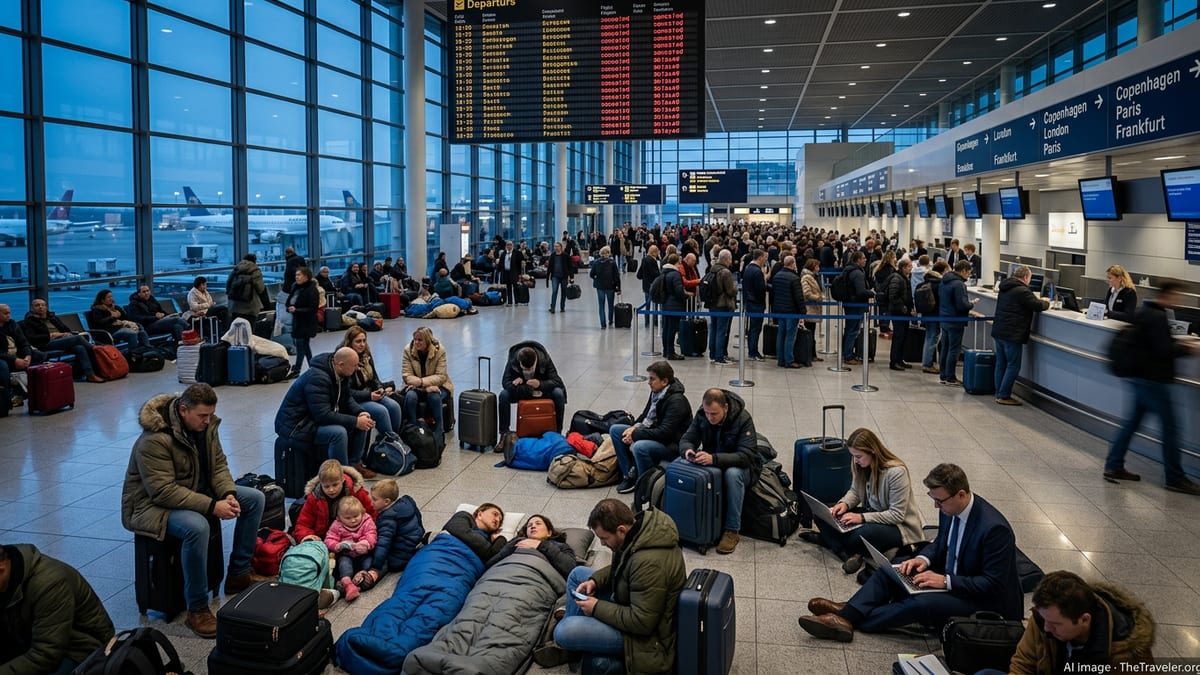
Major Hubs From Copenhagen to Barcelona Buckle Under Strain
Airports in Copenhagen, London, Paris, Frankfurt and Barcelona reported some of the heaviest disruption, with departure boards dominated by red cancellation and delay notices. Early-morning bottlenecks quickly cascaded into afternoon and evening gridlock as ground operations, air traffic control and airline crews struggled to reset schedules.
In Denmark, Copenhagen Airport reported waves of delayed departures on short-haul routes to other Nordic countries and central Europe, as well as knock-on disruption to long-haul services connecting via key hubs. In Spain, Barcelona–El Prat saw growing queues at security and customer service desks as delayed inbound aircraft and crew rotation issues pushed back departure times well beyond scheduled slots.
London’s main airports were hit by a combination of weather-related constraints and saturated air traffic corridors over the UK, forcing airlines to trim frequencies and hold aircraft on the ground. At Paris Charles de Gaulle and Frankfurt, already-busy morning banks of transatlantic and Middle East connections were thinned out, leaving many travelers stuck with limited same-day alternatives.
Airport operators have urged passengers to arrive early, build in extra time for connections and check flight status repeatedly, noting that schedules remain fluid and subject to rapid changes as airlines attempt to recover operations.
Airlines From Ryanair to Qatar Airways Forced Into Rapid Schedule Cuts
Low-cost and full-service carriers alike were forced to slash or delay services, with Ryanair, KLM, British Airways, Qatar Airways, El Al and other European and Gulf airlines among those most exposed to the disruption. Heavily trafficked intra-European routes bore the brunt, but long-haul services to North America, the Middle East and Asia were also affected as aircraft and crews ended up out of position.
Budget operators such as Ryanair, which rely on tight aircraft turnarounds and dense daily rotations, saw individual delays ripple through their networks, creating multi-hour hold-ups even on routes that were not directly hit by the initial operational issues. Passengers on short city-break itineraries in particular found themselves losing precious time at their destination or, in some cases, having entire weekends wiped out by cancellations.
Network carriers including KLM, British Airways and their alliance partners reported heavier-than-normal rebooking loads on remaining services. With many flights departing close to capacity at this time of year, airlines struggled to accommodate all disrupted travelers on the same day, especially on routes linking Europe with the Middle East, where ongoing airspace constraints have already tightened capacity.
Gulf and Middle Eastern airlines such as Qatar Airways, along with Israel’s El Al, faced a double challenge: congestion at European gateways and the continuing rerouting of some services around high-risk airspace. This combination further reduced schedule flexibility, limiting the number of additional seats available to stranded passengers seeking alternative routings.
Knock-On Effects for Global Connections and Holiday Travel
The wave of cancellations and delays quickly spilled beyond Europe, disrupting global connections for travelers heading to and from North America, Africa, Asia and the Middle East. Missed onward flights at hubs like London, Paris and Frankfurt left passengers scrambling to find new itineraries as remaining seats on later departures sold out.
Families returning from school holidays and city breaks reported being told they would need to wait until later in the week for confirmed seats, particularly on popular sun routes and long-haul services. Some travelers were offered circuitous routings via secondary hubs in order to reach their destinations within a reasonable timeframe.
Tour operators and cruise lines with guests transiting through European gateways also faced complications. Late arrivals meant missed embarkations and tour departures, and some operators were forced to arrange last-minute hotel stays or road transfers to help customers catch up with their itineraries further along the route.
Industry analysts noted that while the raw number of canceled flights was a small fraction of Europe’s daily schedule, the concentration of disruption at major hubs and at peak connection times amplified the effect, leaving a disproportionate number of passengers stranded or significantly delayed.
Passengers Face Crowded Terminals, Limited Support Options
Across affected airports, passengers reported long lines at airline service desks, cramped gate areas and difficulty accessing timely information about revised departure times. As delays mounted, many travelers resorted to sleeping on terminal floors or in chairs while waiting for new flights or hotel vouchers.
Airlines deployed additional staff and encouraged customers to use mobile apps and digital tools for rebooking, but call centers and online channels were quickly overwhelmed by the volume of inquiries. In some hubs, airport volunteers and ground staff distributed water and basic refreshments to affected passengers as queues lengthened into the evening.
Hotels near major airports in cities such as London, Paris and Frankfurt filled rapidly as airlines sought rooms for travelers stranded overnight. Those without confirmed accommodation reported paying peak rates for last-minute availability or commuting into city centers in search of more affordable options.
Travelers with tight personal or professional commitments, including business meetings, medical appointments and weddings, were among the hardest hit. Many shared stories of scrambling to rearrange plans at short notice, with some opting to abandon trips entirely when alternative flights were not available within a workable timeframe.
What Stranded Travelers Can Do Right Now
Passenger-rights organizations and consumer advocates urged affected travelers to document their disruption carefully, retain boarding passes and booking confirmations, and request written explanations from airlines where possible. Under European passenger protection rules, travelers on eligible flights may be entitled to assistance, re-routing, refunds and, in some cases, financial compensation depending on the cause and length of the delay or cancellation.
Experts recommend that stranded passengers first check their airline’s app or website for self-service rebooking options before joining airport queues, as digital tools are often updated more quickly than physical departure boards. Those with flexible schedules may have better luck securing seats on indirect routes or flights to nearby alternative airports, then completing the final leg by rail or road.
Travelers are being advised to keep receipts for meals, ground transport and accommodation purchased during the disruption, as these costs may be reimbursable under airline policies or travel insurance. Policyholders should also review coverage limits and notification requirements, since insurers often require prompt contact once a trip disruption occurs.
With schedules across Europe still unstable, airlines and airports continue to warn that further delays and rolling cancellations are possible throughout the day. Passengers yet to depart are urged to monitor their flight status closely and consider adjusting their plans where feasible, as carriers work to gradually restore normal operations across the continent.