

More news on this day
Thousands of airline passengers across Europe are facing extensive disruption as more than 65 flights are canceled and around 1,200 delayed, snarling operations for British Airways, Lufthansa, SAS, Swiss and other carriers at major hubs including London, Paris, Frankfurt and Amsterdam.
Get the latest news straight to your inbox!
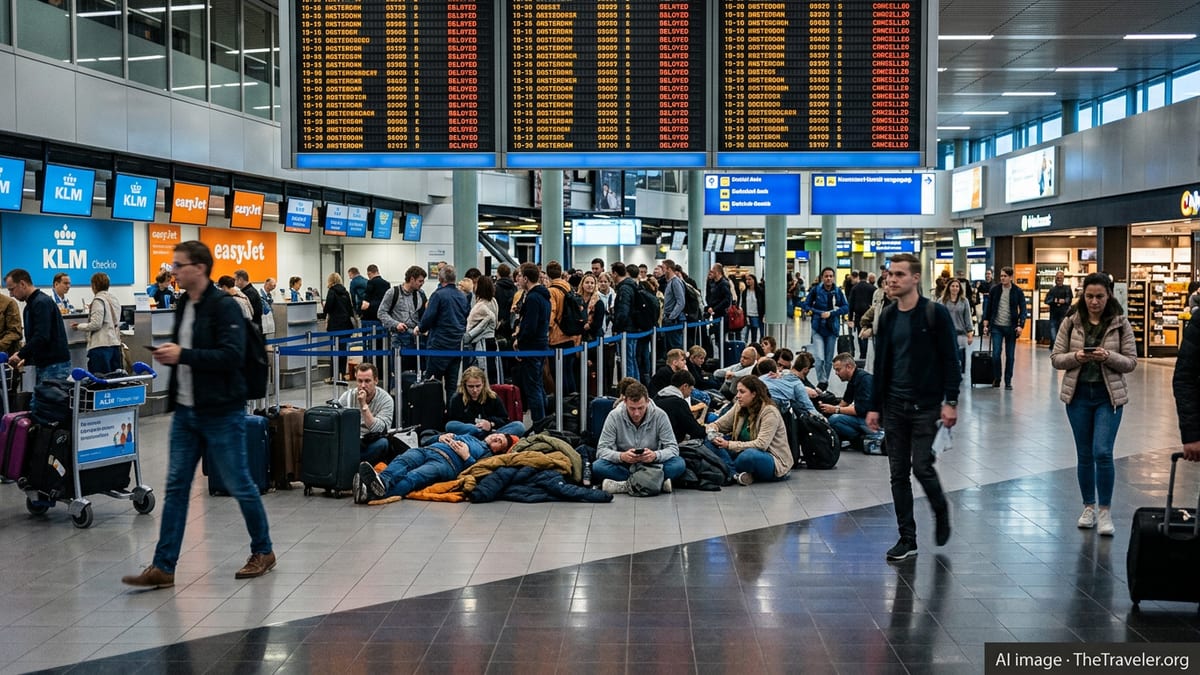
Airports Across Europe Struggle With Fresh Disruptions
Publicly available flight-tracking data for early April shows a new wave of operational disruption across European airspace, with concentrated problems in the United Kingdom, Denmark, France, Germany and neighboring states. Major gateways such as London Heathrow, Paris Charles de Gaulle, Frankfurt and Amsterdam Schiphol are reporting clusters of cancellations and triple-digit delays, leaving terminals crowded and forcing passengers into long rebooking queues.
Recent network overviews from European aviation authorities point to a combination of weather, congestion and capacity constraints, including air traffic flow management restrictions and knock-on effects from earlier storms. February network statistics already highlighted elevated arrival delays driven by snow, fog and convective weather, with some days recording dozens of cancellations across large airline groups. That fragile system resilience is now being tested again as spring travel demand rises.
In several countries, smaller regional and secondary airports are also feeling the impact as delays ripple outward from the biggest hubs. When large hubs such as Frankfurt or Heathrow experience bottlenecks, regional spokes often see late arrivals that then cascade into missed connections, additional delays and last-minute aircraft and crew changes.
The latest figures mirror a pattern seen repeatedly over recent months, where a relatively modest number of outright cancellations is accompanied by a far larger volume of delayed operations, creating widespread disruption even when most flights eventually depart.
Flag Carriers Hit: British Airways, Lufthansa, SAS and Swiss
Flight-status data indicates that some of Europe’s best-known full-service carriers are again at the center of the disruption. British Airways services from London, Lufthansa and Swiss departures from Frankfurt and Zurich, and SAS flights across Scandinavian routes are among those affected, alongside operations by other network and low cost airlines.
Recent published tallies for similar disruption days in March and earlier in 2026 showed Lufthansa facing several dozen cancellations and hundreds of delays in a single day, while British Airways and SAS recorded smaller but still significant percentages of their schedules running late. Those patterns align with the emerging picture on the current day, with relatively low cancellation rates but a high share of flights operating behind schedule.
These airlines are particularly exposed because of their reliance on congested hub airports and complex connecting networks. A single weather-related ground stoppage, runway inspection or air traffic control regulation period can quickly create a backlog that filters through waves of departures. Once aircraft and crews slip out of position, it can take many hours to restore normal operations, especially during busy morning and evening banks.
For hub-and-spoke carriers, protecting long haul departures and key connecting banks often means smaller regional flights are delayed or consolidated to free aircraft and slots, which can leave passengers on short-haul routes facing longer waits and tighter options for rebooking.
London, Paris, Frankfurt and Amsterdam Feel the Strain
Europe’s main aviation gateways are once again bearing the brunt of disruption, with London, Paris, Frankfurt and Amsterdam all reporting heightened levels of delays. Earlier reports on similar disruption days in March highlighted more than 150 cancellations and over 3,000 delays across a mix of hubs including London, Frankfurt, Paris, Istanbul and Zurich, and the current situation appears to fit the same pattern at a slightly lower but still significant scale.
Amsterdam Schiphol has repeatedly reported some of the continent’s highest delay counts on busy days, reflecting both its role as a major transfer hub and the tight capacity environment in Dutch airspace. London Heathrow and Paris Charles de Gaulle, meanwhile, tend to experience pressure during peak departure waves as ground operations, security and runway capacity face heavy loads from large aircraft and dense banks of connections.
Frankfurt, one of Lufthansa Group’s core hubs, regularly features in Europe-wide disruption snapshots due to its central location and high traffic volumes. When Frankfurt slows, the effect is quickly visible across Germany and neighboring countries, and can spill over into schedules at Nordic hubs served by SAS and at Swiss’s Zurich base.
While the total number of cancellations registered in the latest figures is measured in dozens, the volume of delayed flights above 1,200 reflects widespread schedule distortion. For passengers, that often translates into missed connections, extended time on board awaiting departure slots, and last-minute gate or aircraft changes.
Passenger Impact and Rights Under European Rules
The disruption is leaving passengers scattered in departure halls, transit hotels and baggage reclaim areas as they attempt to rebook or reroute. Families returning from holidays, business travelers on tight timetables and transfer passengers connecting between long haul and intra-European services are all among those affected.
Under European Union and aligned regulations such as Regulation (EC) No 261/2004, travelers departing from EU, EEA, Swiss or United Kingdom airports, or flying into the region on qualifying carriers, may be entitled to care, rerouting and in some cases financial compensation when flights are significantly delayed or canceled. The specific entitlements depend on factors including the length of delay at arrival, the distance of the journey, and whether the disruption is linked to extraordinary circumstances such as severe weather.
Consumer advocacy resources highlight that, regardless of compensation eligibility, airlines are generally expected to provide basic assistance during long delays, such as meals, refreshments and, when necessary, hotel accommodation and ground transport between the airport and lodging. Passengers are usually advised to keep receipts for any essential purchases made during the disruption in case reimbursement is available later.
Legal frameworks differ slightly between the European Union and the post-Brexit United Kingdom regime, but the overarching principle across these jurisdictions is that travelers have defined rights when flights are badly disrupted, including the right to choose between a refund and rerouting when cancellations occur.
What Travelers Can Do as Disruption Continues
With delays and cancellations likely to continue until backlogs clear, traveler-focused guidance from recent disruption events offers some practical steps. Publicly available advice commonly stresses the importance of monitoring airline apps and airport departure boards for near real time updates, rather than relying solely on booking confirmations issued earlier in the day.
Air passengers are often encouraged to check in online as early as possible, register for flight-status alerts, and ensure contact details are up to date in airline profiles. When cancellations are announced, rebooking directly through mobile apps or websites can sometimes be faster than joining long queues at airport service desks.
For those already stranded, travel experts typically recommend documenting the disruption, including screenshots of flight status changes and any communication from airlines, as well as keeping records of additional expenses such as meals or overnight stays. This documentation can be useful when submitting claims under European passenger rights rules or airline-specific customer service policies.
With Easter and early summer travel periods approaching, the latest round of disruption underscores the continued fragility of Europe’s air travel system. Even a relatively limited set of cancellations, when combined with more than a thousand delayed departures, can leave thousands of passengers stuck across multiple countries from London and Paris to Frankfurt, Amsterdam and beyond.