

More news on this day
Thousands of airline passengers across the United States are facing cascading disruptions after at least 187 flights were canceled and 2,747 delayed, stranding travelers at major hubs from New York and Chicago to Los Angeles, Orlando, Fort Lauderdale and Washington D.C., and rippling across the wider network.
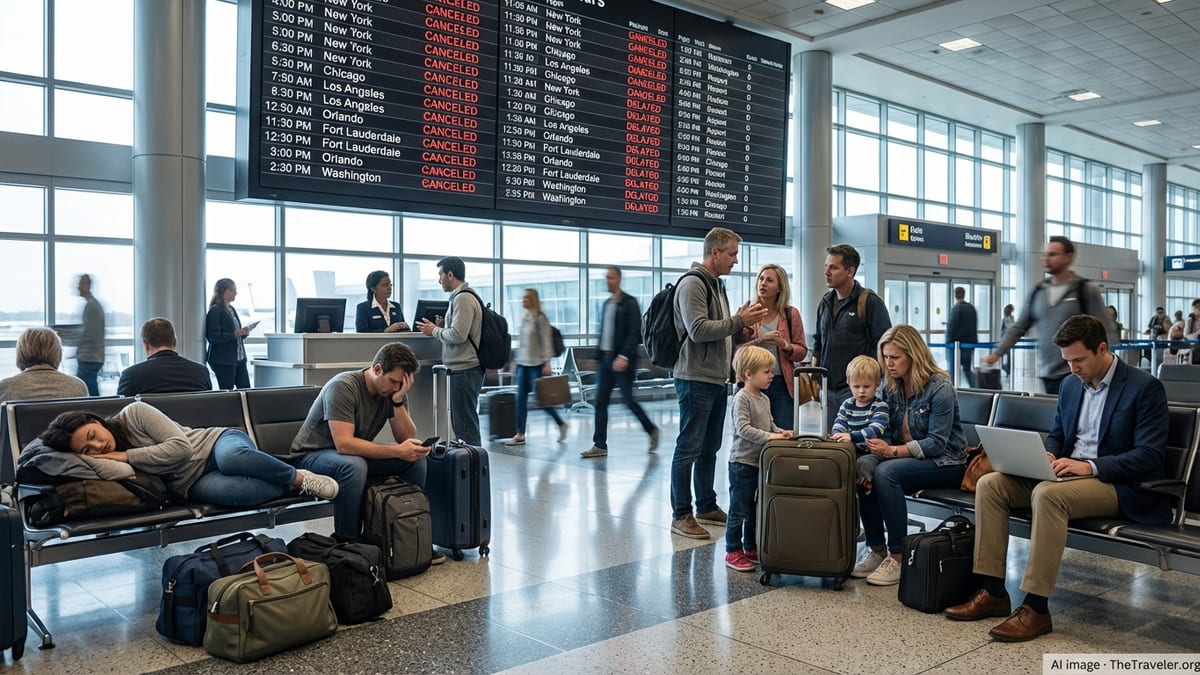
Major Carriers Hit as Disruptions Spread Nationwide
Data from flight-tracking services on Saturday showed the brunt of the disruption falling on some of the country’s largest carriers, including Spirit, United, Delta and American Airlines, alongside other domestic and regional operators. The combination of residual winter weather, high winds and operational bottlenecks led to a wave of same-day schedule changes that left terminals crowded and gate areas overflowing.
Airlines reported a mix of cancellations and rolling delays concentrated at coastal and Midwest hubs, where aircraft and crew rotations are most vulnerable to weather-related slowdowns. While the number of outright cancellations remained below levels seen during the peak of recent winter storms, the volume of delays stretched into the thousands, creating long queues at customer-service desks and extensive rebooking backlogs.
Carriers said they were working to proactively consolidate lightly booked flights, reposition aircraft and reroute crews to stabilize schedules. For many passengers, however, that meant last-minute itinerary changes, missed connections and unexpected overnight stays as seats on alternative departures quickly filled.
New York, Chicago and Los Angeles Bear the Brunt
New York–area airports once again emerged as some of the hardest hit, with LaGuardia, John F. Kennedy and Newark collectively logging hundreds of delayed departures and arrivals. Gusty winds and lingering operational constraints following recent nor’easter conditions forced air-traffic managers to slow arrival rates, reducing the number of planes that could safely land and take off each hour.
In Chicago, O’Hare International and Midway saw mounting delays ripple through already-busy Saturday schedules. O’Hare, a critical hub for both United and American, experienced knock-on effects throughout the day as incoming aircraft arrived late, triggering a domino effect on subsequent flights around the country. Passengers reported crowded concourses, limited seating and long waits for updated departure times.
On the West Coast, Los Angeles International Airport faced its own share of disruption as delayed inbound flights from the Midwest and East Coast threw off afternoon and evening departure banks. Even when local weather remained manageable, the interconnected nature of airline networks meant that a late aircraft arriving from New York or Chicago could quickly push back multiple onward flights, undermining on-time performance at LAX.
Florida and Washington Hubs See Severe Knock-On Delays
In Florida, Orlando International and Fort Lauderdale-Hollywood International became focal points for frustrated leisure travelers and families heading to and from theme parks and cruise ports. Carriers with large point-to-point operations in the state, including Spirit and other low-cost airlines, struggled to absorb the sudden schedule changes, particularly on popular weekend routes.
Passengers described long security lines feeding into already busy gate areas, with many flights posting successive short delays before ultimately departing hours behind schedule. For travelers connecting through Florida to Caribbean and Latin American destinations, missed onward flights added another layer of complexity, often requiring overnight hotel stays or multi-stop reroutes.
In the Washington D.C. region, Ronald Reagan Washington National and Washington Dulles International also experienced elevated delay levels, partly tied to weather limitations and partly to congestion in the Northeast corridor. Federal workers, business travelers and tourists alike faced extended waits on tarmacs and in terminal lounges as departure times were pushed back and aircraft were held in ground-delay programs along the East Coast.
Passengers Face Long Lines, Limited Options and Confusing Rules
For many stranded travelers, the most immediate challenge was navigating the practicalities of disrupted plans. Lines at ticket counters and customer-service desks stretched across concourses at several hubs as passengers sought rebookings, hotel vouchers and meal assistance. Airline apps and websites, increasingly the first point of contact in irregular operations, were intermittently overwhelmed by high traffic as thousands attempted to change flights simultaneously.
Travel experts noted that options quickly narrowed as the day progressed. With weekend flights already heavily booked, finding same-day alternatives on the same carrier often proved difficult, especially for larger families or groups needing seats together. Some passengers resorted to booking one-way tickets on competing airlines at the last minute or pivoting to trains and rental cars on busy intercity corridors such as the Northeast and Midwest.
Confusion also persisted around compensation and passenger rights. While U.S. regulations require refunds when a flight is canceled and a traveler chooses not to fly, coverage for hotels, meals and incidentals depends heavily on whether the disruption is deemed within an airline’s control. Weather-related problems typically fall outside those obligations, leaving many travelers reliant on travel insurance policies or credit card protections to recoup unexpected expenses.
Airlines Work to Recover as More Disruptions Possible
Airline operations teams spent the day working to untangle snarled schedules, aiming to restore normal service ahead of the busy early-week business travel period. Recovery will depend on stabilizing weather patterns and successfully moving aircraft and crews back into position at key hubs overnight, a process that can take multiple days when networks are heavily disrupted.
Industry analysts warned that even as the immediate wave of cancellations and delays subsides, residual effects are likely to persist into the next travel day, with early-morning departures especially vulnerable if aircraft and crews do not end up where they are scheduled. Travelers with flexible plans were advised to consider moving flights away from peak hours and to build in additional connection time where possible.
As winter weather continues to affect large swaths of the country, airlines are expected to keep issuing travel waivers on selected routes, allowing customers to change itineraries without standard fees or fare differences on specific dates. For now, tens of thousands of passengers remain focused on a more immediate goal: simply getting a confirmed seat and a realistic departure time out of crowded terminals from New York and Chicago to Los Angeles, Orlando, Fort Lauderdale and Washington D.C.