

More news on this day
Thousands of passengers across Western Europe are facing severe disruption as airports in the Netherlands, France, Belgium and Spain report at least 85 cancellations and 1,933 delayed flights, tangling the schedules of carriers including Pegasus Airlines, SAS, Air France, Icelandair and a range of European and transatlantic operators.
Get the latest news straight to your inbox!
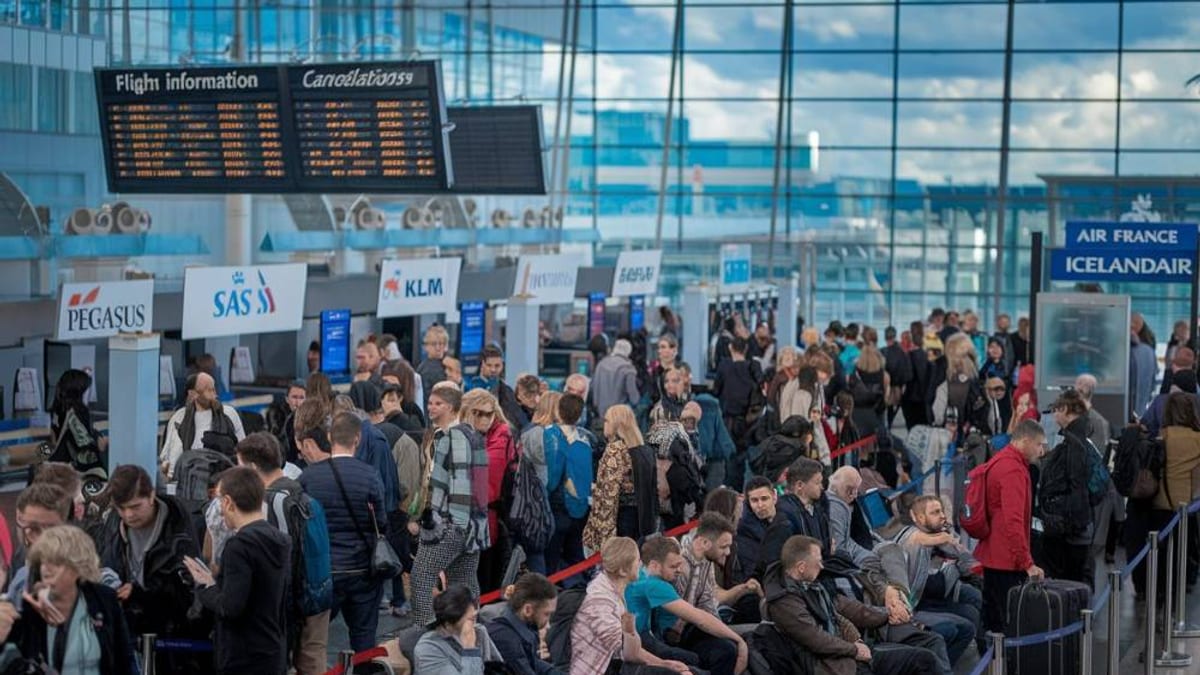
Image by Travel And Tour World
Amsterdam and Brussels Bear the Brunt of Widespread Disruption
Amsterdam Airport Schiphol and Brussels Airport appear to be among the hardest hit in the latest wave of flight disruption, with publicly available tracking data showing a dense cluster of delayed and cancelled departures and arrivals. The numbers indicate that short haul European sectors and key long haul connections are both affected, leaving transfer passengers particularly exposed to missed connections and overnight layovers.
In Amsterdam, reports indicate that a combination of capacity constraints and knock on effects from earlier weather related disruption have pushed delay levels sharply higher. Aircraft and crew arriving late from other European airports have created a cascading effect through the day, with turnaround times stretched and departure boards dominated by rolling delay estimates.
Brussels has also seen substantial disruption, with local media and flight monitoring tools pointing to a mixture of air traffic management constraints and schedule congestion. Passengers on regional routes to other Benelux cities and major hubs such as London, Paris and Frankfurt are experiencing extended waits, while evening bank departures are especially vulnerable as airlines run out of operational slack.
Although low cost carriers account for a significant portion of movements at both airports, the latest figures show that network airlines and regional operators are similarly affected, increasing the likelihood of missed onward flights and complex rebooking challenges for stranded travelers.
Lyon and Barcelona Highlight Strains in the French and Spanish Networks
Lyon Saint Exupéry and Barcelona El Prat are also reporting high levels of disruption, underscoring persistent strains in the French and Spanish air travel networks. Previous punctuality analyses for these airports have already flagged vulnerability to air traffic control restrictions, weather systems and industrial action, and the current spike in delays appears to follow a similar pattern of compounding operational pressures.
In Lyon, a key regional hub for domestic French services and a growing base for low cost and leisure carriers, publicly available punctuality data has in recent months shown a relatively high share of delayed flights compared with some other European airports. The latest figures, with scores of services running behind schedule, reinforce that pattern and point to limited spare capacity during peak periods.
Barcelona, one of Europe’s busiest Mediterranean gateways, has likewise been prone to heavy disruption when thunderstorms, congestion or flow restrictions align. Current reports of prolonged delays on both intra European routes and popular holiday links suggest that aircraft rotations are again running tight, with reactionary delays spreading across multiple airlines as the day progresses.
For travelers, the impact is tangible: longer queues at check in and security, crowding at departure gates and rebooking desks, and greater uncertainty for those relying on tight connections to reach islands, secondary cities or long haul destinations beyond Europe.
European and Nordic Carriers Among Airlines Affected
Among the airlines showing significant schedule disruption are Turkish low cost carrier Pegasus Airlines, Scandinavian operator SAS, French flag carrier Air France and Iceland based Icelandair. Tracking platforms and operational summaries indicate that these carriers are contending with a mix of primary delays, such as weather and airspace restrictions, and secondary knock on delays that stem from earlier disruptions in the network.
Pegasus, which relies heavily on high aircraft utilization across dense intra European and Mediterranean routes, is particularly exposed when a single delay ripples through multiple rotations. When Amsterdam, Brussels or other Western European airports experience congestion or slot restrictions, outbound services can easily run late, affecting subsequent legs across the day.
SAS and Icelandair, both of which operate hub and spoke style networks that funnel passengers through Nordic gateways, face their own challenges when Western European feeder flights run late. Missed connections can force rebookings via alternative routings or overnight stops, and some passengers may find themselves rerouted through secondary hubs to reach North America or Northern Europe.
Air France, with a substantial share of its traffic touching French regional airports such as Lyon as well as its main Paris hubs, is also vulnerable when regional delays stack up. Public information on passenger rights under European regulations emphasizes that long delays and cancellations can trigger obligations around rebooking and, in some circumstances, compensation, which can increase pressure on customer service channels during major disruption events.
Knock On Effects Across the Continent
While the most visible problems are currently concentrated at Amsterdam, Brussels, Lyon and Barcelona, the disruption is radiating across a much wider European network. Aircraft that start the day delayed in one region can arrive late into secondary airports in Germany, the UK, Scandinavia or Central Europe, turning what began as a localized operational crunch into a continent wide challenge.
Air traffic management constraints, including flow controls in crowded airspace sectors, can exacerbate these knock on effects. When controllers slow the rate at which flights can enter or cross certain regions, airlines may be required to hold aircraft on the ground or reroute via longer paths, both of which consume fuel, crew hours and schedule flexibility.
In some cases, airlines have opted to preemptively cancel flights when it becomes clear that downstream delays would make operations impractical. The running total of at least 85 cancellations reflects that strategy, in which carriers prioritize core routes and higher demand services while trimming thinner frequencies.
The result for travelers is a patchwork of options: some passengers can be moved to slightly later departures on the same day, while others are offered next day flights, alternative routings through different hubs, or refunds if they choose not to travel under the revised conditions.
What Travelers Can Expect in the Coming Days
Published coverage and recent operational data suggest that the immediate disruption may ease gradually as airlines work through backlogs and reposition aircraft and crews. However, experience from previous episodes of large scale European disruption shows that residual delays can linger for several days, especially if further weather or airspace constraints arise.
Passengers booked on near term flights to or from Amsterdam, Brussels, Lyon, Barcelona and other busy Western European hubs are being advised by airlines and airports, through public channels, to check their flight status frequently and to allow extra time at the airport. Same day rebooking capacity may be limited on popular routes, particularly at the end of busy travel periods or ahead of major holidays.
Travelers connecting between different airlines on separate tickets are especially vulnerable, as they may not benefit from automatic protection or through rebooking arrangements. Public guidance from consumer organizations consistently highlights the importance of understanding ticket conditions and the scope of European passenger rights rules when planning itineraries that rely on tight connections.
For now, Europe’s air travel system remains under notable strain, with thousands of passengers adjusting plans, rerouting via alternative hubs or delaying trips altogether as airlines and airports work to bring schedules back under control.