

More news on this day
Thousands of air passengers across Europe are facing severe disruption as widespread cancellations and delays ripple through major hubs in France, Denmark, Iceland, England, Germany and the Netherlands, with at least 133 flights cancelled and more than 1,100 delayed on Friday, impacting services operated by Lufthansa, KLM, SAS, British Airways, Air France and other carriers.
Get the latest news straight to your inbox!
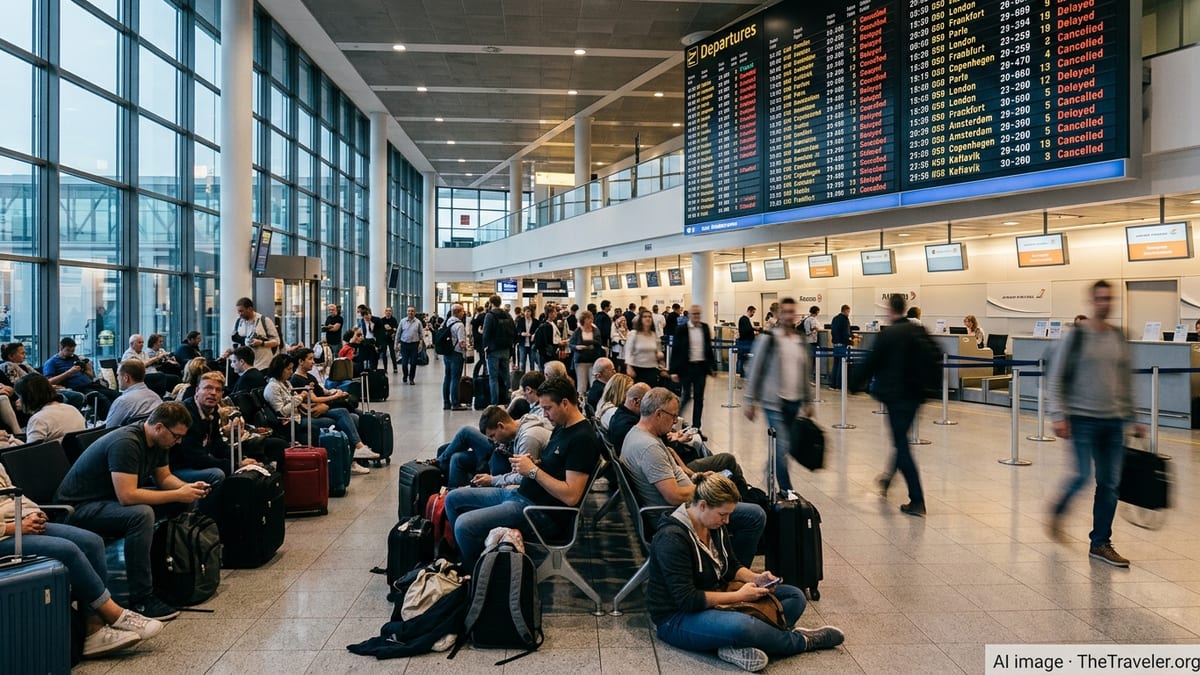
Major Hubs From Paris To Keflavík Buckle Under Strain
Publicly available flight-tracking data and airport status boards on Friday indicate a sharp spike in disruption at some of Europe’s busiest airports, including Paris Charles de Gaulle, London Heathrow and Gatwick, Amsterdam Schiphol, Frankfurt, Copenhagen and Keflavík in Iceland. The latest tallies show more than 133 cancellations and around 1,133 delays across these and other regional airports, leaving departure halls crowded with stranded travelers and overnight queues at service desks.
In Paris, information published by the main French hubs shows a wave of short-haul and intra-European services scrubbed or heavily delayed, particularly on routes shared by Air France and its SkyTeam partners. Frankfurt and Munich, key bases for Lufthansa and important transit points for passengers connecting between Europe, North America, the Middle East and Asia, are reporting clusters of cancellations and rolling delays that extend into the evening schedule.
Amsterdam Schiphol and London’s main airports have also emerged as chokepoints. Data from flight-status aggregators point to a high proportion of delayed departures and arrivals at these gateways, affecting KLM and British Airways along with a mix of European low-cost and long-haul carriers. Keflavík, a crucial transatlantic bridge for passengers traveling via Iceland, is reporting reduced operations and extended ground times as aircraft and crews fall out of sequence.
Lufthansa, KLM, SAS, British Airways And Air France Hit Hard
The disruption has heavily affected Europe’s largest network carriers, which depend on dense hub-and-spoke operations to move passengers through cities such as Frankfurt, Amsterdam, Copenhagen, London and Paris. Schedules published on airline and airport platforms show Lufthansa cancelling and consolidating a portion of its regional and feeder services, with passengers in Germany facing missed connections and unexpected overnight stays.
KLM’s operations in the Netherlands are under similar pressure, with Schiphol departure boards indicating a mix of outright cancellations and long delays on routes around the North Sea region and into Scandinavia. Scandinavian carrier SAS, which relies on coordinated schedules through Copenhagen and other Nordic hubs, is reporting irregular operations that have left travelers in Denmark and connecting passengers from elsewhere in Europe searching for alternative routings.
British Airways and Air France, two of the region’s most prominent flag carriers, are managing disrupted schedules at London and Paris, according to publicly available flight information. While long-haul services appear to be prioritized in many cases, numerous short-haul and European flights have been retimed, merged or cancelled, creating long lines at customer-service counters and leaving many travelers uncertain about when they will be able to depart.
Weather, Knock-On Congestion And Operational Constraints
Operational updates from airlines, airports and air-traffic authorities across Europe point to a combination of factors behind the latest wave of disruption. Adverse weather systems have swept across parts of northern and western Europe in recent days, with strong winds, heavy rain and episodes of snow forcing temporary reductions in runway capacity and stricter spacing between aircraft. These conditions, documented in regional meteorological and aviation bulletins, typically trigger delays that cascade across interconnected networks.
Once initial flights are delayed or cancelled, aircraft and crews frequently become displaced, leaving airlines with limited flexibility to recover their schedules. Industry analyses and recent case studies show that this kind of knock-on congestion can persist for several days, especially when hubs are already operating close to capacity. With major carriers such as Lufthansa, KLM, SAS, British Airways and Air France all relying on tight connection banks, a disturbance in one hub can quickly spread to others.
Staffing constraints and ongoing efforts to rebuild capacity following the pandemic-era downturn have further reduced the margin for error. Publicly available industry reports for the 2025–2026 period describe how many European airlines and ground handling providers continue to face bottlenecks in critical roles, from pilots and cabin crew to baggage handlers and security staff. When weather or airspace restrictions hit on top of these structural strains, disruption tends to be both broader and more prolonged.
Thousands Of Travelers Face Long Queues And Overnight Stays
Scenes shared via airport webcams, social platforms and local media coverage show terminal buildings filled with passengers sitting on the floor, queuing at ticket counters and attempting to rebook via mobile apps as on-site staff struggle to keep pace with demand. In Paris, London and Frankfurt, rebooking lines have reportedly stretched for hours, while some travelers in Keflavík and regional Scandinavian airports have been handed hotel and meal vouchers as they wait for new departure times.
Published accounts from recent large-scale disruptions in Europe indicate that many passengers turn to third-party booking platforms, airline call centers and social media channels when in-person assistance becomes overwhelmed. However, high call volumes and overloaded digital systems can make it difficult to obtain timely information, particularly when airlines are changing schedules in real time to work around weather windows and air-traffic flow restrictions.
Families traveling with children, elderly passengers and those on tight connection windows appear to be among the hardest hit. Travel forums and consumer-advocacy outlets covering Friday’s events describe missed cruises, disrupted business trips and interrupted long-haul journeys as passengers who expected smooth connections in Amsterdam, Frankfurt, London or Paris find themselves unexpectedly stuck overnight.
Passenger Rights And What Affected Travelers Can Do
For passengers stranded by cancellations and long delays, Europe’s air passenger rights framework remains an important reference point. Regulation (EC) No 261/2004 and related national rules set out minimum standards of care and, in some circumstances, compensation when flights are cancelled, significantly delayed or when travelers are denied boarding. The rules generally apply to flights departing from airports in the European Union, as well as flights to the EU operated by EU-based carriers, and are also extended by agreement to countries such as Iceland and Norway.
Under this framework, and according to publicly available guidance from regulators and consumer organizations, travelers are typically entitled to assistance in the form of meals, refreshments and hotel accommodation when severe disruption leaves them waiting for extended periods. Monetary compensation may also be payable on some itineraries if the disruption is not caused by extraordinary circumstances and if specific time thresholds are exceeded, based on the distance of the affected flight.
Consumer groups and travel experts advise passengers caught up in large-scale disruptions to retain all boarding passes, booking confirmations and receipts for additional expenses, as these documents can be essential when submitting claims later. Checking official airline channels and airport information screens regularly, rather than relying solely on third-party apps, is also recommended, particularly when schedules are being updated at short notice.