

More news on this day
Thousands of air travelers across Europe faced hours-long delays and sudden cancellations after more than 1,500 flights were disrupted on Tuesday, snarling operations at major hubs in the United Kingdom, Germany, France, Spain, Denmark and several neighboring countries.
Get the latest news straight to your inbox!
Wide Network Disruption Hits Key European Hubs
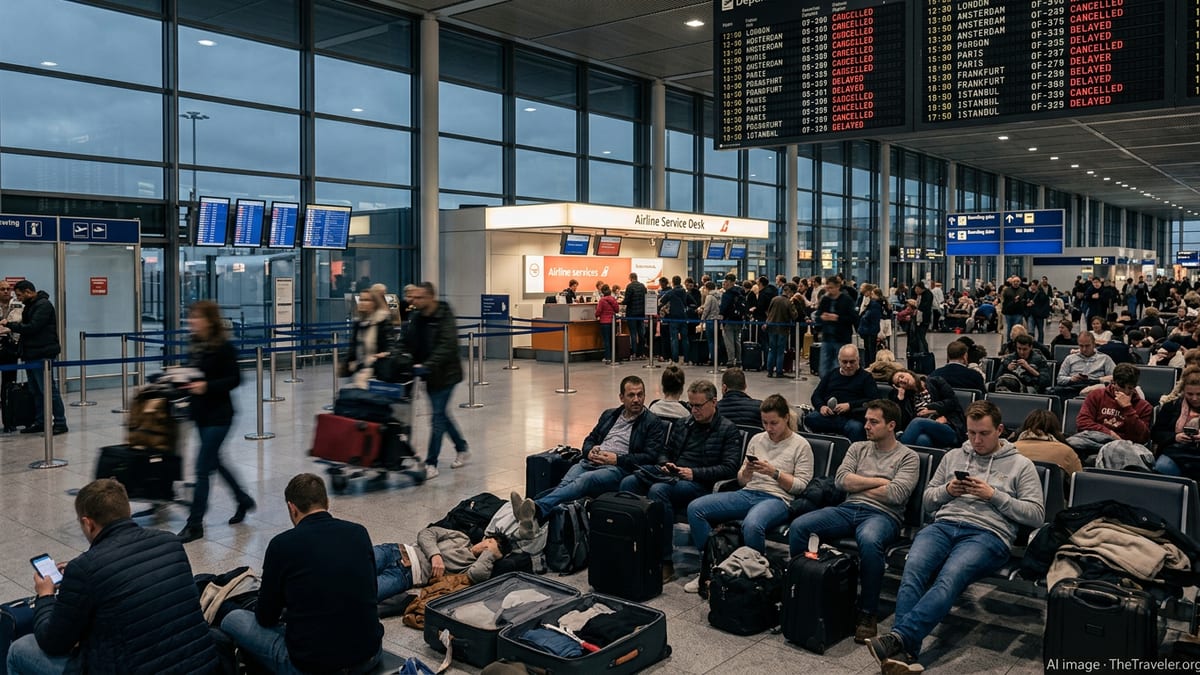
According to live airport boards and flight tracking data, at least 1,554 flights were reported delayed and a further 97 cancelled across Europe, affecting services in and out of London, Paris, Frankfurt, Amsterdam, Copenhagen, Madrid and other major cities. The disruption rippled through both short haul and long haul networks, leaving terminals crowded with stranded passengers and growing backlogs of missed connections.
Publicly available information shows that British Airways, Lufthansa, Scandinavian carrier SAS, Turkish-based Pegasus Airlines and several low cost and regional operators were among the hardest hit. While most flights eventually departed with significant delays, the volume of schedule changes created a cascading effect that extended well beyond the initial wave of affected services.
In London, operations at Heathrow and Gatwick were particularly strained, with knock-on delays impacting services linking the UK to major continental hubs such as Frankfurt, Paris Charles de Gaulle and Amsterdam Schiphol. Reports from Paris and Frankfurt indicated similar scenes, as departure boards filled with late running services and pockets of outright cancellations.
The impact was not limited to the largest gateways. Regional airports in Germany, France, Spain and Scandinavia also reported delayed departures and arrivals as aircraft and crews were left out of position, further complicating recovery efforts across airline networks.
Airlines Struggle With Weather, Congestion and Knock-on Effects
While no single cause fully explained the scale of the disruption, a combination of adverse weather, existing airspace congestion and operational knock-on effects appeared to be driving the delays. Recent storms across parts of northwestern Europe have already strained rail and road transport, and aviation has been facing constraints from high winds, low visibility and residual infrastructure challenges.
Network briefings from European aviation agencies in recent months have highlighted how relatively small schedule shocks can trigger extensive reactionary delays. When early morning flights depart late or are cancelled outright, aircraft and crew rotations are disrupted for the rest of the day, reducing schedule resilience and leaving airlines with fewer options to accommodate additional problems that emerge later.
For carriers such as British Airways and Lufthansa, which rely heavily on hub and spoke models centered on airports like London Heathrow and Frankfurt, even a modest number of cancellations can quickly translate into widespread missed connections. Passengers heading to long haul destinations via Europe’s main hubs were among those most exposed, as missed transfer windows forced involuntary overnight stays or complex rebookings.
Information visible on public flight status tools suggested that some airlines were holding departures on the ground to wait for connecting passengers from heavily delayed feeder flights, trading punctuality on individual routes for a chance to recover more itineraries across the network.
Travelers Face Long Queues, Rebookings and Limited Options
For passengers on the ground, the numbers translated into long queues at ticket counters, crowded terminal seating and growing difficulty securing alternative routes. With cancellations concentrated around key connecting flights, rebooking options quickly narrowed as remaining services filled to capacity.
Reports from major hubs indicated that same day alternatives were in particularly short supply on transatlantic and other long haul routes, with travelers being offered itineraries involving overnight connections, indirect routings through secondary European cities, or departures several days later. At busy airports in London, Paris and Frankfurt, screens showed waiting lists on multiple departures as airlines attempted to clear backlogs of disrupted customers.
In Scandinavian and northern European markets, publicly available accounts pointed to frustration among passengers booked on SAS and other regional carriers, who faced a mix of delayed departures and last minute schedule changes. Similar experiences were reported for travelers flying with Pegasus between European hubs and destinations in Turkey and beyond, where missed connections can trigger lengthy onward delays.
Travel forums and social media posts described inconsistent communication about the status of flights, with some passengers learning of cancellations only after extended gate holds. In several cases, travelers said that airline apps and airport displays did not immediately align, adding to uncertainty about whether to wait near gates or seek rebooking assistance elsewhere in the terminal.
Regulations and Passenger Rights Come Into Focus
As the day’s disruption grew, attention turned once again to Europe’s passenger rights framework. Under Regulation EC 261/2004, travelers departing from European Union and European Economic Area airports, or flying to the region on EU and EEA carriers, are entitled to specific forms of care, rerouting and in some cases financial compensation when flights are cancelled or significantly delayed.
Public guidance on the regulation explains that airlines must typically offer meals, refreshments, access to communication and hotel accommodation when delays extend beyond certain thresholds, particularly for overnight disruptions. In addition, passengers whose flights are cancelled or arrive with long delays may be eligible for compensation, depending on the length of the delay, the distance of the journey and whether the disruption is attributable to extraordinary circumstances such as severe weather or air traffic control restrictions.
Consumer advocacy organizations in Europe regularly advise passengers affected by large scale disruptions to retain boarding passes, booking confirmations and receipts for any additional expenses. In previous incidents, authorities have reminded airlines of their obligation to provide clear information on rights at check in, at gates and when flights are cancelled, although practical experiences at airports often vary.
The complexity of multi segment itineraries, involving code shares between carriers such as British Airways, Lufthansa, SAS and partner airlines, can make claims processes more confusing. Published case studies on past disruptions show that determining which airline is responsible for compensation may depend on which carrier operated the disrupted flight and where the delay originated.
What Travelers Can Do in Ongoing Disruptions
With residual delays expected to linger as airlines work to reposition aircraft and crews, travel experts generally recommend that passengers adopt a proactive approach. Monitoring official airline apps and airport departure boards, checking in online as early as possible, and signing up for flight status alerts can provide earlier notice of schedule changes.
When flights are significantly delayed or cancelled, publicly available guidance suggests that contacting airlines through multiple channels, including call centers, mobile apps and staffed airport desks, can sometimes speed up rebooking. Passengers booked on complex itineraries through congested hubs like London, Paris, Frankfurt or Amsterdam may benefit from asking about rerouting options via alternative European gateways where capacity remains available.
Travel planners also note the value of building longer connection times into itineraries during periods of heightened disruption, especially in winter and early spring when adverse weather and airspace congestion are more common. For those yet to travel, flexible tickets and travel insurance policies that explicitly cover missed connections and extended delays can offer an additional layer of protection.
For now, thousands of travelers remain scattered across terminals across Europe, waiting for new departure times and hoping that airlines can gradually unwind the network gridlock. With the tally of 1,554 delayed and 97 cancelled flights illustrating how quickly disruptions can scale, the episode underlines the continued fragility of tightly timed airline schedules across one of the world’s busiest air travel markets.