

More news on this day
Thousands of airline passengers across Europe are facing long delays, missed connections and overnight airport stays after fresh disruption hit key hubs in Italy, the United Kingdom, Spain, Denmark and Norway, with around 65 flights reportedly cancelled and more than 1,000 delayed in a single day.
Get the latest news straight to your inbox!
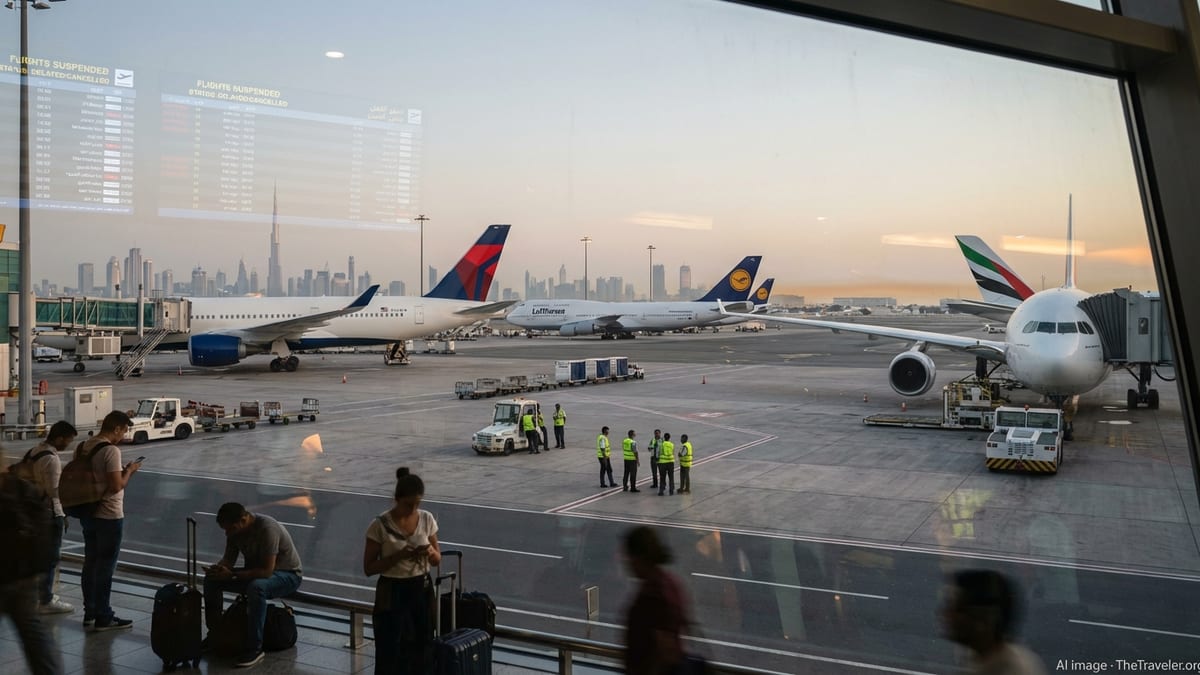
Stormy Weather and Congested Skies Trigger New Wave of Disruption
Operational data and regional reports indicate that a combination of severe late‑winter weather, airspace bottlenecks and knock‑on congestion from earlier delays has created another day of widespread disruption across European aviation. Recent tracking figures for Europe show that it has become common for dozens of flights to be cancelled and well over a thousand to be delayed on heavily impacted days, with the latest episode centered on Italy, the UK, Spain, Denmark and Norway.
Published coverage on recent storm systems over Europe highlights how strong winds, snow and heavy rain have repeatedly forced airports and airlines to trim schedules, slow ground operations and extend turnaround times. In previous events this winter, weather‑related disruptions in Italy and the Nordic region have triggered cascading delays, as aircraft and crew fall out of position and airlines struggle to reset their networks before the next operational day.
The current round of disruption follows that pattern, with roughly 65 flights cancelled outright and about 1,096 delayed across Europe, according to aggregated figures from flight‑tracking snapshots and industry reports. While those numbers are small compared with the continent’s total daily traffic, they are heavily concentrated in several key hubs, magnifying the impact for travelers who depend on onward connections.
Compared with the worst episodes of recent years, the scale of the latest disturbance is moderate but still highly disruptive at a passenger level. Industry analyses of earlier days this month and in prior seasons have documented comparable events where fewer than 100 cancellations and around 1,500 delays still left thousands of people stranded in terminals, sleeping on airport floors or scrambling for scarce hotel rooms.
Florence and Italian Airports Struggle With Weather and Capacity
In Italy, Florence’s Amerigo Vespucci Airport has again emerged as a pressure point. Publicly available information from recent storms shows that smaller, weather‑sensitive airports such as Florence and some northern Italian gateways are vulnerable when strong crosswinds, low visibility and heavy rain converge on already tight runway layouts and limited apron space.
During recent disruption episodes, Italian airports including Florence and Milan have seen clusters of cancellations and long delays as airlines have diverted flights to larger hubs, reduced frequencies and waited for weather to clear before resuming normal operations. Those actions help maintain safety but can leave passengers on regional and feeder routes with few immediate alternatives, particularly late in the operating day.
Current disruption figures suggest that a portion of the 65 cancellations and many of the 1,096 delays are tied to Italian operations, including flights operated or marketed by major European airlines such as Air France and British Airways, as well as regional and codeshare partners. When flights into and out of Florence are cut or delayed, travelers bound for long‑haul services in Paris, London, Amsterdam or other hubs may miss onward connections and find themselves rebooked onto services departing many hours later or even the following day.
Capacity constraints amplify the problem. Italian airports that cater to both business and leisure travel often run busy schedules in the morning and evening peaks, leaving limited flexibility to absorb rolling delays. Once a critical mass of services is pushed back, turnaround times lengthen, aircraft rotations slip further and crews hit duty‑time limits, creating a feedback loop that keeps disruptions going well into the night.
Manchester and Palma de Mallorca See Knock‑On Effects
In the United Kingdom, Manchester Airport continues to feature regularly in daily disruption tallies. Recent statistical breakdowns of European operations show Manchester experiencing elevated delay percentages on several occasions this year, with some days seeing around one third of flights arriving or departing behind schedule. On days like the current one, when delays across the continent exceed 1,000 flights, Manchester’s role as both an origin point and a transfer hub means even minor schedule changes elsewhere can quickly cascade into more severe local disruption.
Many of the delayed flights affecting Manchester involve services operated by British Airways and other UK‑based and European carriers feeding into larger hubs. Late‑running inbound aircraft from continental Europe can arrive outside their planned slots, forcing crews and ground handlers to compress turnaround operations or accept further pushbacks. For passengers, that translates into extended waits at departure gates, missed domestic and European connections and shorter minimum connection times on already tight itineraries.
Further south, Palma de Mallorca Airport in Spain is also cited in recent disruption coverage as experiencing recurring delays, particularly on busy travel days. As a major leisure gateway, Palma relies heavily on tightly choreographed rotations by low‑cost and charter operators. When storms or air‑traffic restrictions elsewhere in Europe slow down aircraft arrivals, the entire schedule can stack up, especially in the afternoon departure wave when aircraft are due to return holidaymakers to multiple countries.
On days with several hundred delays across Europe, Palma’s share may be relatively small, but the passenger impact is significant. Leisure travelers are often less accustomed to irregular operations, and families with children can find extended gate waits or late‑night arrivals especially stressful. For those with onward rail or ferry connections from mainland Spain, even short delays can upend carefully planned itineraries.
Copenhagen and Oslo Highlight Nordic Vulnerability
In Scandinavia, Copenhagen and Oslo remain central nodes in the region’s air network and feature prominently in current disruption statistics. Previous daily snapshots of European operations have shown Copenhagen handling dozens of delays and several cancellations even on relatively routine days, while Oslo often records more delays than cancellations as airlines attempt to preserve connectivity despite challenging weather.
The latest figures, pointing to more than a thousand delays across Europe and a subset concentrated in Denmark and Norway, fit a broader pattern where Nordic airports grapple with winter storms, high winds and intermittent low visibility. While these hubs are well equipped for snow and ice, rapid shifts in weather conditions and crosswinds can require temporary runway closures or reduced arrival and departure rates, slowing the flow of traffic through already busy airspace.
Scandinavian carriers and their partners typically seek to maintain schedule integrity by operating delayed rather than cancelled flights whenever feasible, but this approach can create extended queues of late‑running services throughout the day. Passengers traveling through Copenhagen or Oslo may find that their flights still operate, yet push back an hour or more behind schedule, which in turn jeopardizes onward connections to secondary cities in Europe.
Regional reports also underscore how disruptions in Copenhagen and Oslo ripple outward. When key feeder flights into these hubs run late, smaller airports across Denmark and Norway experience mismatched arrival times and missed banks of departures, forcing rebookings and overnight stays even for travelers who never pass through the main hubs themselves.
Multiple Airlines Hit as Network Strain Continues
The latest disruption has affected a broad mix of airlines rather than a single carrier, reflecting the interconnected nature of European air travel. Publicly accessible operational summaries for recent days show notable impacts for flag carriers such as Air France and British Airways, regional operators including Air Nostrum in Spain and Scandinavian and Nordic carriers serving Denmark and Norway.
In many cases, the cancellations and delays logged today are the result of accumulated strain from previous disruptions. Aircraft that started the day out of position due to earlier storms or technical issues can force airlines to trim schedules or swap equipment. When that happens simultaneously in multiple countries, as reflected in current figures for Italy, the UK, Spain, Denmark and Norway, the resulting network imbalance leaves limited spare capacity to accommodate passengers from cancelled services.
Analysts point out that Europe’s aviation system is operating with relatively tight staffing and fleet margins, a trend noted in several recent disruption reports. That means there are fewer standby crews and spare aircraft available to step in when weather, air‑traffic control restrictions or technical problems arise. The outcome is a system where even a modest number of cancellations and a little over a thousand delayed flights can translate into thousands of passengers waiting for rebooking options.
Consumer advocates continue to highlight that travelers flying within or from the European Union and certain associated countries are covered by compensation and care obligations for many types of delays and cancellations. However, accessing those rights in practice often requires persistence, thorough documentation of expenses and patience as airlines work through backlogs of claims created by repeated days of disruption across the continent.