

More news on this day
Thousands of air passengers across Europe are facing last minute disruption as a new wave of cancellations and delays sweeps through major hubs in the United Kingdom, Denmark, France, Germany and beyond, with at least 65 flights cancelled and more than 1,200 delayed on a single day of upheaval.
Get the latest news straight to your inbox!
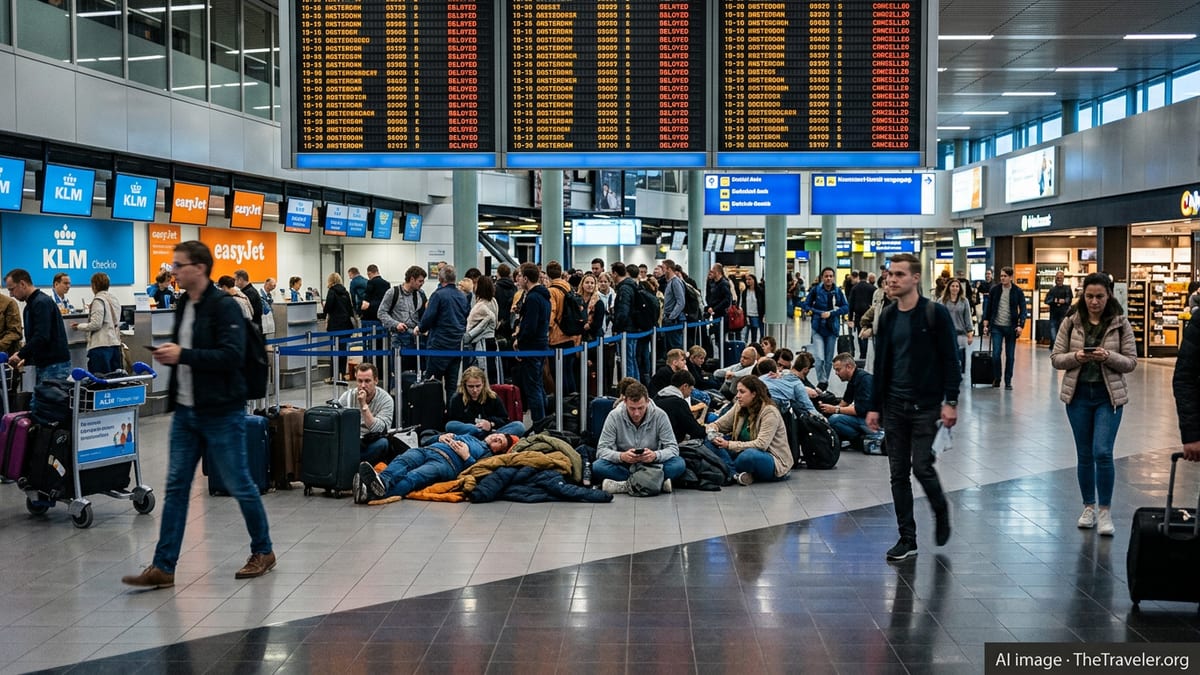
Major Hubs From London to Frankfurt Hit Hard
Recent operational data compiled from European flight tracking platforms and industry coverage shows that the latest day of disruption has concentrated around some of the continent’s busiest hubs. London, Paris, Frankfurt and Amsterdam reported some of the heaviest knock on effects, with smaller but still significant impacts at airports in Denmark, Switzerland and other neighboring countries.
Reports indicate that Germany, the United Kingdom and France account for a large share of the 65 cancellations and 1,205 delays, echoing patterns seen in earlier disruption spikes this year in which these markets repeatedly feature among the hardest hit. At London Heathrow and other London area airports, delays rippled across banks of departures to continental Europe and long haul destinations, as late inbound aircraft forced schedule adjustments.
Frankfurt and Munich in Germany, and Paris Charles de Gaulle in France, similarly experienced waves of late running flights that affected both departures and arrivals. According to publicly available operational tallies, delay rates at some of these hubs reached double digits as a proportion of the day’s total movements, underscoring how even a relatively modest number of outright cancellations can translate into far broader timetable instability.
Amsterdam Schiphol, which has been repeatedly affected by staffing constraints and congested airspace in recent months, again faced elevated delay counts. Smaller regional airports feeding these mega hubs also saw knock on effects as aircraft and crews ran behind schedule, leaving passengers stranded far from the main centers of disruption.
Flag Carriers and Network Airlines Under Pressure
The latest figures show that prominent European flag carriers and network airlines are again on the front line of the disruption. British Airways, Lufthansa, Scandinavian Airlines (SAS) and Swiss are among the operators most visibly affected, reflecting their heavy reliance on hub and spoke networks built around exactly the airports now experiencing the most severe gridlock.
British Airways services into and out of London faced a mix of cancellations and protracted delays, particularly on short haul European sectors where aircraft typically operate multiple rotations per day. When an early departure runs late, subsequent flights often inherit the delay, creating a rolling backlog that can persist into the evening peak.
Lufthansa and Swiss, key members of the same airline group, reported operational challenges across German and Swiss gateways including Frankfurt, Munich and Zurich. Publicly available statistics from recent disruption days show Lufthansa frequently among the carriers with the highest number of delayed flights in continental Europe, a trend that appears to be persisting as the wider network strains under airspace and staffing constraints.
SAS, a critical link between Nordic capitals and major hubs such as London, Paris and Amsterdam, has also been caught in the turbulence. Earlier published data on recent European disruption days highlighted dozens of delayed SAS services in a single trading period, and current patterns suggest continuing vulnerability when bottlenecks develop in central European airspace.
Layered Causes Behind Europe’s Ongoing Flight Disruptions
While each individual delay or cancellation can have a distinct trigger, aviation analysts point to a familiar set of overlapping pressures behind the latest wave of disruption. Congested airspace over parts of Europe, lingering staffing challenges in both air traffic control and ground handling, and tight airline schedules that leave little room for recovery all contribute to a fragile operating environment.
Published coverage on recent travel disruption days notes that temporary airspace restrictions and weather related flow controls have repeatedly slowed traffic over key corridors leading into hubs such as London, Paris, Frankfurt and Amsterdam. When aircraft are forced into holding patterns or rerouted, their late arrival often cascades through the rest of the day’s rotations.
Industry reporting also points to staffing imbalances that have persisted since the rapid rebound in demand after the pandemic. Some ground operations teams and security checkpoints remain stretched, particularly at peak travel times. Even minor check in or boarding delays can then push departure times beyond allocated air traffic control slots, forcing further waits.
In parallel, airlines have rebuilt schedules aggressively to capture renewed demand, particularly on profitable intra European and transatlantic routes. The result is dense, back to back rotations with limited slack. When paired with external constraints such as air traffic control capacity, this creates an operating model in which relatively small disturbances can quickly affect thousands of passengers.
Knock On Effects for Travelers Across the Continent
For passengers, the arithmetic behind the reported figures translates into a difficult travel day across a wide swath of Europe. With 65 flights cancelled outright and 1,205 delayed, the number of disrupted journeys runs into the tens of thousands, especially at hubs where connecting traffic is dominant.
Travel industry coverage of recent disruption episodes in Europe notes that missed connections remain one of the most acute pain points. At hubs like London Heathrow, Frankfurt and Paris Charles de Gaulle, a late inbound flight of even an hour can be enough to break complex itineraries linking regional European cities with long haul destinations in North America, Africa or Asia.
Passengers left in limbo at secondary airports, including those in Denmark and other Nordic countries, often face longer waits for rebooking because frequencies on some routes are limited. When aircraft and crews are out of position due to earlier delays, same day alternatives can be scarce, leading to overnight stays and additional accommodation and meal expenses.
Rail networks and alternative airports can offer some relief, but the scale of delays reported across multiple countries on the same day reduces the flexibility that travelers and airlines usually rely on. Industry observers note that as disruptions increasingly span several neighboring states at once, options for rerouting quickly become constrained.
What Passengers Can Do as Disruptions Persist
With European air travel experiencing repeated days of heavy disruption in recent months, consumer advocates and travel specialists are emphasizing preparation and awareness. Public information from EU and UK consumer agencies highlights that many passengers on flights to, from or within Europe may have rights to care, rerouting or compensation when cancellations and long delays are not caused by extraordinary circumstances.
Travel advice published by passenger rights organizations suggests that travelers should monitor flight status closely on the day of departure, use airline apps where possible, and keep documentation such as boarding passes and receipts for meals and accommodation. These records can be important when seeking reimbursement for expenses or statutory compensation under European and UK regulations.
Observers also recommend allowing longer connection times when booking itineraries that rely on busy hubs such as London, Paris, Frankfurt and Amsterdam, particularly during peak seasons or on days when weather or air traffic control restrictions are forecast. While longer layovers are less convenient, they can reduce the risk of missed onward flights when delays ripple through the system.
With airlines, airports and air traffic managers still working to resolve structural challenges in staffing and capacity, indications are that periodic days of widespread disruption may continue. For now, passengers across Europe are being urged by travel experts to build flexibility into their plans and to familiarize themselves with the remedies available when journeys do not go as scheduled.