

More news on this day
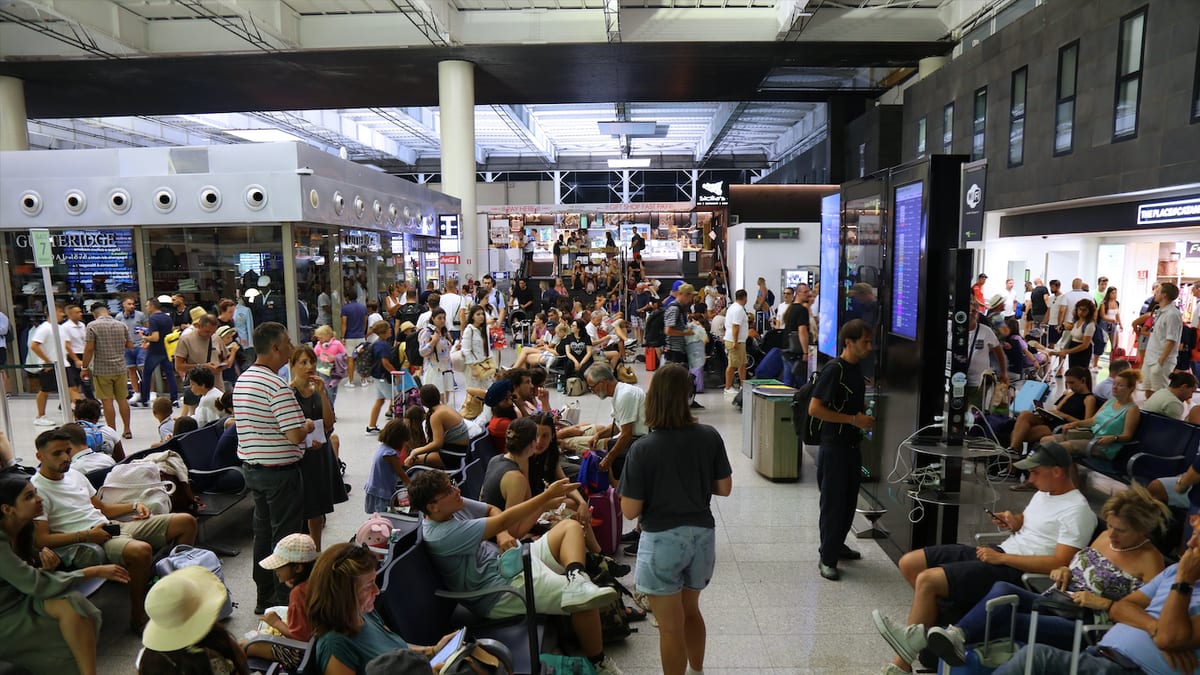
Thousands of air travelers across Europe are facing long queues, missed connections and overnight airport stays after widespread disruption led to 1,475 delayed flights and 172 cancellations across seven countries, according to multiple aviation data reports and industry coverage.
Get the latest news straight to your inbox!
Major hubs from Oslo to Madrid hit by rolling disruption
The latest wave of disruption has affected airports in Spain, England, Italy, Norway, Denmark, Sweden and the Netherlands, with delays and cancellations concentrated at some of the continent’s busiest hubs. Publicly available flight-tracking data cited in recent coverage shows particularly heavy disruption at Oslo, Barcelona, Amsterdam Schiphol, Milan Malpensa, Rome Fiumicino, Madrid Barajas, Copenhagen, Gothenburg, London Heathrow, Manchester and London Stansted.
Across these airports, the combined tally has reached 1,475 delayed services and 172 cancellations, leaving departure boards dominated by red and amber alerts. Reports indicate that Amsterdam Schiphol alone has seen nearly 300 delays and close to 20 cancellations, while London Heathrow and Manchester have each recorded well over 100 delayed flights in a single operating day.
In southern Europe, Barcelona and Rome have been among the hardest-hit Mediterranean gateways, with well over 100 delayed flights each and a smaller but still significant number of cancellations. Madrid Barajas has also recorded more than 100 delays, contributing to knock-on disruption for passengers connecting onward to Latin America, North Africa and other parts of Europe.
In northern Europe, Oslo, Copenhagen and Gothenburg have all reported substantial disruption, according to travel-industry and passenger-rights monitoring sites. The concentration of delays at these Scandinavian hubs has strained short-haul networks to and from the Nordic region, creating further complications for travelers heading to secondary airports.
Airlines struggle with capacity, weather and network bottlenecks
The disruption has affected a wide range of carriers, including ITA Airways, Vueling, KLM, SAS, Ryanair and other European and international airlines operating through the impacted airports. Published analyses of recent operations point to a combination of factors, including localized weather issues, air traffic control constraints and lingering structural bottlenecks in Europe’s aviation network.
Data from European aviation bodies over the past year indicates that air traffic flow management delays remain elevated, with capacity limits in key airspace sectors regularly leading to holding patterns and slot restrictions. On busy travel days, this can quickly translate into rolling delays across multiple hubs when one region experiences congestion or staffing pressure.
Seasonal weather has also played a role. Earlier in the year, severe winter conditions prompted airlines in parts of Europe to cancel dozens of flights and adjust schedules to preserve safety margins, a pattern that has continued in milder form as spring brings rapidly changing wind and visibility conditions to major coastal and northern airports.
Industry briefings have repeatedly highlighted how European carriers are still operating with little slack in their networks after several years of cost-cutting and fleet rationalization. When a cluster of storms, capacity restrictions or technical issues arises, aircraft and crews can quickly end up out of position, making it difficult to restore normal operations before the next wave of departures.
Passengers face long waits, rebooking challenges and missed holidays
The immediate impact for travelers has been felt in crowded terminals, extended waits at customer service desks and uncertainty over when replacement flights will depart. According to passenger-rights platforms tracking the current situation, many stranded travelers are facing overnight stays in airport hotels or improvised sleeping arrangements in terminal seating areas when accommodation near the airport fills up.
At leisure-focused hubs such as Barcelona, Rome and Madrid, the disruption has coincided with a busy period for European city breaks and early-season holiday travel. Tourism observers note that even a single cancellation or multi-hour delay can cause travelers to lose valuable time on short trips, while missed cruise departures and lost prepaid bookings add further financial and emotional strain.
Business travelers and those using major hubs for long-haul connections are equally exposed. Reports describe passengers arriving late from northern or western Europe and missing onward flights to destinations in North America, the Middle East and Asia, often resulting in rebookings one or two days later during periods when long-haul services are already heavily booked.
Travel advisers stress that the complex nature of modern airline networks means disruption in one region can quickly ripple across others. The current pattern of delays in northern and southern Europe is already feeding through to secondary airports as aircraft and crews arrive late, compressing turnaround times and raising the risk of further schedule slippage.
What EU rules say about compensation and care
The latest disruption once again brings attention to passenger protections under European Union law. Under Regulation (EC) No 261/2004, travelers departing from EU airports, or flying into the EU with an EU carrier, may be entitled to compensation when flights are cancelled or arrive with long delays, provided specific conditions are met and the cause is not classified as an extraordinary circumstance.
Public guidance based on this regulation explains that compensation levels are generally linked to flight distance and delay length, with typical lump-sum amounts ranging from 250 to 600 euros per person in eligible cases. In addition to possible financial compensation, airlines are required to provide basic care such as meals, refreshments and access to communication when delays extend beyond certain thresholds.
For cancellations or significant schedule changes, passengers are usually offered a choice between a refund of the unused ticket portion or rerouting at the earliest opportunity. Consumer-rights organizations advise affected travelers to retain boarding passes, booking confirmations and receipts for any out-of-pocket expenses, as these can be important when submitting claims.
However, specialists in passenger-rights cases note that not every delay or cancellation results in compensation. Events such as severe weather or certain types of airspace restrictions are often treated as extraordinary circumstances, limiting airlines’ liability for compensation even though they still owe a duty of care in terms of food, accommodation and rebooking support.
Practical steps for travelers caught in the disruption
With disruption spread across multiple countries and airlines, travel experts are urging passengers to take a proactive approach. Industry guidance recommends checking flight status regularly via airline apps or airport information pages, as schedules can change multiple times in the hours before departure when networks are strained.
Where flights are significantly delayed or cancelled, specialists suggest contacting the airline through digital channels as well as at the airport to improve the chances of securing a prompt rebooking. Some carriers allow customers to switch to alternative services or nearby airports at no additional fare in periods of large-scale disruption, particularly when capacity is available within the same travel window.
Travel-insurance providers and passenger-rights services are also seeing increased interest from travelers seeking to understand what costs may be recoverable. Policies vary widely, but some offer coverage for accommodation, meals and missed connections when delays exceed a specified threshold, provided travelers can document the disruption and their expenses.
For those yet to travel, European aviation trend reports suggest building extra flexibility into itineraries where possible. Allowing longer connection times, traveling with carry-on luggage when feasible and avoiding the final flight of the day on critical legs are among the practical measures often cited to reduce the risk of being stranded when Europe’s congested skies encounter another day of heavy disruption.