

More news on this day
Thousands of travelers across the United States faced hours-long waits, missed connections, and abandoned itineraries as a new wave of aviation disruption canceled 207 flights and delayed a further 4,395 services at major hubs including Los Angeles, Atlanta, Boston, Chicago, Houston, Orlando, and New York.
Get the latest news straight to your inbox!
Major U.S. Airports Buckle Under Mounting Disruptions
Publicly available flight-tracking data for early April show that the latest round of disruptions is concentrated at some of the nation’s busiest hubs, amplifying the impact far beyond individual cities. Reports indicate that Los Angeles International, Hartsfield-Jackson Atlanta, Chicago O’Hare, Boston Logan, Houston George Bush Intercontinental, Orlando International, and New York’s LaGuardia and JFK airports all reported elevated levels of cancellations and rolling delays as the day progressed.
The 207 cancellations, while modest compared with the worst weather or holiday meltdowns, came on a day dominated by delayed departures and arrivals. With 4,395 flights running late, the pattern has been described in industry coverage as a high-delay, moderate-cancellation scenario, in which aircraft and crews remain in circulation but increasingly fall out of position across the national network.
Because these hubs act as primary connection points for coast-to-coast and regional traffic, disruption in one city quickly ripples outward. Travelers departing from or connecting through secondary airports such as Albany, Seattle, or smaller Midwest and East Coast fields have faced knock-on delays, even when local weather or airport conditions appeared calm.
Travel publications tracking the episode highlight that the latest figures land on top of an already difficult Easter and early spring period, during which multiple days have seen several hundred cancellations and thousands of delays nationwide. For many passengers, the newest totals represent just one more day in a string of unreliable departure boards.
Multiple Airlines Caught in the Same System-Wide Snarl
The disruption has not been confined to any single carrier. Data aggregated from flight-status platforms show significant operational impacts across the largest U.S. airlines, including American Airlines, Delta Air Lines, Southwest Airlines, United Airlines, Spirit Airlines, Alaska Airlines, and Frontier Airlines, along with several regional and contract carriers that operate flights under big-brand codes.
Among the network carriers, Delta, American, Southwest, and United all logged sizable numbers of delayed flights across their main hubs, particularly in Atlanta, Chicago, Houston, New York, and Orlando. For travelers, the broad mix of affected brands has meant limited rebooking options, since competing carriers have also been operating with heavily delayed schedules and few empty seats during the spring rush.
Low-cost and ultra-low-cost carriers have been hit as well. Spirit and Frontier, which typically run tight schedules with intensive aircraft utilization, are especially vulnerable when early delays cascade through the day. Reports from recent travel coverage note that on similarly disrupted days this spring, these airlines have seen clusters of delays and cancellations at leisure-heavy airports such as Orlando and Las Vegas, where any schedule slip can be hard to recover before nightfall.
Regional airlines flying under the banners of the major carriers add another layer of complexity. When flights operated by smaller partners are scrubbed or pushed back, passengers may see a familiar big-airline logo on their ticket but face limited alternative options because regional fleets are smaller and route networks thinner than those of the mainline carriers.
Weather, Volume, and Network Strain Collide in a Busy Spring
While the latest disruption figures are tied to a single day’s operations, they come against a backdrop of sustained stress on the U.S. aviation system through late March and early April. Travel industry reporting on Easter weekend highlighted several days with thousands of delays and hundreds of cancellations, as storms swept through key hubs in the Midwest, South, and East, forcing ground stops and traffic-management programs.
Travel associations and analysts have noted that airlines scheduled aggressively into the spring peak, with passenger volumes projected to surpass pre-pandemic levels. High load factors leave little spare capacity to absorb irregular operations, so even a comparatively small number of cancellations or an uptick in arrival spacing at busy airports can translate into widespread disruption by late afternoon.
Operational research and federal transportation statistics have repeatedly shown that hubs such as Atlanta, Los Angeles, Chicago, New York, Boston, and Orlando are highly sensitive nodes in the network. When delays and cancellations accumulate at these airports, recovery can take days, particularly if bad weather or airspace constraints recur before airlines have repositioned aircraft and crews.
The pattern seen in this latest event aligns with broader findings from recent academic work on delay propagation, which suggests that post-pandemic networks are more vulnerable to security screening bottlenecks, crew scheduling limits, and tight turn times. Combined with seasonal thunderstorms and strong demand, these structural pressures increase the likelihood that relatively modest disruptions grow into nationwide snarls.
Passengers Grapple With Long Lines, Limited Options, and Rising Costs
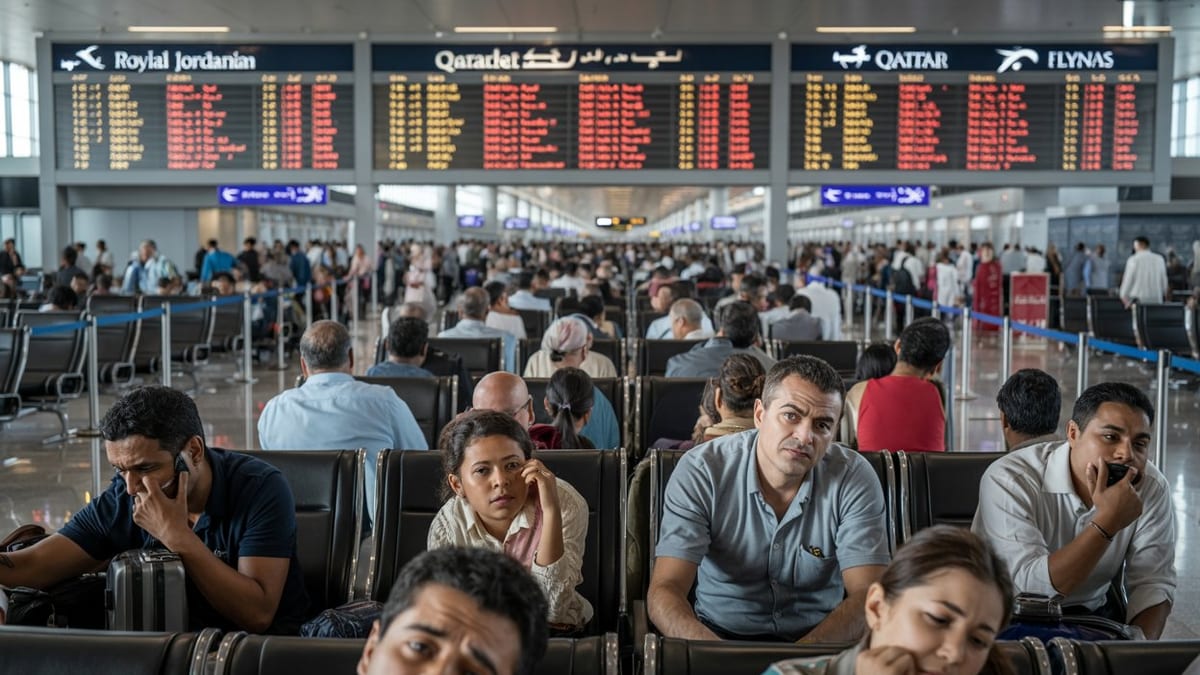
For travelers on the ground, the statistics translate into crowded terminals, long customer-service queues, and shrinking options for getting to their destinations on time. At high-traffic hubs like Atlanta, Chicago O’Hare, Orlando, and New York’s airports, images and accounts shared across social platforms on recent disruption days show passengers camped out near gates and check-in counters, some waiting hours for rebooking or hotel vouchers.
Because many flights are operating nearly full during the spring travel surge, passengers whose trips are canceled often find that the next available seat on any airline departs much later than advertised schedules might suggest. In some cases, travelers have reported being offered itineraries one or two days after their original plans, particularly on heavily booked leisure routes to and from Florida and major coastal gateways.
Travel media and consumer advocates continue to emphasize that airlines retain broad discretion over vouchers, meal credits, and hotel accommodations in the United States when disruptions are caused by weather or air traffic constraints. As a result, passengers affected by the 207 cancellations and thousands of delays are encountering a patchwork of policies, with some carriers voluntarily offering more generous assistance than others.
Extended delays also carry financial consequences that extend beyond the price of a ticket. Missed hotel stays, prebooked activities, rental cars, and work commitments often cannot be recouped, even when airlines eventually deliver passengers to their final destination. For families traveling at the tail end of school holidays, the timing of these disruptions can be especially painful.
What the Latest Numbers Signal About the Months Ahead
The current wave of flight problems is prompting renewed questions about how U.S. aviation will cope with the even busier summer season. Industry forecasts point to record passenger volumes in June, July, and August, with many of the same hub airports already operating near capacity on peak days. If the combination of aggressive scheduling, seasonal storms, and staffing limitations persists, passengers could face recurring days of elevated cancellations and several thousand delays.
Comparisons with earlier reports this year, including episodes with more than 300 cancellations and upwards of 4,000 to 5,000 delays on single days, suggest that the latest 207 cancellations and 4,395 delays are part of a broader pattern rather than an isolated shock. Each such day leaves airlines with a backlog of repositioning and crew adjustments, narrowing the margin for error when the next weather system or airspace constraint arrives.
Travel analysts note that structural fixes, such as increased staffing in air traffic control, more resilient crew scheduling practices, and greater slack in airline timetables, will take time to implement. In the meantime, travelers can expect that major hubs like Los Angeles, Atlanta, Boston, Chicago, Houston, Orlando, and New York will remain focal points for any nationwide aviation turbulence.
For now, the day’s tally of 207 canceled and 4,395 delayed flights stands as another warning sign that the U.S. air travel system is operating with little room for disruption. As spring gives way to the peak vacation months, passengers may need to build in extra buffers, flexible plans, and considerable patience to navigate a network that continues to be stretched to its limits.