

More news on this day
Air travel across the United States deteriorated into a day of widespread disruption as major carriers including Spirit, American, Southwest, United and JetBlue canceled at least 63 flights and delayed more than 3,000 others, stranding thousands of passengers from Atlanta and Houston to Chicago, Orlando, New York, San Francisco and Philadelphia.
Get the latest news straight to your inbox!
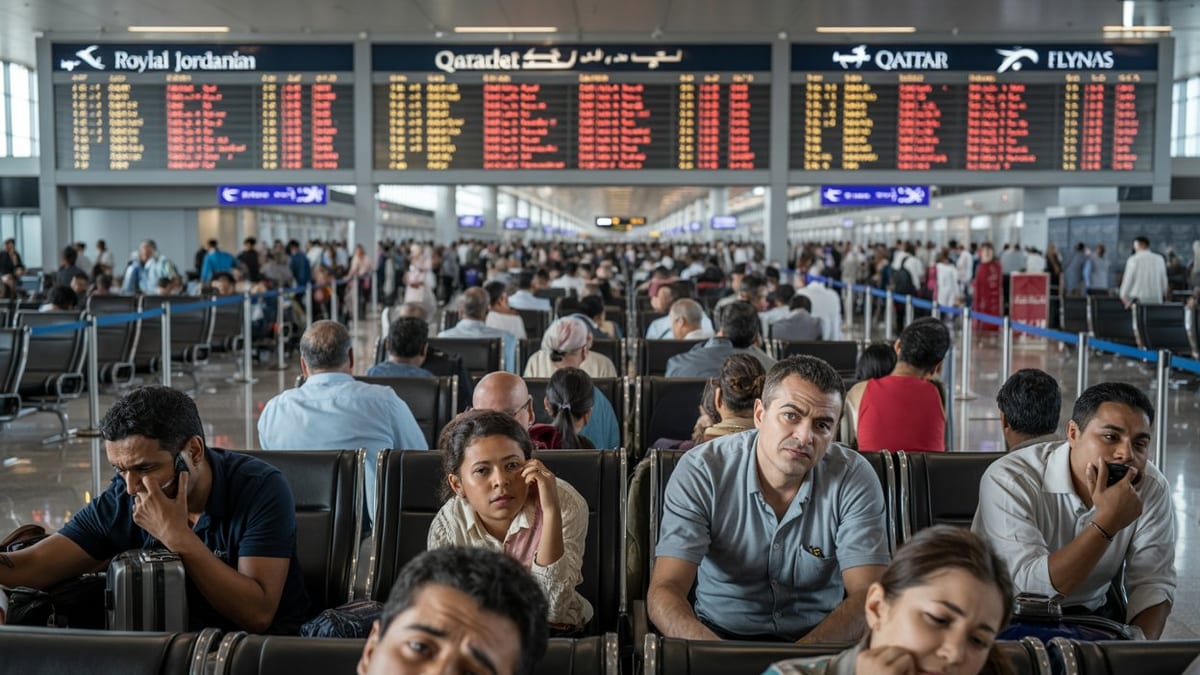
Disruptions Hit Coast to Coast on a Busy Travel Day
Publicly available tracking data for Wednesday, April 8, indicates a fresh wave of delays and cancellations layered on top of several days of unstable operations at major US hubs. Aggregated counts across key airports point to at least 63 cancellations and roughly 3,025 delays affecting domestic and international routes, with the real number of impacted journeys far higher once missed connections and rebooked itineraries are considered.
While the raw figures fluctuate throughout the day as schedules update, reports show New York area airports, Orlando, Chicago, Houston, Atlanta, San Francisco and Philadelphia again appearing among the hardest hit. Data compiled by specialist aviation and travel outlets describes thousands of passengers facing missed meetings, lost vacation time and unexpected overnight stays as flight after flight slipped from “on time” into rolling delay.
The pattern follows a broader trend seen in recent days in which relatively modest cancellation totals have been overshadowed by extremely high delay numbers. Even when only a fraction of departures are formally scrubbed, extensive late running can overwhelm airport infrastructure and airline networks, creating the same experience for travelers as a much larger cancellation event.
Major Carriers Struggle With Cascading Delays
Operational statistics published on Wednesday highlight how widely the disruption has been shared among airlines. American Airlines, Southwest Airlines, United Airlines, Spirit Airlines and JetBlue all reported significant numbers of delayed departures, reflecting strain across both full service and low cost business models.
Recent breakdowns at individual carriers help explain the sensitivity of the system. In the past week, analytics firms documented United facing more than 800 delays and several dozen cancellations across its US hubs in a single day, while separate reporting noted Frontier suffering over 200 disruptions centered on Denver and New York. These localized problems have contributed to congestion as aircraft and crews circulate through shared airports and airspace.
Travel and aviation news outlets have also chronicled recurring spikes in delays for large US carriers when storms, air traffic control constraints or tight crew scheduling hit at the wrong moment. Once a morning bank of flights departs late from a hub like Chicago or Houston, knock-on effects can stretch deep into the night, particularly for airlines that rely on complex connection banks.
Key Hubs From Atlanta to New York Bear the Brunt
Wednesday’s figures show familiar bottlenecks. Atlanta’s Hartsfield-Jackson International Airport, the world’s busiest by passenger traffic, has experienced repeated waves of delays and cancellations in recent days, including more than 350 disrupted flights reported over the Easter return period. Those earlier snags left many travelers with missed long haul connections and forced rebookings that are still working through the system.
Chicago’s O’Hare and Midway airports, along with Houston’s George Bush Intercontinental and Hobby, continue to report elevated disruption as well. Flight status boards in recent days have recorded dozens of cancellations and hundreds of delays at Chicago and Houston alone, with ripple effects extending to secondary airports when aircraft and crews fail to arrive as scheduled.
On the coasts, New York’s airports remain a particular pressure point. New data for Newark Liberty International on Wednesday shows more than a hundred delayed flights and nearly a dozen cancellations tied to Spirit, United, JetBlue and other carriers, affecting routes across Florida and the broader East Coast. Similar issues have been logged at John F. Kennedy and LaGuardia, while Orlando and Miami continue to grapple with heavy late running on popular leisure routes.
San Francisco and Philadelphia, though less prominent in today’s cancellation counts than some southern and northeastern hubs, have nevertheless seen a steady stream of delays that contribute to the nationwide total of more than 3,000 affected flights.
Weather, Congestion and Tight Schedules Combine
Industry reporting links the latest disruption to a mix of spring weather patterns, airspace congestion and tightly planned airline schedules. Recent storm systems have repeatedly passed through the central and eastern United States, temporarily reducing airport capacity and forcing the Federal Aviation Administration to slow traffic into crowded terminals.
At the same time, airlines have been operating with leaner staffing and aircraft buffers following years of cost cutting and high demand. When a storm cell, ground stop or equipment issue interrupts the sequence at a large hub, carriers have limited spare planes and crews available to recover quickly. That reality has been visible over the past week as even modest cancellations have triggered days of elevated delays at Atlanta, New York, Chicago and other key nodes.
Past episodes underline how vulnerable the network can be. Earlier this year, a major winter storm was associated with one of the worst weather-related disruption days on record, with more than 10,000 US flights canceled or heavily delayed over a single weekend. Airlines, airports and regulators have since faced renewed scrutiny about how they plan for such events and communicate with passengers when schedules unravel.
Passengers Face Long Lines and Limited Options
For travelers on Wednesday, the statistics translate into long queues at customer service counters, packed gate areas and scarce same day alternatives. Published guidance from consumer advocates notes that passengers hit by cancellations are generally entitled to a refund if they choose not to travel, although cash compensation for delays is more limited under current US rules.
Several passenger rights organizations advise affected travelers to monitor airline apps closely, document delays and keep receipts for meals or hotels in case some costs are reimbursable. They also suggest checking whether disrupted itineraries touch regions where stronger compensation rules apply, such as the European Union, which can offer additional protection on certain transatlantic routes.
With seat availability tight during busy spring travel, many stranded passengers are being rebooked one or more days later or rerouted through unfamiliar airports. Travel analysts recommend that anyone flying in the coming days build extra time into connections, consider early morning departures that are less exposed to cascading delays, and have backup plans for ground transport if final arrival times shift unexpectedly.