

More news on this day
Thousands of passengers across the United States faced hours-long waits and missed connections on Thursday as a mix of airline operational issues and unstable winter weather triggered the cancellation of at least 115 flights and delays to more than 2,500 services, disrupting travel from Boston and New York to Chicago, Honolulu and San Francisco.
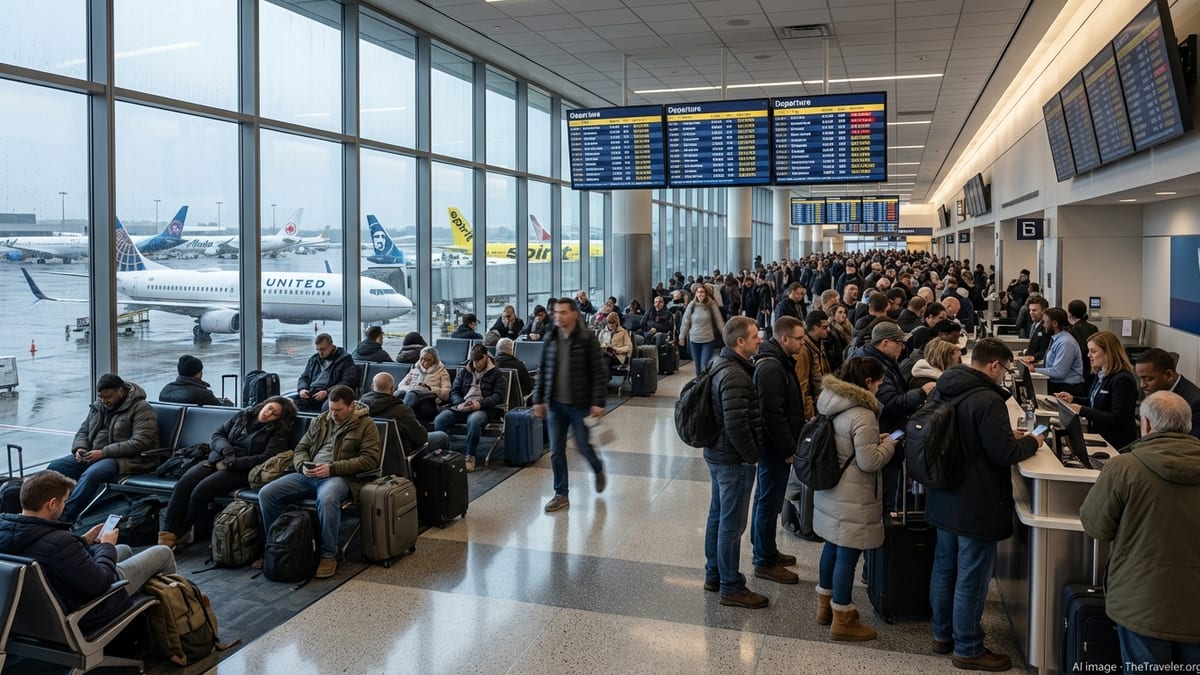
Widespread Disruptions Hit Major U.S. Hubs
The latest wave of disruption rippled through some of the country’s busiest airports, including Boston Logan, New York’s LaGuardia and Newark, Chicago O’Hare, San Francisco International and Honolulu. Flight-tracking data showed hundreds of delayed departures and arrivals at the coastal hubs, with schedules further squeezed by knock-on effects at inland connectors such as Detroit, Denver and Atlanta.
Regional operators Endeavor Air and SkyWest, which fly feeder services for major carriers, were among those hardest hit, compounding the impact for travelers booked on United, Delta and other large airlines. At Detroit Metropolitan Wayne County Airport alone, 9 flights were canceled and 98 delayed, affecting routes to and from Chicago, Denver, Atlanta, Orlando, Toronto and New York. The backlog of late-arriving aircraft meant delays cascaded throughout the day for passengers attempting to connect onward.
United Airlines and its regional partners reported clusters of delays on transcontinental and mid-haul routes, while Spirit Airlines and Air Canada contended with late turns on popular leisure and cross-border services. Alaska Airlines, which has already faced heightened scrutiny following a series of tech and operational challenges over the past year, continued to warn of residual schedule pressures as crews and aircraft struggled to reset after earlier disruptions.
By mid-afternoon, the cumulative effect was evident on departure boards at airports nationwide, with long strings of amber and red status alerts replacing on-time listings. While some flights departed within an hour of schedule, others sat for extended periods awaiting aircraft, crews or clearance amid saturated traffic flows.
Weather, Tech Troubles and Tight Schedules Combine
A patchwork of winter weather systems and operational constraints drove the latest disruption. Low cloud ceilings and gusty conditions around New York forced intermittent ground stops at LaGuardia and Newark, slowing arrivals and departures and prompting airlines to thin schedules. Similar conditions affected Boston, where crews navigated changing visibility and de-icing requirements during the morning push.
Airline and airport officials also pointed to lingering technology and staffing challenges that have dogged the industry through recent seasons. Alaska Airlines’ systemwide halt in 2025 due to a critical hardware failure underscored how sensitive modern networks are to even brief outages, and carriers across the board have been working to harden their operations. Yet tight aircraft utilization, lean staffing and complex crew-rostering rules mean that any interruption can still quickly snowball across multiple hubs.
In recent years, analysts have noted that U.S. carriers such as Frontier, JetBlue and Spirit have posted some of the highest rates of delays and cancellations, reflecting a combination of dense schedules, congested airports and exposure to volatile weather. Air Canada has similarly struggled with punctuality, ranking among the more delay-prone international airlines, a pattern that continues to affect cross-border operations into major U.S. gateways.
With airline networks closely interlinked, today’s issues at one or two hubs were enough to ripple from the East Coast to the Pacific. Flights into Honolulu and San Francisco, particularly those relying on connections through Chicago, Denver or West Coast spokes, faced rolling delays as crews and aircraft arrived late from earlier segments.
Travelers Face Long Lines and Limited Rebooking Options
For passengers, the numbers translated into crowded terminals, snaking customer-service queues and mounting frustration. At Boston Logan and Chicago O’Hare, travelers reported waiting more than an hour to speak with airline staff as agents worked to rebook those who had missed connections or whose flights had been scrubbed altogether.
With winter schedules already running close to capacity, same-day alternatives were scarce on many routes. Some travelers headed to secondary airports such as Providence or Milwaukee in search of open seats, while others abandoned plans and sought refunds or vouchers. Hotels near major hubs filled quickly as evening delays turned into overnight stays for those unable to secure onward flights.
Families with children and international travelers were particularly affected, with missed long-haul departures from East Coast gateways creating multi-day detours. At San Francisco International, some passengers connecting from delayed domestic arrivals to overnight flights bound for Asia and Oceania were forced to reroute through alternative hubs or wait for the next day’s departures.
Despite the strain, ground staff and cabin crews continued to stress safety over speed, citing the need to manage duty-time limits and ensure aircraft were fully inspected and de-iced before departure. Airlines urged customers to check their flight status repeatedly on mobile apps before heading to the airport and to allow extra time for security and boarding.
Know Your Rights on Cancellations and Delays
Consumer advocates reminded travelers that their rights vary depending on the carrier and the cause of disruption. In the United States, airlines are not required to compensate passengers for delays or cancellations caused by weather or air traffic control, but they typically must provide rebooking at no additional fare and, in some cases, meal vouchers or hotel accommodation when the disruption is within the airline’s control.
U.S. legacy carriers and several low-cost airlines have recently published customer service commitments detailing what passengers can expect when flights are canceled for reasons such as crew shortages or mechanical issues. These commitments often include meal vouchers after a certain number of hours, hotel rooms for overnight delays and complimentary rebooking on the next available flight, though specific thresholds and policies differ by airline.
On cross-border itineraries involving Air Canada and other international carriers, Canadian and international rules may also apply, sometimes offering more robust entitlements. Under Canadian regulations, for example, passengers can be eligible for food, accommodation and cash compensation when cancellations or long delays are within an airline’s control and not related to safety.
Travel lawyers advise keeping boarding passes, receipts and written confirmation of delays, along with screenshots of airline messages, to support any later claims. Travelers are also encouraged to ask explicitly whether a disruption is categorized as weather-related or within the carrier’s control, as that distinction can shape available remedies.
How to Navigate Ongoing Disruptions
With weather patterns and operational pressures expected to remain volatile through the late winter travel period, experts say today’s turmoil is unlikely to be the last. Flyers are being urged to build additional time into itineraries, especially when connecting between separate tickets or to cruises, tours or major events that are hard to reschedule.
Travel planners recommend booking early-morning departures where possible, as these are less likely to be affected by the day’s accumulating delays. Nonstop flights, while often more expensive, can significantly reduce the risk of missed connections like those seen today across Chicago, New York and West Coast hubs.
Frequent travelers also point to the value of airline mobile apps and real-time flight trackers, which can provide earlier warnings of schedule changes than departure boards alone. In many cases, passengers can rebook themselves within the app as soon as a delay crosses a key threshold, avoiding long lines at airport counters.
For now, with more than 2,500 flights running late and more than 100 canceled nationwide, the advice for travelers is simple but sobering: check your flight repeatedly, pack patience and be prepared to adjust plans as the U.S. air travel system works through yet another difficult day.