

More news on this day
Thousands of airline passengers across the United States faced long delays and unexpected overnight stays on March 5, 2026, as major carriers including Southwest, American, United and SkyWest reported 303 cancellations and 1,919 delays, snarling operations from Dallas and Chicago to Miami, Nashville, Oklahoma City and other key hubs.
Storm Systems and Congestion Collide Over Central U.S.
The latest wave of disruption comes as a multi day severe weather pattern settles over the central United States, sending lines of thunderstorms and strong crosswinds across busy air corridors. Forecasts from Wednesday, March 4, through at least Saturday, March 7, warned that the combination of hail, damaging winds and a risk of tornadoes would repeatedly interrupt tightly banked hub operations, particularly in Texas and the Southern Plains.
Dallas Fort Worth International and Dallas Love Field bore much of the brunt, with rolling ground stops and reduced arrival rates forcing airlines to trim schedules and hold departures on the ramp. Even when storms briefly cleared, crews and aircraft were out of position, creating a cascade of late departures that spread to airports hundreds of miles away that were themselves experiencing clear skies.
Operational planners noted that the pattern is especially punishing for itineraries built around short connection windows. As one wave of storms clips North Texas and Oklahoma, flights into and out of Dallas and Oklahoma City fall behind schedule, which in turn forces carriers to delay onward legs to Chicago, Miami and Nashville while they wait for inbound aircraft and rested crews.
Major Hubs From Chicago to Miami Feel the Ripple Effect
Chicago O’Hare International, one of the nation’s busiest connecting hubs, reported heavy congestion as the day wore on, with United and regional partner SkyWest among the hardest hit by delays. Long arrival queues formed as storms to the south and west slowed aircraft handoffs between air traffic control centers, pushing back departure slots and increasing taxi times on already crowded ramp areas.
In Miami, afternoon thunderstorms combined with rerouted traffic from elsewhere in the network to strain gate capacity and ground handling resources. American Airlines, which relies on Miami International as a key gateway to Latin America and the Caribbean, juggled late arriving aircraft with high spring demand, leaving many passengers facing missed connections and last minute rebookings on already full flights.
Nashville and Oklahoma City, both important connecting points for Southwest and other domestic carriers, saw banks of departures bunch together as earlier weather delays worked through the system. Travelers arriving from smaller regional markets into these mid continent airports often discovered that their onward flights to Chicago, Dallas or coastal destinations had already pushed back or were waiting on flight crews nearing duty limits.
Southwest, American, United and SkyWest Struggle to Recover
The imbalance of aircraft and crews across the national network made recovery difficult for the largest U.S. airlines. Southwest, which operates a point to point model with dense schedules through cities like Dallas, Chicago Midway, Nashville and Oklahoma City, saw minor delays on early flights compound into hours long disruptions by late afternoon as turn times tightened and ground holds accumulated.
American and United, both heavily reliant on tightly timed hub banks at Dallas Fort Worth and Chicago O’Hare respectively, faced a different challenge. Each wave of weather forced them to throttle arrivals and departures to keep the system from gridlock, sacrificing on time performance to preserve safety margins in crowded airspace. Once banks broke down, rebalancing crews and aircraft across domestic and international routes became an intricate puzzle that stretched late into the evening.
Regional operator SkyWest, which flies under the brands of multiple major carriers, was particularly exposed. Aircraft and crews cycling between smaller Midwestern and Southern airports and the big hubs at Dallas, Chicago and Denver encountered repeated delays. That left passengers on regional jets vulnerable to last minute cancellations when equipment could not make it to its next assignment within federal duty rules for pilots and flight attendants.
Passengers Face Long Lines, Limited Options and Mixed Support
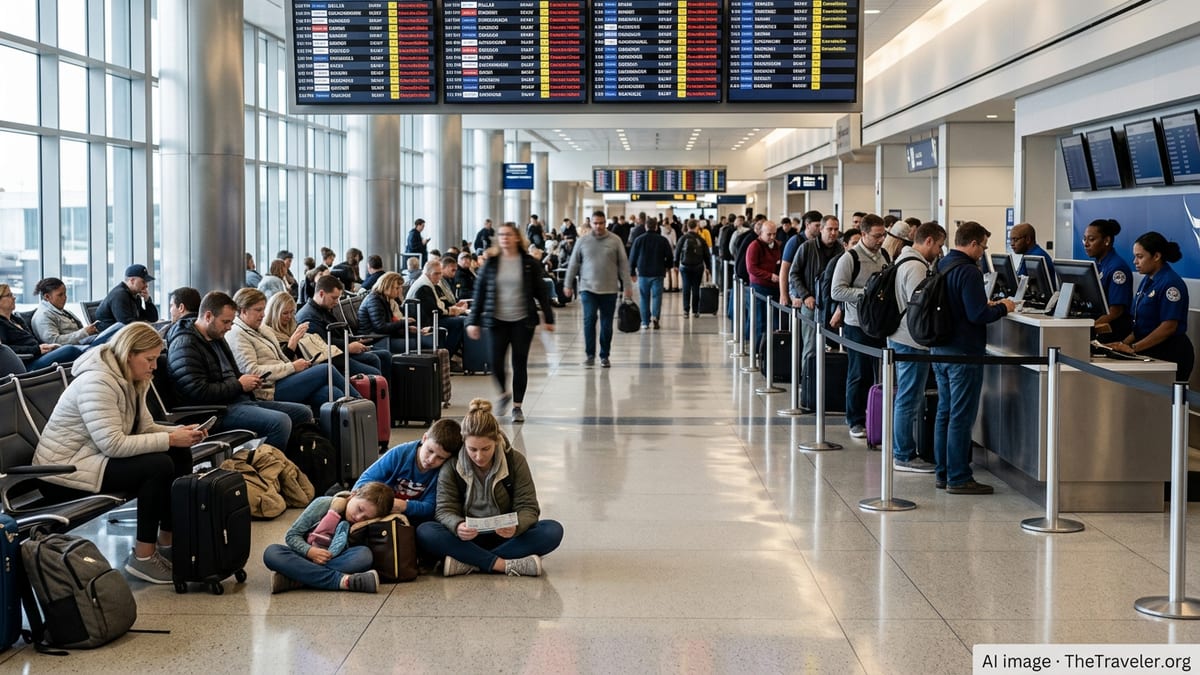
For travelers on the ground, the statistics translated into crowded concourses, lengthy customer service queues and a scramble for scarce hotel rooms near major airports. At Dallas, Chicago and Miami, lines stretched from rebooking counters deep into terminal corridors as families, business travelers and international visitors tried to salvage plans around missed weddings, meetings and cruise departures.
Many passengers reported being rebooked on flights one or two days later, particularly on popular leisure routes where spring demand had already filled most seats. Same day alternatives were often limited to less convenient routings with multiple connections or redeyes through distant hubs, if they were available at all.
Airlines encouraged customers to use mobile apps and self service kiosks to change itineraries, but the volume of disrupted trips tested digital systems as well. Notifications sometimes arrived after new flights had already been delayed again, adding to confusion among travelers trying to interpret shifting gate assignments and departure times across crowded terminal information screens.
What Travelers Can Expect in the Coming Days
With the storm system forecast to linger over the central United States through at least Saturday, aviation analysts warned that the current disruption is likely to persist in the form of elevated delays even after the worst weather cells pass. Airlines may proactively trim schedules at affected hubs to rebuild buffers and reduce the risk of sudden, large scale cancellation waves later in the week.
Passengers booked to travel through Dallas, Chicago, Miami, Nashville or Oklahoma City over the next several days are being urged to monitor flight status frequently, check in as early as possible and avoid tight connections if they have flexibility. Those starting trips from smaller regional airports that feed into these hubs are especially vulnerable to missed onward flights when the first leg of a journey is delayed.
While carriers have begun to waive change fees on select routes tied to the storm affected region, compensation for hotel stays and meals remains inconsistent and often depends on whether the delay is classified as weather related or within an airline’s control. Travelers stuck overnight are being advised to document expenses and keep records of communications with airlines in case additional relief policies are announced once the extent of the disruption becomes fully clear.