

More news on this day
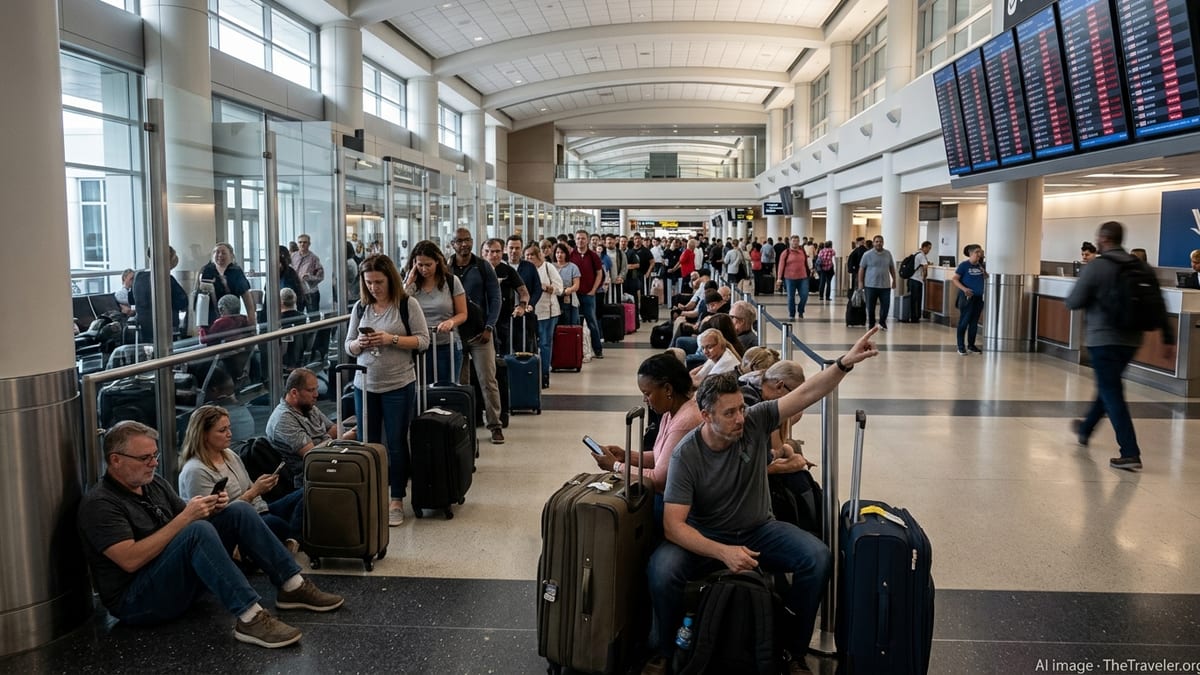
Thousands of passengers across the United States faced long lines, missed connections and overnight airport stays as nearly 200 flights were canceled and close to 4,000 more were delayed in a fresh wave of disruption affecting Delta Air Lines, Southwest, American, Spirit, Kuwait Airways and other carriers at major hubs from New York and Los Angeles to Chicago and Atlanta.
Get the latest news straight to your inbox!
Nationwide Disruptions Hit Major U.S. Carriers
Publicly available flight-tracking data on Sunday showed 188 cancellations and 3,904 delays across the U.S. system, underscoring how even a relatively modest share of the daily schedule can translate into large numbers of affected travelers when multiple big carriers experience problems simultaneously. Delta Air Lines, Southwest Airlines, American Airlines, Spirit Airlines and Kuwait Airways were among the most visible names on boards filled with delayed and canceled flights.
The disruption stretched across key coastal and Midwest gateways, including New York area airports, Los Angeles International, Chicago O’Hare and Atlanta, where rolling delays created bottlenecks throughout the day. Passengers reported missed connections, extended tarmac waits and long queues at rebooking counters as airlines attempted to reshuffle crews and aircraft.
The pattern fits a broader trend in U.S. aviation in recent years, in which relatively small percentages of cancellations and delays equate to tens of thousands of disrupted journeys due to dense schedules and heavily interconnected hub networks. Government data on on time performance show that carriers such as Delta, Southwest, American and Spirit routinely operate tens of thousands of monthly flights, so any systemic strain quickly ripples through the system.
Weather, Congested Skies and Tight Schedules
Initial reports pointed to a familiar combination of factors behind the latest wave of disruption, including unsettled weather in busy corridors, air traffic congestion and schedule tightness that leaves little room to recover when early flights run late. Federal data categorize most delay causes into air carrier issues, national aviation system constraints, extreme weather and security, and recent reports highlight how non extreme weather and heavy traffic volumes are increasingly important contributors.
In practice, this means that thunderstorms near one hub, temporary ground stops at another and a shortage of spare crews or aircraft can quickly cascade into multi airport problems. Once early morning services depart behind schedule, crews may time out later in the day under duty limits, forcing cancellations even when the original weather or traffic issue has eased.
Analysts note that airlines have generally improved completion rates compared with the pandemic recovery years, but average delay times remain elevated. Industry wide reviews of millions of domestic flights in the 2020 to 2024 period show that while some operational metrics have recovered, passengers are still experiencing longer waits when disruptions do occur, particularly during peak travel periods.
New York, Los Angeles, Chicago and Atlanta Among Hardest Hit
The latest disruption was most visible at the nation’s largest hubs, where the biggest carriers concentrate connecting traffic. At New York’s major airports, screens showed a steady build up of delayed arrivals and departures for both domestic and transatlantic routes operated by Delta, American and other international partners, with Kuwait Airways services also affected on long haul sectors.
In Los Angeles, delays across Southwest, American and Delta pushed back departures to destinations across the country, complicating onward connections and forcing some travelers into overnight stays. Chicago O’Hare, a critical node for transcontinental and Midwest traffic, saw a similar pattern, with rolling delays spilling into the evening and forcing crews and aircraft to be repositioned.
Atlanta, Delta’s primary hub and among the world’s busiest airports by passenger volume, again became a focal point of disruption. Past incidents have shown how concentrated hub operations can magnify the impact of IT problems or airspace restrictions, and the latest data suggested that even incremental schedule pressure in Atlanta was enough to generate missed connections and extended ground times for thousands of travelers.
Disruptions Follow Recent High Profile Airline Meltdowns
The latest wave of cancellations and delays comes after a series of high profile disruptions that have drawn sustained scrutiny of airline operations. In late 2022, Southwest Airlines suffered a scheduling crisis that led to thousands of cancellations and a double digit cancellation rate at the height of the holiday season, prompting a federal settlement and new compensation commitments for affected passengers.
In July 2024, Delta Air Lines experienced one of the most significant operational breakdowns in recent memory after a widespread technology outage tied to third party software. Over several days, the carrier canceled more than 7,000 flights and affected more than a million passengers, prompting an investigation and highlighting the vulnerability of modern airline operations to IT failures.
Other large scale events, including global technology outages that briefly grounded flights at multiple carriers in 2024, have reinforced concerns among travelers and regulators about system resilience. The recurring nature of these meltdowns means that even smaller, single day disruptions, such as the one affecting 188 cancellations and thousands of delays, can trigger heightened anxiety among passengers already wary of missed trips and unexpected costs.
What Travelers Can Expect and How Airlines Respond
As airlines work through backlogs from the latest disruption, passengers can expect lingering knock on effects, including aircraft swaps, schedule changes and reduced seat availability on certain routes. Even once real time cancellation and delay numbers return to typical levels, displaced customers from earlier flights still need to be reaccommodated, which can fill later services and limit rebooking options.
Carriers typically respond by prioritizing mainline hub to hub routes to rebuild network integrity, adjusting crew pairings and in some cases adding larger aircraft where possible to move more passengers on each departure. However, the tight utilization of fleets and staff that has characterized the post pandemic recovery gives airlines limited flexibility to add backup capacity on short notice.
Consumer advocates point out that federal rules require clear communication about delays and cancellations and, in specific circumstances, provide for refunds when flights are significantly changed or canceled. Recent regulatory actions and public pressure have encouraged airlines to publish customer service commitments on issues such as meals, hotel rooms and rebooking support during controllable disruptions, although coverage and conditions vary by carrier.
For now, the latest figures on cancellations and delays serve as another reminder that even on days without headline making meltdowns, U.S. air travel remains vulnerable to cascading disruptions. With major hubs like New York, Los Angeles, Chicago and Atlanta operating near capacity, relatively small shocks in weather, air traffic control or airline scheduling can quickly leave thousands of travelers facing another long day and night at the airport.