

More news on this day
Thunderstorms sweeping across the San Francisco Bay Area on Saturday evening prompted a ground stop at San Francisco International Airport, unleashing a cascade of delays that rippled through one of the nation’s busiest air travel hubs and across the wider U.S. network.
Get the latest news straight to your inbox!
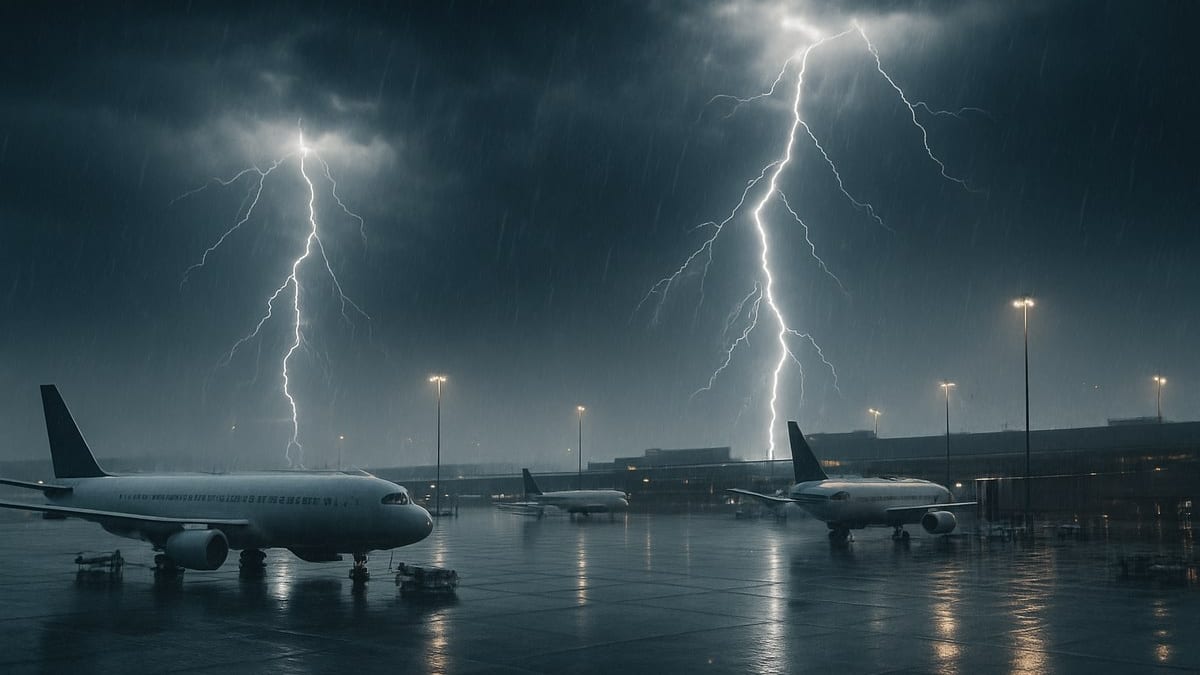
Ground Stop Halts Traffic at San Francisco International
Publicly available flight-tracking data show that San Francisco International Airport briefly halted most arriving and departing traffic on Saturday, April 11, after a line of thunderstorms moved directly over the airfield. The Federal Aviation Administration’s real-time airport status page listed thunderstorms, rain and low visibility in the vicinity around the same time, reflecting deteriorating conditions at the height of the storm.
Local media reports indicate that the ground stop began shortly after 5 p.m. Pacific time and was initially expected to last for more than an hour as controllers and airport operations limited movements for safety. During that window, aircraft already on the taxiways were held in place, while inbound flights queued in holding patterns or diverted to other airports when fuel or crew limits required.
Once the ground stop eased, departures and arrivals resumed but at a reduced rate, producing what aviation observers describe as a “rush hour traffic jam” effect. Aircraft that had been stacked up on the ground and in the air were forced into longer waits for gates, takeoff slots and baggage handling, setting the stage for an evening of rolling delays.
Despite the disruption, federal data by later in the evening showed the airport listed as “on time” in overall status, a reminder that even short-lived ground stops can have outsized effects on individual flights while official metrics normalize as conditions improve.
Hundreds of Delays as Storms Hit a Strained Airport
Flight status boards on Saturday evening reflected the scale of the disruption. Aggregated figures from airline and tracking platforms indicated hundreds of delayed flights into and out of San Francisco, with delay times commonly stretching from 45 minutes to more than two hours for both domestic and international routes.
Local coverage cited average delays approaching an hour during the peak of the ground stop, with warnings that waits could lengthen to well over two hours as the backlog worked through the system. For passengers, that translated into long lines at check-in counters, crowded gate areas and rebookings that pushed some trips into the early hours of Sunday.
The timing of the storm proved especially problematic. The strongest cells arrived during a busy weekend travel period when San Francisco already faced reduced runway capacity and tighter separation requirements introduced in recent weeks. Community and aviation forums have highlighted how those structural constraints, combined with any weather disruption, can quickly push the airport from normal operations into severe congestion.
By late evening, schedules showed delayed departures radiating from San Francisco to major hubs across the United States and onward to international destinations. These secondary effects meant that the impact of a localized thunderstorm extended to travelers far from the Bay Area, including those connecting through SFO on itineraries involving multiple carriers.
Stormy Weekend Forecast Amplifies Travel Risks
Meteorological outlooks had flagged the risk of thunderstorms over the Bay Area heading into the weekend. Forecasts from the National Weather Service and regional meteorologists called for an unusually unstable air mass over Northern California, with the potential for strong, erratic winds, intense downpours, small hail and frequent lightning through Saturday and into Sunday.
Coverage from Bay Area news outlets described the system as part of a broader pattern delivering one of the wettest weekend stretches in more than a year. Earlier in the day, forecasters pointed to a several-hour window in the late afternoon and evening when convective storms were most likely to form directly over coastal and bayside locations, including the corridor around San Francisco International.
Lightning-mapping and radar imagery published on Saturday showed tens of thousands of strikes across California and western Nevada over a 24-hour period, underscoring the intensity of the broader storm environment. Aviation specialists note that any thunderstorm cell located directly above an airport, even if short-lived, can trigger temporary shutdowns when close lightning, wind shear or rapidly shifting visibility threaten safe takeoffs and landings.
For SFO, where runway layout and terrain already limit flexibility in adverse weather, the combination of thunderstorms and existing operational constraints heightened the risk that a brief storm pulse could escalate quickly into hours of downstream disruption.
Travelers Confront Missed Connections and Overnight Disruptions
As the ground stop and subsequent delays unfolded, travelers reported missed connections, tight turnarounds and unexpected overnight stays. Public posts on travel and aviation forums on Saturday evening described passengers held aboard aircraft waiting for a gate, others queueing for rebooking at customer service desks, and some opting to abandon same-day travel altogether in favor of flights later in the weekend.
Long-haul routes were particularly exposed. International arrivals arriving from Europe and Asia that reached the Bay Area during or shortly after the ground stop frequently encountered gate holds or lengthy waits for connecting passengers and crew. Likewise, outbound transcontinental and transpacific flights faced boarding delays as arriving aircraft, flight attendants and pilots were repositioned.
Travel advisories issued by several major carriers ahead of the weekend had already warned customers of potential weather-related disruptions across parts of the United States, including California. Flexible rebooking options and fee waivers for certain routes encouraged some passengers to adjust plans in advance, but the strength and timing of the thunderstorms meant many still found themselves navigating same-day schedule changes.
Airport community updates and noise roundtable briefings in recent months have also pointed to ongoing construction and airspace rule changes around San Francisco that limit the ability to increase arrival rates quickly once weather passes. That reality left little room to “catch up” on Saturday night’s backlog, prolonging the inconvenience for many travelers.
What the SFO Disruption Signals for Spring and Summer Flying
The thunderstorm-triggered ground stop at San Francisco adds to a growing list of weather-related disruptions at major U.S. airports this spring, including ground delays and stops tied to severe storms in Texas and the Midwest earlier in April. Aviation analysts note that as climate variability drives more frequent and intense convective events, large hub airports with limited runway capacity face increasing vulnerability to even short bouts of severe weather.
San Francisco’s experience on Saturday illustrates how several factors converge to magnify the impact of a single storm system: a geographically constrained airfield, evolving federal rules that limit simultaneous approaches, overlapping construction projects and tight airline scheduling that leaves little slack when problems arise. Each of these elements can turn a one-hour halt in operations into an evening of knock-on effects across the national airspace system.
For travelers planning flights through SFO in the coming weeks, publicly available guidance from airlines and weather services highlights a few practical implications. Afternoon and evening departures may carry higher risk of thunderstorm interference during active patterns, and tight connections through San Francisco can be especially vulnerable when the airport is already operating near capacity.
Industry observers suggest that passengers consider earlier departures where possible, build extra time into itineraries involving SFO and monitor both weather forecasts and airline alerts closely on days when convective storms are predicted over the Bay Area. Saturday’s ground stop, while relatively brief, demonstrated how quickly thunderstorm activity can reshape travel plans at one of the West Coast’s key international gateways.