

More news on this day
Luxury tour operator Timbuktu Travel has expanded its global portfolio with the addition of Nepal, positioning the Himalayan nation as a multi-experience destination that fuses culture, nature and adventure for high-end travelers in 2026.
Get the latest news straight to your inbox!
Strategic Expansion into the Himalayas
The addition of Nepal marks a significant broadening of Timbuktu Travel’s focus beyond its core African and Latin American strongholds. Publicly available company information describes Timbuktu as a next-generation platform built around complex, multi-destination journeys, using an interactive planner and on-the-ground expertise to design bespoke itineraries. Bringing Nepal into that framework signals confidence in the country’s capacity to deliver varied, high-value experiences within a single trip.
The move aligns with broader forecasts for 2026 released in Timbuktu Travel’s recent trend reporting, which highlight rising demand for journeys that go beyond traditional sightseeing to focus on connection, authenticity and deeper engagement with local environments and communities. By framing Nepal as a place where trekking, wildlife, spiritual heritage and soft adventure can all be combined, the company is positioning the country as a flagship example of this multi-layered approach.
Industry coverage also points to increasing interest in so-called “frontier” or under-explored destinations, with Nepal frequently cited as a standout option for travelers seeking meaningful trips that still offer comfort and high service levels. Against this backdrop, the decision to feature Nepal more prominently reflects a competition among specialist operators to secure early mover advantage in the next wave of premium adventure destinations.
Nepal as a Multi-Experience Destination
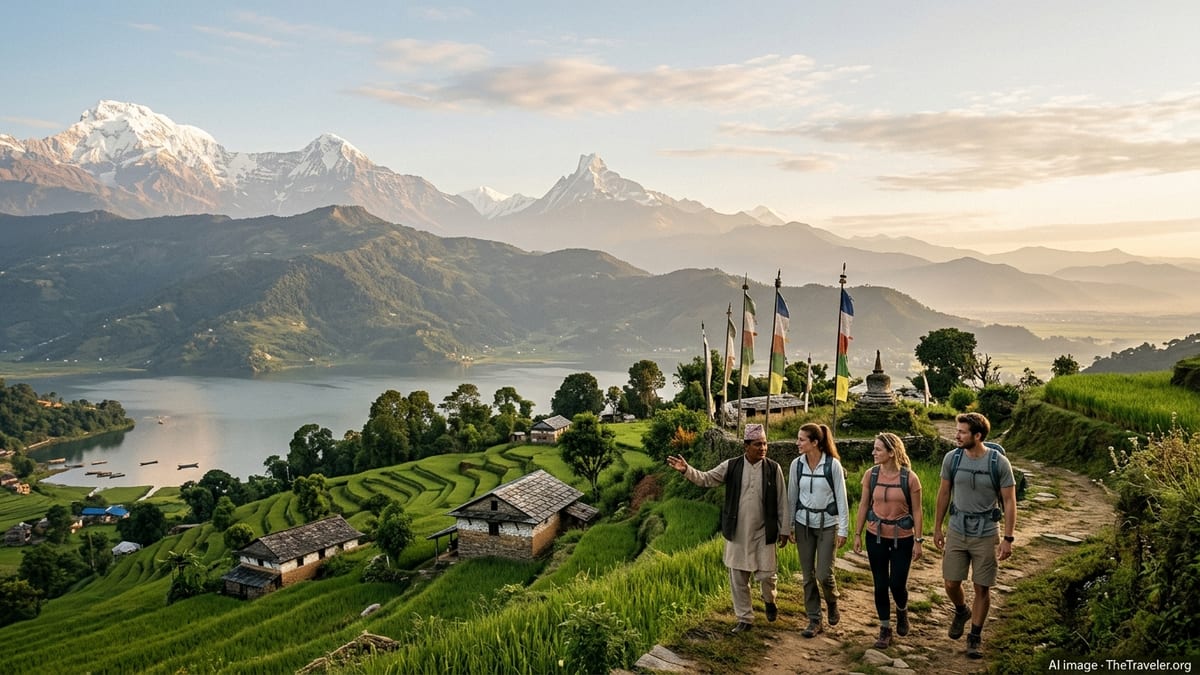
Information on Timbuktu Travel’s Nepal portfolio presents the country as far more than a single-trek destination. Sample itineraries pair temple visits in the Kathmandu Valley with time in lakeside Pokhara beneath the Annapurna range, and extend into the subtropical lowlands for wildlife viewing in Chitwan and other protected areas. The emphasis is on stitching together contrasting landscapes and cultures within a single custom route.
Coverage of new Himalayan programs indicates that itineraries are being designed to showcase the “full spectrum” of Nepal, from historic royal cities and Buddhist sites to quieter trekking regions and remote jungle reserves. This multi-layered positioning mirrors a broader shift in experiential travel, where visitors increasingly seek a blend of activity, culture and nature rather than a single marquee highlight.
The approach also reflects evolving perceptions of Nepal itself. Reports from regional tourism and business publications describe the country as a year-round experiential destination, supported by gradual improvements in infrastructure, trail upgrades and a growing collection of sustainable lodges and higher-end teahouses. Timbuktu Travel’s expansion appears to build on these developments, using them as a springboard for itineraries that appeal to both first-time visitors and repeat Himalayan travelers.
Blending Culture, Nature and Adventure
Central to the new Nepal offering is the promise of seamless transitions between cultural discovery, wilderness immersion and adventure activities. Publicly available itinerary descriptions outline days that might begin with temple-hopping among UNESCO-listed sites in Kathmandu’s surrounding cities, continue with scenic flights or drives into the mountains, and conclude with sunset over rice terraces or lakes framed by snow-capped peaks.
On the nature and wildlife side, the company’s materials spotlight the lowland Terai as one of Asia’s more compelling wildlife regions, where dense jungle and riverine forests provide habitats for species such as rhinos and a range of birdlife. Rather than replicating the open savannah model of African safaris, these programs emphasize slower, more intimate encounters, with patience and expert guiding required to spot animals in thick vegetation.
Adventure is woven through these experiences in varied forms, from classic trekking routes near the Annapurna range to quieter valleys and shorter hikes designed for mixed-ability groups. The itineraries are structured to appeal to travelers interested in active days without necessarily committing to technical mountaineering or long expeditions, aligning with broader trends toward accessible adventure that still feels remote and immersive.
Responding to Shifting Traveler Priorities
Timbuktu Travel’s latest trend reporting for 2026 highlights several shifts in traveler behavior that are directly reflected in the Nepal launch. The company cites strong growth in small-group and multi-generational trips, wellness-infused journeys and itineraries built around deeper cultural immersion. Nepal’s mixture of mountain landscapes, spiritual heritage and village life lends itself to shared experiences that resonate across age groups.
Industry commentary on Nepal’s tourism recovery also notes an increasing focus on sustainability and impact, with more properties and operators working to balance visitor growth with environmental protection and community benefit. Timbuktu Travel’s broader commitment to community-led initiatives and conservation, described in its corporate materials, suggests that Nepal itineraries are likely to highlight lodges and experiences with visible local impact, in line with rising consumer interest in responsible travel.
At the same time, external reporting shows Nepal working to refine trekking regulations and improve safety and oversight in remote mountain regions. While requirements continue to evolve, the overall direction points to a more structured framework for foreign hikers, reinforcing the role of specialist operators in navigating permits, logistics and risk management for travelers seeking off-the-beaten-path experiences.
Strengthening Timbuktu Travel’s Global Footprint
The decision to foreground Nepal within Timbuktu Travel’s portfolio arrives as the company gains broader recognition for its destination expertise. Recent industry coverage of global advisor rankings lists several of its specialists among the leading travel planners worldwide, citing their ability to craft complex, culturally rich itineraries. Adding a high-profile Himalayan destination strengthens the firm’s claim to offer comprehensive, tailor-made journeys across multiple continents.
Corporate background information portrays Timbuktu Travel as combining digital trip-planning tools with a distributed team of regional experts. Integrating Nepal into this model enables travelers to experiment online with route ideas that span city stays, trekking, wildlife and wellness, before refining plans with specialists who know conditions on the ground. This blend of technology and human insight is positioned as a key differentiator in the increasingly competitive luxury and adventure travel space.
For Nepal, inclusion in a curated, globally promoted portfolio is likely to enhance visibility among affluent, experience-driven travelers who may previously have associated the country primarily with Everest or long-haul treks. For Timbuktu Travel, the move consolidates its strategy of identifying destinations where a single journey can encompass multiple modes of travel and engagement, reinforcing its identity as a leader in multi-experience, multi-destination trips.