

Tintamarre Island is one of those rare places in the Caribbean that still feels wild. Just off the northeast coast of Saint Martin, this uninhabited speck of land has no shops, no bars and no roads, only a sweep of pale sand, turquoise water and healthy marine life gliding over protected reefs.
For snorkelers, it is a small paradise: sea turtles grazing over seagrass, schools of reef fish flashing across coral heads, and water so clear you can see the sandy bottom far below your fins.
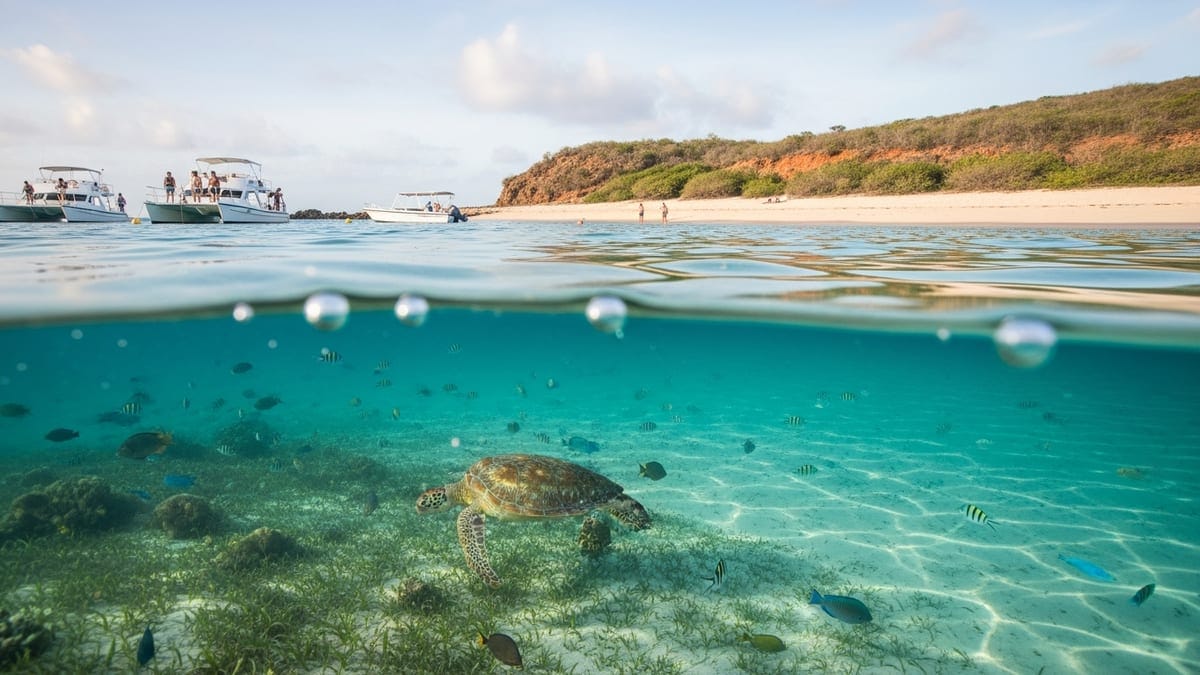
Understanding Tintamarre Island and Its Marine Reserve
Tintamarre lies about 2 miles off the northeast coast of Saint Martin and is part of the French side’s Marine Nature Reserve. The island is undeveloped, which means you will not find restaurants, beach clubs or rental kiosks here.
What you will find is a long beach on the south side, low cliffs and rocky shelves around much of the coastline, and shallow turquoise water that quickly deepens into darker blue. The lack of infrastructure is a deliberate choice intended to protect the habitats that make Tintamarre such a standout snorkeling destination.
The Marine Nature Reserve status is not just a label. It comes with strict regulations on anchoring, fishing and collecting. Boats must use designated mooring or anchoring zones, commercial activities are controlled, and visitors are prohibited from taking sand, shells or any marine organisms.
These rules are enforced more actively in recent years as authorities respond to growing visitor numbers and concerns over reef damage and wildlife disturbance. The upside for snorkelers is obvious: healthier coral patches, more fish and a better chance of seeing sea turtles in relatively undisturbed surroundings.
Most day visitors experience Tintamarre on an organized boat trip from Saint Martin or Sint Maarten. These run from Simpson Bay, Philipsburg and Oyster Pond on the Dutch side, and from Marigot or Orient Bay on the French side. Because all itineraries are constrained by reserve rules, there is a degree of consistency in how and where boats anchor.
That, in turn, keeps the best snorkeling areas from being overrun at any one time, even though peak days can feel busy when several catamarans arrive together. Expectations are important: you are visiting a protected yet popular site, not a private island.
For travelers interested in nature and conservation, understanding this protected status adds depth to the visit. Tintamarre’s seagrass beds and fringing reefs form part of a larger network of habitats that shelters seabirds, turtles, rays and reef fish around Saint Martin.
When you float on the surface watching a hawksbill turtle feed below, you are seeing the result of two decades of local and regional efforts to give these animals space and time to recover. Respecting the rules is not a bureaucratic detail; it is the reason the experience is still so rewarding.
Getting to Tintamarre: Tours, Timing and Conditions
Reaching Tintamarre is only possible by boat. There are no public ferries, so visitors book either a group excursion or a private charter. Most trips are half or full day cruises that combine Tintamarre with other stops such as Creole Rock, Pinel Island or a coastal cruise along the cliffs of the French side.
Catamarans and larger motor yachts are the most common options for shared tours, while smaller speedboats and sailing yachts are typical for private groups.
From departure points such as Simpson Bay or Philipsburg on the Dutch side, the ride to Tintamarre usually takes 30 to 45 minutes depending on sea conditions and any intermediate stops. From the French side, especially from Orient Bay or Cul-de-Sac, travel times can be shorter.
Operators often schedule Tintamarre either as the first stop of the day, to get ahead of crowds and take advantage of calm early-morning conditions, or late morning when the sun is high and visibility in the water is at its best. When booking, ask specifically when the boat expects to be at Tintamarre, as this can influence your experience.
Weather and sea state matter more than many visitors anticipate. The island sits exposed to Atlantic swells, and although the south-facing beach is relatively sheltered, rougher days can mean choppy surface conditions, stronger current near the headlands and reduced underwater visibility due to stirred-up sand. During the calmer winter and early spring months, you are more likely to find glassy surface conditions and clear water.
In the late summer and during the Atlantic hurricane season, tour operators monitor marine forecasts closely and may cancel or adjust itineraries at short notice. Flexible scheduling and travel insurance are sensible when planning trips in shoulder and storm seasons.
For dedicated snorkelers, a small-group tour or private charter is often worth the extra cost. These boats can adjust how long they stay at Tintamarre based on conditions and passenger interest, and guides are more likely to get in the water with you, pointing out turtles and safer entry and exit points.
On larger party-style catamarans, snorkeling is just one activity among several, and the group may not spend very long in the best areas for marine life. If your primary goal is unhurried time in the water, communicate that clearly when you book and choose accordingly.
Snorkeling Zones: Turtles, Reefs and Clear Water
The beauty of Tintamarre for snorkelers lies in its variety within a compact area. Most tours anchor off the southern beach, where the sand slopes gently into clear, waist-deep water. From here, you can swim in two broad directions. To one side lie the seagrass meadows where green sea turtles are often found grazing; to the other, low rocky ledges and coral outcrops that attract reef fish, sea fans and occasional rays.
The turtle zone is usually within a few minutes of surface swimming from the boat or beach. In relatively shallow water, patches of seagrass sway over smooth sand. This is feeding territory for green turtles, which can be seen drifting slowly between patches, surfacing for air every few minutes.
The clarity of the water often allows you to watch them from above without diving, a major advantage for less experienced snorkelers or those who are not comfortable with freediving. Even when turtles are not present, the seagrass supports conch and smaller invertebrates that reward close observation.
The reefier sections tend to lie closer to the rocky points and along sections of the northern and eastern coastline that some tours approach by tender or encourage stronger swimmers to reach. Here, the sandy seabed gives way to scattered coral heads, low spur-and-groove formations and boulders encrusted with sponges.
You may see sergeant majors, parrotfish, juvenile angelfish and wrasse weaving through the structures, as well as sea fans and soft corals waving in the surge. On calm days the visibility can be striking, with sunlight creating sharp, shifting patterns over the contours of the reef.
Current and surge increase as you move away from the protected southern bay and toward the open edges of the island. Guides familiar with Tintamarre’s conditions will often confine novice swimmers to the sheltered beach side and reserve the more exposed corners for confident snorkelers who are comfortable with moderate current and stronger wave action.
It is important not to stray around blind corners of cliffs or rocky points without guidance; what feels manageable in one direction can quickly become tiring against an unexpected current on the return.
Sea Turtles and Marine Life: What You Are Likely to See
Most visitors come to Tintamarre with turtles in mind, and for good reason. The waters surrounding the island are important feeding grounds for green sea turtles, which rely on the seagrass beds that flourish in the shallow sandy areas.
You may also encounter hawksbill turtles along the rockier slopes, where they forage for sponges. Sightings can never be guaranteed, but on calm days with a bit of patience, it is common to see at least one turtle gliding past or rising to the surface within easy viewing distance.
Beyond turtles, Tintamarre’s fringing reefs support a typical northeastern Caribbean assemblage of fish and invertebrates. Schools of blue tang and surgeonfish graze on algae, while stoplight parrotfish crunch their way across hard surfaces.
You may spot trumpetfish hovering vertically beside sea fans, squirrelfish and grunts sheltering under ledges, and small damselfish defending their patches of algae. In the sandier channels, southern stingrays sometimes rest partially buried, and eagle rays patrol deeper edges, particularly where the bottom drops away more steeply from shore.
Coral diversity includes brain corals, mustard hill corals, various species of star corals, and sea rods and sea fans. While some sections have suffered from bleaching events and storm damage over the years, protected areas around Tintamarre still contain pockets of healthy coral growth, especially where reserve regulations limit anchoring and physical disturbance.
Observant snorkelers may also notice cleaner shrimps, sea cucumbers and occasional octopus, particularly if they move slowly and take time to look into crevices rather than racing over the surface.
Above the waterline, Tintamarre is also valuable for seabirds. The island provides nesting or resting areas for species such as terns and noddies that benefit from the relative isolation and lack of human infrastructure.
Even from the water you may see them circling overhead or resting on rocky outcrops. Their presence is another reminder that the island’s protected status encompasses both marine and terrestrial ecosystems, and that your activity as a visitor takes place in the middle of a wider, interconnected habitat.
Safety, Skills and Snorkeling Etiquette
Although Tintamarre is suitable for beginners under the right conditions, it is crucial not to underestimate open-water snorkeling. You are in the sea, often without a lifeguard, and conditions can change rapidly.
Basic competence in swimming, comfort with a mask and snorkel, and an understanding of how to clear a snorkel and mask are essential before you venture far from the boat or shore. Many operators provide buoyancy aids such as snorkeling vests or foam noodles; do not hesitate to use them, especially if you are not a strong swimmer.
Always snorkel with a buddy, and agree on simple signals before you get in the water. Stay within sight of your boat, and pay attention to instructions about boundaries and time limits.
Guides will often point out safe entry and exit spots and warn you about areas of stronger current or hidden rocks near the surface. If you feel tired, cold or anxious, turn back earlier than you think you need to. In the excitement of spotting a turtle, it is easy to forget how far you have drifted.
Good snorkeling etiquette is critical, both for your safety and for the wellbeing of the ecosystem you have come to enjoy. Keep your fins away from coral and the seafloor; standing, kicking or even brushing against coral can break fragile structures that take years to grow.
Maintain a respectful distance from turtles and other wildlife. A general rule is to stay at least several body lengths away and never block a turtle’s path to the surface. If an animal changes direction abruptly or speeds up, it is signaling that you are too close.
Environmental responsibility extends to what you bring and wear. Choose a mask that fits properly so you are not constantly adjusting it with wet, slippery hands, and consider a rash guard or lightweight wetsuit to reduce reliance on sunscreen.
If you do use sunscreen, opt for a formula without ingredients that are known to harm corals and marine life, and apply it well before entering the water to minimize wash-off. The Marine Nature Reserve’s regulations prohibit taking anything from the sea or shore, including rocks, shells and sand. Leaving no trace is not just polite, it is required.
Planning Your Gear and Choosing the Right Tour
Most boat tours to Tintamarre include basic snorkeling gear such as masks, snorkels and fins. For many travelers, that is sufficient. However, if you are particular about fit and hygiene, bringing your own mask and snorkel is a smart decision.
A well-fitted mask that seals comfortably around your face makes the difference between a relaxed exploration and a constant battle against leaking and fog. If you wear prescription lenses, consider a prescription mask or contact lenses designed for water use.
Fins are especially useful at Tintamarre because some of the best turtle and reef zones require moderate surface swimming from the boat. Short travel fins are usually adequate for these distances and easier to manage than long freediving fins when boarding and exiting boats.
If you are not used to wearing fins, practice gentle, straight-legged kicks that originate from your hips rather than frantic, bent-knee movements that tire you quickly and increase the risk of accidentally kicking coral or other snorkelers.
In addition to core gear, pack a lightweight long-sleeve top or rash guard, a hat and a towel. Even on overcast days, the combination of tropical sun and reflection from the water makes sunburn a real risk.
Many operators offer drinks on board, but bringing your own reusable water bottle helps you stay hydrated between swims and reduces reliance on single-use plastic. A small dry bag is useful to protect your phone, camera and personal items from spray and the occasional rain shower.
When comparing tours, consider group size, itinerary and how much emphasis is placed on snorkeling versus socializing or cruising. Some operators market their trips explicitly around snorkeling and marine life, with guides in the water pointing out species and discussing the reserve’s rules and ecology.
Others focus more on music, open bars and beach time, with snorkeling as a short optional activity. Neither approach is inherently better, but aligning your expectations with the tour’s style will make your day at Tintamarre more satisfying.
Responsible Travel and Conservation at Tintamarre
Every visitor to Tintamarre participates, consciously or not, in the island’s conservation story. The area’s increasing popularity brings economic benefits to Saint Martin’s tourism sector, but it also adds pressure on fragile habitats.
The Marine Nature Reserve’s regulations, such as designated mooring zones and bans on collecting, are one layer of protection; another is the behavior of individual visitors and operators on any given day.
As a traveler, you can support responsible practices by choosing tour companies that demonstrate clear respect for the reserve. Look for operators that brief passengers on regulations before arrival, discourage touching wildlife, avoid loud music in the anchorage and never anchor directly on coral.
On the water, follow their guidance even if you see less responsible behavior from other boats. Peer example matters: when guests calmly observe turtles from a distance instead of crowding them, it sets a tone others are more likely to follow.
On the island itself, stay on established paths if you go ashore, avoid disturbing bird nesting areas and pack out all trash. Even biodegradable waste such as fruit peels can attract invasive species or alter local wildlife behavior.
If you use disposable items on board, ensure they are secured so they do not blow overboard. Small choices add up, particularly at a compact site like Tintamarre where multiple groups may be visiting simultaneously.
Finally, consider extending your impact beyond a single excursion. Learning about regional marine conservation initiatives, supporting local organizations that work on reef monitoring or turtle protection, and sharing accurate information with other travelers all help sustain places like Tintamarre.
The clearer and richer the water appears during your snorkel, the more evident it becomes that such beauty is neither guaranteed nor permanent without ongoing care.
The Takeaway
Tintamarre Island offers one of the most memorable snorkeling experiences in the northern Caribbean: a raw, undeveloped landscape ringed by clear turquoise water, seagrass beds frequented by turtles and reefs alive with fish and corals.
Its protected status inside Saint Martin’s Marine Nature Reserve is central to that appeal, shaping how tours operate, where boats anchor and how visitors are expected to behave. Approach the island with an understanding of those rules, and you will find that they enhance rather than limit your time in the water.
Planning the experience is straightforward. Choose a tour that prioritizes snorkeling, pay attention to weather conditions and timing, and equip yourself with a well-fitted mask, fins and sun protection.
Once in the water, move slowly, give wildlife space and keep your fins and hands away from the reef. In return, Tintamarre will reward you with glimpses of grazing turtles, schools of reef fish and the quiet sensation of floating over a living landscape, suspended between sand and sky.
For many travelers, a day trip to Tintamarre becomes the highlight of a Saint Martin holiday. It combines adventure and serenity in equal measure, reminding visitors what the Caribbean coastline looked like before development and how vibrant its underwater world can be when given room to breathe.
Treat the island as a privilege rather than a playground, and you help ensure that future snorkelers will find the same clear water, turtles and reefs waiting for them just beyond the shore.
FAQ
Q1. Do I need to be an experienced snorkeler to enjoy Tintamarre Island?
Beginners can enjoy Tintamarre, especially in the sheltered waters off the main beach, provided they are comfortable in the sea and use flotation aids if needed. However, some of the most interesting reef areas are better suited to confident swimmers, so honest assessment of your skills and following guide instructions are essential.
Q2. How likely am I to see sea turtles while snorkeling at Tintamarre?
Turtle sightings are common but never guaranteed. Green sea turtles frequently graze in the seagrass meadows around the island, and hawksbills may appear near rocky areas. Calm conditions, patience and a respectful distance improve your chances of longer, more natural encounters.
Q3. What is the best time of day to snorkel at Tintamarre for clear water?
Late morning to early afternoon typically offers the best combination of high sun and good underwater visibility, making colors more vivid and reducing shadows. Many tours plan their Tintamarre stop during this window, though early-morning visits can be quieter and more serene.
Q4. Can I visit Tintamarre Island without joining an organized tour?
Most visitors arrive with commercial operators, but private boat owners can reach Tintamarre on their own if they respect Marine Nature Reserve regulations and use designated anchoring or mooring areas. There is no public ferry and no infrastructure on the island, so independent visitors must be fully self-sufficient.
Q5. Are there any facilities on Tintamarre such as restrooms, food or shade structures?
No, Tintamarre is undeveloped and has no built facilities. You will need to rely on your boat for restrooms, shade and refreshments, and bring everything you require for the day, including water, snacks and sun protection. This simplicity is part of the island’s appeal but requires preparation.
Q6. What kind of marine life, besides turtles, can I expect to see?
Snorkelers commonly observe parrotfish, surgeonfish, angelfish, wrasse, damselfish and various schooling species such as grunts and snapper. On the sandier bottom you may encounter rays or conch, while the reef structures host corals, sponges and invertebrates like cleaner shrimp and sea cucumbers.
Q7. Is snorkeling at Tintamarre suitable for children?
With proper supervision and flotation, older children who are comfortable in the water can enjoy the calm, shallow areas near the beach. Parents should keep them close to the boat or shore, avoid areas with noticeable current and ensure they understand not to touch corals or chase turtles and fish.
Q8. What should I wear and bring specifically for snorkeling at Tintamarre?
Wear a well-fitted swimsuit or rash guard, and consider a long-sleeve top or light wetsuit for sun and jellyfish protection. Bring your own mask if possible, along with a towel, reef-safe sunscreen, a hat and a reusable water bottle. If you are prone to seasickness, taking precautions before departure is wise.
Q9. Are there any health or environmental risks I should be aware of?
Standard open-water risks apply, including currents, sharp rocks and occasional stinging organisms. Foot protection is helpful for rocky entries, but you should never walk on coral. Environmentally, the main concerns are damage to reefs and disturbance of wildlife, which you can minimize by avoiding contact, using careful fin kicks and following Marine Nature Reserve guidelines.
Q10. How can I make my visit to Tintamarre more sustainable?
Choose a tour operator that prioritizes conservation, avoid single-use plastics, use reef-safe sunscreen, and never touch or take anything from the sea or shore. Observing wildlife from a distance, packing out all trash and sharing responsible practices with fellow travelers all help protect Tintamarre’s reefs, turtles and clear water for the future.