

More news on this day
A surge in pilgrim footfall, record donations and fresh infrastructure investment are turning Tirupati and wider Andhra Pradesh into one of India’s most closely watched hubs for spiritual and religious tourism, as the state seeks to capitalise on a nationwide boom in faith-driven travel.
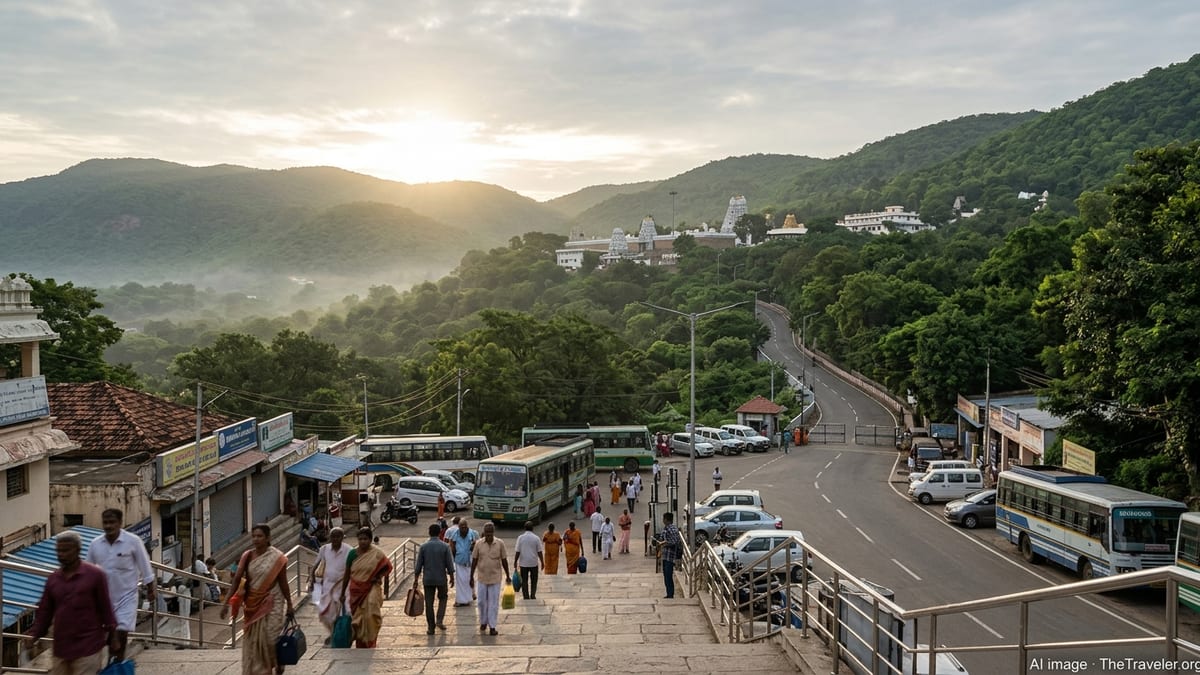
Tirupati’s Temple Economy Reaches New Milestones
Tirumala, home to the hilltop Sri Venkateswara shrine above Tirupati, is registering some of its strongest numbers on record, reinforcing its status as one of the world’s wealthiest and busiest pilgrimage destinations. Publicly available information shows that the Tirumala Tirupati Devasthanams (TTD) trust, which manages the temple, has projected multi-thousand-crore annual budgets in recent years, with growth driven largely by donations and pilgrim offerings.
Recent donation figures underline the scale of that momentum. According to published coverage, TTD-linked trusts received donations of more than Rs 900 crore between late 2024 and late 2025, reflecting robust support from devotees across India and abroad. Independent analyses have also estimated the broader TTD ecosystem to hold assets worth several trillion rupees, highlighting the financial weight now attached to spiritual tourism in this corner of Andhra Pradesh.
On-the-ground indicators, from accommodation demand to prasad sales, tell a similar story. Reports on temple operations indicate that sales of the iconic Tirumala laddu prasadam reached well over a billion pieces in 2025, with double-digit year-on-year growth, pointing to steadily rising pilgrim volumes. Municipal data and local coverage further suggest that Tirupati’s urban footprint is expanding to keep pace, with proposals to upgrade the city’s administrative status and integrate surrounding growth corridors.
The cumulative effect is a temple economy that now anchors a much larger web of services spanning transport, hospitality, small-scale retail and religious merchandise. For many visitors, however, these commercial markers simply sit in the background of what remains a deeply personal act of devotion, even as their collective choices reshape the region’s economic geography.
State Strategy: From Temple Town to ‘Spiritual Capital’
The surge of interest around Tirupati is not solely organic. A formal tourism strategy unveiled under Andhra Pradesh’s Tourism Policy 2024–29 positions Tirupati as a “Spiritual Capital” for the state, according to a government strategy document prepared with external consultants. The plan identifies pilgrimage and spiritual travel as a flagship growth segment and proposes tailored interventions to improve both capacity and visitor experience.
Among the priorities outlined are upgraded connectivity, streamlined crowd and queue management, and enhanced amenities in and around the temple town. Public documents emphasise the need to balance religious sensitivities with contemporary expectations for hygiene, safety and digital services, especially as younger domestic travellers and an expanding diaspora show interest in structured pilgrimage itineraries.
The state’s positioning also leans on national trends. A sectoral study on pilgrimage and spiritual tourism released in 2024 estimated that religious travel accounts for well over half of India’s domestic tourism journeys. That baseline, combined with post-pandemic appetite for road trips and shorter spiritual breaks, has encouraged Andhra Pradesh planners to frame Tirupati as a natural gateway for themed circuits stretching across the state.
In this reading, Tirupati is both destination and launchpad: the place where many visitors first land or disembark before fanning out to lesser-known shrines, monastic centres and cultural sites spread from the Rayalaseema heartland to the north-coastal districts.
Infrastructure Upgrades Transform the Pilgrim Experience
To sustain higher flows of devotees, tangible changes are unfolding in and around Tirupati. The upgraded airport, improved highway connectivity on the Bengaluru and Chennai axes, and expanded rail links are already altering how visitors approach the temple town. Reports indicate that bus operators and tour companies have responded with more frequent services, particularly around major festivals and auspicious dates in the Vaishnavite calendar.
Within Tirumala itself, the focus is turning to technology-enabled crowd management and services. Local coverage and community reports describe new systems ranging from online darshan booking and slot-based access to QR code-based footwear tracking designed to prevent loss and reduce congestion around cloakroom facilities. Pilgrim feedback shared in public forums suggests that, while peak-season crowding remains a concern, incremental improvements are easing bottlenecks in critical zones such as queue complexes and food distribution halls.
Accommodation capacity is also evolving. TTD-run guesthouses and dharamshalas continue to serve the bulk of budget-conscious pilgrims, while privately operated hotels and homestays in Tirupati cater to mid-scale and premium visitors. Investors in the hospitality sector are watching these dynamics closely, with industry commentary pointing to sustained opportunities in mid-market hotels, particularly around the city’s transport hubs and on arterial roads leading up to the hills.
Beyond core pilgrimage infrastructure, civic amenities are being pulled into the conversation. Waste management, drinking water supply and traffic regulation are all under pressure as daily footfall rises. Urban planners and civil society groups are increasingly framing Tirupati as a test case for how fast-growing spiritual tourism centres can balance service delivery, cultural preservation and environmental constraints.
Beyond Tirumala: Building Statewide Spiritual Circuits
While Tirupati dominates headlines, Andhra Pradesh is positioning a broader portfolio of religious and spiritual destinations to distribute visitor flows more evenly. Official tourism material highlights sites such as the coastal temple complex at Simhachalam near Visakhapatnam, the hill shrines of Srisailam on the state’s border, and newer attractions like the Mounagiri Hanuman Temple in Anantapur district, which showcases contemporary temple architecture rooted in traditional forms.
In the north of the state, thematic projects like the Ramanarayanam temple complex near Vizianagaram have already demonstrated how integrated design, landscaping and amenities can convert a devotional centre into a wider tourism draw. Publicly available information notes that the site attracted millions of visitors within a short span after opening, underlining the appetite for modern, family-friendly spiritual destinations that combine religious narratives with gardens, light installations and interpretive galleries.
State-level strategy documents call for stitching such nodes into coherent circuits that can be marketed to domestic tour operators and online platforms. Proposed itineraries include combinations of Vaishnavite and Shaivite temples, Buddhist heritage sites, riverfront ghats and coastal shrines, designed to spread economic benefits beyond Tirupati while encouraging longer stays.
For smaller temple towns and village shrines, this push brings both opportunity and responsibility. There is scope for homestays, local guiding services and artisanal craft sales, but also a need for safeguards around construction norms, waste disposal and the integrity of ritual practices. Observers of India’s wider religious tourism boom note that destinations which plan early for such trade-offs are better placed to avoid the strains now visible in some over-saturated circuits elsewhere in the country.
Balancing Devotion, Commerce and Sustainability
The rise of Tirupati and Andhra Pradesh as a spiritual tourism hotspot also raises questions about how to balance devotional priorities with commercial and environmental considerations. The continuous expansion of built-up areas on and around the sacred hills, the strain on local ecosystems, and the prospect of further crowds in narrow temple precincts are prompting debate among residents, pilgrims and planners.
Environmental groups and urban experts have called in public forums for stricter carrying-capacity assessments, green building codes and stronger safeguards for forested slopes around Tirumala. At the same time, there is ongoing demand for better last-mile transport, expanded parking and more flexible darshan categories, reflecting the competing pressures on a destination that is both sacred site and economic engine.
Social impact is another emerging theme. TTD’s long-standing investments in free meals, healthcare and education for pilgrims and local communities are frequently cited in public reports as examples of how temple revenues can be channelled back into welfare. Recent budget allocations outline significant spending on educational institutions and charitable activities, suggesting that social programming will remain central as revenues grow.
For now, the devotees keep coming. Early mornings see long lines of barefoot pilgrims climbing toward the hill shrine, while in Tirupati below, hotel lobbies, bus stands and railway platforms pulse with arrivals from across India. If current trends hold, the city and its surrounding districts are likely to play an even larger role in India’s unfolding story of spiritual and religious tourism, offering a case study in how faith, infrastructure and policy intersect on the modern pilgrimage trail.