

I went to Vancouver Island’s west coast assuming Tofino would easily beat Ucluelet. Tofino is the name everyone throws around, the place that shows up in glossy magazines and social feeds. Ucluelet, or “Ukee,” always sounded like the quieter cousin you only visit if Tofino is sold out. After splitting my time between the two on the same trip, I came home with a very different view.
Both towns share the same wild Pacific coastline, but the experience on the ground felt surprisingly different in terms of cost, crowds, access to nature and overall vibe. If you are trying to pick a base, or wondering whether it is worth changing towns mid‑trip, here is what actually mattered once I was there.
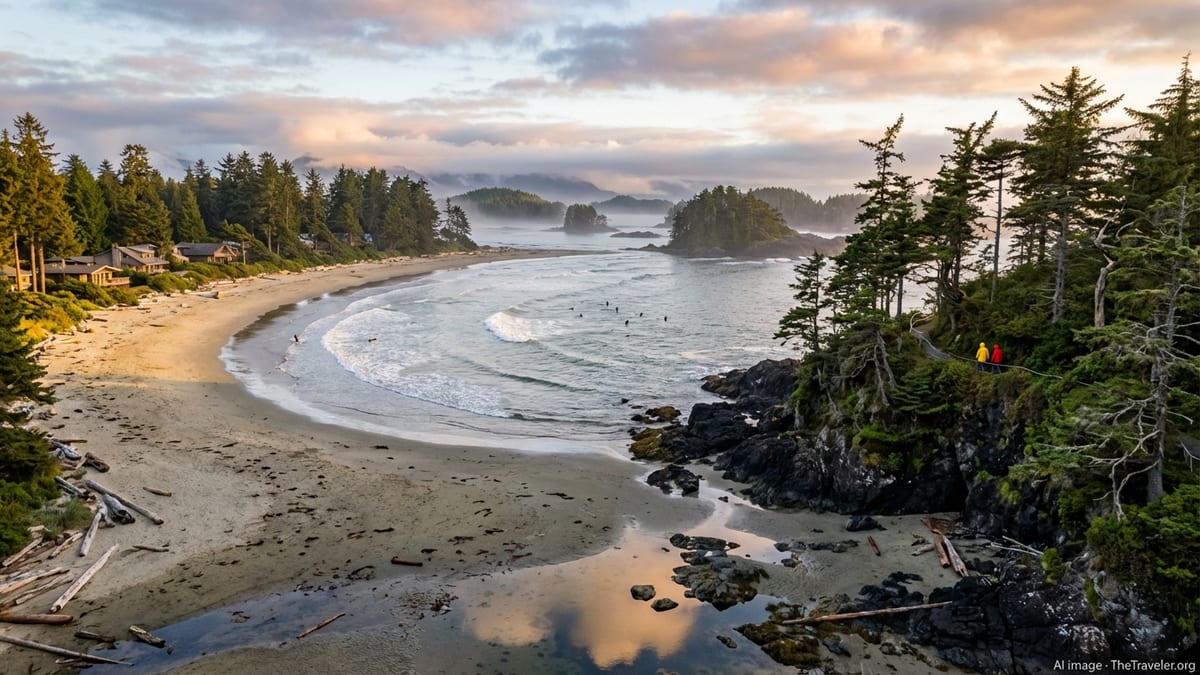
Setting the Scene: Same Coastline, Very Different Feel
On a map, Tofino and Ucluelet look almost interchangeable. They sit at opposite ends of the same peninsula on British Columbia’s west coast, about 40 kilometres apart with Pacific Rim National Park’s beaches between them. In reality, the two towns feel like different chapters of the same book. Tofino struck me as a surf village turned international destination, while Ucluelet still felt like a working community that happens to have world‑class scenery wrapped around it.
Driving in along Highway 4, the first real decision I had to make was whether to turn right to Ucluelet or continue straight toward Tofino. I had booked my first few nights in Ucluelet purely because accommodation there was significantly cheaper and more available. That choice set the tone: Ucluelet became my low‑key base with easy trail access and calmer evenings, while Tofino was where I went for surfing lessons, more restaurant options and people‑watching.
Seasonality shapes both towns in similar ways. Storm watching typically runs from late October into March, with the biggest surf and most dramatic weather often lining up from November through February according to local operators. Summer brings long days, warmer water by local standards and busy beaches. In practice, I found winter and shoulder seasons better suited to Ucluelet’s trails and cozy storm‑viewing nooks, while summer made Tofino’s beach culture and surf scene really shine.
If you only look at postcards, Tofino might seem like the obvious choice. Once I started dealing with parking, restaurant waits and room rates, the gaps between the two towns became a lot more visible. I stopped thinking of them as interchangeable and started treating them as two very different styles of coastal trip that just happen to share the same stretch of ocean.
Getting There and Getting Around: How Convenience Really Compares
From the mainland, both towns effectively share the same access route. I came over on the ferry to Nanaimo and then drove Highway 4 west. The road has improved in recent years but still includes winding mountain sections, active construction zones at times, and winter conditions that can turn slippery around the pass. Local advice was consistent: check conditions, allow extra time, and in winter be prepared with proper tires rather than assuming this is just an easy coastal drive.
Without a car, the logistics used to heavily favour Tofino, but that is changing. I tested the bus connections as a backup in case my rental ran into trouble. Scheduled coach services now run between Nanaimo and the coast, with advance reservation required and restrictions on bikes and surfboards. On top of that, the regional West Coast Transit bus connecting Tofino, Ucluelet and the communities and beaches in between has been expanding, with more frequent daytime trips and late‑evening runs scheduled from early 2026. That meant I could realistically stay in one town and rely on the bus to reach the other for dinner or a day of surfing, as long as I paid attention to the timetable.
Once I arrived, day‑to‑day convenience separated the two towns. Tofino’s village centre is compact, but parking around peak times was a headache. I circled more than once looking for a spot near popular bakeries or the small harbourfront, and I quickly learned that summer and busy weekends almost demand either walking from your accommodation or building in time to hunt for parking. In Ucluelet, I had a much easier time pulling into trailheads and grocery stores, and the main streets felt less clogged. The tradeoff was that Ucluelet’s “centre” is more spread out, and there are fewer shops and cafes within a tight walking radius.
If pure convenience is your main criteria and you are not wedded to one town’s vibe, I would now recommend basing yourself wherever you find a good place to stay and using the improved bus service or a car to commute between them. Neither town is dramatically easier to reach from the outside world, but getting around once you are there felt smoother in Ucluelet and more walkable yet more congested in Tofino.
Cost, Availability and Where I Actually Slept
My first serious decision moment came months before the trip, staring at booking sites and watching prices in Tofino creep higher each time I refreshed. Even in shoulder season, waterfront hotels in Tofino often priced out as splurges, especially the ones directly on Chesterman Beach or Cox Bay. By contrast, I could still find mid‑range rooms and small suites in Ucluelet for noticeably less, sometimes enough of a difference to pay for several meals out or activities.
In the end I split my stay: a few nights in Ucluelet with a partial ocean view and kitchen, followed by two nights in a modest place closer to Tofino’s beaches. That mix worked, but I will be honest: the Tofino nights felt expensive for what I got. The room was smaller, parking was tighter, and the property clearly banked on its location rather than its finishes. In Ucluelet I stayed in a place that was not luxurious but felt more spacious and less stressed, partly because I was not doing mental math on how much each night was costing me.
During winter storm season, both towns offer storm‑watching packages, but again pricing leaned higher in Tofino. At one point I looked at an oceanfront resort on Cox Bay that bundled in wine and cozy extras; it looked fantastic, but by the time I added taxes and fees it became a once‑in‑a‑decade kind of splurge. Ucluelet’s equivalent ocean‑view stays and condo‑style units around the harbour or near the Wild Pacific Trail came in at a lower tier, though I sometimes had to trade direct beach access for a short walk or drive.
If you are travelling on a tight budget, Ucluelet clearly wins. If you want that classic “step out onto the surf beach” experience and have money to burn, Tofino’s high‑end lodges and beach houses deliver, but you pay for every crashing wave. If I went back with friends or family, I would likely book a larger rental in Ucluelet and then drive or bus to Tofino’s beaches during the day. For a couple’s splurge weekend, I would reverse it and accept Tofino’s higher price tag in exchange for waking up right on the sand.
Nature Access: Beaches vs Wild Cliffs
The biggest surprise of the trip was how differently I experienced nature in each place, even though they share the same weather and broad coastal setting. When people talk about Tofino, they usually mean its beaches: long crescents of sand like Chesterman, Cox Bay and Long Beach just outside town in Pacific Rim National Park Reserve. Those beaches are exactly as dramatic as the photos suggest. I spent hours walking in the mist, watching surfers ride winter swells and feeling my face sand‑blasted by the wind. It is the textbook west coast beach experience.
Ucluelet’s star, by contrast, is the Wild Pacific Trail, which winds along rocky headlands, sheltered coves and dense coastal rainforest. It is open year‑round during daylight and designed to be accessible to a wide range of walkers, with several sections that families and even some wheelchair users can enjoy. The trail delivers one panoramic viewpoint after another, often with benches set in spots that feel purpose‑built for storm watching. Waves slam into the rocks, spray rises, and you can feel the ground subtly shudder under your feet from the force of the swell.
I expected to prefer the wide beaches of Tofino, but I ended up spending more actual time on the Wild Pacific Trail. It felt less like a backdrop and more like an experience in itself. Even on rainy days, the forest canopy provided a natural cover, so I did not feel forced indoors by every passing squall. I learned to pack water and layers, because there is no potable water along the trail and the wind can shift quickly, turning a mild afternoon into something that felt much colder.
If your idea of a perfect day is walking barefoot on open sand, watching surfers and tide pools, Tofino is hard to beat. If you prefer clifftop views, lighthouses and the feeling of being tucked into the forest while watching storms hammer the outer rocks, Ucluelet quietly wins. For me, the ideal combination was spending a day on Tofino’s beaches, then retreating to Ucluelet for a late afternoon loop on the Wild Pacific Trail as the waves intensified.
Crowds, Atmosphere and Culture: Who Each Town Feels Built For
Tofino felt instantly more international and more curated. Even in the off‑season I heard several languages on the main street, saw a steady stream of surf vans and rental cars, and noticed how many shops were clearly aimed at visitors rather than locals. The upside is energy: there is always something happening, from surf lessons to gallery openings. The downside is that you are rarely alone. Popular coffee shops and brunch spots had lines, and even booking a dinner table on a rainy shoulder‑season night required a bit of planning.
Ucluelet’s atmosphere was different. I met more year‑round residents, saw more work trucks than camper vans, and felt less like I was walking through a place designed for my Instagram feed. That does not mean Ucluelet is undiscovered; tourism is a major part of its economy, and the Pacific Rim Visitor Centre nearby sees a heavy flow of people. But the town itself still feels lived in, with a slightly scruffier, more down‑to‑earth rhythm. Restaurants lean more practical than polished, and I often walked into dinner without a reservation, even on a busy weekend.
One tradeoff I noticed was nightlife. If you are looking for late‑night drinks and a bit of a scene, Tofino is the safer bet. Ucluelet winds down earlier, and most evenings I ended up back at my accommodation with a book or a board game while the rain hammered the windows. With expanded late‑evening bus service connecting the two, it is increasingly realistic to stay in Ucluelet and head to Tofino for a night out, then ride back without driving. That combination strikes me as one of the more underrated advantages of basing in Ucluelet.
If you crave buzz, curated boutiques and a strong surf‑town identity, Tofino delivers. If you prefer a place where you blend into local life a bit more, Ucluelet felt more relaxed and less self‑conscious. Personally, I liked waking up in Ucluelet’s quieter streets and then chasing whatever energy level I wanted that day, whether that meant a busy Tofino lineup or a nearly empty section of the Wild Pacific Trail in the drizzle.
Surfing, Storm Watching and Other Activities
From an activity standpoint, I went in assuming Tofino would win on every front. It is still the more obvious hub for surf schools, equipment rentals and guided trips, and that held true. Nearly all the beginner‑friendly surf lessons I could find were based around Tofino, focusing on beaches like Cox Bay and Chesterman, where the consistent waves and sandy bottoms make learning relatively forgiving. The downside is that you are rarely alone in the water. Surf lineups can feel crowded, even in cooler months, and parking near popular breaks fills fast.
Ucluelet matched Tofino surprisingly well on storm watching. Both towns sit directly exposed to Pacific systems that roll in from the open ocean, and local tourism boards openly promote storm season from roughly late October to March. In Tofino, I watched huge swells explode against Pettinger Point from Cox Bay and roll across Long Beach under thick, grey cloud. In Ucluelet, I felt the waves hammer the rocky headlands below Amphitrite Point and along designated storm‑watching decks on the Wild Pacific Trail.
What really changed my experience was how safely and easily I could watch those storms. Tofino’s beach access is spectacular, but there is a temptation to edge too close to logs and rocky outcrops when the waves really start to perform. Ucluelet’s trail design, with fenced viewpoints and clear signage warning people to stay off the outer rocks, made me feel more comfortable during big swells. I still had to respect closures during extreme winds, but I never felt like I was improvising my own viewing point in potentially dangerous spots.
Beyond surfing and storms, both towns offer versions of the same classic coastal experiences: whale watching in spring, bear viewing in sheltered inlets, kayaking and fishing trips, and plenty of day hikes. In practice, I found Tofino better set up for guided tours with multiple competing operators and a wider range of trip styles. Ucluelet excelled in unguided, do‑it‑yourself experiences: coastal trails, small beaches, and tucked‑away viewpoints I could reach without booking anything. If you like to build your trip around organized excursions, Tofino is easier. If you would rather put on a rain jacket and explore on your own schedule, Ucluelet quietly offers more than it gets credit for.
Food, Groceries and Everyday Practicalities
One of my more mundane but important decision points was where to base myself for everyday needs: groceries, coffee, and meals that did not require a reservation or a special occasion. Tofino has the edge on sheer variety. From higher‑end restaurants to casual food trucks and bakeries, I could easily fill a long weekend just eating my way around town. The problem was friction. At peak times I had to choose between eating early, waiting in line, or giving up and grabbing something basic.
Ucluelet’s food scene is smaller but often less stressful. I found solid breakfasts, decent seafood and a few unexpectedly good casual spots without the constant sense of competition for a table. Grocery shopping was straightforward in both towns, though prices reflected the remote location and supply logistics. Staying in a place with at least a basic kitchenette made a noticeable dent in costs; I cooked simple dinners on a few nights in Ucluelet and did lunches in Tofino, which helped balance the budget.
One detail I had not considered before arrival was how often power cuts can happen during major winter storms. In Tofino, I stayed at a place that clearly anticipated this, complete with candles and instructions for riding out brief outages. Ucluelet had a similar culture of preparedness, but I noticed that some smaller properties felt a bit more vulnerable, especially those tucked deeper into the trees. If you are planning a mid‑winter storm‑watching trip, I would now prioritize accommodations in either town that explicitly mention backup systems or at least provide clear guidance for outages.
In terms of day‑to‑day errands, neither town is perfect. Things close earlier than many city visitors expect, and supplies can run low if weather disrupts deliveries. Overall, though, I found it slightly easier to live my “normal life” in Ucluelet, where I could park easily, shop quickly and get back to the trails, while Tofino felt more like a place built for indulgent meals and lingering rather than efficient errands.
Safety, Weather and When I Would Go Back
Weather is not a background detail on this coast. It is the main character, and it dictates what kind of trip you will have in both towns. In summer, long daylight hours and calmer seas make almost everything easier: driving, hiking, wildlife watching and beginner surfing. The tradeoff is crowds, higher prices and fuller parking lots. In winter, storms dominate, and both Tofino and Ucluelet promote storm watching as a signature experience. Storm systems between late October and March can bring powerful winds, sideways rain and huge swell that make the coastline look and feel truly wild.
Safety becomes a real consideration in storm season. Local guidance in both towns is consistent: respect posted closures, stay off exposed rocks and logs, and watch for fast‑rising tides, especially during king tide periods when storm surge and lunar cycles line up. On one particularly rough day, beach access points in Tofino were partially closed or strongly discouraged, while sections of the Wild Pacific Trail in Ucluelet remained open but clearly signed, with staff ready to close them if winds strengthened further. I never felt unsafe, but I also never forgot that the same waves I was admiring could easily sweep someone away who underestimated them.
If I had to pick my preferred season based on this experience, I would choose late winter or early spring. Storms were still frequent, the trails were open, and the days were just long enough to squeeze in both a hike and a slow meal. I would base myself in Ucluelet for most of that trip, using the regional bus or a car to get to Tofino for specific activities. For a first‑time visitor determined to surf in warmer water, I would lean toward late summer or early fall and accept that crowds and prices will both spike, especially in Tofino.
In terms of overall safety and comfort, neither town felt risky. Crime levels seemed low, locals were welcoming, and the bigger threats came from the road conditions and the ocean itself. The key difference is that Ucluelet’s trail infrastructure steered me into safer viewing spots more naturally, while Tofino’s open beaches required a bit more personal judgment to avoid getting into trouble when the weather turned dramatic.
The Takeaway: Who Should Choose Tofino, Who Should Choose Ucluelet
After staying in both places back to back, I stopped thinking of Tofino and Ucluelet as rivals and started seeing them as complementary options that just happen to be neighbours. Tofino is still the marquee destination: it has the established surf culture, the most famous beaches, the densest cluster of restaurants and galleries, and a stronger nightlife. It is also more expensive, more crowded at peak times and more susceptible to the small frustrations that come with popularity, from tight parking to fully booked dinner slots.
Ucluelet is the quieter base that snuck up on me. The Wild Pacific Trail alone almost justifies a stay, and the mix of rainforest, rocky headlands and storm‑watching spots felt richer and more varied than I expected. Prices were lower, day‑to‑day logistics were easier, and the town’s lived‑in feel gave my trip an anchor that extended beyond tourism. The tradeoff is that you will not find the same density of surf schools or high‑end dining, and evenings are generally calmer.
If you are a first‑time visitor with only a couple of nights, and you want the classic “Tofino experience” you have probably seen in magazines, staying in or near Tofino still makes sense, especially if you are keen to surf and eat out often. If you are travelling on a budget, prefer hiking and storm watching to nightlife, or want a quieter base for a longer stay, Ucluelet is the better fit. For many people, the ideal trip might be a mix: a few nights in each, or one town as a base with day trips to the other using the growing network of buses and the shared strip of coast between them.
Knowing what I know now, I would plan my next visit around Ucluelet as home base with deliberate forays to Tofino, rather than the other way around. That is not the story I expected to tell before I went, but it is the one that reflects how the trip actually felt once I was under those grey skies, listening to the Pacific hammer the shore.
FAQ
Q1. Is Tofino or Ucluelet better for a first visit to the area?
For a short first visit focused on surfing, restaurants and the classic beach experience, I would lean toward Tofino. For a slightly longer or more relaxed stay with an emphasis on hiking, storm watching and lower costs, I would start in Ucluelet and day‑trip to Tofino as needed.
Q2. Which town is more budget friendly overall?
In my experience, Ucluelet was clearly more budget friendly. Accommodation options there were consistently cheaper for similar quality, parking was simpler and I spent less on eating out, even though groceries were similarly priced in both towns.
Q3. Can I visit both Tofino and Ucluelet without a car?
Yes, but it takes more planning. You can reach the coast by scheduled bus from Nanaimo, and once there you can use the regional West Coast Transit service that connects Tofino, Ucluelet and key stops in between. You will need to time your days around the bus schedule, and surfboards are not allowed on some routes, so it is not as flexible as having your own vehicle.
Q4. Where is storm watching better, Tofino or Ucluelet?
The storms themselves feel equally powerful in both places. I preferred Ucluelet for storm watching because the Wild Pacific Trail has purpose‑built viewpoints and safer, elevated spots above the rocky shoreline. Tofino’s beaches are more open and dramatic, but they require more caution and respect for tides when the swell is big.
Q5. Which town has better hiking options?
Ucluelet has the edge for hiking right from town, mainly because of the Wild Pacific Trail with its various sections and viewpoints. Tofino has shorter walks and access to beach strolls in the nearby national park, but if your priority is dedicated coastal trail time with varied scenery, I would choose Ucluelet.
Q6. How far apart are Tofino and Ucluelet, and is it realistic to stay in one and visit the other?
The two towns are roughly 40 kilometres apart by road, with beaches and the national park in between. Driving time is usually under an hour each way, and with the regional bus running more frequent trips, it is very realistic to stay in one town and visit the other for the day or an evening meal.
Q7. Is Tofino really worth the higher accommodation prices?
It depends what you want. If waking up directly on a surf beach, walking to multiple restaurants and being in the thick of the action matter most to you, then yes, paying extra for Tofino can feel justified. If you mainly want nature, space and a quiet place to sleep, I did not find the higher prices there as easy to rationalize compared with more affordable options in Ucluelet.
Q8. Which town is better for families with kids?
Both can work well for families, but I would lean toward Ucluelet if you value easier parking, calmer evenings and stroller‑friendly coastal trails. Tofino offers more surf schools and beach time, but it can feel busier and more intense at peak times, which some families may find tiring.
Q9. Do I need to book far in advance for either town?
For summer and popular holiday periods, yes. Tofino in particular books up quickly, especially beachfront rooms and well‑known restaurants. Ucluelet has more last‑minute availability but still fills during peak times. For storm season, the biggest oceanfront spots in both towns run packages that can also sell out, so I would not assume winter means everything is empty.
Q10. If I only have one full day, should I spend it in Tofino or Ucluelet?
With a single full day, I would choose based on your style. If you want surfing, beach walks and a lively village, spend it in Tofino and the nearby park beaches. If you want dramatic cliffs, lighthouse views and a quieter, more contemplative day on the coast, base yourself in Ucluelet and walk as much of the Wild Pacific Trail as you can.