

More news on this day
South Africa is emerging alongside Kenya, Ghana, Egypt, Morocco, Nigeria, Tunisia and Uganda as a focal point for a forecast surge in tourism, with the forthcoming TOICE 2026 platform drawing in global travel and hospitality brands including Qatar Airways, Kenya Airways and Marriott to help unlock new revenue across Africa’s visitor economy.
Get the latest news straight to your inbox!
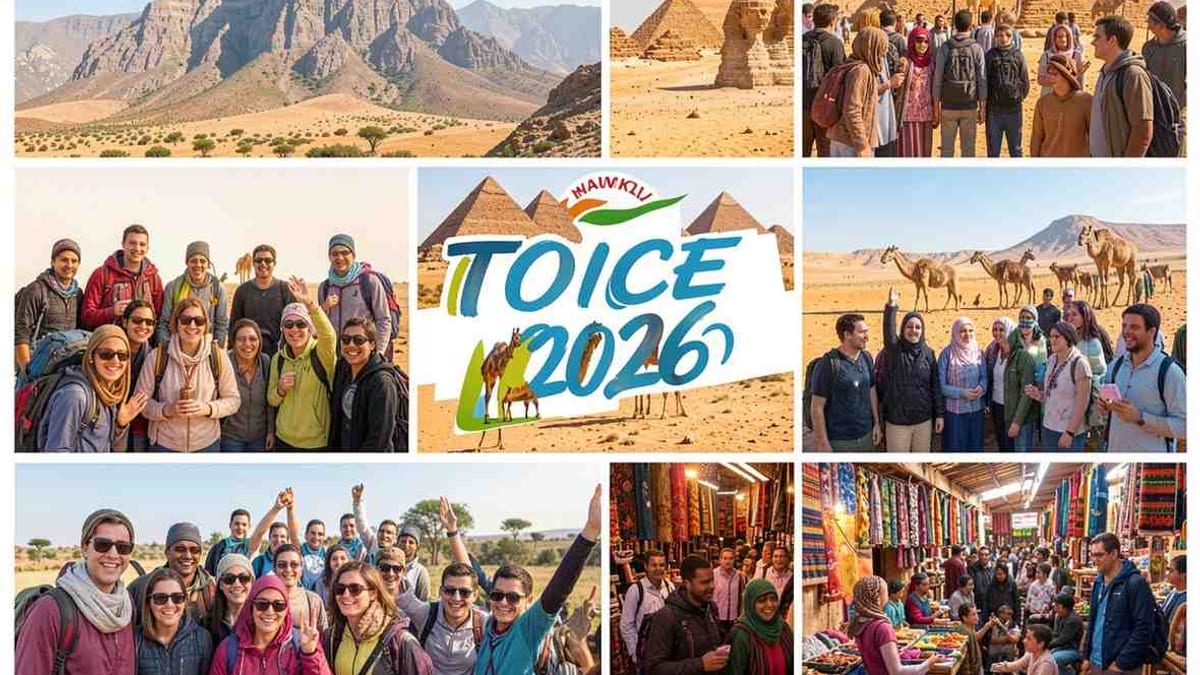
Image by Travel And Tour World
Africa’s Tourism Recovery Builds Toward a 2026 Inflection Point
Publicly available data on global travel trends indicates that Africa’s tourism sector has been steadily rebuilding following the disruption of the early 2020s, with destinations such as Morocco, Tunisia, Kenya, Ghana, Nigeria, Uganda and South Africa recording sustained improvements in international arrivals and tourism receipts. Industry observers increasingly describe 2026 as a potential inflection year, as major events, route expansions and hospitality investments converge across the continent.
Within this context, South Africa’s alignment with peers including Kenya, Ghana, Egypt, Morocco, Nigeria, Tunisia and Uganda under the TOICE 2026 banner is being framed as part of a broader push to capture rising demand for leisure, meetings, incentives, conferences and exhibitions. These markets already feature prominently in regional rankings for international meetings activity and are viewed as natural hubs for a new wave of cross-border tourism growth.
Tourism officials and analysts across Africa have repeatedly highlighted the importance of strong air connectivity, branded accommodation and integrated marketing to convert interest into visitor numbers and spending. TOICE 2026 is positioned as a collaborative platform where airlines, hotel groups, tourism boards and private operators can shape joint strategies for attracting higher-value travelers, lengthening stays and encouraging multi-country itineraries.
The inclusion of both North African and sub-Saharan destinations under a shared 2026-focused narrative also reflects a shift away from fragmented national campaigns toward more coordinated regional propositions. By linking established beach and heritage destinations with safari, city-break and business-travel hubs, proponents of TOICE 2026 argue that Africa can present a more compelling and diversified offer to long-haul markets in Europe, the Middle East, Asia and North America.
TOICE 2026: A New Platform for Airline and Hotel Collaboration
While detailed programming for TOICE 2026 has not yet been broadly disclosed in the public domain, the initiative is being presented as a tourism- and investment-oriented conference and exhibition concept designed to run across multiple African markets. Its core aim is to bring together travel suppliers, investors and destination marketing bodies that are seeking to scale tourism revenues in the medium term, particularly around the 2026 calendar.
The decision to anchor TOICE 2026 partnerships with Qatar Airways, Kenya Airways and Marriott underscores the central role that aviation and hospitality networks will play in any sustained boom. Qatar Airways operates a globally connected hub model that links key African capitals and tourism centers to major source markets, while Kenya Airways remains an important regional carrier with a strong footprint in East, Central and West Africa. Marriott, meanwhile, has expanded its African portfolio in recent years, adding branded properties in cities and resort areas across Morocco, Egypt, South Africa, Nigeria and other markets.
According to published corporate material, Qatar Airways has expanded its African operations over the past decade, leveraging its Doha hub to feed traffic to destinations across both North and sub-Saharan Africa. Kenya Airways has likewise been pursuing strategic partnerships and fleet optimization to strengthen its positioning as a connector between African cities and intercontinental routes. Marriott’s growth strategy in Africa has focused on upper midscale to luxury properties that can cater to both business and leisure travelers, including the meetings and events segment that conferences such as TOICE seek to stimulate.
Observers note that the combined effect of airline connectivity and hotel brand presence is critical for cities that aspire to host larger conferences, exhibitions and incentive travel programs. By aligning TOICE 2026 with these players, organizers aim to reduce perceived barriers to booking African destinations, reassure corporate buyers about service standards and logistics, and make it easier to package multi-stop itineraries that span several of the participating countries.
South Africa Joins a Growing Bloc of Tourism Powerhouses
South Africa’s participation alongside Kenya, Ghana, Egypt, Morocco, Nigeria, Tunisia and Uganda reflects both its current tourism scale and its desire to compete more aggressively for meetings and high-yield leisure business. South Africa remains one of the continent’s most visited destinations, combining wildlife, wine tourism, coastal experiences and established urban centers capable of hosting large conventions and trade fairs.
Neighbouring and partner markets are following different but complementary trajectories. Morocco and Egypt continue to attract strong demand for cultural and beach holidays, Tunisia is rebuilding its international profile, and Ghana and Nigeria have been drawing attention for cultural tourism, diaspora travel and business events. Kenya and Uganda form part of the wider East African safari and adventure circuit, while also cultivating conference and technology-focused travel, particularly in Nairobi and Kampala.
Industry rankings for international association meetings show that most of these countries already feature in continental league tables for hosted events, suggesting an existing base of facilities, know-how and service providers. The TOICE 2026 framework is expected to build on that foundation by promoting cross-learning between markets, supporting joint bids for rotating conferences and encouraging regional pre- and post-event touring options that spread spending beyond a single host city.
South Africa’s addition to this grouping is also viewed as a signal of greater south-to-north and intra-African connectivity. Direct and one-stop flights between Johannesburg, Cape Town or Durban and cities such as Nairobi, Accra, Lagos, Cairo or Casablanca are increasingly common, supported by both African and Gulf-based carriers. This network density is viewed as a prerequisite for any serious attempt to scale up corporate meetings, incentive travel and large-scale exhibitions across multiple African destinations.
Air Connectivity and Hospitality Capacity Set the Stage for Growth
Airlines and hotel groups linked to TOICE 2026 are betting that a combination of improved connectivity, rising middle-class demand and destination development will underpin a strong upturn in travel volumes by 2026. Carriers like Qatar Airways and Kenya Airways already connect many of the participating countries directly or via their hubs, allowing travelers to combine, for example, a safari in Kenya or Uganda with a city break in South Africa or a cultural itinerary in Morocco or Egypt.
On the hospitality side, Marriott’s expanding footprint in Africa gives tour operators, corporate travel managers and conference planners greater confidence in product consistency across multiple markets. The presence of well-known hotel flags in gateway cities and resort areas is often cited as a factor that influences destination choice for large global events, as organizers seek predictable service levels, loyalty-program reach and negotiated corporate rates.
Capacity building is another theme tied to the anticipated tourism boom. Many of the participating countries have been investing in new terminals, upgraded runways, conference centers and hotel projects, often in partnership with international developers and financiers. Publicly available infrastructure and investment plans indicate ongoing or proposed upgrades at airports and exhibition venues in South Africa, Kenya, Nigeria, Morocco and Egypt, among others, which are expected to come on stream or reach maturity around the middle of the decade.
Analysts caution that realizing the full benefits of these investments will require coordinated marketing, visa facilitation and streamlined travel processes. However, they also note that joint platforms such as TOICE 2026 can help align government agencies, private operators and international partners around practical measures that improve the traveler experience, such as synchronized event calendars, clearer air service agreements and standardized service benchmarks.
Revenue Opportunities Across Leisure, Business and Events Travel
Expectations surrounding TOICE 2026 extend well beyond headline visitor numbers. Travel and tourism specialists point to the potential for significantly higher per-visitor spending if African destinations can attract more long-haul leisure tourists, corporate delegations and high-value event participants. These segments tend to generate substantial ancillary revenue through premium airfares, upscale accommodation, organized excursions, dining, retail and ground transport.
South Africa and its TOICE partners are positioning themselves to tap into this value by diversifying their tourism products and encouraging travelers to explore beyond traditional gateways. Safari and wildlife experiences are being combined with wine and gastronomy, coastal stays, cultural festivals, wellness retreats and urban creative districts, while business trips are being extended with short leisure add-ons. Airlines and hotel chains see opportunities to bundle these offerings with loyalty-program incentives and dynamic packaging.
Multi-country itineraries are another revenue multiplier. With better air links and greater collaboration between tourism boards, a traveler flying into Nairobi with Qatar Airways or Kenya Airways could, for instance, connect onward to Cape Town or Casablanca and then continue to a third city such as Accra or Lagos, all within a single trip. Each stop generates incremental revenue for local hotels, restaurants, transport providers and attractions.
As TOICE 2026 gathers momentum, market watchers will be monitoring booking trends, capacity announcements and new hotel openings across South Africa, Kenya, Ghana, Egypt, Morocco, Nigeria, Tunisia and Uganda. If the partnerships with Qatar Airways, Kenya Airways and Marriott translate into concrete route expansions, promotional campaigns and event wins, proponents argue that Africa could enter 2026 with one of the fastest-growing tourism and hospitality revenue pipelines of any global region.