

More news on this day
Flagship digital asset conference TOKEN2049 has postponed its much anticipated Dubai 2026 edition to 2027, according to emerging industry reports, injecting fresh uncertainty into the global crypto travel calendar as regional tensions weigh on large-scale events across the Gulf.
Get the latest news straight to your inbox!
Rescheduling a Flagship Event in an Unsettled Moment
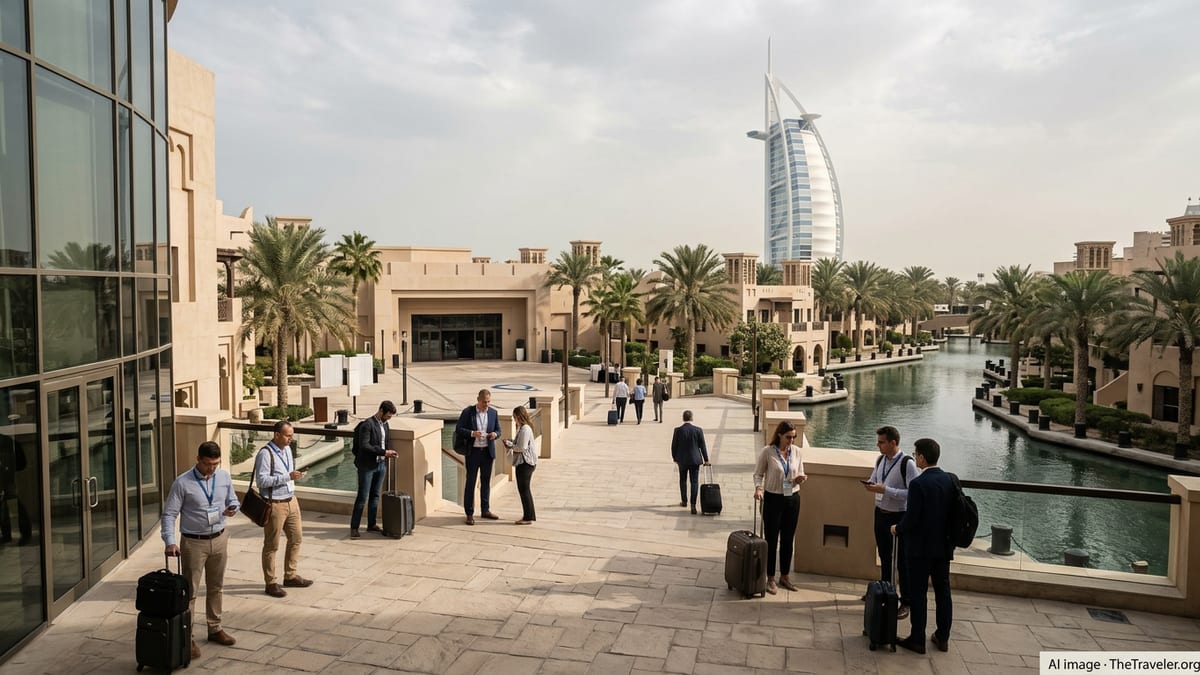
Publicly available listings for TOKEN2049 had been pointing to a late April 2026 return to Dubai, positioning the event as one of the year’s anchor gatherings for the global crypto and Web3 community. Event guides and partner announcements described plans for a two day conference drawing more than 15,000 attendees, with the Madinat Jumeirah complex repeatedly cited as the expected venue.
More recent coverage of the region’s business events landscape, however, has focused on a growing layer of geopolitical risk. In early March 2026, business media reported that several technology and entrepreneurship conferences across the United Arab Emirates were reassessing their dates as organizers weighed security concerns, insurance costs and international travel sentiment. Within that context, industry calendars and conference trackers have begun to show TOKEN2049 Dubai as pushed from its original 2026 slot into 2027.
While no detailed public statement on the change in dates has yet been circulated across all platforms, the pattern emerging from updated event rosters points to a clear deferral rather than a quiet cancellation. References to a 2026 Dubai edition are gradually being replaced or supplemented by language suggesting the next local iteration of the brand will now take place in 2027, preserving Dubai’s role on the TOKEN2049 circuit but at a slower cadence than many participants had anticipated.
The adjustment comes at a sensitive time for the crypto sector’s in person ecosystem. Many firms and communities that rely on large regional hubs such as Dubai for networking, fundraising and deal making had been counting on a predictable cycle of conferences following the successful 2025 edition of TOKEN2049 in the city.
Knock on Effects for the Global Crypto Travel Circuit
The decision to move TOKEN2049 Dubai from 2026 to 2027 is already rippling through the tightly packed calendar of digital asset and Web3 events. Conference aggregators that had slotted Dubai between major gatherings in Europe and Asia are now flagging a gap in late April, a period that had become synonymous with back to back crypto weeks centered on the United Arab Emirates.
Travel planners and corporate events teams are among the first to feel the disruption. Many crypto businesses map roadshows, product launches and investor meetings around anchor conferences, using them as focal points for broader regional visits. With one of the sector’s largest Middle Eastern fixtures postponed, companies are revisiting 2026 itineraries, debating whether to redistribute budgets to smaller Gulf events or to focus instead on Singapore, Hong Kong and European hubs that still expect to host their scheduled blockchain gatherings.
For individual travelers, the shift may translate into fewer obvious reasons to combine leisure and business travel in Dubai during the spring of 2026. Tourism operators and hospitality groups that had promoted packages tied to a dense crypto week now face uncertainty around occupancy projections and ancillary spending from high value conference guests. That said, some hoteliers are reportedly pivoting to target attendees of other technology and finance events still on the books, signaling that the city’s broader meetings and conventions ecosystem remains active even as specific crypto fixtures are deferred.
Regional destinations that compete with Dubai for digital asset conferences are also watching closely. Cities positioning themselves as alternative crypto gateways may view the postponement as a short term opportunity to capture itineraries and sponsorship dollars that had been earmarked for the Gulf.
Regional Tensions and Event Risk in the Gulf
The reshaping of TOKEN2049 Dubai’s schedule is unfolding against a backdrop of heightened regional tensions that have begun to affect cross border travel and major gatherings. Recent reporting from global business outlets has highlighted a series of conference delays and format changes across the Middle East, as organizers reassess how best to manage perceived security risks and the possibility of rapidly changing conditions.
Insurance, contingency planning and duty of care obligations have taken on a new prominence in this environment. For a conference on the scale of TOKEN2049, which typically brings together thousands of founders, investors and technologists from more than 100 jurisdictions, any deterioration in the risk outlook can have outsized implications. Analysts tracking the sector note that large flagship events are particularly exposed, since their international footprint ties attendance decisions to a wide range of national travel advisories and corporate risk policies.
In that context, repositioning Dubai’s next TOKEN2049 edition into 2027 appears consistent with a broader pattern of organizers favoring a longer planning horizon. By moving outside an immediate window of volatility, conference brands aim to preserve their ability to attract high profile speakers, secure long term sponsorships and negotiate venue arrangements without last minute concessions driven by uncertainty.
At the same time, the deferral underscores how closely the global crypto travel circuit is intertwined with wider geopolitical currents. Even as digital assets are marketed as borderless, the physical infrastructure of community building remains acutely sensitive to regional developments that sit far outside the control of any single organizer.
Uncertainty for Sponsors, Side Events and Local Ecosystem
Beneath the headline change in dates, the postponement of TOKEN2049 Dubai has practical consequences for a dense ecosystem of sponsors, exhibitors and side event organizers. In previous years, the main conference has served as the centerpiece of a sprawling festival like week across the city, with hundreds of satellite meetups, networking sessions and brand activations scheduled around its official agenda.
With the 2026 edition now deferred, marketing and partnership teams face a complex recalibration. Some sponsors had already aligned product roadmaps and campaign timelines with the expected Dubai gathering, planning high visibility launches or regional announcements on the sidelines of the main stage. Event specialists tracking the market suggest that many of those plans may now shift toward 2027, potentially lengthening development cycles but also creating more time for refined activation strategies.
For Dubai’s local crypto and Web3 community, the gap year presents both risks and openings. On one hand, the absence of a marquee global conference in 2026 could slow the influx of new international projects and investors who typically time exploratory trips around TOKEN2049 Week. On the other, local organizers may find room to elevate homegrown meetups and mid sized summits into more prominent fixtures, temporarily filling the void for regional participants who still plan to travel within the Gulf.
Coworking spaces, innovation hubs and free zone authorities focused on digital assets are likely to play a larger coordinating role in this interim period. Many already host year round programming and may lean into that function more visibly as the community looks for continuity in face to face engagement.
Looking Ahead to a Reset Dubai Showcase in 2027
Despite the near term disruption, early signals from industry commentary suggest that the postponement is being interpreted as a strategic pause rather than a retreat from Dubai altogether. The city has invested heavily in positioning itself as a hub for digital assets, with specialized regulatory frameworks and dedicated free zones drawing exchanges, infrastructure providers and Web3 startups.
Conference listings for 2027 are starting to reflect expectations that TOKEN2049 will return once conditions are perceived as more stable, potentially with an even larger footprint built on the momentum of previous editions. For travel planners, that scenario points to a delayed but not diminished convergence of the crypto world on Dubai, with many stakeholders now looking one year further out as they map their long term engagement with the region.
In the meantime, the shift serves as a reminder that the crypto industry’s most visible in person gatherings remain exposed to forces well beyond price cycles and protocol launches. As regional tensions reshape the risk calculus for major events, participants across the sector are being prompted to diversify their travel plans, reassess contingency strategies and remain flexible about where and when the community will next come together at scale.
For Dubai, a city that has rapidly become synonymous with large format crypto weeks, the postponement of TOKEN2049’s 2026 edition marks a rare pause in an otherwise accelerating story. How organizers, sponsors and travelers adapt over the coming year will help determine whether the 2027 return becomes a symbolic reset moment for the region’s role in the global digital asset conversation.