

More news on this day
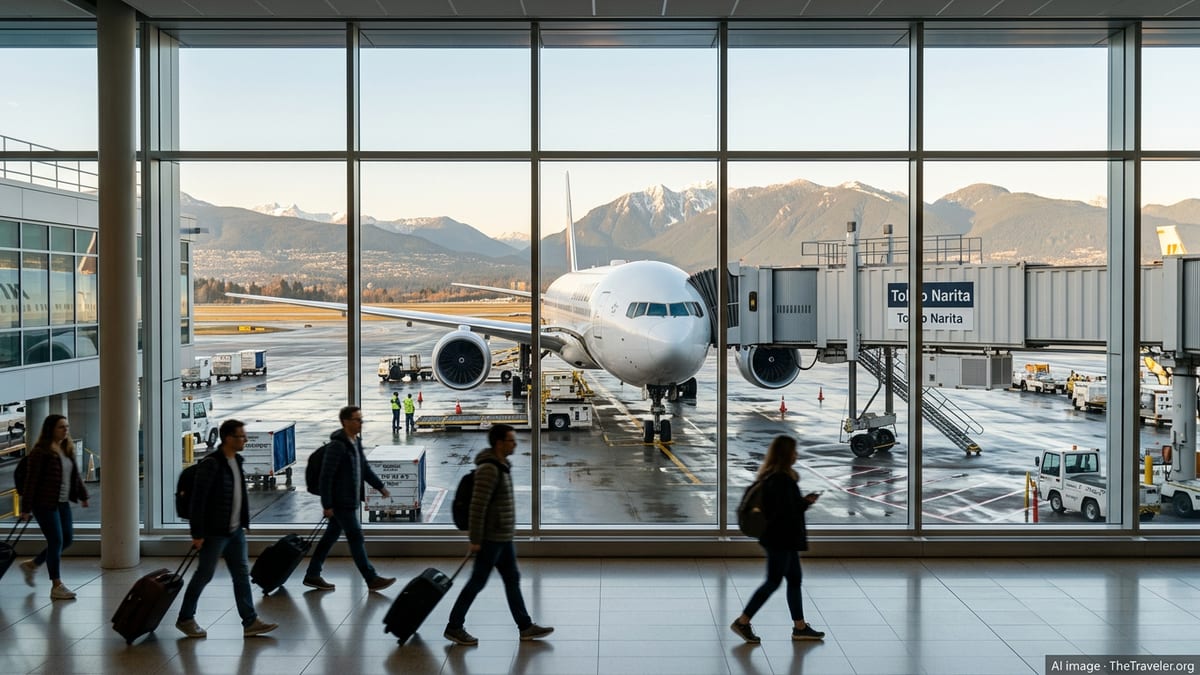
Tokyo Narita and Vancouver are poised for a closer connection in 2026, as Japanese and Canadian carriers adjust their transpacific networks to add capacity and refine schedules between the two Pacific gateways.
Get the latest news straight to your inbox!
Japan Targets Strategic Growth on Transpacific Links
Japan’s flag and low cost carriers are steadily repositioning Tokyo Narita as a core long haul hub, and the Narita–Vancouver corridor is emerging as one of the key beneficiaries. The route already links Japan’s capital region with Canada’s primary Pacific gateway, but 2026 is shaping up as a year of targeted expansion and schedule fine tuning rather than simple restoration of pre pandemic patterns.
Network filings and investor updates from Japanese airlines point to a broader strategy in which Narita shoulders a growing share of leisure and connecting traffic, while Tokyo Haneda focuses on premium and time sensitive demand. Within that framework, links to western North America, including Vancouver, are central. The Narita–Vancouver pairing offers not only point to point travel but also onward connectivity deep into both countries, feeding tourism, business travel and air cargo flows.
Industry analysts note that after several years of cautious rebuilding, both Japanese and Canadian carriers are now signaling willingness to add capacity where demand justifies it. Vancouver’s strong Japanese community, robust tourism appeal and role as a hub for Asia bound itineraries from the rest of Canada and the United States give the Narita route a durable commercial logic as airlines shape their 2026 schedules.
ZIPAIR and Full Service Carriers Align Capacity
On the Japanese side, growth in 2026 is expected to come from a mix of low cost and full service operations using Tokyo Narita as a shared platform. ZIPAIR, the JAL affiliated low cost carrier based at Narita, has already built up a presence on transpacific routes and has progressively increased flying to North American cities, including Vancouver, as additional aircraft have entered the fleet. While the airline is also redistributing capacity within Asia, its recent schedule adjustments indicate a stronger focus on long haul leisure markets during the northern summer season.
At the same time, Japan Airlines and All Nippon Airways continue to refine their North American networks, with Narita handling more connecting flows and Haneda taking on additional high yield business traffic. Vancouver fits well into this division of labor. For Japanese travelers, Narita offers a familiar international gateway with a wide range of onward options, while for Canadian and US passengers connecting through Vancouver it provides an efficient entry point into Japan’s domestic and regional networks.
Capacity additions on the Narita–Vancouver sector in 2026 are expected to be incremental rather than dramatic, but even modest increases in weekly frequencies can translate into thousands of additional seats over a season. Airlines are pairing these adjustments with product upgrades, using widebody aircraft that balance passenger demand with belly hold cargo, a key revenue component on the transpacific.
Vancouver Strengthens Its Role as Canada’s Japan Gateway
For Vancouver International Airport, the evolving Narita schedule in 2026 dovetails with a broader push to cement its status as Canada’s leading gateway to Japan. Airport and airline planners have emphasized that Vancouver already offers more non stop connectivity to Japanese cities than any other Canadian hub, and upcoming schedule changes are set to reinforce that position.
Recent announcements by Air Canada of a new seasonal Vancouver–Sapporo service from December 2026 highlight how carriers are layering additional Japanese destinations onto an established foundation of Tokyo services. While Sapporo is a separate route, its launch underscores Vancouver’s importance in airlines’ Japan strategies and supports feeder traffic that can also benefit Narita bound flights. As leisure travelers combine ski trips in Hokkaido with time in Tokyo, demand for flexible itinerary options via Vancouver is expected to rise.
Airport officials in Vancouver have framed the growth of Japan services, including Narita, as a win for both tourism and trade. More capacity to Tokyo improves access for Canadian exporters shipping high value goods into Japan and beyond, while inbound visitation from Japan supports hotels, attractions and regional tourism operators in British Columbia and neighboring provinces.
Tourism, Trade and Diaspora Travel Drive Demand
Underlying the network decisions slated for 2026 are structural demand drivers that make the Narita–Vancouver market attractive over the long term. One of the strongest is leisure tourism. Japan remains a top wish list destination for Canadian travelers, and the combination of cultural appeal, food tourism, seasonal festivals and winter sports draws steady demand throughout the year. Direct Narita flights from Vancouver simplify travel planning and shorten total journey times compared with routings through other North American hubs.
On the Japan outbound side, western Canada’s nature focused image and proximity to the Pacific Coast resonate with travelers seeking outdoor experiences, road trips and ski holidays. Non stop Narita–Vancouver service aligns well with this demand, particularly when paired with rail and tour packages extending into the Canadian Rockies and along the coast. Airlines are tailoring schedules in 2026 to capture peak holiday periods on both sides of the Pacific.
Business and diaspora travel add another layer of resilience. Vancouver’s Japanese community, along with growing corporate ties in sectors such as technology, forestry, resources and education, helps keep premium cabins and shoulder season flights viable. Even as virtual meetings remain common, companies and universities continue to value face to face engagement, and reliable Narita links offer an efficient bridge for corporate travelers and exchange students alike.
What Travelers Can Expect in 2026
For passengers, the practical impact of Japan’s 2026 route strategy will be felt in schedule choice, seat availability and pricing on the Narita–Vancouver route. As frequencies inch upward and carriers refine departure and arrival times, travelers can expect more flexibility for same day connections, better alignment with hotel check in and check out windows, and improved options for multi city itineraries that combine Tokyo with other Japanese or North American destinations.
Competition between full service airlines and ZIPAIR’s low cost model is also likely to shape the market, offering a wider range of fare levels and onboard experiences. Price sensitive leisure travelers may gravitate toward stripped back products with paid extras, while others opt for premium cabins and full service amenities on legacy carriers. The net effect is more choice on a route that once offered far fewer alternatives.
Although detailed summer and winter schedules for 2026 are still being finalized, industry filings and recent announcements point in the same direction: Tokyo Narita and Vancouver will be more closely connected, with capacity calibrated to meet rising demand. Travelers planning Japan or Canada trips for late 2026 and beyond should watch for fresh timetable updates as airlines lock in their transpacific plans in the coming months.