

More news on this day
Tokyo’s newest cultural landmark, MoN Takanawa: The Museum of Narratives, is emerging as a key driver for cultural tourism, combining cutting-edge technology, Japanese heritage and experiential design within the fast-developing Takanawa Gateway City district.
Get the latest news straight to your inbox!
A Flagship for Takanawa Gateway City
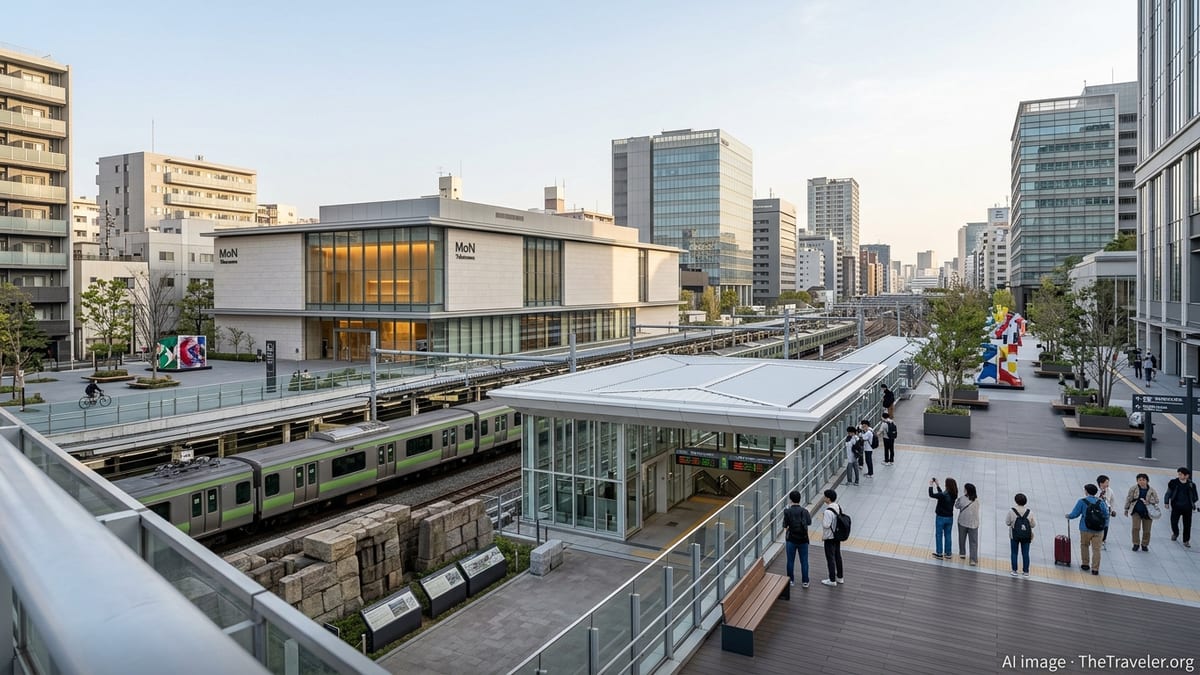
MoN Takanawa is positioned at the heart of Takanawa Gateway City, a major mixed-use redevelopment anchored to JR East’s Takanawa Gateway Station in Minato Ward. The museum forms the cultural core of a district that combines offices, residences, commercial spaces and public plazas, and that has been promoted as a next-generation “smart city” neighborhood. Reports indicate the museum opened on March 28, 2026, aligning with the broader rollout of new facilities around the station.
Publicly available information describes MoN Takanawa as a “Museum of Narratives,” conceived to connect culture “100 years into the future.” Its mission centers on creating and sharing new forms of Japanese culture through collaborations across art, technology, science and entertainment. That positioning gives the museum a dual role as both visitor attraction and experimental cultural lab, designed to keep pace with Tokyo’s evolving urban identity.
The building sits on land closely linked to the history of Japan’s first railway line, and incorporates views toward preserved infrastructure such as the Takanawa Embankment. By tying contemporary architecture to this historic setting, the museum reinforces Takanawa Gateway City’s branding as a place where past and future intersect, a narrative that tourism authorities have increasingly highlighted in destination marketing for Tokyo’s waterfront and southern districts.
With direct access from Takanawa Gateway Station and proximity to major transport hubs such as Shinagawa Station and Haneda Airport, MoN Takanawa is expected to be easily folded into visitors’ itineraries. The location strengthens the wider strategy of distributing cultural attractions beyond traditional clusters in Ueno, Asakusa and Roppongi, and nudges leisure travelers to explore emerging neighborhoods along Tokyo’s rail network.
Immersive Storytelling and High-Tech Exhibitions
Programming details released so far suggest MoN Takanawa will emphasize immersive, story-driven experiences over conventional gallery displays. The complex houses multiple performance and exhibition zones, including a main hall often described as an experimental theater, smaller “Box” theaters, and a range of lab-style spaces for media art, data visualizations and interactive installations.
The inaugural line-up features crossovers between popular culture and advanced display technology. Published coverage highlights a live “manga performance” based on Osamu Tezuka’s classic series “Phoenix,” staged as an audio-visual spectacle that blends projected panels, soundscapes and theatrical staging. Such events position the museum at the intersection of anime, manga and live performance, sectors that already draw substantial inbound tourism to Japan.
Other facilities highlighted in official materials include themed laboratory zones such as “Sun Lab,” “Land Lab” and “Sea Lab,” which are intended to host small-scale exhibitions, workshops and collaborative projects. By organizing spaces around elemental themes and seasons, the programming framework can flexibly accommodate everything from environmental storytelling to local history and contemporary digital art.
This emphasis on dynamic, rotating content is likely to support repeat visitation and encourage longer stays in the Takanawa Gateway area. For international travelers, the combination of recognizable cultural properties, large-scale media art and multi-sensory environments aligns with a broader global trend in museum design, where high-resolution projection, sound design and real-time data are used to transform narrative-driven exhibitions into destination in their own right.
Linking Heritage, Rail Travel and Urban Regeneration
MoN Takanawa’s emergence is closely tied to Japan’s rail heritage and Tokyo’s ongoing urban regeneration. The museum is part of a cultural creation building overseen by the East Japan Railway Culture Foundation, which was established to plan and manage programming in line with JR East’s wider development of Takanawa Gateway City.
Planning documents from Japan’s Agency for Cultural Affairs describe the museum as a hub for the preservation and use of cultural resources, with a focus on integrating those resources into tourism circuits. In practice, this means the museum is expected to highlight themes such as the evolution of rail infrastructure, the transformation of the Takanawa shoreline and the role of transportation in shaping modern Tokyo, while connecting these stories to contemporary art and technology.
The surrounding district incorporates remnants of the historic Takanawa Embankment, recognized as an important cultural property, and new public artworks, including large-scale color installations in nearby parks. Together, these elements create a cultural corridor that links the museum to outdoor spaces, plazas and viewing decks, potentially lengthening the time visitors spend in the area and diversifying how they move between indoor exhibitions and open-air sites.
For cultural tourism planners, this interconnected layout offers opportunities to package MoN Takanawa with other nearby attractions, from waterfront promenades to future developments planned around Shinagawa. It also reinforces a narrative of Tokyo not only as a city of stand-alone museums, but as a destination where transportation hubs and public spaces themselves act as cultural stages.
New Magnet for International and Domestic Visitors
The opening of MoN Takanawa comes at a time when Japan is experiencing record levels of inbound tourism, with government strategies stressing the importance of high-value cultural experiences beyond traditional sightseeing. Analysts of the museum sector note that large-scale, technology-forward venues have become important magnets for international visitors who seek both recognizable icons and fresh, photogenic environments.
MoN Takanawa’s focus on cross-genre collaboration and media-rich storytelling aligns with this demand. The mix of manga-inspired performances, data-driven installations and seasonal programs offers entry points for visitors who may be unfamiliar with classical Japanese arts but strongly engaged with contemporary pop culture and digital media. At the same time, the museum’s mission of “connecting culture a century into the future” provides a thematic frame that can incorporate more traditional elements, from craftsmanship and design to seasonal customs.
Domestic tourism is also expected to benefit. Tokyo-based travelers are likely to treat MoN Takanawa as a new weekend destination, particularly given its position within a broader complex of restaurants, retail and public event spaces. By creating reasons for residents to revisit regularly, the museum can help stabilize visitor numbers outside peak international travel seasons and support year-round cultural programming.
Industry observers point out that the museum’s arrival coincides with other significant cultural infrastructure projects in the capital, such as the planned reopening of the Edo-Tokyo Museum in 2026. Together, these developments suggest a new phase for Tokyo’s museum landscape, in which large, narrative-driven venues play a leading role in attracting visitors and distributing cultural experiences across the city.
Boosting Minato’s Profile as a Cultural District
MoN Takanawa also reinforces Minato Ward’s profile as a cultural and lifestyle destination. The ward is already home to several major art institutions and design-led commercial complexes, and has long attracted international residents, embassies and global companies. The addition of a flagship museum in Takanawa Gateway City extends the district’s cultural footprint to an emerging transport hub on its southern edge.
By opening with a program that foregrounds collaboration and experimentation, the museum aligns with Minato’s image as a place where business, technology and culture intersect. Event and residency formats announced in planning documents indicate that MoN Takanawa aims to work with creators, researchers and technology partners to develop original content, some of which may be premiered in Tokyo before touring elsewhere in Japan or overseas.
From a tourism perspective, this sets the stage for Minato to promote multi-stop cultural itineraries that link existing art museums, waterfront attractions and new sites in Takanawa Gateway City. Combined with the area’s hotel capacity and direct rail access to Haneda Airport, these routes have the potential to make Minato an even stronger base for visitors who wish to explore both central Tokyo and nearby regions on day trips.
As MoN Takanawa’s exhibition and event calendar expands over the coming months, travel providers are expected to watch closely for programs that can be incorporated into themed tours and packages. The museum’s blend of immersive storytelling, heritage references and transport connectivity positions it as a key test case for how new cultural infrastructure can translate into measurable gains for urban tourism in Tokyo.