

More news on this day
Tokyo’s latest Pokémon themed projection spectacle is transforming the capital’s government district into a vivid nighttime attraction, strengthening the city’s wider strategy to draw more visitors after dark.
Get the latest news straight to your inbox!
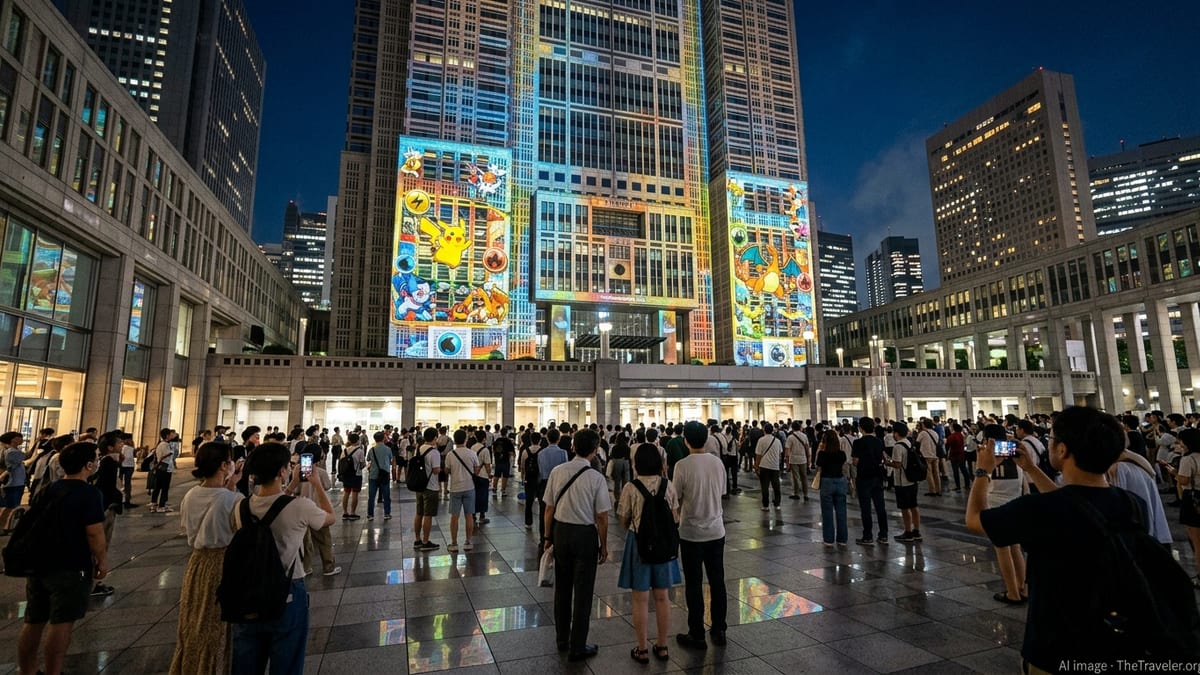
Pokémon Joins Record-Breaking Projection Mapping in Shinjuku
A large scale Pokémon Trading Card Game show titled Tokyo Luminous Night has been added to the existing projection program on the Tokyo Metropolitan Government Building in Shinjuku. Publicly available event information shows that the nightly performance uses Pokémon card imagery on a massive scale along the facade of the skyscraper, integrating animated monsters, card effects, and vivid colors into a synchronized light and music display.
The Pokémon segment forms part of Tokyo Night & Light, the projection mapping initiative that began in 2024 and is recognized as one of the largest shows of its kind. Reports indicate that the new content runs on selected evenings from early night hours, giving both residents and visitors a fresh incentive to stay in central Tokyo after sunset.
By using the instantly recognizable characters of the long running franchise, the show is designed to appeal to families, casual fans, and dedicated collectors. The Pokémon card visuals, projected at monumental scale, bridge the gap between digital gaming culture and physical city space, offering a viewing experience that is both nostalgic and distinctly urban.
The installation is free to watch from the plaza around the government complex, which helps lower the barrier for travelers who may be exploring Shinjuku on a budget. Travel guides and local coverage describe crowds gathering ahead of each showing, with visitors photographing the building as it cycles through Pokémon themed sequences alongside other creative programs.
Part of Tokyo’s Broader Nighttime Tourism Strategy
The new show aligns with Tokyo’s ongoing efforts to build a stronger after dark visitor economy. Tokyo Night & Light was launched by city organizers in 2024 with the express goal of boosting nighttime tourism and creating new urban attractions that go beyond shopping and dining. Official materials describe the project as a way to encourage people to stay longer in central districts, diversify entertainment options, and distribute foot traffic more evenly through the evening.
Shinjuku’s government towers were chosen in part because of their prominent silhouette on the skyline and the availability of large, flat surfaces suitable for high resolution projection. Earlier special programs have featured classic Japanese pop culture icons and large scale visual art pieces. The arrival of Pokémon content extends that strategy, tapping into an international fan base that already travels to Japan to visit character cafes, retail outlets, and themed events.
Nighttime tourism has been a key focus for destination marketing organizations across Japan as the country experiences strong post pandemic visitor numbers. Public data on hotel stays and international arrivals shows that Tokyo is competing with other Asian cities to attract travelers who are seeking safe, walkable, and visually engaging cityscapes after sunset. High profile projection shows, especially those tied to global brands, function as a relatively low impact way to add atmosphere without building entirely new venues.
In Shinjuku, the effect is to draw people beyond the area’s familiar nightlife quarters into the administrative district, where wide plazas and observation decks offer a different kind of evening experience. The Pokémon show, framed by the twin towers of the metropolitan building, adds a layer of playful spectacle to a setting more often associated with offices and civic functions.
What Visitors Can Expect From the Night Show
According to event schedules and visitor accounts, the Pokémon Luminous Night segment is staged several times on weekends and holidays, starting shortly after sunset. Each performance lasts only a few minutes, but the overall program cycles through multiple sequences, encouraging spectators to remain in the plaza for more than one viewing.
Viewers typically gather on the ground level plaza facing the main tower, where the best vantage points offer an unobstructed look at the building’s facade. The projections are bright enough to remain clear against the city’s ambient light, and the soundtrack is broadcast at moderate volume so that it is audible without overpowering the surrounding streets. The atmosphere is more casual than that of a ticketed show, with passersby stopping to watch between trains or after dinner.
Pocket parks and pedestrian spaces around the metropolitan building give visitors room to move between viewing locations, photograph the projections, and capture the Shinjuku skyline. Travel blogs point out that the show pairs well with a visit to the building’s free observatories, where guests can look out across Tokyo’s illuminated districts before or after watching the Pokémon themed program at ground level.
Families with children, groups of friends, and solo travelers have all reported positive impressions of the projection mapping show, noting particularly the scale of the visuals and the novelty of seeing trading card designs animated across an entire skyscraper. Many describe it as an accessible highlight to add to an evening itinerary that might also include nearby shopping streets, ramen shops, and late running trains from Shinjuku Station.
Synergy With Other Pokémon Attractions in the Capital
The expansion of Pokémon content into Tokyo’s nighttime skyline complements a growing network of related attractions across the city. Various Pokémon Centers, themed hotel rooms, seasonal campaigns at landmarks, and collaborative events with pop culture properties already attract dedicated fans. The projection mapping show in Shinjuku adds a new dimension by shifting part of that experience into the public realm and into the evening hours.
Published coverage of visitor behavior in Tokyo suggests that anime and game themed experiences can have an outsized influence on travel decisions, particularly among younger tourists and repeat visitors. By positioning a major Pokémon spectacle in a central district that is easy to reach by rail, the city increases the likelihood that fans will incorporate Shinjuku into their plans, even if their original focus was shopping in other neighborhoods or visiting traditional temples.
There is also a degree of synergy with nearby entertainment districts. Travelers who spend the day at character shops or museums elsewhere in Tokyo can end their itinerary in Shinjuku, where the projection show becomes a visual finale to a themed day out. The fact that viewing is free and does not require reservations helps fill the gap between daytime ticketed attractions and late night dining or bar visits.
For Tokyo’s tourism stakeholders, the result is a fuller 24 hour experience that highlights both contemporary pop culture and the scale of the urban landscape. The Pokémon projection mapping show at Tokyo Night & Light stands as a prominent example of how character branding, public art, and light based technology are being used together to reshape the city’s appeal after dark.