

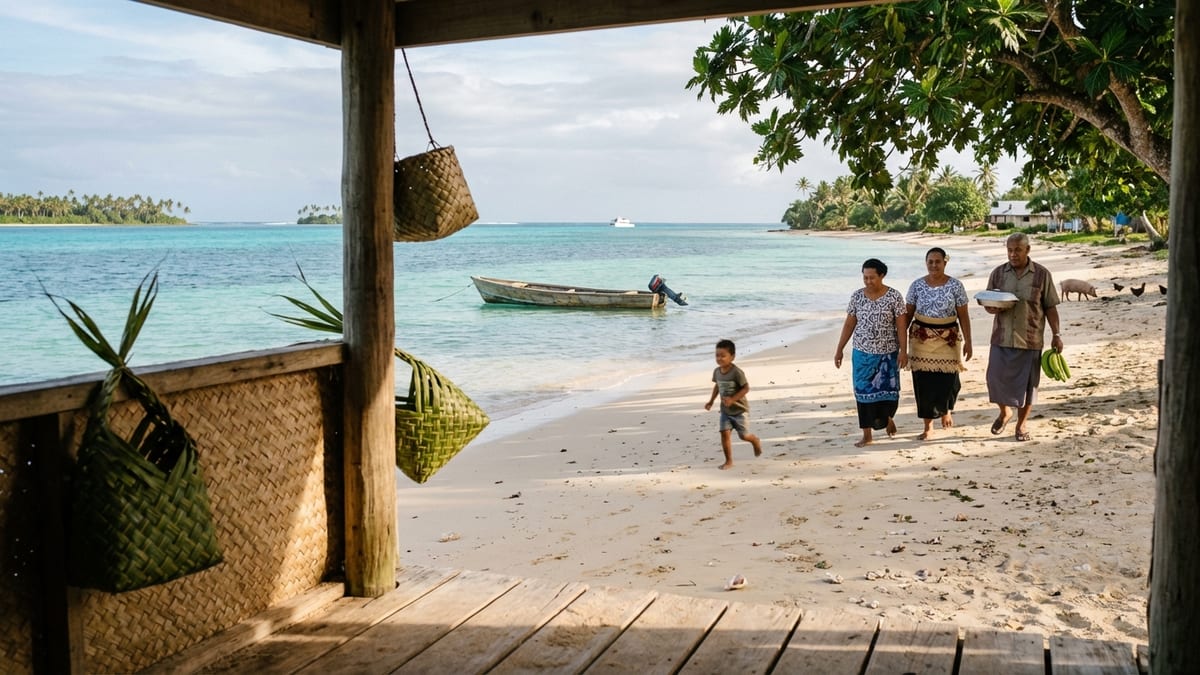
Tonga is one of the South Pacific’s last true kingdoms, a scattered chain of low coral atolls and lush volcanic islands where church bells still set the rhythm of the week, humpback whales calve in sheltered lagoons, and village feasts stretch late into the tropical night.
For travelers, it offers a rare mix of authentic culture, uncrowded beaches and world class marine life, yet remains far less visited than neighboring Fiji or Samoa. This guide brings together the latest practical information on Tonga’s islands, culture and logistics so you can confidently plan a trip that is both memorable and respectful.
Understanding Tonga: The Kingdom in the Pacific
The Kingdom of Tonga lies in the central South Pacific, roughly a three hour flight north of New Zealand and to the east of Fiji. It is made up of more than 170 islands, though only around 45 are inhabited. These islands are grouped into several main clusters, with Tongatapu in the south, ‘Eua just to its east, Ha’apai strung like a necklace in the center, and Vava’u in the north. Together they are home to a population of around 100,000 people, the vast majority of whom are ethnically Tongan and speak Tongan as well as English.
Tonga is unique in the region as the only Pacific island nation never formally colonized. It signed treaties with foreign powers but retained its monarchy and a strong sense of independence. The king still plays a prominent ceremonial role, although the country has undergone democratic reforms in recent years. Visitors quickly notice the importance of church and family in everyday life, the pride in the royal family, and the conservative social norms that shape how people dress, behave and interact in public.
The climate is tropical, with warm temperatures year round and a wetter, more humid season from roughly November to April that coincides with the South Pacific cyclone season. Conditions may vary between the low limestone and coral islands and the more elevated volcanic ones, but in general you can expect daytime temperatures in the mid 70s to mid 80s Fahrenheit throughout the year, with warm seas that make swimming and snorkeling pleasant in all seasons.
Infrastructure in Tonga is modest but improving. Power and water outages do occur, especially in outer islands, and internet speeds can be inconsistent, but for many travelers this relative lack of development is part of the charm. Tonga remains a place where you can still find an empty beach, snorkel vibrant coral gardens with only reef fish for company, and sit beneath breadfruit trees in a village with more pigs than cars.
Island Groups & Where to Go
Most trips to Tonga begin on Tongatapu, the southern island group that includes the capital, Nuku’alofa. Tongatapu itself is a raised coral plateau ringed by reefs and offshore islets. Here you will find the kingdom’s main government buildings, the royal palace, markets, banks and the bulk of Tonga’s accommodation options. It is also the main transport hub, with Fua’amotu International Airport handling international arrivals and small aircraft and ferries connecting to other islands. Tongatapu’s highlights include dramatic blowholes on the southwest coast, ancient terraced royal tombs, and small offshore islands with white sand beaches accessible by day trip.
Directly to the east, the island of ‘Eua feels like a different world despite lying only a short flight or a small ferry ride away. It is one of the oldest islands in Tonga, deeply forested and cut by cliffs and caves. ‘Eua has become known as an eco and hiking destination, where visitors walk through rainforest to coastal lookouts, explore sinkholes and limestone formations, and, in season, observe humpback whales from the shore. Accommodation is simpler than in Nuku’alofa, but the tradeoff is a tranquil, village based experience with easy access to nature.
North of Tongatapu, the Ha’apai group forms the geographic heart of the kingdom. These islands are the South Seas of storybooks, many of them low coral atolls or tiny sand cays surrounded by clear water and shallow reef. Ha’apai is much less developed than Tongatapu or Vava’u. Life moves at a slower pace, there are fewer vehicles and limited nightlife, and accommodations are often small guesthouses or beachside eco lodges. In return, travelers enjoy long stretches of nearly empty beach, exceptional snorkeling and in season some of the most peaceful whale swimming in Tonga’s waters.
The northernmost major group is Vava’u, an archipelago of more than 50 islands scattered across deep, protected waters. Sailors know Vava’u as one of the Pacific’s premier cruising grounds, with calm anchorages, blue water passages and secluded coves. It is also a leading base for whale watching and whale swimming, with numerous licensed operators working from the main town of Neiafu. Beyond the water, Vava’u offers vanilla plantations, cultural visits to small villages, and viewpoints over the maze of islets and channels that define the group.
Culture, Etiquette & Daily Life
Tongan culture, or anga fakatonga, revolves around family, faith and respect. The extended family remains the central social unit, with obligations and responsibilities that extend well beyond the nuclear household. Respect for elders, chiefs and church leaders is deeply ingrained and expressed through language, body posture and behavior. For visitors, understanding and honoring these hierarchies is key to building positive relationships during your stay.
Religion plays an unmistakable role in daily life. Sunday is widely observed as a day of rest and worship, with many businesses, government offices and even some cafes and tour operators closed or operating limited hours. Noise, work and recreational activities are generally toned down. Travelers should plan ahead for Sundays, arranging meals and logistics in advance and treating the day as a chance to attend a church service, hear powerful hymn singing and experience a central aspect of Tongan life.
Dress standards are conservative by Western resort norms, even in hot weather. In towns and villages, both men and women generally cover shoulders and knees. Traditional garments like the tupenu (a wraparound skirt for both genders) and the woven ta’ovala mat worn over the waist are formal attire. While tourists are not expected to adopt full traditional dress, it is appreciated if you avoid skimpy clothing away from the beach. When visiting villages, churches or formal events, opt for modest outfits and ask a local host if you are unsure what is appropriate.
Hospitality is a cornerstone of Tongan identity. Visitors who show basic respect and curiosity are often invited into homes, offered food and included in family gatherings. Feasts known as kai pola or umu, where food is cooked in an underground oven, can feature roast pig, taro, yam, seafood and local specialties. These events usually include speeches, kava ceremonies and traditional singing and dancing. When invited, arrive on time, bring a small gift such as fruit or sweets if possible, and follow the lead of your hosts in where to sit and when to eat.
Best Time to Visit & Whale Season
Tonga can be visited year round, but understanding the seasonal patterns will help you plan the right trip. The cooler, drier period from roughly May to October is generally considered the most comfortable time, with lower humidity, less rainfall and slightly cooler nights. Sea temperatures remain warm enough for swimming and snorkeling, and visibility for diving is typically good. This period also aligns with Tonga’s famed humpback whale season, a major draw for many travelers.
Each year, southern humpback whales migrate from the cold feeding grounds of Antarctica to the warm, sheltered waters around Tonga to mate, give birth and nurse their calves. They typically arrive around June or July and remain through October, though precise timing varies from year to year and between island groups. The core season for whale watching and, where regulations allow, in water encounters, runs from mid July to mid October, with peak activity often in August and September.
During this period, licensed operators in island groups like Vava’u, Ha’apai, ‘Eua and Tongatapu offer day trips to observe the whales at close range. Tonga is one of the few countries in the world that still permits carefully managed swimming with humpbacks. Strict rules govern how boats approach whales, how many swimmers can enter the water, and under what conditions encounters can take place. These rules exist to protect whales from disturbance at a sensitive time in their life cycle and to safeguard visitors in open ocean conditions.
The hotter, wetter season typically runs from November through April and coincides with the South Pacific cyclone season. Tropical storms and cyclones can bring heavy rain, strong winds and temporary disruptions to transport, power and communications. Many days in this period are still warm and pleasant, and travelers who accept weather risk may find lower prices and fewer visitors. However, it is important to monitor forecasts from regional meteorological services and follow local advice during any severe weather event.
Entry Requirements, Visas & Health
Entry requirements for Tonga vary by nationality and are subject to change, so always check with the nearest Tongan embassy or consulate, or with your government’s latest travel advice, before booking. Many travelers from countries such as the United States, Australia, New Zealand and parts of Europe have historically been granted visa free entry on arrival for short stays, provided they have a passport valid for at least six months beyond their intended departure, a return or onward ticket and evidence of sufficient funds.
Some travelers may require a visa in advance, and rules around work, study or extended stays are distinct from those for tourism. If you plan to volunteer, undertake research or engage in other non tourist activities, clarify with Tongan authorities what kind of entry permission is required. While Tonga does not typically impose complicated entry health checks on tourists, health and vaccination recommendations can change, so consult an up to date travel health source or a travel clinic several weeks before departure.
Health care facilities in Tonga are basic compared to those in larger countries. The main hospital in Nuku’alofa can manage many routine issues, but serious illnesses or injuries may require evacuation to New Zealand or another regional hub. It is essential to have comprehensive travel insurance that covers medical treatment, emergency evacuation and trip disruption, particularly if you plan adventure activities such as diving or whale swimming. Bring an ample supply of any prescription medicines, along with copies of prescriptions and a basic personal medical kit.
Tap water quality can vary. In Nuku’alofa and major towns, some accommodations provide treated water or advise when tap water is safe to drink. In more remote areas, it is prudent to use bottled water or to treat water by boiling, filtering or using purification tablets. As in other tropical destinations, take common sense precautions with food hygiene, avoid mosquito bites where possible, and practice safe sun exposure, especially when on the water where reflection intensifies UV radiation.
Getting There & Getting Around
The main gateway to Tonga is Fua’amotu International Airport on Tongatapu. Flight connections fluctuate over time, but routes generally link Tonga to regional hubs such as Auckland and other parts of New Zealand, and occasionally to Fiji and Australia, depending on airline schedules and seasonal demand. When planning your trip, consider that flights may not operate daily on all routes and that schedules can change at relatively short notice, especially on smaller carriers.
Once in Tonga, domestic travel between island groups is possible by small aircraft and inter island ferries. Domestic flights typically run between Tongatapu and major destinations such as Vava’u, Ha’apai and ‘Eua. These flights save considerable time compared with ferries but are subject to weight limits, weather related delays and operational changes. Ferries provide a slower but usually less expensive way to move between islands, often overnight on basic vessels. Conditions can be rough at times and schedules are not always tightly kept, so flexibility and patience are important.
Within the main towns, taxis are widely used, and it is common to agree a fare before departure as meters may not be used. Some visitors choose to rent cars on Tongatapu or Vava’u, which allows more freedom to explore but comes with the need to adjust to local driving habits and road conditions that may include potholes, free roaming animals and limited signage. Bicycles can be a pleasant way to explore quieter islands or coastal stretches, particularly in Ha’apai where traffic is light and distances between villages are manageable.
In rural areas and small islands, walking and informal local boats often fill in the gaps. Always verify safety standards when boarding small craft, ask about life jackets and be cautious about traveling in poor weather. Communications in outer islands can be intermittent, and mobile coverage may be patchy, so let accommodation or hosts know your plans when heading out for remote walks or independent boat trips.
Where to Stay, Eat & What It Costs
Accommodation in Tonga ranges from simple guesthouses and family run fale style lodgings to small boutique resorts on their own islands. There are no towering international chains or large scale resorts of the kind seen in more heavily touristed destinations. In Nuku’alofa you will find mid range hotels, inns and guesthouses suitable for business travelers and tourists. On ‘Eua, Ha’apai and Vava’u, many visitors opt for beachfront lodges, eco resorts or self contained bungalows where the emphasis is on personal service and proximity to nature rather than extensive onsite facilities.
Prices vary by island group and level of comfort but tend to be higher than in Southeast Asia and similar Pacific destinations for the same category, reflecting the costs of importing goods and running small operations in remote locations. Budget travelers can find dormitory rooms or basic guesthouses, particularly on Tongatapu and some of the outer islands, while mid range couples and families often choose simple beach resorts with half board or full board packages that include meals and sometimes activities.
Tongan cuisine reflects the islands’ agricultural and marine wealth. Root crops like taro, yam and cassava, green bananas, fresh fish, pork and tropical fruits are staples. The traditional umu feast, where food is wrapped in leaves and baked in an earth oven over hot stones, produces smoky, tender dishes that are central to celebrations. In Nuku’alofa and Neiafu you will also find cafes and restaurants serving international dishes, Chinese food, bakery items and coffee. In smaller communities, meal options may be limited to what your guesthouse or a handful of local eateries can provide, so it is wise to coordinate meal plans with your accommodation in advance.
Overall travel costs in Tonga depend heavily on your activity choices. A relatively low cost trip built around independent beach time, village walks and modest guesthouse stays can be kept within a moderate budget. Adding whale swimming trips, sailing charters, diving and domestic flights quickly increases the total. Because many activities are run by small, licensed operators with limited capacity during peak season, booking key experiences ahead of time, especially whale related excursions between July and October, is recommended.
Safety, Responsible Tourism & Practical Tips
Current foreign travel advisories generally rate Tonga as a destination where normal safety precautions are appropriate. Violent crime is relatively uncommon, but petty theft, opportunistic robbery and occasional assaults occur, particularly in urban areas and at night. Standard security measures apply: keep valuables out of sight, use hotel safes where available, lock doors and windows and avoid walking alone in poorly lit areas after dark. In the outer islands, social cohesion and small communities tend to lower crime risks further, though basic caution is still advised.
Natural hazards are part of life in Tonga. The islands sit in a seismically active region, and earthquakes, tsunamis and volcanic activity have affected the country in the past. Tropical cyclones and storms are a recurring risk between November and April. Before and during your trip, monitor weather reports and pay attention to local announcements. Familiarize yourself with your hotel’s evacuation procedures and know the nearest high ground if you are staying near the coast. In the water, some beaches may have strong currents, submerged debris or sharp coral. Swim in recommended areas, heed local advice and avoid entering the ocean in rough conditions.
Responsible tourism in Tonga centers on respect for culture, environment and wildlife. When joining whale watching or whale swimming tours, choose licensed operators that adhere to regulations limiting the distance, time and manner of interactions. Avoid pressuring guides to get closer than allowed or to pursue whales displaying avoidance behavior. On land, try to minimize plastic usage, dispose of waste properly and be sensitive when taking photographs, especially of people, ceremonies and private spaces. Always ask before photographing individuals, and accept a refusal with grace.
Other practical considerations include the use of cash and cards, connectivity and language. The local currency is the Tongan pa’anga. Cash is widely used, particularly in markets and small businesses. ATMs are available in Nuku’alofa and some larger towns but may not be present on smaller islands, where cash is essential. Credit cards are accepted at some hotels and restaurants but not universally. English is widely spoken in tourist areas and by younger Tongans, although learning a few Tongan greetings and courtesies is appreciated and often opens doors to warmer interactions.
The Takeaway
Tonga is not a destination built for mass tourism. Its scattered islands, deep rooted cultural traditions and modest infrastructure mean that travel here rewards patience, curiosity and a willingness to embrace a slower pace. In return, visitors gain access to powerful experiences that are increasingly rare in the modern travel landscape: sharing a home cooked feast with a village family, drifting quietly above coral gardens at sunrise, hearing whales sing through a snorkel or joining a Sunday congregation as four part harmonies fill a small wooden church.
Planning a trip to Tonga requires more preparation than booking a week at a large resort elsewhere in the Pacific. Flight schedules are limited, domestic transport can be irregular, and you must time your visit carefully if whale encounters or particular activities are a priority. Yet with thoughtful planning, responsible choices and a flexible mindset, Tonga offers the chance to step into a living Polynesian kingdom where nature and tradition remain remarkably intact. For travelers seeking authenticity, connection and unspoiled seascapes, it is an unforgettable destination.
FAQ
Q1. Do I need a visa to visit Tonga for tourism?
Visa rules depend on your nationality, length of stay and purpose of visit. Many travelers from countries such as the United States, Australia and New Zealand have historically been granted visa free entry on arrival for short visits with a valid passport, onward ticket and proof of funds. However, you should always confirm the latest requirements with the nearest Tongan embassy or consulate or your government’s travel advice before you book.
Q2. When is the best time to see humpback whales in Tonga?
The main humpback whale season in Tonga usually runs from around June or July through October, with the core period for whale watching and swimming typically from mid July to mid October. Peak activity often falls in August and September, although exact timing varies each year and between island groups. If whales are your primary reason for visiting, aim for this window and book licensed operators well in advance.
Q3. Is Tonga safe for solo travelers?
Tonga is generally considered safe for solo travelers who take normal precautions. Petty crime can occur, particularly in urban areas at night, so secure your belongings, avoid walking alone in poorly lit areas and be cautious with alcohol. In villages and outer islands, communities are small and usually very welcoming, but basic common sense and cultural respect remain important. As always, share your itinerary with someone at home and consider registering with your embassy if this is recommended.
Q4. How many days should I spend in Tonga?
For a first visit that includes one outer island group, aim for at least 7 to 10 days. This allows time to arrive and adjust on Tongatapu, spend several days in Vava’u, Ha’apai or ‘Eua and account for possible weather or transport delays. If you hope to combine multiple island groups and factor in activities like whale swimming, diving and cultural visits, two weeks or more will allow a more relaxed pace and reduce pressure if schedules shift.
Q5. Can I use credit cards, or do I need cash?
You will need a mix of both. In Nuku’alofa and some larger towns, hotels, restaurants and a few shops accept major credit cards, and ATMs are available for withdrawing local currency. In smaller islands, family run guesthouses, market stalls and local transport are often cash only. Since ATMs are not present everywhere and can occasionally be out of service, it is wise to carry enough Tongan pa’anga to cover several days of expenses when traveling to outer islands.
Q6. What should I wear to respect local culture?
Dress modestly, especially in towns and villages. Both men and women should cover shoulders and at least to the knees in everyday settings. Beachwear such as bikinis and swim shorts are appropriate only on the beach or during water activities, not in shops, churches or villages. For church services or formal events, choose neat, conservative clothing. If you are unsure, ask your host or accommodation for guidance and follow what locals are wearing in similar contexts.
Q7. Is Tonga a good destination for families with children?
Tonga can be rewarding for families, particularly those who enjoy nature and do not rely on large resort style entertainment. Children often enjoy snorkeling in shallow lagoons, visiting small villages, playing on quiet beaches and spotting whales from boats during the season. Parents should keep in mind that medical facilities are limited, amenities like playgrounds and kids’ clubs are rare, and long boat or plane transfers can be tiring for younger children. Good planning and realistic expectations are essential.
Q8. Do I need to book whale swimming and tours in advance?
Yes, especially during peak whale season from July to October. Licensed operators have limited capacity, and regulations restrict the number of swimmers with any group of whales. As a result, popular tours in Vava’u, Ha’apai and ‘Eua often fill up well ahead of time. Booking in advance secures your place and allows you to choose operators that prioritize safety and whale welfare. Outside the peak season or for less specialized activities, arranging tours a few days in advance is often sufficient.
Q9. What kind of plug and voltage does Tonga use?
Tonga uses 230 volts at 50 hertz, with plug types similar to those used in Australia and New Zealand, featuring angled flat pins. Travelers from countries with different plug types or voltages will need appropriate adapters and, if necessary, voltage converters for certain devices. Many modern electronics like phones and laptops are dual voltage, but always check your equipment’s label before plugging in.
Q10. Can I drink the tap water in Tonga?
Tap water quality varies by location. In parts of Nuku’alofa and some larger accommodations, tap water may be treated and considered safe to drink, but many travelers prefer bottled or filtered water as a precaution. In smaller islands and villages, you should assume that tap or tank water needs to be boiled, filtered or chemically treated before drinking. To reduce waste, consider bringing a reusable bottle and a reliable purification method such as a filter bottle or purification tablets.