

More news on this day
Busy terminals, long security lines and constant announcements can create the illusion that airports are secure bubbles, yet recent reports on theft, scams and personal safety incidents suggest many travelers still underestimate how vulnerable they are from curbside drop-off to baggage claim.
Get the latest news straight to your inbox!
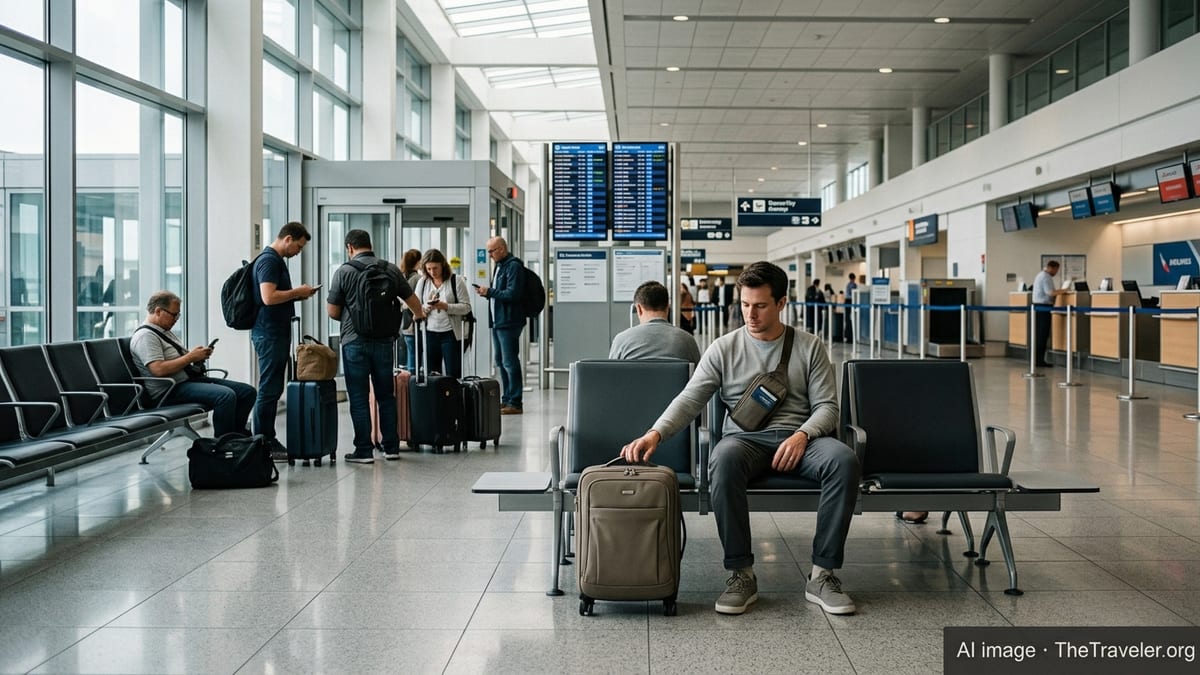
Losing Focus at Curbside Drop-Off and Parking Areas
The first weak spot often appears before travelers even enter the terminal. Publicly accessible curbside zones and parking structures mix private vehicles, rideshares and foot traffic, creating ideal conditions for opportunistic theft. Publicly available information shows that crowded drop-off lanes and parking lots see incidents ranging from luggage snatching to vehicle theft when travelers are distracted loading bags or searching for tickets.
A common mistake is leaving car doors open and bags unattended while saying goodbye, printing boarding passes or dealing with children. Even a brief lapse can allow someone to remove a bag from a back seat or trunk and disappear into traffic. Travelers who assume cameras or patrols are watching every moment may overestimate how closely these areas are monitored.
To reduce risk, experts recommend preparing documents and boarding passes before arrival, locking the car between loading each bag and keeping valuables out of sight. In parking structures, choosing well-lit spots near elevators or exits, avoiding isolated levels and pausing to scan the area before loading or unloading luggage can significantly improve personal safety.
Letting Distractions Take Over at Security Checkpoints
Security checkpoints are designed to screen for prohibited items, but the organized chaos can also be exploited by thieves. Coverage of recent incidents highlights “distraction zone” tactics in which one person causes confusion or delays in the line while an accomplice targets loose items in trays or bags on the conveyor belt. With travelers focused on instructions, removing shoes and repacking, wallets, phones and laptops can be vulnerable.
A frequent mistake is placing high-value items loose in bins or sending bags through the scanner long before reaching the metal detector. Reports indicate that many lost or stolen items at checkpoints involve electronics and small personal valuables left unsecured or out of sight for even a short period. Relying solely on the presence of screening staff for protection can give a false sense of security.
Safer habits include placing phones, watches and small valuables inside a zipped pouch or interior pocket of a carry-on before approaching the belt, and sending bags onto the conveyor only when ready to step through the scanner. Travelers are also advised to keep visual contact with their belongings as they emerge from the X-ray machine and to move immediately to a nearby repacking table rather than lingering at the belt.
Trusting Public Wi-Fi, Charging Stations and Unfamiliar Helpers
As more travelers rely on digital boarding passes, banking apps and email, criminals have expanded their focus beyond physical theft. Publicly available advisories warn that spoofed Wi-Fi networks at airports can capture login credentials and financial details when passengers connect without checking the network name. Similarly, “juice jacking” concerns around unsecured USB charging points have prompted renewed guidance on protecting devices and data.
Another mistake involves accepting unsolicited help with kiosks, check-in machines or baggage at crowded counters. Scams reported in recent travel forums describe individuals who offer assistance and then use the distraction to move or remove bags, or to glimpse PIN codes and personal information. Travelers tired after long journeys may be more inclined to accept help without verifying who is assisting them.
To reduce digital and physical vulnerability, travelers can rely on their mobile network or a personal hotspot where possible, and verify that any airport Wi-Fi they use matches the official network name provided on signage, not on handwritten notes or flyers. Using personal plug-in chargers instead of public USB ports, shielding screens when entering passwords and politely declining unsolicited assistance at machines or kiosks can help limit opportunities for scammers.
Letting Bags Out of Sight in Waiting Areas and Lounges
Gate areas and lounges may feel safer because they are past security, yet reports of theft in these zones show that criminals continue to target distracted passengers. Common tactics include removing items from open bags placed behind seats, lifting small carry-ons when travelers fall asleep, and exploiting crowded seating to move a bag only a few meters at a time until it is out of view.
A widespread mistake is treating lounges as private spaces and leaving laptops, passports or wallets on tables while visiting the buffet or restroom. Accounts from frequent travelers describe individuals buying low-cost tickets specifically to gain access to secure areas or lounges, then circulating to identify unattended belongings.
Better habits include keeping passports, cash, cards and electronics on one’s person in a secure money belt, neck wallet or interior pocket, and positioning carry-on bags where they are always in direct line of sight, such as under a leg or with a strap looped around a foot. For solo travelers, taking all valuables along when stepping away, even briefly, can be an important safeguard, as staff in these areas may not be monitoring individual bags.
Underestimating Risks at Baggage Claim and Landside Arrival Halls
Many travelers relax their guard once the flight is over, yet statistics and anecdotal accounts indicate that baggage claim and arrival halls remain high-risk zones. These areas are often accessible to the general public, meaning people without boarding passes can mingle freely with passengers. Reports have documented opportunistic thefts in which individuals lift suitcases from carousels, remove contents in nearby restrooms or exits, or walk away with lookalike bags.
One common mistake is standing far back from the carousel, leaving a gap between the traveler and their luggage. This allows someone else to handle or reposition a suitcase before its owner reaches it. Another is failing to label bags clearly, which can make it harder to distinguish between accidental mix-ups and deliberate attempts to walk off with the wrong case.
Practical precautions include standing close enough to the carousel to see and reach bags as soon as they appear, checking tags before exiting the area and using distinctive straps or covers that make bags harder to claim unnoticed. Travelers are also advised to move away from crowded exits to a quieter, secure corner of the hall before rearranging contents or checking for missing items.
Making Valuables Easy Targets in Checked and Carry-On Luggage
Finally, one of the most persistent safety mistakes is packing irreplaceable or conspicuously valuable items in ways that make them attractive to thieves. Published guidance from travel safety organizations continues to stress that jewelry, large amounts of cash, high-end electronics and critical documents should not be placed in checked baggage, where they may be out of sight for extended periods.
Another oversight is using bags with broken or flimsy zippers, obvious designer branding or visible high-end boxes inside, which can draw unwanted attention. While security-approved locks and tamper-evident features can deter casual tampering, they are not a guarantee against determined criminals, particularly in crowded or understaffed areas.
Safer packing strategies focus on concealment and compartmentalization. Travelers can use plain, non-designer luggage with robust zippers, interior pockets and discreet organizers, keeping high-value items in a small personal bag that remains under the seat or within arm’s reach. Recording serial numbers for electronics, photographing packed bags before traveling and keeping receipts in a separate location can also support claims if items are lost or stolen. Together, these measures help limit both the likelihood and the impact of airport crime, turning travelers from easy targets into harder prospects for would-be thieves.