

More news on this day
As Ramadan 2026 approaches, airlines serving Saudi Arabia and wider Islamic routes are sharpening their focus on the needs of fasting passengers, with carriers from Oman, Indonesia and the United Arab Emirates positioning themselves as particularly attentive to worshippers flying for Umrah, business or family reunions during the holy month.
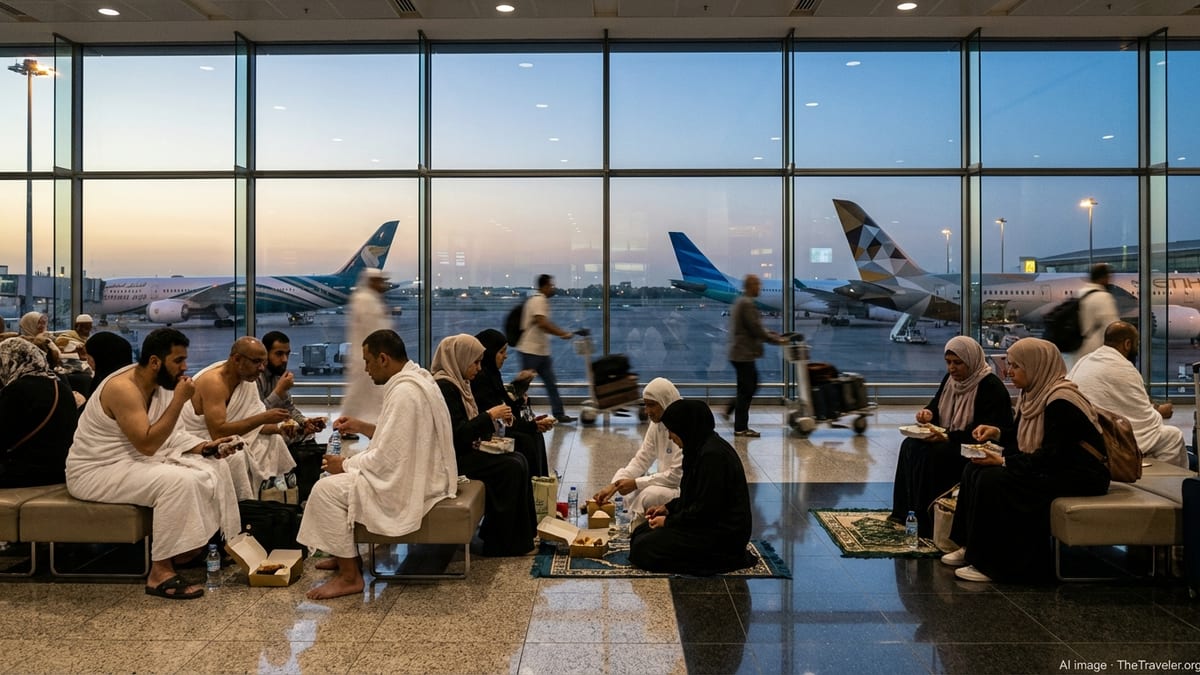
Ramadan 2026 Travel Surge Puts Focus on Passenger Wellbeing
With Ramadan 1447 expected to begin around the evening of 18 February 2026 in Saudi Arabia, followed by a month of dawn to dusk fasting, demand is building for flights into Jeddah, Madinah and other key gateways serving the holy cities of Mecca and Medina. Airlines that operate dense networks into the kingdom and across the wider Gulf are preparing for a seasonal spike not only in passenger numbers, but in the specific needs of observant Muslims who will spend long hours in the air while abstaining from food and drink.
For many travelers, particularly those embarking on Umrah pilgrimages outside the peak Hajj period, the choice of airline is no longer only about price or schedule. Cabin policies that respect prayer times, carefully timed iftar and suhoor offerings, and staff trained to understand the rhythm of fasting have become decisive factors. As 2026 bookings open across global distribution systems, airlines in Oman, Indonesia and the United Arab Emirates are showcasing tailored Ramadan programs to capture this growing, values-driven market.
Saudi Arabia’s own calendar for Ramadan 2026 is being closely monitored by both domestic and foreign carriers, because the first day of fasting sets the tone for flight planning on busy regional corridors. Aviation analysts say the combination of a late winter start date, relatively moderate fasting hours compared with peak summer years, and robust post-pandemic demand for religious travel is creating a competitive environment in which service innovations during Ramadan can translate directly into market share.
Oman Air: Quiet Hub and Thoughtful Iftar Timing for Gulf Corridors
Oman Air, the national airline of the Sultanate of Oman, is increasingly positioning Muscat as a calmer alternative hub for passengers routing to Saudi Arabia and the wider Gulf during Ramadan. The government in Muscat has already confirmed that Ramadan 2026 in Oman will begin on 19 February, aligning closely with Saudi expectations and giving airlines a clear planning horizon for their staffing and catering schedules.
From a traveler’s perspective, one of Oman Air’s most distinctive advantages is the less congested environment at Muscat International Airport compared with the mega hubs in neighboring states. For fasting passengers navigating tight connection windows between Southeast Asia, the Indian subcontinent and Saudi Arabia, fewer terminal crowds can mean a less stressful suhoor before dawn or iftar at sunset. Airport food and beverage operators in Muscat typically extend hours and adjust menus during Ramadan, enabling travelers to access light pre-dawn meals or dates and juices in the transit area when local fasting times permit.
On board, Oman Air has established a reputation in recent years for proactively announcing local prayer and iftar timings on routes that cross time zones, and for ensuring that date, water and juice service is ready the moment the sun sets according to the aircraft’s position. While formal 2026 menus have not yet been published, previous Ramadan seasons have seen economy and premium cabins alike receive boxed iftar elements on evening departures, as well as flexibility in meal scheduling for passengers who prefer to delay eating until after Maghrib prayers.
Industry observers note that Oman Air’s network structure also lends itself to Ramadan-friendly itineraries. With strong links into cities such as Karachi, Lahore, Dhaka and key Indian metros, the carrier is able to time outbound services toward Jeddah, Riyadh and Dammam so that many passengers can complete suhoor on the ground, fast comfortably on board and then break their fast shortly before or after landing, minimizing disruption to their spiritual routines.
Garuda Indonesia: National Carrier Aligns With World’s Largest Muslim Population
Indonesia, home to the world’s largest Muslim population, treats Ramadan as a pillar of its social and economic year. Garuda Indonesia, the country’s flag carrier, reflects that centrality in its seasonal planning. While the airline is still finalizing its official Ramadan 2026 program, its past practices and public statements indicate that fasting passengers can expect a detailed, culturally grounded approach on both domestic and international routes.
Historically, Garuda has configured its catering schedule so that on flights operating close to Maghrib, cabin crew are prepared with dates, water and light snacks that can be served immediately when the time for iftar begins. On some routes, the airline has provided printed information about local fasting hours at origin and destination, along with in-flight announcements to help passengers reconcile differences when crossing time zones. For Indonesians heading to Saudi Arabia for Umrah, these touches are more than conveniences; they are seen as signs that the carrier understands the religious significance of the journey.
On the ground, Garuda’s presence at terminals in Jakarta and other hubs is complemented by airport operators who typically open dedicated prayer spaces and extend food service hours for pre-dawn suhoor. That ecosystem is particularly important given the long sector lengths between Indonesia and the Gulf. Many passengers choose late-night or early-morning departures in order to complete suhoor at home, rest during the day in the air and then land in Saudi Arabia in time for evening prayers and iftar with family or tour groups.
With Indonesia’s outbound religious travel market recovering strongly, analysts expect Garuda to emphasize reliability and schedule integrity during Ramadan 2026. For fasting travelers, predictable departure and arrival times can matter as much as extra service touches, because delays risk turning carefully planned suhoor or iftar windows into drawn-out, uncomfortable stretches. The airline’s ability to coordinate with Saudi and Gulf partners on through-ticketing to secondary cities could further improve the Ramadan experience for pilgrims connecting beyond Jeddah or Madinah.
Etihad Airways: Integrated Ramadan Experience From Lounge to Landing
Etihad Airways, based in Abu Dhabi, has been among the most visible Gulf carriers in recent years when it comes to structured Ramadan offerings, both in its home hub and on board. The airline has previously detailed special menus in its lounges, including traditional juices, soups and desserts associated with Ramadan, alongside full iftar meals for passengers departing in the evening. Such initiatives are widely expected to return in refined form for 2026, especially as Ramadan again falls during a period of strong long-haul demand.
In the air, Etihad has made a point of tailoring meal service to fasting schedules rather than simply following standard time-based routines. On flights where sunset occurs mid-journey, cabin crew are typically briefed to prepare iftar snack boxes and beverages well in advance, so that there is no delay in serving dates and water once the fasting day ends. Premium cabins often see a more elaborate iftar course integrated into the main meal service, while economy passengers receive simplified but thematically consistent offerings that still respect religious tradition.
Another factor that sets Etihad apart for Ramadan travelers is its network pattern. Abu Dhabi functions as a major hub linking European, North American and Asian cities with Saudi Arabia and the wider Middle East. During Ramadan, the airline can align connection banks so that passengers have sufficient time in the terminal to pray, break their fast or eat suhoor before the next leg. With prayer rooms located close to many departure gates and additional Ramadan signage and staff guidance, the airport experience is designed to complement what happens on board.
Etihad has also highlighted charitable and community initiatives during previous Ramadan seasons, such as partnering with humanitarian organizations or running in-flight donation drives. For some travelers, knowing that a portion of their ticket price or onboard spending can support relief projects during the holy month adds a further layer of meaning to choosing the Abu Dhabi carrier for their Ramadan journeys.
Why Fasting Passengers Prioritize Timing, Flexibility and Clarity
Regardless of which airline they choose, fasting travelers face a consistent set of challenges when flying during Ramadan. The most obvious is the need to calculate accurate suhoor and iftar times at altitude, where the aircraft may cross multiple time zones and the position of the sun relative to local horizons shifts during the flight. Airlines that provide clear, authoritative guidance through flight-deck announcements or cabin information can help passengers avoid confusion and maintain confidence that they are observing the fast correctly.
Meal timing and flexibility are equally crucial. Passengers who prefer to eat suhoor as late as possible often request that their first meal be delayed, while those who do not wish to eat at all during fasting hours may ask that trays be kept aside for after sunset. Airlines like Oman Air, Garuda Indonesia and Etihad, which have trained crews to accommodate such requests without disrupting service to non-fasting passengers, tend to receive positive feedback from observant flyers.
Another growing concern is hydration and health during long-haul flights. As Ramadan 2026 will see fasting hours range from around 11.5 to more than 15 hours in different regions, physicians routinely remind travelers to drink ample water between iftar and suhoor and to avoid excessive caffeine or heavy meals. Airlines that design lighter, nutrient-dense iftar and pre-dawn offerings, and that ensure water is readily available before and after the fasting window, can play a real role in protecting passenger wellbeing, particularly for older worshippers or those undertaking multiple sectors in quick succession.
Transparent policies also matter. Clear communication at the time of booking and check-in, as well as through mobile apps, about whether special Ramadan meal arrangements are available, can help travelers plan their itineraries. Fasting passengers increasingly seek out carriers that outline their Ramadan services on official channels ahead of time, rather than relying only on informal reports.
Planning Ramadan 2026 Flights to Saudi Arabia and Beyond
For many Muslims, the run-up to Ramadan is a time not only for spiritual preparation but for practical travel planning. With the holy month expected to begin in mid to late February 2026, travelers looking to perform Umrah in the early days of Ramadan, attend family gatherings in the Gulf, or simply continue essential business trips while fasting are already comparing options across carriers and hubs.
Specialists in religious tourism advise booking early flights into Jeddah, Madinah and other Saudi cities, especially around the first and last ten days of Ramadan, which are traditionally seen as particularly blessed periods. Seats in those windows, especially on airlines with strong Ramadan reputations, tend to sell out quickly. Additionally, travelers are encouraged to pay attention to arrival times, with many preferring to land in the late afternoon so they can reach accommodation and settle before Maghrib, or to choose overnight flights that allow for a more comfortable suhoor after landing.
Transit choices can be equally important. Routing through Muscat with Oman Air, Jakarta or other Indonesian hubs with Garuda, or Abu Dhabi with Etihad allows passengers to take advantage of airports that actively adapt their operations for Ramadan. Availability of quiet prayer rooms, extended food and beverage hours timed to local fasting schedules, and staff used to handling large numbers of worshippers all help smooth the journey.
Travel agents also report that some families and groups now prioritize airlines whose on-time performance is strong during Ramadan, minimizing the risk that delays will throw off carefully coordinated prayer and fasting plans. In this context, carriers investing in robust operations and contingency planning can stand out just as much as those promoting special menus.
Beyond Saudi Arabia: Regional Routes That Matter for Ramadan
While Saudi Arabia is the spiritual focal point for many Ramadan travelers, the month also prompts a surge in intra-regional journeys across the wider Muslim world. Oman Air, Garuda Indonesia and Etihad each play strategic roles on these routes, often carrying passengers whose final destination is not the kingdom but other cities with strong Ramadan traditions.
Oman Air’s regional network, for example, connects Gulf capitals and smaller cities across the Arabian Peninsula, facilitating trips for family reunions, business visits and religious study. These itineraries may not involve pilgrimage, but the fasting needs of passengers are just as pressing, particularly on multi-stop journeys across the Gulf and Indian Ocean littoral.
Garuda Indonesia links Jakarta and other Indonesian cities with destinations in Southeast Asia, Australia and the Middle East. For Indonesians living abroad or studying overseas, Ramadan 2026 will be an opportunity to return home or visit relatives, often through complex itineraries that rely on smooth coordination between Garuda and partner airlines. Consistent Ramadan-sensitive service on each leg can make a significant difference to how restorative those visits feel.
Etihad’s role is especially pronounced on long-haul corridors from Europe and North America into the Gulf and onward, carrying a mix of diaspora communities, students and professionals who choose to observe Ramadan with family in their countries of origin. On such journeys, travelers may spend more than one iftar or suhoor in transit. An airline that understands and caters to these repeated fasting cycles can help reduce the physical and emotional strain of long-distance travel during the holy month.
What Travelers Should Watch For as Airlines Finalize 2026 Plans
In the months leading up to Ramadan 2026, airlines across the Islamic world and beyond will continue to refine their offerings for fasting passengers. Travelers considering Oman Air, Garuda Indonesia or Etihad are advised to monitor official updates for specific menu details, prayer time announcements, and any temporary schedule changes designed to better align with fasting hours.
Analysts expect that competition among airlines for Ramadan traffic into Saudi Arabia and neighboring countries will push more carriers to publicize their policies on accommodating fasting passengers, from flexible meal timing and special snack boxes to additional ground support at hubs. As sustainability and cost pressures remain high across the industry, the carriers that succeed will likely be those that integrate these services into their broader customer-experience strategies rather than treating them as one-off promotions.
For observant Muslims planning their 2026 journeys, the core considerations are unlikely to change: respect for religious practice, clarity of information and genuine hospitality. In that landscape, airlines such as Oman Air, Garuda Indonesia and Etihad, which have already invested in Ramadan-focused services, are well placed to retain and grow their share of a travel segment that combines deep spiritual significance with enduring commercial importance.