

Travelers who love Lake Huron tend to cherish the same things: big horizons, long strands of sand or cobble, working harbors, and a pace that rarely feels rushed. Yet even on the most easygoing of the Great Lakes, popular stretches can feel busier every year. For those looking to recapture the quiet, there are other shores that offer the same blend of water, wind, and stillness without the lines at the ice cream stand or packed parking lots. From New England fishing villages to Atlantic islands and far-flung freshwater beaches, these alternatives to Lake Huron deliver the restorative calm coastal travelers crave.
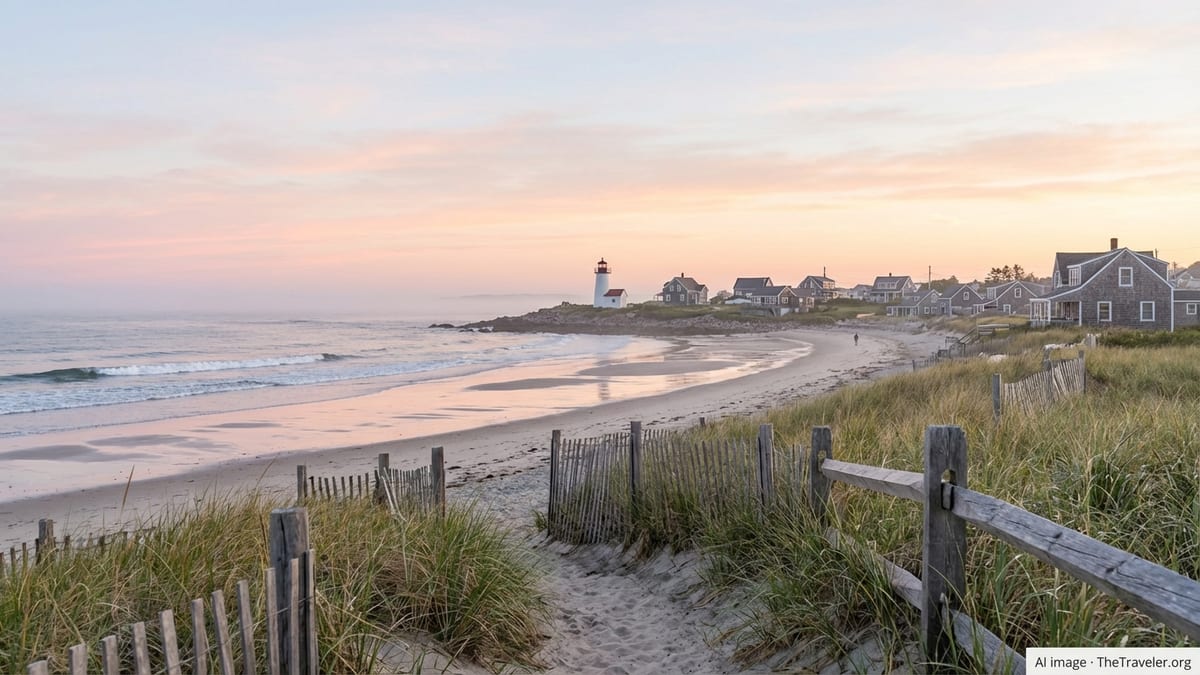
What Makes a Great Alternative to Lake Huron
Lake Huron appeals to travelers who want water-focused trips that are more about long walks and loons calling at dusk than beach bars and boardwalk rides. Any satisfying alternative should echo that sensibility. Think modest main streets instead of mega-resorts, independent motels and cabins over high-rise hotels, and shorelines where you can follow your own footprints in the sand for a long time before seeing anyone else’s.
Quiet coasts also tend to share a few practical traits. They are usually a little harder to reach than the major hubs, sitting an extra hour or two beyond the most obvious exit or ferry dock, and they often have limited capacity in the form of small inns, cottage rentals, and basic campgrounds. That natural cap on visitor numbers helps preserve the unhurried mood that many travelers now find harder to track down on Lake Huron’s more famous strands.
For Lake Huron loyalists specifically, places that mix working waterfronts, wildlife, and approachable outdoor adventure will feel familiar. The destinations that follow were chosen for their quieter reputation, relatively low-rise development, and capacity for simple pleasures: scenic walks, birdlife, dark skies, and waves that provide a soothing soundtrack but rarely a party scene.
Ogunquit, Maine: Easygoing Atlantic Energy
On the surface, Ogunquit on Maine’s southern coast might sound too well-known to count as a tranquil hideaway. Yet recent travel reporting points to it as an underrated alternative to the region’s busiest beach towns, and its mood still feels closer to a relaxed fishing village than a commercial resort. Set between the Atlantic and a tidal river, Ogunquit centers on a long sandy beach, a compact village, and a classic harbor filled with lobster boats.
For travelers used to Lake Huron’s big skies and gentle surf, Ogunquit’s appeal lies in its balance of salt air and serenity. The main beach offers broad, shallow shallows that are friendly for wading and family play, particularly at lower tides when the sands seem to stretch toward the horizon. Early mornings and evenings tend to be especially peaceful, when most visitors are still at breakfast or already back in town for dinner and the light is soft over the water.
A shoreline path known locally for its scenery threads along low cliffs and pocket coves, offering an experience somewhat akin to walking a Lake Huron dune trail, but with surf crashing below instead of gentle lake rollers. Benches along the way invite lingering in all seasons, whether you are watching stormy seas in shoulder months or sailboats on calm summer afternoons. Because the town’s core footprint is compact, many guests leave their car parked for the duration of a stay and navigate on foot, by bike, or via small local trolleys.
Compared to Maine’s headline destinations, Ogunquit’s nightlife is modest, with evenings more about ice cream, theater, or quiet drinks than crowds. That tone, along with the absence of high-rise development, makes it feel like a seaborne cousin of Huron’s smaller Ontario and Michigan communities, ideal for travelers who want the full Atlantic experience without sacrificing a sense of calm.
Stonington, Connecticut: A Working Harbor Without the Rush
Where some coastal towns traded their fishing fleets for souvenir shops long ago, Stonington on the southeastern Connecticut shore still leans into its identity as a working harbor. Recent coverage of off-the-grid Atlantic destinations has highlighted it precisely because it flies under the radar compared with nearby Mystic. Narrow streets lined with historic homes dip toward a compact waterfront where lobster boats and small trawlers continue their daily routines.
For travelers used to Lake Huron’s blend of heritage and water views, Stonington offers a similar sense of continuity. The village core has changed slowly, and much of the draw lies in unscripted moments: watching crews unload their catch at the town dock, chatting with locals outside the small-scale shops, or choosing a bench to take in views over the breakwater toward open water.
One modest stone lighthouse, long converted to a museum, provides a focal point and a platform for wide-angle views across the harbor and beyond. The scene from the top feels oddly familiar to anyone who has climbed a Great Lakes light: shoals, scattered islands, and vessels moving through narrow passages. Around the point, small, often uncrowded beaches and tide-washed rocks provide spots for picnics, beachcombing, and pastel sunsets that rival anything on an inland sea.
Because Stonington stays a step removed from the region’s heaviest tourist traffic, lodging stock remains limited, leaning toward inns and rentals rather than sprawling resorts. As with quieter corners of Lake Huron, that low-key infrastructure means planning ahead during peak season, but it also helps preserve the very atmosphere travelers are seeking.
Little Compton, Rhode Island: New England’s Quiet Peninsula
Little Compton sits on the tip of the Sakonnet Peninsula in Rhode Island, in a position that quite literally keeps it off many travelers’ way. Travel writers frequently describe it as one of New England’s more tranquil coastal communities, with South Shore Beach in particular singled out for its low-key energy and wide Atlantic views. The town’s mix of farmland, stone walls, and shoreline gives it a pastoral character that stands in contrast to Rhode Island’s busier resort centers.
Coastal travelers who love Lake Huron’s more natural stretches will likely feel at home on this undeveloped edge. The main beach is backed by modest dunes and open sky rather than a wall of buildings, and the sounds tend to be limited to surf, wind, and seabirds. In certain conditions, the waves here can be more robust than anything on Huron, but there are usually sheltered corners and nearby coves that offer calmer waters for those who simply want to float or wade.
Behind the beach, a protected coastal pond and preserve safeguard nesting sites for shorebirds. Access is carefully managed in warm months, and visitors are encouraged to keep dogs to approved zones or leave them at home to help protect fragile dunes and bird habitat. That conservation-first approach will feel familiar to travelers who know Lake Huron’s nature reserves and dark-sky preserves, where quiet recreation and ecological care go hand in hand.
In the village itself, white-steepled churches, a small commons, and a scattering of historic homes form a classic New England tableau. Services and amenities are relatively sparse compared with larger towns, so it is wise to arrive with a flexible schedule and a willingness to unplug. Many visitors settle into a rental or inn, stock up on essentials, and then spend days moving only between the farm stands, shoreline, and their porch chairs.
Prince Edward Island’s North Shore: Red Cliffs and Gentle Pace
For Lake Huron fans who are open to traveling farther afield, Canada’s Prince Edward Island offers a compelling saltwater counterpart. The island’s famed north shore, with its iron-rich red cliffs, dune-backed beaches, and tidy fishing villages, is popular with Canadians yet still manages to deliver stretches of strikingly quiet coast, especially outside of peak school holiday weeks. Instead of towering hotels, you are more likely to find low-slung cottages, family-run inns, and small campgrounds nestled behind the dunes.
Unlike many Atlantic coasts, PEI’s north shore often offers relatively warm summer waters thanks to its location in the Gulf of St. Lawrence and the shallowness of many bays. That can be a pleasant surprise for travelers accustomed to Lake Huron’s temperatures, which tend to stay on the cool side even in August. Beaches here range from broad, soft strands ideal for families to smaller, more rugged coves where the red sandstone has been carved into arches and ledges by wind and waves.
Fishing harbors and village wharves remain central to island life, and visitors who value authenticity over spectacle will find plenty of both. Early mornings see crews heading out for lobster or crab in season, while evenings bring a quiet rhythm of locals walking the breakwaters, children fishing off the piers, and visitors enjoying simple suppers focused on seafood and farm produce. Away from the main gateways, traffic thins quickly, and many of the most memorable viewpoints are down unmarked roads that end at pocket beaches or cliff lookouts.
Because PEI’s north shore is spread out, it rewards a slow, exploratory style of travel rather than a checklist approach. Much like following Lake Huron’s coast road, the pleasure lies in stringing together lesser-known spots: a lighthouse overlooking a wind-scoured point, a nearly empty beach path through the marram grass, or a small bakery that seems to appear in the middle of fields with a view of the sea just beyond.
Nova Scotia’s South Shore: Lighthouses, Lobster Shacks, and Long Horizons
Nova Scotia has drawn growing attention in recent years for its combination of Atlantic surf, heritage towns, and a rising wellness scene, but substantial stretches of its coastline still feel remarkably quiet, especially along parts of the South Shore between Halifax and Yarmouth. Here, narrow coastal roads twist past inlets, fishing harbors, and beaches where granite outcrops give way to long sweeps of pale sand. Outside a few well-known postcard towns, you may find only a handful of people sharing the view.
Travelers who appreciate Lake Huron’s low-key cottage communities will likely recognize a kindred spirit in these villages. Colorful wooden homes and shingled sheds cluster around wharves stacked with lobster traps, and the local economy often still depends on the sea. Simple seafood shacks and small diners outnumber fine-dining restaurants, and accommodations tend toward motels, inns, and rental cottages tucked among spruces and wild roses.
Beyond the day-to-day rhythms of fishing and beach walking, Nova Scotia’s coastline offers geographic drama that inland seas cannot quite match. Offshore islands, rocky headlands, and shifting sandbars create complex seascapes that change constantly with the light and weather. On calm days, sheltered coves invite swimming and paddleboarding, while breezier conditions bring whitecaps and excellent conditions for surfers in a few dedicated spots. The mix of quiet coves and wilder headlands gives Lake Huron travelers the chance to experience a broader range of coastal moods while still retreating to a peaceful base each evening.
With its growing profile, Nova Scotia is seeing more visitors overall, but many focus on a handful of marquee sights. Those willing to explore side roads, travel outside the busiest weeks of summer, or stay in the less publicized communities often find that the sense of discovery and solitude remains intact.
Lake Superior’s Remote Shores: Inland Sea, Wilder Spirit
Not every alternative to Lake Huron involves salt water. For those who want to stay within the Great Lakes system yet seek fewer people and a stronger sense of remoteness, Lake Superior’s more isolated stretches are an obvious candidate. On the southeastern shore, in Michigan’s Upper Peninsula, long tracts of coast remain largely undeveloped aside from the occasional access road, low-key cabin cluster, or nature preserve.
One particularly quiet area lies west of Whitefish Point, where conservation lands protect dunes, wetlands, and beaches from new construction. The shoreline here feels similar to Lake Huron’s wildest segments, with low dunes, birch and pine forests, and the constant sound of waves. The difference is scale and mood: Superior is deeper and colder, with more dramatic weather shifts and a long maritime history that includes numerous shipwrecks, reminders of both beauty and risk.
Because much of this shoreline lacks amenities, it attracts visitors who are prepared for self-reliant travel. Basic trailheads and sand tracks lead to beaches where you may not see another person for hours, particularly outside of midsummer or on cooler days. For many Lake Huron enthusiasts, that sparse human presence is precisely the appeal, offering a chance to feel genuinely away from it all without leaving the region entirely.
Those who make the effort are rewarded with dark night skies, abundant birdlife, and sunsets that rival anything on Huron, lingering late into the evening in peak summer. Even short visits can reset expectations of what a Great Lakes beach day can feel like when development and crowds are kept at arm’s length.
Western Lake Michigan and Inland Lakes: Freshwater Calm With Long Beaches
While parts of Lake Michigan are as busy as any coastal resort, its western and northern reaches still harbor towns and parks with a quieter, more measured feel that will resonate with Lake Huron travelers. In northern Michigan, low-key beach communities and state parks protect miles of sand, dunes, and cobble shoreline where development is set back from the water and night skies remain comparatively dark.
Along these coasts, shallow, sandy-bottomed bays can provide swimming conditions similar to Huron’s most family-friendly spots, with water that warms a little more quickly than the big lake beyond. Towns tend to cluster around compact main streets with a few restaurants, cafés, and outfitters, leaving broad stretches of shore undeveloped. This pattern allows visitors to enjoy the convenience of a small hub while still having easy access to quiet sections of beach and trail.
Farther inland, a network of large glacial lakes offers another kind of coastal calm. Here, tree-lined shores dotted with small public beaches and low-profile cottage developments provide the feeling of living beside a scaled-down Great Lake. The water is often clearer and warmer than the big lakes, and boat traffic is usually limited to small craft. For Lake Huron fans who care more about water access and quiet evenings than the drama of an open horizon, these inland coasts can be just as satisfying.
Because these destinations receive fewer out-of-region visitors, they tend to feel less seasonal in personality, with some businesses and communities humming along year-round rather than surging only in midsummer. Returning at different times of year can reveal entirely different moods, from autumn color reflected on still water to late-spring mornings when loons and songbirds provide most of the soundtrack.
The Takeaway
Lake Huron remains one of North America’s great places for anyone who craves space, sky, and the steady rhythm of waves. Yet the desire for unhurried, uncrowded coasts often calls for exploring beyond familiar shorelines. Whether you head east for New England villages, cross the border for red cliffs on Prince Edward Island and quiet Nova Scotia inlets, or stay within the Great Lakes by seeking out Lake Superior and lesser-known Lake Michigan communities, it is still possible to find beaches where parking lots are small and evenings end in silence rather than amplified music.
What unites these alternatives is not a specific type of sand or the salinity of the water, but a shared commitment to staying human in scale. Small harbors, modest accommodations, and a focus on everyday coastal life all help keep visitor numbers manageable and experiences authentic. For travelers who love Lake Huron’s mood more than any single place-name, these shores offer fresh vistas without asking you to give up the qualities that drew you to the lake in the first place.
As pressures on popular waterfronts increase, quiet coasts will depend more than ever on visitors’ willingness to tread lightly: to respect local communities, support independent businesses, and make room on the sand for others seeking the same calm. With that mindset, your search for an alternative to Lake Huron can become less about leaving a favorite destination behind and more about expanding your personal map of places where the water and the world seem to slow down together.
FAQ
Q1. What makes a destination a good alternative to Lake Huron?
Good alternatives share Lake Huron’s low-rise development, easygoing pace, walkable beaches, and emphasis on simple outdoor activities over nightlife or large-scale attractions.
Q2. Are these quieter coastal destinations suitable for families?
Yes. Most of the destinations highlighted have gentle beaches, small-town services, and a relaxed environment that suits families looking for low-key time together.
Q3. When is the best time of year to visit these quieter coasts?
Late spring and early fall often provide a balance of mild weather and thinner crowds, while high summer offers warmer water but requires more advance planning.
Q4. Will I need a car to enjoy these destinations?
In many cases, yes. While some towns are walkable once you arrive, reaching trailheads, lesser-known beaches, and rural viewpoints usually requires a car.
Q5. How can I keep my trip environmentally friendly?
Choose locally owned accommodations, minimize single-use plastics, stay on marked paths, respect wildlife buffers, and conserve water and energy where possible.
Q6. Are these coastal areas generally expensive to visit?
Costs vary, but quieter towns often offer a range of simple lodgings and self-catering options. Traveling outside peak weeks can also help keep expenses down.
Q7. Can I swim safely at these alternative destinations?
Swimming is common, but conditions vary by day and location. Always check local advisories, obey posted signs, and ask residents or lifeguards about currents and hazards.
Q8. How far in advance should I book accommodations?
For peak summer dates, it is wise to reserve several months ahead. In shoulder seasons, you may find more flexibility, though small places can still book up.
Q9. Are there options for travelers without a big gear collection?
Yes. Many coastal towns have outfitters that rent kayaks, bikes, and basic beach gear, so you can travel light and still enjoy the outdoors fully.
Q10. What should I prioritize packing for a quiet coastal trip?
Layers for changing weather, comfortable walking shoes, a lightweight rain jacket, sun protection, and a daypack are usually more useful than formal clothing.