

Lake Michigan has long been a summer icon for Midwesterners, but it is far from the only freshwater shoreline worth planning a vacation around. From high-altitude lakes ringed by pines to sandy strands along Canada’s Georgian Bay and gentle, family friendly coves in New England, a growing number of travelers are seeking out alternatives that offer clear water, soft sand and classic beach-town energy without the crowds or high prices of the most famous Great Lakes resorts. Here are some of the best freshwater destinations to consider when you want everything you love about a beach holiday, minus Lake Michigan.
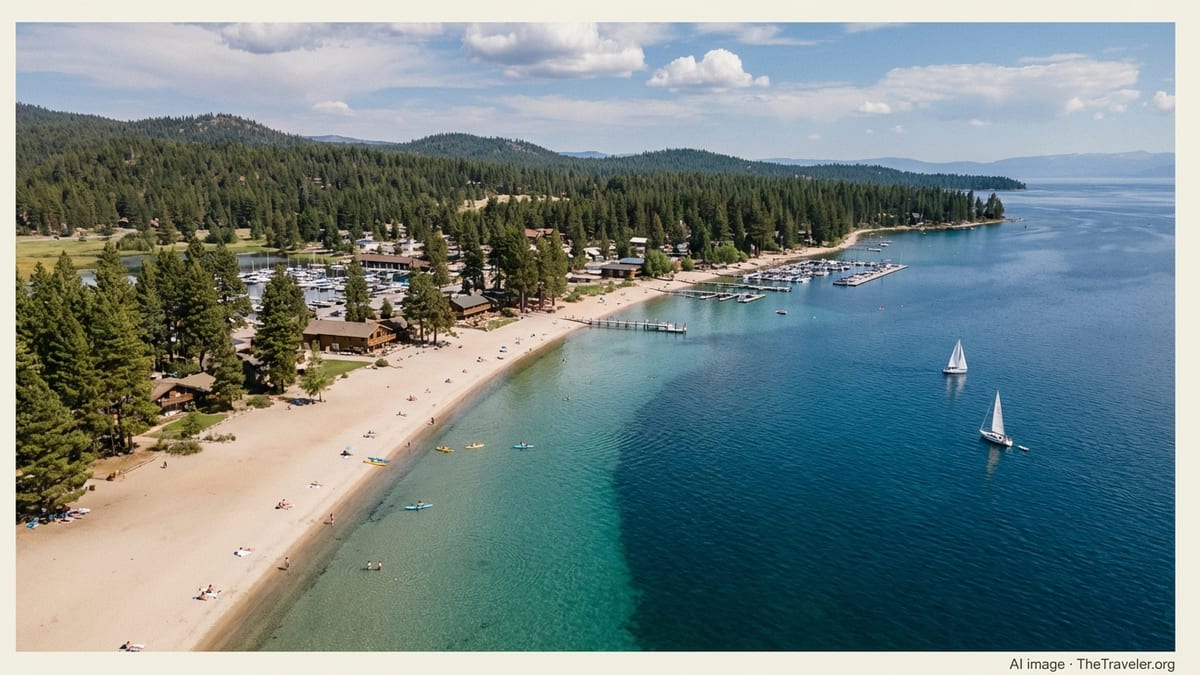
Lake Tahoe, California and Nevada: Alpine Clarity and Mountain Energy
Straddling the border of California and Nevada, Lake Tahoe is one of the most striking freshwater alternatives to any Great Lake. The second deepest lake in the United States, its long stretches of shoreline combine pine forest, granite boulders and remarkably clear, cold water. Summer brings reliably sunny days, low humidity and cool evenings, which gives Tahoe a very different feel from the humid Midwest, yet it still delivers the same sense of a full-scale lakeside getaway built around swimming, boating and beach time.
Beach options at Tahoe range from classic family spots with concessions and rentals to quieter coves that require a short hike. On the Nevada side, Round Hill Pines offers a broad sandy strand, marina, chair and umbrella rentals, and access to paddleboards, kayaks and small boats, which makes it especially good for first-time visitors. Across the lake in California, beaches near South Lake Tahoe and Tahoe City provide similar amenities with a slightly livelier atmosphere, plus easy access to restaurants and lodging just off the sand.
Water temperatures at Tahoe stay cooler than those on Lake Michigan, so long swims feel brisk even in July and August. In exchange, you gain remarkably clear visibility and an alpine setting where rocky points, forested slopes and distant snow patches frame the water in every direction. Add in extensive hiking and biking networks, from lakefront paths to high ridges with panoramic views, and Tahoe becomes a strong choice for travelers who want a beach vacation tightly linked to mountain adventure.
Practical considerations are straightforward: peak season typically runs from late June through early September, and roads can be congested on holiday weekends, so midweek stays and shoulder-season visits in June or September often feel more relaxed. Many public beaches charge modest day-use or parking fees, and afternoon thunderstorms can build on especially hot days, but they usually pass quickly, leaving dramatic light and cooler air in their wake.
Georgian Bay, Ontario: Canada’s Freshwater Coastline
North of Toronto, Georgian Bay on Lake Huron delivers some of the most impressive freshwater shoreline in North America and is often suggested as a natural alternative when Lake Michigan feels too crowded. Sometimes referred to as a sixth Great Lake because of its size and distinct geography, Georgian Bay offers a mix of long sandy beaches, rugged Canadian Shield rock coastlines and countless islands dotted with windswept pines. For beach-focused travelers, it combines ocean-like vistas with the calmer, less salty personality of freshwater.
Wasaga Beach, at the southern end of Georgian Bay, is frequently cited as the world’s longest freshwater beach, with roughly 14 kilometers of uninterrupted sand and shallow water that warms pleasantly by midsummer. Its wide, gently sloping shoreline and designated swimming areas make it a favorite for families, while the town behind the dunes provides seasonal dining, casual nightlife and accommodations ranging from simple motels to rental cottages. Despite steady redevelopment along parts of the waterfront, the overall feel remains that of a classic summer resort town focused squarely on its beach.
Just up the coast, destinations such as Sauble Beach offer a slightly quieter and more retro take on the Georgian Bay holiday. Here, soft sand, shallow water and memorable sunsets shape the experience, and beach volleyball, small surf shops and independent ice cream stands maintain a laid-back atmosphere that feels less commercial than some of the busiest Lake Michigan strips. A short drive inland leads to rivers, waterfalls and forest trails, which adds variety for travelers who want breaks from the sun.
Reaching Georgian Bay generally involves a drive of two to three hours from Toronto, and summer weekends can see heavy traffic, especially at Wasaga. Daytime highs in July and August are warm but not oppressive, and evenings by the water can be cool enough for a light jacket. For those accustomed to the crowds on Chicago’s lakefront or the popular west Michigan beaches, Georgian Bay’s mix of open space, long sightlines and more modest visitor numbers can feel like a welcome change of pace.
The Finger Lakes, New York: Gentle Shores and Wine Country Vibes
Western and central New York’s Finger Lakes region offers a considerably different style of freshwater beach vacation from Lake Michigan, emphasizing intimate coves, rolling hills and vineyard views over sweeping expanses of sand. The long, narrow lakes in this glacially carved landscape are known for clear water and relatively calm conditions, making them appealing for paddlers and swimmers seeking a relaxed environment without significant surf or undertow.
Public swimming areas and small beaches line lakes such as Canandaigua, Seneca, Cayuga and Keuka. At the north end of Canandaigua Lake, for example, visitors find managed lakefront parks with roped-off swimming zones, lawns for picnicking, and easy access to boat launches and local marinas. The mood is more low-key than a typical Great Lakes resort: sailboats and pontoon boats dominate, music from lakeside patios carries faintly across the water, and evening cruises provide a chance to see the shoreline’s historic boathouses and cottages from a different perspective.
Beyond the sand, one of the Finger Lakes’ strongest draws is its wine and food culture. Dozens of wineries and tasting rooms ring the larger lakes, often situated on hillsides that look directly down onto the water. Farm-to-table restaurants, roadside stands and seasonal festivals add to the sense of a region that revolves around both its landscape and its harvests. Travelers can easily combine beach afternoons with tasting-room stops, waterfall hikes in nearby state parks, and visits to small towns with 19th-century main streets.
Summer weather in the Finger Lakes tends to be warm and humid but slightly less intense than major Midwest heat waves, with lake breezes offering some relief. Public beaches typically charge small admission or parking fees, and lifeguards are present at many sites during set hours in high season. Because the lakes are narrower than Lake Michigan, you are never far from services, and day trips around the shoreline by car allow you to sample multiple beaches and overlooks within a single weekend.
Lake Champlain, Vermont and New York: Freshwater with a Mountain Backdrop
Stretching along the border of Vermont and New York, with a northern reach into Quebec, Lake Champlain is another compelling alternative for travelers comparing freshwater destinations. While its shoreline is less uniformly sandy than Lake Michigan’s, several state and municipal parks offer genuine beach experiences, often with views of the Green Mountains to the east and the Adirondacks to the west. The combination of water access and surrounding peaks creates a sense of scale that many visitors associate more with the West than with the Northeast.
On the Vermont side, broad, grassy lakefront parks lead to designated swimming beaches where sand or fine pebbles meet relatively shallow water. These official swim areas are designed with families in mind, offering restrooms, picnic tables, playgrounds and calm conditions that are typically well suited to beginner swimmers. In New York, the western shoreline features smaller public beaches and marinas where local residents and summer visitors launch sailboats, kayaks and fishing boats into the lake’s long north-south corridor.
Lake Champlain is known for variable conditions that reward planning. Calm summer mornings can feel nearly glassy, ideal for paddleboarding or long swims close to shore. By afternoon, wind often picks up, attracting sailors and windsurfers and creating a more dynamic surface. Water temperatures are generally cooler than those at many Lake Michigan beaches by late summer, particularly in deeper sections of the lake, but shallow bays and coves warm enough for comfortable swimming during July and August.
What sets Champlain apart as a beach vacation alternative is how closely integrated it is with regional culture and history. Lakefront cities and towns pair waterfront promenades and small urban beaches with independent cafes, breweries and historic districts. Inland, farm roads lead to orchards, cheesemakers and mountain trailheads, turning a straightforward lake holiday into a broader exploration of northern New England and upstate New York, all anchored by daily time in and around the water.
Lake Winnipesaukee, New Hampshire: Classic New England Lake Life
In central New Hampshire, Lake Winnipesaukee distills the idea of New England lake life into a single destination, with islands, forested peninsulas and sheltered bays surrounding its clear water. For travelers considering an alternative to Lake Michigan’s larger urban beaches and developed resort corridors, Winnipesaukee offers a more intimate, small-town version of a freshwater getaway that still features sandy fronts, boat rentals and plenty of summertime bustle.
Weirs Beach is one of the most recognizable stretches of shoreline on Winnipesaukee, with a sandy swimming area, boardwalk and nearby arcades that recall mid-20th-century American vacation culture. Families spread towels on the sand, children wade in gradually deepening water, and excursion boats depart regularly, offering narrated cruises around the lake’s many islands. The scene can be lively in July and August, but the scale remains compact, with most activities clustered within a walkable waterfront district.
Around the rest of the lake, smaller beaches and town parks provide quieter alternatives. Many visitors choose to rent cottages or cabins with direct water access, using public docks and marinas as launching points for day trips by boat to waterside restaurants or secluded coves. Paddlers and sailors appreciate the variety of channels and inlets, which allow for half-day explorations without ever straying far from shore.
Weather in high season tends to be warm and somewhat humid, moderated by breezes and frequent evening cool-downs. The region’s popularity with both regional day-trippers and long-term vacationers means lodging can book out quickly on peak weekends, particularly around school holidays. For travelers who appreciate the combination of a real beach, a walkable waterfront village and a strong sense of local tradition, Winnipesaukee stands out as a freshwater option that feels far removed from the Midwestern Great Lakes, yet every bit as dedicated to summer on the water.
Lake Chelan, Washington: Sun-Drenched Shores in the Cascades
On the eastern side of Washington State’s Cascade Range, Lake Chelan stretches like a long, deep fjord framed by rugged hills and, in its upper reaches, true mountains. It is a markedly different landscape from Lake Michigan’s broad horizon line, yet for travelers focused on freshwater swimming and lakeside relaxation, Chelan functions as a worthy counterpart with its own distinct appeal. The town of Chelan at the southern end centers on a waterfront district where parks and beaches form the heart of summer activity.
The lake is renowned for its clear, blue water, which draws swimmers, boaters and paddlers from across the Pacific Northwest. Public waterfront parks provide small sandy beaches and designated swim zones, along with grassy areas for picnicking and shade. In mid to late summer, water temperatures become comfortably swimmable near the surface in the southern basin, although deeper sections remain quite cold, reflecting the lake’s glacial origins and considerable depth.
Beyond simple beach time, Lake Chelan’s broader appeal lies in the surrounding landscape and climate. The lower valley experiences hot, dry summers with abundant sunshine, which creates ideal conditions for vineyards and orchards that climb the slopes above the water. Visitors often divide their days between swimming and boating in the morning, wine tasting or fruit picking in the afternoon, and waterfront dining in the evening. Farther up-lake, accessible by boat or seaplane, small communities and trailheads introduce a more remote, backcountry dimension to the lake experience.
Although Lake Chelan is more geographically isolated than Lake Michigan’s major resort hubs, regional airports and well-maintained highways keep it within reasonable reach for travelers from Seattle, Spokane and beyond. Peak visitor numbers coincide with school vacations and regional heat waves, making shoulder periods in June and early September appealing for those who want warm weather with fewer crowds. Compared with the urban skylines and broad beaches of the Great Lakes, Chelan’s charm is rooted in its combination of compact waterfront parks, dramatic topography and a climate that almost guarantees clear, bright days.
Practical Tips for Choosing a Lake Michigan Alternative
While each freshwater destination has its own character, a few practical questions can help narrow the field when you are weighing Lake Michigan against its rivals. First, consider how important a traditional wide sandy beach is to your group. Places like Wasaga Beach on Georgian Bay and Weirs Beach on Winnipesaukee come closest to replicating the feel of a Midwestern shorefront, with room for volleyball, sandcastles and extended shoreline strolls. In contrast, destinations such as Lake Chelan or many Finger Lakes parks offer smaller sandy coves and mixed shoreline where lawn, pebbles and docks are part of the experience.
Climate is another key factor. Travelers who relish the cooler nights and lower humidity of the mountains may gravitate toward Lake Tahoe, Lake Champlain or Lake Chelan, where altitude or dry air modifies summer heat. Those who prefer warm, shallow water and classic beach weather might lean toward Georgian Bay or some of the gentler Finger Lakes. In all cases, recognizing that water temperatures can lag behind air temperatures early in the season helps set realistic expectations, particularly in June.
Accessibility and surrounding attractions also shape the choice. Lakes near major cities often offer easier travel logistics, more frequent public events and a wider range of accommodations, but they can feel busy on peak weekends. More remote spots usually trade some convenience for quieter shorelines and stronger connections to wilderness. If your ideal vacation includes frequent restaurant meals and nightlife, beach communities with walkable downtowns are likely to be the best match. If you are targeting long paddles, stargazing and early nights, smaller towns or state park settings may be more comfortable.
Finally, think about the balance you want between water time and off-beach activities. Wine country regions such as the Finger Lakes and Lake Chelan make it easy to alternate between swimming and tasting room visits. Mountain-framed lakes like Tahoe and Champlain excel for travelers who want to integrate hikes, bike rides and scenic drives. By clarifying these priorities, you can match your expectations to the strengths of each alternative and build a freshwater vacation that feels like an upgrade rather than a compromise.
The Takeaway
For many travelers, Lake Michigan has become shorthand for freshwater summer escapes, yet it is only one of many large lakes that combine beaches, resorts and outdoor recreation into compelling vacations. Whether you are drawn to the alpine clarity of Lake Tahoe, the sweeping sands of Georgian Bay, the vineyard-lined coves of the Finger Lakes or the small-town charm of New England’s inland lakes, there are abundant options that rival or surpass the Midwest’s most famous shoreline in specific ways.
Choosing a Lake Michigan alternative is less about finding a perfect replica and more about deciding which aspects of lake life you value most. Some travelers will prize wide, shallow beaches ideal for children; others will prioritize cool, clear water set against a backdrop of peaks, wineries or historic towns. In many of these destinations, visitor numbers remain modest enough that even high summer can feel manageable, especially if you plan for midweek stays or shoulder-season visits.
What unites these freshwater beaches is the simple pleasure of stepping from warm sand into clear, unsalted water and looking out across a horizon defined not by skyscrapers, but by hills, dunes or distant islands. By broadening your search beyond Lake Michigan, you open the door to new landscapes, regional cultures and travel traditions, all built around the same essential ritual of long days on the shore and unhurried evenings under open skies.
FAQ
Q1. Which freshwater beach destination feels most similar to Lake Michigan?
For a familiar mix of wide sand, shallow swimming areas and busy summer crowds, Wasaga Beach on Georgian Bay and Weirs Beach on Lake Winnipesaukee offer experiences closest to classic Lake Michigan resorts.
Q2. Where can I find the clearest freshwater swimming among these alternatives?
Lakes with deeper basins and rocky shorelines such as Lake Tahoe, Lake Chelan and sections of the Finger Lakes are especially known for clear, blue water, though temperatures can be cooler than at shallower beaches.
Q3. Which of these lakes is best for families with young children?
Shallow, gently sloping beaches around Georgian Bay, certain Finger Lakes parks and well-managed town beaches on Winnipesaukee and Champlain tend to be particularly suitable for young swimmers and new paddlers.
Q4. Are these destinations generally less crowded than popular Lake Michigan beaches?
Crowd levels vary, but many of these lakes see fewer peak-season visitors than the most famous Lake Michigan strands, especially outside holiday weekends and in shoulder months like June and September.
Q5. Can I combine a beach vacation with wine tasting at any of these lakes?
Yes. The Finger Lakes in New York and Lake Chelan in Washington both support well-established wine regions, allowing travelers to alternate between waterfront relaxation and visits to nearby vineyards and tasting rooms.
Q6. Which destination offers the best mix of mountain scenery and beaches?
Lake Tahoe and Lake Champlain stand out for combining accessible freshwater swimming areas with dramatic mountain backdrops, extensive trail networks and scenic drives within a short distance of the shore.
Q7. How do water temperatures compare to Lake Michigan in summer?
Shallower beaches on Georgian Bay and some inland lakes can feel similar or slightly warmer by late summer, while deeper alpine and mountain-fringed lakes like Tahoe and Champlain often remain noticeably cooler throughout the season.
Q8. Are there options for travelers who prefer quieter, small-town environments?
Yes. Smaller communities around the Finger Lakes, the less developed parts of Georgian Bay and many stretches of Lake Chelan and Winnipesaukee provide low-key atmospheres focused on cottages, marinas and simple waterfront parks.
Q9. Do these freshwater destinations offer good opportunities for paddling and boating?
All of the highlighted lakes support strong paddling and boating cultures, with rentals and launches commonly available, though specific options and regulations vary by park, municipality and season.
Q10. When is the best time of year to plan a freshwater beach trip to these alternatives?
High season typically runs from late June through August, but early September often offers warm water, fewer crowds and stable weather, while June can be pleasant with slightly cooler water and more variable conditions.