

Malaysia has quietly become one of Asia’s most compelling destinations, drawing millions of visitors with its blend of ultra-modern cities, layered history, tropical islands and ancient rainforests. International arrivals surpassed 25 million in 2024, and travelers are increasingly combining Kuala Lumpur’s skyline with Penang’s heritage streets, Langkawi’s beaches, and the wild landscapes of Borneo in a single trip. For first-time visitors and repeat travelers alike, certain highlights capture the country’s diversity particularly well. These are the top attractions in Malaysia that belong on every itinerary.
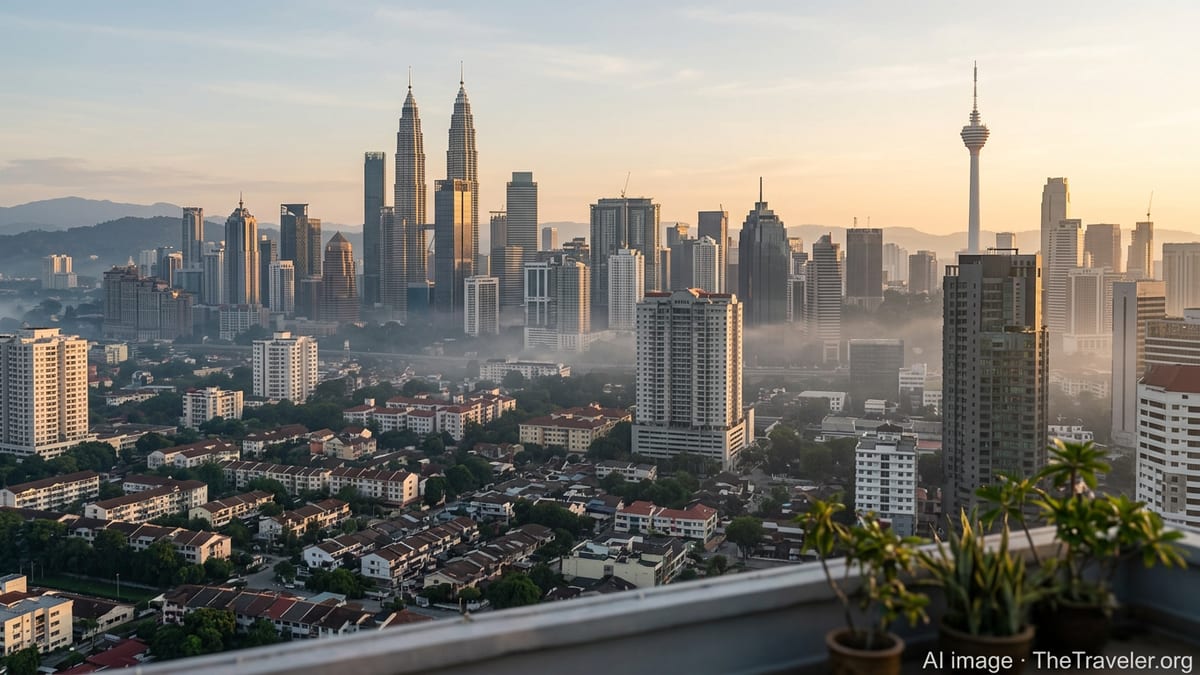
Kuala Lumpur and the Iconic Petronas Towers
Almost every journey through Malaysia begins or ends in Kuala Lumpur, a city that pairs Southeast Asia’s energy with striking architectural showpieces. At the center of it all stand the Petronas Twin Towers, once the tallest buildings in the world and still among the most recognizable skyscrapers anywhere. Their stainless-steel facades and Islamic-inspired geometry glow at night, while the landscaped KLCC Park below offers one of the best vantage points for photos and people-watching. Visiting the observation deck and skybridge provides a sweeping view over the capital’s dense skyline, from heritage shoplots to new residential towers stretching to the surrounding hills.
Beyond the towers, central Kuala Lumpur is packed with attractions that reward slow exploration. The historic heart around Merdeka Square preserves British colonial-era buildings, while nearby Petaling Street in Chinatown and the markets of Little India in Brickfields show the city’s multicultural character in the form of temples, shrines, mosques and food stalls. Trendy neighborhoods like Bukit Bintang and Bangsar are hubs for modern Malaysian cuisine, rooftop bars and shopping malls, making the city feel immediately accessible even to first-time visitors to Southeast Asia.
Travel data show that Kuala Lumpur consistently receives the largest share of international stays in Malaysia, and hotel operators report that guests are now extending their visits to spend more nights in the capital. This reflects not only the city’s role as a transit hub but also its growing appeal as a destination in its own right for food, arts, events and medical tourism. The city’s efficient light rail, expanding pedestrian walkways and app-based ride-hailing make it relatively straightforward to move between attractions, even during short stopovers.
For travelers planning a wider Malaysian itinerary, Kuala Lumpur is also the launchpad for side trips. High-speed trains and buses head south to Malacca, while frequent domestic flights link the capital to Penang, Langkawi, Kota Kinabalu and Kuching. Building in at least two full days in the city is usually enough to see the main landmarks, sample a cross-section of Malaysian food and adjust to the country’s tropical climate before heading onward.
Penang’s George Town and Northern Heritage Coast
On Malaysia’s northwest coast, Penang has emerged as a heavyweight destination in its own right, drawing millions of visitors annually to its mix of street food, street art and layered history. The island’s capital, George Town, is a UNESCO World Heritage site whose narrow lanes pack in Chinese clan houses, British-era shophouses, Indian temples and mosques within a compact grid. The architecture reflects centuries of trade and migration, and many of the pastel-colored buildings have been carefully restored into boutique hotels, galleries and cafés without losing their sense of place.
One of George Town’s biggest draws is its food scene, widely regarded as among the best in Asia. Travelers flock to hawker centers and roadside stalls for char kway teow, asam laksa, nasi kandar and countless other regional specialties, often at any hour of the day. Many visitors quickly settle into a rhythm of sightseeing in the morning before the heat peaks, then planning the rest of the day around what to eat next. It is common to meet repeat travelers who return to Penang primarily to revisit favorite food stalls or to explore new ones recommended by locals.
Beyond the compact city center, Penang rewards those who venture into its hills and coastline. The funicular up Penang Hill reveals cooler air and sweeping views back over George Town and the Straits of Malacca, while nearby walking trails pass remnants of colonial bungalows and pockets of rainforest. Along the northern coast, Batu Ferringhi’s beach resorts cater to families and short-break travelers, with sunset walks and water sports within easy reach of the city. Recent investment in attractions like the Komtar Skywalk, a glass walkway high above the urban core, has added new vantage points for photography and skyline views.
Penang’s international airport and busy cruise pier also make the island one of Malaysia’s key entry points. Tourism authorities note that the island consistently ranks among the country’s top destinations by visitor numbers, reflecting its dual appeal for both leisure and business events. For travelers, that translates into a wide range of accommodations, from historic shophouse hotels to full-service beach resorts, and a steady calendar of festivals and cultural events that keep the island lively throughout the year.
Langkawi and the Beaches of the Andaman Sea
For many visitors, the word “Langkawi” is synonymous with tropical escape. This archipelago of nearly a hundred islands in the Andaman Sea has become one of Malaysia’s flagship beach destinations, drawing domestic and international travelers seeking sun, sand and calm seas. The main island offers a mix of long sandy beaches, mangrove forests, rice paddies and karst outcrops, while smaller surrounding islands host quiet coves and coral reefs visited by boat tours and divers.
Langkawi’s most photographed attraction is the Langkawi SkyBridge, a curved pedestrian bridge suspended high above the rainforest canopy and accessed via what is often described as one of the steepest cable car rides in the world. On clear days, the ride offers views across the island’s green interior, the sparkling sea and occasionally the mainland coast in the distance. For travelers who prefer to stay at sea level, popular beaches like Pantai Cenang and Pantai Tengah offer easy swimming, beachfront cafés and bars, and a relaxed nightlife scene that is livelier than many other Malaysian islands yet still far from overwhelming.
Recent tourism statistics indicate that Langkawi consistently ranks among the country’s most visited island destinations by both domestic and foreign travelers. Flexible visa policies for key markets and increased flight connectivity from regional hubs have made it even easier to include the islands in multi-stop Southeast Asia trips. At the same time, parts of the archipelago are designated as geoparks, reflecting efforts to balance development with conservation, especially in mangrove and karst environments that are sensitive to overuse.
Travelers should be aware that weather patterns can significantly shape the island experience. The drier months between roughly November and March are generally preferred by many visitors on the island’s western and northern coasts, with calmer seas that favor swimming, island-hopping and snorkeling. During periods of heavier rain, interior attractions such as waterfalls and mangrove tours can still be appealing, but boat excursions may be more limited. Planning at least three nights allows enough time to enjoy the beaches, take a cable car ride and explore local food spots that showcase seafood and northern Malaysian flavors.
Malacca’s Historic Core and Straits Heritage
South of Kuala Lumpur, the historic port city of Malacca offers a different perspective on Malaysia’s past. Once a vital link in the maritime trade routes between China, India and the Middle East, the city came under successive Portuguese, Dutch and British rule, each leaving behind fortifications, churches and civic buildings. Today, its compact historic core is recognized as a UNESCO World Heritage site, shared with George Town in Penang as part of the Straits Settlements heritage.
Most visitors begin their exploration around Dutch Square, where the red-hued Stadthuys and Christ Church stand as reminders of 17th-century Dutch influence. From here, narrow streets lead to the old quarters of Heeren Street and Jonker Walk, where Chinese townhouses have been converted into museums, cafés, antique shops and boutique guesthouses. Temples, mosques and clan houses sit almost side by side, mirroring the multicultural fabric of the city that grew out of trade and migration over centuries.
Malacca is especially popular for weekend trips from Kuala Lumpur and Singapore, so its streets and riverside promenades can feel crowded in the evenings and on public holidays. The night market along Jonker Walk is a particular draw, offering everything from local snacks and Nyonya desserts to vintage curios. Yet it is still possible to find quieter corners by exploring backstreets, visiting museums in the morning or taking a slow boat ride on the Melaka River, where old warehouses and new murals line the banks.
Tourism reports highlight Malacca as one of the country’s enduring favorites, with strong numbers of day-trippers adding to overnight visitors. For travelers building a broader Malaysia route, one or two nights are usually enough to cover the historic sights, sample local Nyonya cuisine that blends Malay and Chinese influences, and enjoy the river views at sunset before continuing onward to other parts of the country.
Cameron Highlands and Taman Negara’s Rainforests
While Malaysia is often associated with heat and humidity, the Cameron Highlands offer a cooler counterpoint in the central highlands of Peninsular Malaysia. Developed in the colonial era as a hill station, the area’s rolling tea plantations, market gardens and mossy forests now attract travelers seeking relief from the lowland heat. Gentle walking trails wind through plantations and pockets of forest, while tea estates invite visitors to tour processing facilities and sample locally grown brews overlooking neatly contoured green hillsides.
Domestic travel behavior surveys consistently place the Cameron Highlands among Malaysia’s most popular highland retreats, especially for families and couples on weekend breaks. The cooler climate allows for comfortable daytime hikes and evening walks, though temperatures can still be mild compared with temperate destinations. Visitors can explore strawberry farms, small markets selling local produce, and viewpoints that look across valleys lined with tea bushes and mist-shrouded ridges.
For a more immersive rainforest experience, many travelers pair the highlands with a visit to Taman Negara, one of the oldest tropical rainforests on the planet. Covered by dense canopy and threaded with rivers, this national park is known for its canopy walkways, night safaris and river cruises that offer a chance to spot wildlife such as hornbills, macaques and, with luck, more elusive species. While sightings of large mammals like tigers or elephants are rare near tourist zones, simply walking through the forest, hearing insects and birds and seeing giant trees up close conveys a sense of the ecosystem’s age and complexity.
Infrastructure in and around these nature destinations is more modest than in coastal resorts, and road journeys can be winding and slow. Travelers should factor in travel time from Kuala Lumpur or Penang and be prepared for changeable weather. Nonetheless, for those willing to trade some comfort for cooler air and forest immersion, combining the Cameron Highlands and Taman Negara provides a memorable contrast to the beaches and urban centers that dominate many first-time itineraries.
Sabah and the Wild Landscapes of Borneo
On the island of Borneo, the Malaysian state of Sabah offers some of the country’s most dramatic natural attractions. Its capital, Kota Kinabalu, serves as a lively coastal base with markets, seafront dining and nearby island trips, but many travelers come specifically to tackle Mount Kinabalu, one of Southeast Asia’s highest peaks. The climb typically spans two days and requires a permit and advance booking with licensed operators, but even those who do not summit can appreciate the mountain’s presence from the surrounding national park, where easier trails lead through cool, mossy forests.
Beyond the mountain, Sabah’s east coast has become synonymous with wildlife encounters and marine adventures. Around Sandakan and Sepilok, rehabilitation centers for orangutans and sun bears give visitors a chance to learn about conservation efforts and see animals that were once kept as pets or affected by habitat loss being prepared for reintroduction into the wild where possible. Nearby river safaris along the Kinabatangan River offer opportunities to spot proboscis monkeys in riverside trees, hornbills overhead and, with some luck, pygmy elephants along the banks.
Off the southeastern coast near Semporna, the islands around Sipadan, Mabul and Kapalai are regarded by divers as among the region’s standout locations. Regulated access and marine park protections are designed to safeguard the area’s coral reefs and rich marine life, which can include turtles, reef sharks and dense schools of fish. Non-divers can still enjoy snorkeling, shallow reefs and sandbars around some islands, though it is important to choose operators who respect park rules and conservation guidelines.
Visitor numbers to Sabah have been climbing again in recent years, supported by improved air links from Kuala Lumpur and other Asian cities. At the same time, environmental pressures and overtourism in sensitive habitats remain ongoing concerns. Travelers can contribute positively by using licensed local guides, respecting wildlife viewing distances, minimizing plastic use and choosing sustainably minded accommodations and operators, especially in coastal and rainforest areas.
Islands and Marine Parks of the East Coast
While Langkawi and Penang dominate many discussions of Malaysian islands, the country’s east coast offers some of its clearest waters and best coral reefs. Off the state of Terengganu, islands such as Perhentian, Redang and Lang Tengah are part of marine parks that aim to protect fringing reefs and marine life. These islands have long been favored by divers and snorkelers for relatively easy access to colorful corals, schools of fish and, in some sites, turtles and reef sharks in shallow waters.
The Perhentian Islands in particular have built a reputation as relaxed, relatively affordable beach escapes with a strong focus on the ocean. Days often revolve around boat trips that hop between snorkel sites, visits to quiet coves and simple beachside meals. Redang, by contrast, is known for clearer water and more upmarket resorts, appealing to travelers looking for a comfortable base with house reefs and organized dive outings. Tioman Island, further south off the state of Pahang, combines dense jungle interior with a necklace of small villages and bays, attracting both budget travelers and divers interested in reefs and a handful of wrecks.
Seasonality is important on this side of the peninsula. The northeast monsoon typically brings rougher seas and heavier rain roughly between November and February, and many resorts and dive operators close during this period. Travelers planning island trips should check opening dates before booking flights and consider traveling in the shoulder months around the main dry season, when conditions can be favorable and crowds somewhat lighter.
Infrastructure on these islands can vary from simple beach chalets to full-service resorts, and cash is still more commonly used than cards at smaller outlets. Boat schedules may shift based on seas and weather, so it is sensible to build in some flexibility at the start and end of an island stay. For those willing to manage the logistics, however, the payoff is access to some of Malaysia’s most inviting beaches and underwater scenery.
The Takeaway
Malaysia’s enduring appeal lies in how easily it blends contrasts into a single journey. In one trip, travelers can step out of a luxury mall beneath Kuala Lumpur’s skyscrapers, wander centuries-old alleys in Penang and Malacca, breathe cool air over highland tea plantations, and wake to rainforest sounds in Borneo or on the fringe of a marine park. Recent tourism figures show that more visitors are choosing multi-stop itineraries that connect cities, coastlines and highlands, reflecting a growing awareness of how much variety the country offers within relatively short travel distances.
Choosing where to go ultimately depends on individual interests and time. First-time visitors often prioritize Kuala Lumpur, Penang and either Langkawi or an east-coast island for a balance of culture, food and beach time. Those with more days can venture into the Cameron Highlands and Taman Negara or fly to Sabah for wildlife and diving. Whatever the route, Malaysia’s combination of hospitable locals, diverse cuisine, competitive pricing and improving transport links helps explain why it continues to rise in global tourism rankings and why many travelers find themselves planning a return visit before they have even left.
FAQ
Q1. How many days do I need for a first trip to Malaysia?
Most travelers find that 10 to 14 days is enough to see Kuala Lumpur, Penang and one or two island or nature destinations without feeling rushed.
Q2. What is the best time of year to visit Malaysia’s main attractions?
Malaysia is a year-round destination, but conditions vary by region. The west coast, including Kuala Lumpur, Penang and Langkawi, is often most pleasant from roughly November to March, while some east-coast islands close during the northeast monsoon.
Q3. Is Malaysia suitable for first-time visitors to Southeast Asia?
Yes. Many travelers see Malaysia as an accessible introduction to the region thanks to its good transport links, widespread English usage in cities and well-developed tourism infrastructure in major destinations.
Q4. Do I need to book attractions like the Petronas Towers or Mount Kinabalu in advance?
For popular attractions with limited capacity, advance booking is recommended. Tickets for the Petronas Towers observation deck can sell out on busy days, and climbs on Mount Kinabalu require permits arranged through approved operators.
Q5. Are Malaysian islands safe for swimming and snorkeling?
In established island destinations such as Langkawi, Perhentian, Redang and Tioman, designated swimming and snorkeling areas are generally considered safe, though visitors should always follow local safety advice and be mindful of currents and boat traffic.
Q6. How easy is it to travel between different regions within Malaysia?
Domestic flights link Kuala Lumpur with Penang, Langkawi, Sabah and Sarawak, while buses and trains cover many routes on Peninsular Malaysia. Travel times can be longer than expected due to traffic and weather, so building in buffer days is wise.
Q7. What should I wear when visiting religious sites like temples and mosques?
Modest clothing is important. Shoulders and knees should be covered, and some mosques and temples may provide additional coverings or require visitors to remove shoes before entering certain areas.
Q8. Is Malaysia expensive compared with neighboring countries?
Costs vary by destination and travel style, but many visitors find Malaysia represents good value, with mid-range accommodations, meals and domestic transport often priced competitively relative to other popular Asian destinations.
Q9. Can I rely on card payments and ATMs when visiting islands and highland areas?
In major cities and larger resorts, cards are widely accepted and ATMs are common. On smaller islands and in remote areas, cash is still preferred, so it is sensible to withdraw enough money before leaving urban centers.
Q10. How can I travel more sustainably when visiting Malaysia’s top attractions?
Choosing locally owned accommodations and guides, minimizing single-use plastic, respecting park rules, and avoiding wildlife exploitation experiences all help support more responsible tourism across Malaysia.