

Germany’s major cities are compelling destinations in their own right, but some of the country’s most memorable experiences lie just beyond the urban edge. From Prussian palaces and Alpine lakes to medieval towns and river valleys lined with vineyards, Berlin, Munich and Frankfurt offer access to remarkably varied landscapes and cultures in under two hours of travel. With efficient rail links, clear signage and well developed visitor infrastructure, these day trips are straightforward to plan and rewarding in any season.
Planning Day Trips from Germany’s Big Three Cities
Berlin, Munich and Frankfurt are among Europe’s best bases for day trips, thanks to dense rail networks, frequent regional trains and clear ticketing systems. In most cases you can leave after breakfast, enjoy six to eight unrushed hours on the ground and still be back in time for a late dinner. Flexible regional day passes often make travel more affordable for couples and small groups, and stations close to historic centers keep transfers simple.
Timing and weather play a large role in how these excursions feel. Spring and early autumn bring milder temperatures, blooming parks and fewer crowds, while summer offers longer daylight for exploring castles and lakeshore paths. Winter can be atmospheric in old towns and spa resorts, though shorter days mean planning your must see sights carefully. Aim to start early, especially for the most popular destinations, to avoid mid morning bottlenecks at palaces and viewpoints.
Most of the trips highlighted here are easy to reach independently by train and local bus or on foot. Guided tours can still be useful if you prefer a structured program or want a knowledgeable guide to provide context at historically complex sites. Whichever option you choose, build in time to simply sit in a café, stroll side streets or pause by the river; these unplanned moments often become the most vivid memories.
With that in mind, the following destinations represent a strong mix of culture, landscape and accessibility from each city. They can be combined into a longer Germany itinerary or enjoyed individually as a way to experience a different side of the country without changing hotels.
From Berlin: Potsdam and the Palaces of Sanssouci
Just southwest of Berlin, Potsdam feels like a grand garden suburb shaped by centuries of Prussian royalty. The city’s centerpiece is Sanssouci Park, a vast expanse of terraces, colonnades and formal lawns studded with palaces, pavilions and fountains. Sanssouci Palace itself, commissioned by Frederick the Great, is a relatively intimate summer retreat with yellow facades, ornate interiors and sweeping views over vineyard like terraces. Nearby, the larger New Palace showcases a more theatrical side of 18th century architecture.
Beyond the palaces, Potsdam’s historic quarters reveal a surprising patchwork of influences. The Dutch Quarter is lined with 18th century red brick gabled houses that recall canal cities in the Netherlands, while the Russian Colony Alexandrowka features wooden houses built for a Russian choir in the 1820s. The city’s role in 20th century history also looms large; Cecilienhof Palace hosted the 1945 Potsdam Conference, and the Glienicke Bridge over the Havel later became famous as a Cold War exchange point.
For visitors, Potsdam is compact enough to explore largely on foot, with frequent pauses in cafés and shaded park benches. A typical day might combine a morning tour of Sanssouci Palace, an afternoon walk through the Dutch Quarter and time along the lakeshore or on a river cruise to see villas and park landscapes from the water. Signage is generally clear in both German and English, and public transport from Berlin is frequent, making this one of the most effortless and rewarding day trips from the capital.
Allow a full day if you enjoy palaces and gardens; those who prefer a lighter cultural program can focus on one or two key sights and spend the rest of the time simply wandering the old town. Comfortable walking shoes are important, as distances within the park can be longer than they appear on the map, and paths can be uneven in older sections.
From Berlin: Sachsenhausen and the Weight of History
North of Berlin, the former Sachsenhausen concentration camp near Oranienburg is one of the most sobering day trips in Germany. The site has been preserved as a memorial and museum that documents both the atrocities committed under National Socialism and the later use of the camp by Soviet authorities. Visiting is emotionally demanding, but many travelers consider it a vital experience for understanding the region’s history beyond museums and monuments in the capital.
The grounds include remnants of barracks, watchtowers and fences laid out in a distinctive triangular plan, along with exhibitions that explore the stories of prisoners from across Europe. Audio guides and guided tours provide context while leaving space for quiet reflection. Photography is generally permitted, but it is important to approach the site with respect; this is a place of remembrance, not a backdrop for casual snapshots.
A visit typically lasts several hours, including time in the exhibitions and at the main memorials. Weather can greatly influence your comfort level, as much of the site is outdoors and exposed to wind and rain. Dressing in layers and wearing sturdy footwear will help, particularly in colder months when the grounds can feel stark and icy.
Because of the subject matter, this day trip is best suited to older teenagers and adults. Families should consider in advance how to discuss what they will see. Many visitors find it helpful to schedule lighter activities or an unstructured evening back in Berlin after returning, allowing time to process the experience instead of heading straight into more sightseeing.
From Munich: Füssen and Neuschwanstein’s Alpine Drama
Southwest of Munich, the town of Füssen serves as the gateway to one of Germany’s most iconic sights: Neuschwanstein Castle. Perched on a rocky hill with the Alps rising behind it, the 19th century creation of King Ludwig II looks like something from a storybook. Its interiors, inspired by German legends and the operas of Richard Wagner, are extravagant and theatrical, while the exterior has become an enduring symbol of Romantic architecture.
Neuschwanstein’s popularity means careful planning is essential, especially between late spring and early autumn and during school holidays. Timed entry tickets often sell out in advance, and there can be queues for the shuttle buses and horse drawn carriages that climb the hill from the village of Hohenschwangau. Many travelers choose to visit the neighboring Hohenschwangau Castle as well, the yellow walled childhood home of Ludwig II, which provides useful context for his later architectural ambitions.
For the best views, most visitors walk or take a shuttle to Marienbrücke, a pedestrian bridge spanning a gorge with a waterfall below. From here the castle appears almost suspended above the forested slopes. The path can be busy and occasionally closed for maintenance or safety, so check local updates before your trip and be prepared for crowds at peak times. Weather in the foothills is variable; clouds and rain are common even in summer, though mist can lend the landscape a dramatic atmosphere.
Beyond the castles, Füssen itself deserves a little time. Its compact old town has pastel facades, a hilltop castle of its own and riverfront paths where you can stretch your legs before or after the main visit. Many organized tours combine transport, castle tickets and a brief stop in Füssen, but independent travelers can easily spend the full day exploring at their own pace, lingering over a lakeside walk or a late lunch before returning to Munich in the evening.
From Munich: Lakes, Alps and the Royal Retreat of Herrenchiemsee
East of Munich, the Chiemsee region offers a softer, more spacious take on Alpine scenery. Bavaria’s largest lake is sometimes called the Bavarian Sea, its broad, shimmering surface ringed by small towns, reed beds and distant mountain silhouettes. Ferries crisscross the water to islands where royal architecture and quiet footpaths coexist, making this one of the most relaxing day trips from the city.
The standout attraction is Herrenchiemsee Palace on Herreninsel, another creation of King Ludwig II. Conceived as a homage to the Palace of Versailles, it features an opulent Hall of Mirrors, richly decorated state rooms and formal gardens laid out with fountains and clipped hedges. Inside, the decor is dense and theatrical; outside, the lake views and surrounding woodland trails offer welcome contrast. Guided tours typically move at a steady pace, so it helps to arrive early or later in the afternoon to avoid group congestion.
Many visitors pair Herreninsel with a stop on the neighboring Fraueninsel. This smaller island hosts a working Benedictine convent, a village of traditional houses and lakeside beer gardens where you can sit under chestnut trees and watch ferries glide past. The pace here is slow and contemplative, well suited to travelers who want to balance a palace visit with time in nature.
Weather conditions strongly shape the experience at Chiemsee. On clear days, the combination of lake and Alpine backdrop is striking, while low clouds or drizzle can make the landscape feel more introspective. Even in cooler seasons, a walk along the shore paths and a quiet ferry ride can be enjoyable, provided you dress for wind and occasional rain. Plan your timing around the ferry schedules and leave a margin for connections back to Munich, especially in the evening when services can be less frequent.
From Frankfurt: Heidelberg and the Neckar River Romance
South of Frankfurt, Heidelberg appears almost custom designed for a day trip. Its red roofed old town stretches along the Neckar River, framed by wooded hills and overlooked by the ruins of Heidelberg Castle. The city largely escaped heavy bombing during the Second World War, so its historic fabric feels unusually intact compared with many German cities, lending the streets a distinctly old world atmosphere.
Most first time visitors make a beeline for the castle, reached by a funicular or a steep path that winds through terraced gardens. The complex itself is part ruin, part restored palace, with weathered stone walls, ornate facades and terraces that offer wide views over the river and city below. Within the castle grounds you can see the famous giant wine barrel and explore small exhibitions on local history and early scientific instruments.
Back down in the Altstadt, the pedestrian Hauptstrasse runs the length of the old town, lined with cafés, boutiques and university buildings. Side streets lead to baroque churches, small squares and the riverfront, where the Old Bridge spans the Neckar with arches and statues. Crossing to the far bank brings you to the Philosopher’s Way, a hillside path favored historically by university thinkers and today by visitors seeking a scenic stroll with excellent city views.
Heidelberg’s popularity means weekends and holidays can feel busy, especially in the warmer months and around its Christmas market season. To experience a quieter side of the city, aim for a weekday visit or explore early in the morning and later in the afternoon, taking a long lunch break when the crowds are thickest. Even a relatively short day here offers a satisfying mix of history, landscape and café culture before you board the train back to Frankfurt.
From Frankfurt: The Rhine Valley’s Castles and Vineyards
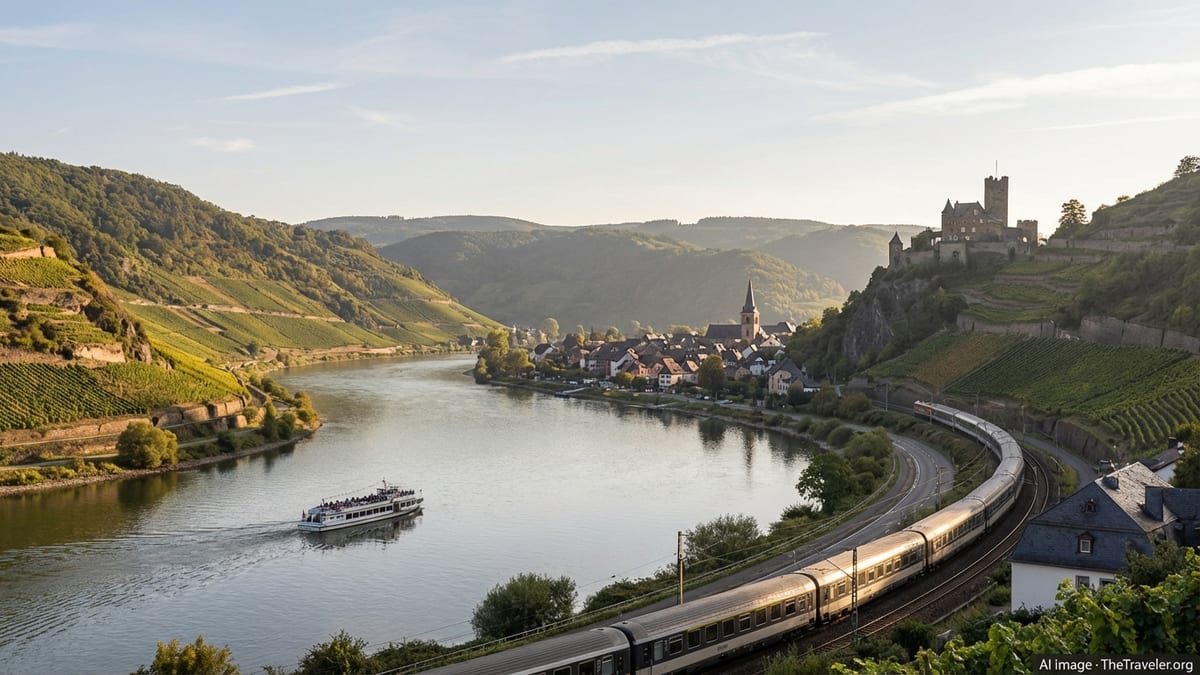
West of Frankfurt, the Upper Middle Rhine Valley is one of Germany’s most scenic stretches of river. Recognized as a UNESCO World Heritage site, it is characterized by steep vineyard slopes, wooded cliffs and a chain of medieval castles that once controlled trade along this crucial waterway. For travelers based in Frankfurt, a day that combines a short train ride with a river cruise and a village stop is a classic introduction to this landscape.
Key riverside towns such as Rüdesheim, Bingen, St Goar and Bacharach provide natural starting points. From there, cruise boats ply the river, passing landmarks like the narrow Loreley Rock and hilltop fortresses that seem to grow directly out of the slate hillsides. Many visitors choose a one way cruise and return by train, maximizing time on the water without duplicating the same scenery on the way back.
The valley is also one of Germany’s most important wine regions, best known for Riesling produced from vines that cling to steep terraces. In most towns you will find traditional wine taverns and small tasting rooms where you can sample local bottles by the glass. Tasting portions are usually modest, and there is no expectation that you buy in quantity, though bringing home a single bottle as a souvenir is common. If you prefer to avoid alcohol, grape juice and non alcoholic options are widely available.
Seasonality has a strong impact here. Spring and autumn offer the most comfortable temperatures for boat decks and hillside walks, while summer can be lively with festivals, open air concerts and longer evening cruises. In winter, services may be reduced and some attractions may close or operate limited hours, so checking current timetables before setting out is important. Regardless of the season, carrying a light jacket is wise, as breezes on the river can feel cooler than in Frankfurt’s streets.
FAQ
Q1. Can I visit these day trip destinations from Berlin, Munich and Frankfurt without renting a car?
Yes, most of the places described are comfortably accessible by train and local buses. Germany’s regional rail network is extensive, and stations are usually within walking distance or a short bus ride of historic centers and major sights.
Q2. How far in advance should I book tickets for popular attractions like Neuschwanstein or Sanssouci?
For peak travel months and weekends, booking at least several days in advance is sensible, and during school holidays or summer it is safer to secure tickets one to two weeks ahead. Off season, you may find same day availability, but advance reservations still reduce waiting times.
Q3. Are these day trips suitable for families with children?
Many of these destinations work well for families, particularly Potsdam, Chiemsee, the Rhine Valley and Heidelberg, which offer space to run around and visually engaging castles and boats. Sachsenhausen is generally recommended only for older teenagers and adults due to the sensitive subject matter.
Q4. What is the best season for taking day trips from these cities?
Late spring and early autumn usually provide the best balance of mild weather, longer daylight and manageable crowds. Summer brings lively festivals and outdoor dining but also higher visitor numbers, while winter can be atmospheric in historic towns, provided you are prepared for cold and shorter days.
Q5. Do I need to speak German to manage these excursions?
No, you can usually manage with English, especially in popular destinations where ticket offices, museums and transport hubs often have English information. Learning a few basic German phrases for greetings, please and thank you is appreciated and can make small interactions smoother.
Q6. How much walking should I expect on these day trips?
You should expect a moderate amount of walking, particularly at palace complexes, around old towns and when reaching viewpoints like Marienbrücke near Neuschwanstein. Comfortable footwear is important, and travelers with mobility concerns may wish to check in advance about lifts, shuttles or alternative routes.
Q7. Are guided tours worth considering, or is it better to travel independently?
It depends on your preferences. Independent travel offers more flexibility with timing and route, while guided tours can simplify logistics and provide richer historical context. For time pressed visitors or those less comfortable with train connections, an organized tour can remove much of the planning effort.
Q8. What should I budget for a typical day trip from one of these cities?
Costs vary by destination, but as a broad guideline you might allow for regional train fares, one or two entrance tickets, a meal, snacks and perhaps a boat trip or local bus. Booking rail passes or day tickets can lower per journey costs, particularly if two or more people are traveling together.
Q9. How early should I start my day to make the most of these excursions?
Leaving between 7.30 and 9.00 in the morning generally works well, giving you a full day on the ground without too rushed a start. For very popular attractions, taking one of the earlier trains can help you reach ticket offices or entrance queues before the main crowds arrive.
Q10. Is it realistic to combine more than one of these destinations in a single day?
In most cases it is better to focus on one main area per day, allowing time to explore without feeling hurried. The exception is where sights cluster closely together, such as castles and villages along the Rhine or both islands on Chiemsee, which can be combined comfortably into a single, well planned itinerary.