

Aitutaki’s lagoon is the stuff of South Pacific fantasy, all shifting blues and sugar-white sandbars. Most visitors quite rightly book a lagoon cruise on their first full day and come back raving about it. But if you stop at the boat ramp, you miss the deeper character of this small, storied island.
Aitutaki rewards those who venture inland, stay through the evening, and spend time with the people who call this turquoise atoll home. From cultural villages and hilltop vistas to bonefishing flats and kite-surfing reefs, there is a surprisingly rich menu of experiences beyond the classic day on the water.
Get to Know Aitutaki’s Heart at Punarei Cultural Village
One of the most meaningful ways to step beyond the postcard view is to spend time at Punarei Cultural Village. Set among taro patches and breadfruit trees, this recreated pre-missionary village was built by local families to keep Aitutaki’s stories, architecture, and rituals alive. Guided visits peel back the layers of the island’s past, from marae ceremonial sites to the arrival of Christianity and how it changed daily life. You will hear legends connected to the surrounding landscape, gaining context for those dreamy lagoon motu you saw from the boat.
A typical visit might include a welcome by drum and chant, followed by demonstrations of ancient building methods, food preparation, or weaving. You may help scrape coconuts, taste umu food from an earth oven, or try your hand at making simple handicrafts using pandanus and coconut fibre. Rather than feeling like a staged show, the experience is shaped by whichever elders and family members are on site that day, giving it an endearingly unscripted quality.
Another benefit of spending time at Punarei is understanding Aitutaki’s efforts toward cultural sustainability. Local guides increasingly draw on materials such as the recently launched Aitutaki Cultural Tour Guide booklet, a project that brought together orators, translators, and tourism businesses to standardise island storytelling for visitors. Those shared narratives are being passed on to younger Aitutakians as much as to travellers, so your visit supports both cultural preservation and livelihoods.
Drive the Backroads and Climb Maunga Pu
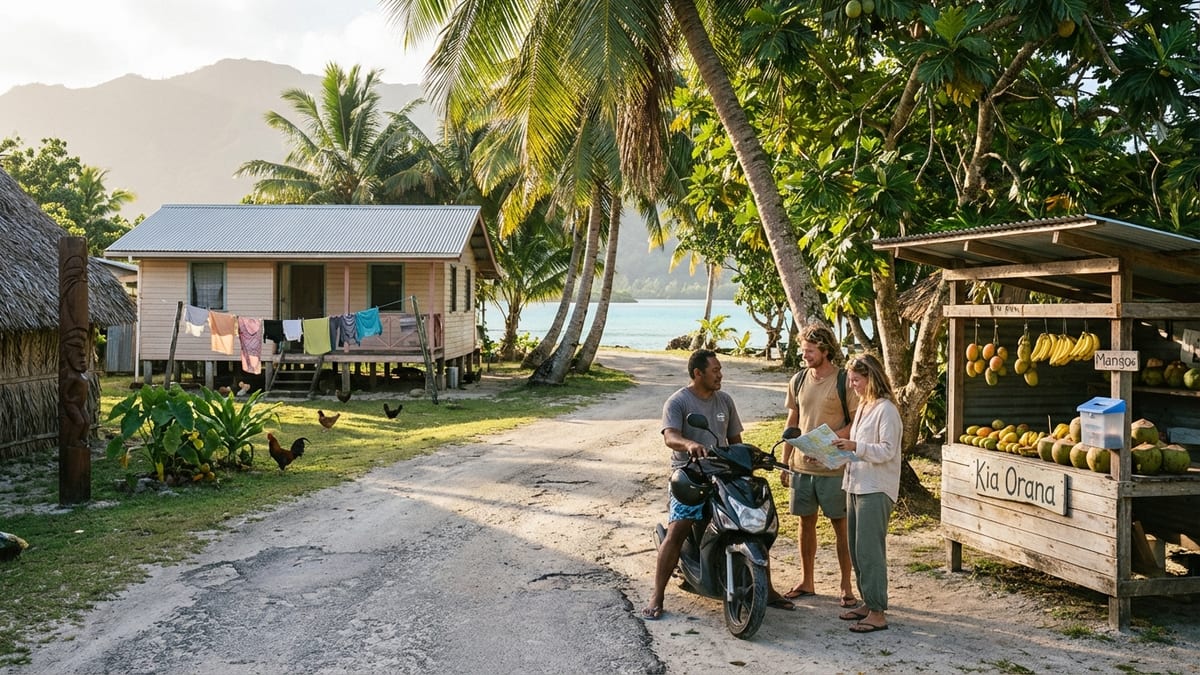
Leave the lagoon for a few hours and Aitutaki reveals a landscape of coral limestone, coral stone churches, and sleepy villages where hens patrol the roadside. The island is small enough to circle in less than an hour by scooter, but it is worth slowing down and meandering along the interior roads. Coconut plantations and papaya groves frame glimpses of the lagoon, while modest family homes sit next to tidy churchyards, each denominational spire a reminder of the island’s strong Christian heritage.
For a literal change of perspective, take the track up Maunga Pu, the island’s highest hill. A 4WD safari tour will get you up the steepest sections if you do not want to walk, but reasonably fit travellers can hike the final part on foot. The summit offers panoramic views across the main island, motu rings, and the reef pass, particularly striking in early morning or late afternoon light when the lagoon’s colours intensify.
Stop at small lookouts and village kiosks as you loop around. You might find chilled nu (drinking coconuts), homemade cakes, or seasonal fruit for sale on unattended tables, with a simple honesty box beside them. This low-key island economy reinforces Aitutaki’s unhurried, trusting character. By the time you return to your accommodation, you will have a much clearer mental map of where the lagoon sits in relation to farms, schools, and churches and how central the land remains to island life.
Experience Island Nights and Fire Dancing
Once the sun drops behind the coconut palms, Aitutaki’s focus shifts from sea to stage. Island Night shows are a highlight of the after-dark scene, combining buffet dinners with live drumming, singing, and energetic ura dance performances. Several resorts and local groups host their own versions, and while the format is broadly similar, each troupe brings its own choreography, costumes, and humour.
For visitors, the draw is seeing Cook Islands culture come alive through rhythm and movement. Dancers in shell belts and feather headdresses move in tightly drilled formations, hips shaking in time with a bank of drummers who somehow keep the beat while putting on their own show of stick twirls and shouted cues. Songs are often in Cook Islands Māori, and a good MC will translate lyrics and tease out the stories behind each item, from legends to courting dances.
No Island Night feels complete without fire dancing. Aitutakian fireknife performers are known around the Cook Islands for their speed and daring, spinning flaming staffs in tight arcs and tossing them high into the darkness. The atmosphere is festive rather than formal, with plenty of crowd participation for simple group dances. Booking at least one Island Night gives you a window into contemporary Aitutakian identity as it is lived today, not just as it appears in history books or on postcards.
Bonefishing, Lagoon Flats and Life on the Water
While most travellers experience Aitutaki’s lagoon from a shared day cruise, anglers quickly learn that the island offers one of the South Pacific’s great bonefishing destinations. The atoll’s wide sand and turtle grass flats are home to unusually large, powerful bonefish that have become legendary among fly fishers. Specialist local guides operate small-boat and wading trips tailored to different skill levels, with a strong emphasis on catch-and-release conservation to protect this finite resource.
Even if you are not a committed angler, spending time with a fishing guide can be a fascinating cultural experience. You will hear how islanders traditionally read tides, cloud shadows, and the changing moods of the reef, and how that knowledge is now being combined with modern tackle and conservation science. Many guides split their time between subsistence fishing, charter work, and leading snorkelling or spearfishing outings, giving them a multi-layered relationship with the lagoon.
For those who prefer paddles to rods, the same flats lend themselves to stand-up paddleboarding or kayaking. Renting a board near Ootu Beach and gliding out over knee-deep turquoise water lets you spot rays and small reef fish without ever donning a mask. Sunrise and sunset sessions are particularly memorable, when the light is soft and the lagoon is at its calmest. These quieter, small-scale water experiences complement the social buzz of a day cruise and help spread visitor impact across the lagoon.
Kitesurfing and Windsports in Trade-Wind Paradise
Aitutaki has quietly built a reputation as a kitesurfer’s dream. The predominant easterly trade winds blow steadily across the reef for much of the year, typically in the 15 to 30 knot range, while waist-deep warm water and broad sandbars create an ideal training ground for both beginners and experienced riders. Several small operators and independent instructors run lessons and gear hire, usually focusing on the sandspit and lagoon area near Ootu Beach.
On a breezy afternoon, you might see bright kites arcing above the lagoon while riders trace long tacks across barely ruffled water. More advanced kiters can head farther from shore toward the reef edge and small motu, using a guide boat for safety and support. The sense of freedom is extraordinary: there are no high-rise resorts or busy shipping channels, just sky, water, and the thin line of the reef in the distance.
Newcomers can start with introductory lessons on kite control, body dragging, and water starts, often progressing quickly thanks to the forgiving conditions. Because Aitutaki’s tourism scene remains relatively low-volume, there is rarely a sense of crowding on the water. Windsports have become an important niche for the island, attracting repeat visitors who time their trips around seasonal wind patterns and who often stay longer than the typical lagoon-cruise-only guest.
Wellness, Spas and Slow Days on Shore
Between active adventures and cultural outings, Aitutaki encourages a slower rhythm that feels increasingly rare in the modern travel landscape. Several resorts and independent therapists offer spa and massage treatments, from simple beachside tables shaded by palms to fully equipped spa complexes tucked into lush gardens. Menus typically include deep-tissue and relaxation massages, body scrubs based on coconut and local botanicals, and facials using South Pacific-inspired ingredients.
Many travellers build a spa day around the natural rhythm of the island: a slow breakfast, a mid-morning treatment, then hours with a book under a palm tree or on the veranda of a lagoon-facing villa. Couples on honeymoon or celebrating anniversaries often book side-by-side massages or private outdoor tubs scattered with frangipani flowers. In contrast to busier resort islands elsewhere in the Pacific, appointment schedules are rarely rushed, and personal connection with therapists is part of the appeal.
Wellness on Aitutaki also means giving yourself permission to do very little. Wandering down to a village bakery for still-warm donuts, chatting with schoolchildren on their way home, or simply sitting on the beach to watch the constant play of light on the lagoon can be as restorative as any formal treatment. The island’s small size and low-rise development help preserve a sense of quiet that many visitors cite as the most memorable part of their stay.
Food, Markets and Everyday Island Flavours
For a different kind of indulgence, Aitutaki’s modest but satisfying food scene reflects its mix of Polynesian roots and contemporary influences. Many visitors take most meals at their accommodation or beachfront cafes, feasting on grilled lagoon fish, ika mata raw fish salad in coconut cream, and plates piled with rice, taro, and tropical salads. Chefs take advantage of freshly caught parrotfish, tuna, and mahi-mahi, often combining them with imported staples to create a relaxed, bistro-style take on island cuisine.
Look beyond restaurant menus and you will find a quieter, more local food culture. Small family-run eateries open for set hours, serving hearty plates of chop suey, island-style curries, or chicken with root vegetables. Roadside stalls display mangoes, bananas, and pawpaw in season, while village bakeries turn out breads and cakes on specific days. Asking your hosts or scooter hire operator which days different spots open is often the best way to catch them at their most authentic and least tourist-focused.
Many Island Night buffets double as introductions to traditional cooking techniques such as umu earth ovens and tuitui coconut cream preparations. If your schedule allows, seek out opportunities to watch or help with food preparation during a cultural tour or homestay-style encounter. The stories that accompany dishes are as important as the flavours: you might hear how certain plants are used for both nourishment and medicine, or how feasting practices tie into church calendars and life events.
Planning, Etiquette and Practical Tips Beyond the Lagoon
To make the most of Aitutaki beyond its famous cruises, a little planning goes a long way. Many cultural experiences, Island Nights, and specialty activities operate on set days of the week or require a minimum number of participants. It is worth sketching a loose weekly plan as soon as you book flights, then confirming days and times again once you arrive at your accommodation. Local tourism offices and resort desks are valuable sources of up-to-date information in a destination where small operators may adjust schedules seasonally.
Respectful behaviour is as important inland as it is on the water. Aitutaki is deeply religious, and Sundays in particular are reserved for church, family, and rest. Many businesses close or operate limited hours, and visitors are encouraged to dress modestly and keep noise to a minimum away from main resort areas. Attending a church service can be a highlight of a trip, thanks to powerful hymn singing, but remember to cover shoulders and knees and follow the lead of local congregants.
When exploring villages and backroads, slow your driving speed and greet people with a friendly “kia orana.” Ask permission before entering obvious private land, taking close-up photos of individuals, or exploring near marae and family grave sites. On the lagoon and flats, follow guide instructions about marine life, as coral and clam beds are fragile and slow to recover from damage. Aitutaki’s charm lies in its intact community fabric and natural environment, and visitors have a role in keeping both strong.
The Takeaway
Aitutaki’s lagoon rightly earns its place on global dream lists, but the island is far more than a day cruise. Spend time in places like Punarei Cultural Village, hilltop lookouts, village churches, and quiet backroads, and you will come away with a richer understanding of how people live in this glittering corner of the Cook Islands. Balance wind-fuelled days on kiteboards or bonefishing flats with slow afternoons at a spa or under a palm tree, and you start to tap into the island’s natural rhythm.
In a travel world that often prizes speed and checklists, Aitutaki rewards curiosity and lingering. Once you have ticked the lagoon cruise from your to-do list, treat it as the starting point rather than the main event. The true magic lies in what you do next: the conversations you have, the songs you hear, the meals you share, and the quiet moments when the only sound is the rustle of palm fronds in the trade winds.
FAQ
Q1. How many days should I spend on Aitutaki to enjoy activities beyond the lagoon cruise?
Most travellers find that three full days are the bare minimum, with five to seven days ideal if you want to fit in a lagoon cruise, a cultural village visit, an Island Night, and time for bonefishing, kitesurfing, or simply relaxing.
Q2. Do I need to book cultural tours and Island Nights in advance?
Yes, it is wise to reserve ahead, especially in peak seasons such as school holidays and during dry months. Many experiences run on specific days or require a minimum number of guests, so advance booking helps operators plan and avoids disappointment.
Q3. Is it easy to get around Aitutaki without a car?
Scooters and bicycles are popular and practical for most visitors, given the island’s small size and relatively light traffic. Some travellers choose small rental cars for comfort in wet weather or when travelling with young children, but it is not essential.
Q4. What should I wear when visiting villages or attending church?
Opt for modest, lightweight clothing that covers shoulders and knees, particularly on Sundays and when entering churches or cultural sites. Beachwear is fine at resorts and the lagoon, but more conservative dress is appreciated in local communities.
Q5. When is the best time of year for kitesurfing on Aitutaki?
Trade winds are generally most reliable during the cooler, drier months from about May to October, though conditions vary year to year. Dedicated riders often plan for this window but can still find good wind outside it with a bit of luck and flexibility.
Q6. Can beginners try bonefishing on Aitutaki, or is it only for experts?
Beginners are welcome, and local guides are used to introducing newcomers to saltwater fly fishing. That said, Aitutaki’s bonefish are strong and wary, so patience and realistic expectations are important. Many first-timers value the lagoon experience as much as the catch.
Q7. Are there vegetarian or vegan dining options on the island?
Most resorts and larger cafes can cater to vegetarian diets with advance notice, drawing on local vegetables, salads, and tropical fruit. Vegan options may be more limited, so it helps to communicate clearly with your accommodation before arrival and again at check-in.
Q8. How respectful should I be about taking photos of cultural performances?
Photography is generally welcome at Island Nights and cultural shows, but avoid using flash during intimate moments and pay attention to any announcements from hosts. For close-up photos of individual performers, it is considerate to ask permission afterward.
Q9. Is swimming and snorkelling safe outside of organised lagoon cruises?
Inside the lagoon near main beaches, conditions are usually calm, but currents and tidal changes can be stronger near the reef passages. Always seek local advice before venturing far from shore, never swim alone, and avoid the open ocean side unless you are with experienced guides.
Q10. What is the main etiquette I should follow to be a good guest on Aitutaki?
Greet people with a friendly “kia orana,” dress modestly away from the beach, respect church hours and private property, and follow local guidance about marine life and cultural sites. Simple courtesy and openness to learning go a long way toward making your stay rewarding for both you and your hosts.