

Greece’s islands may steal the spotlight, but some of the country’s most compelling experiences lie on the mainland. From snow-dusted mountain ranges and stone-built villages to ancient theatres, monasteries and thriving wine regions, mainland Greece offers depth, variety and a calmer, more everyday glimpse of Greek life. Whether you are a first-time visitor or returning to explore further, these highlights reveal a richer Greece beyond the islands.
Walk the Timeless Streets of Athens Beyond the Acropolis
Athens is often treated as a brief stop before catching a ferry, yet the capital rewards slower exploration. The Acropolis and its museums understandably draw crowds, but away from the hilltop temples you can wander neighbourhoods that show how ancient and modern Greece coexist. In Plaka, neoclassical townhouses, Byzantine churches and small archaeological remains sit between tavernas and family-run shops. Nearby Anafiotika climbs the slopes below the Acropolis with whitewashed alleys and vine-draped courtyards that feel more like a Cycladic island than a capital city.
For a contemporary take on the city, head to the former gasworks district of Gazi, where industrial brick buildings have become cultural spaces, galleries and cafes. In Pangrati and Koukaki, independent bakeries, design studios and casual wine bars make it easy to slip into local rhythms. Summer visitors should keep an eye on heat advisories, as authorities have, in recent years, temporarily closed the Acropolis during the hottest afternoon hours for safety. Planning early-morning or late-afternoon visits and using the midday for shaded strolls, long lunches or museum time can make Athens far more comfortable.
Cultural life in Athens continues well into the evening. From May to October, the Athens Epidaurus Festival brings a full programme of theatre, music and dance to venues across the city, including the ancient Odeon of Herodes Atticus at the foot of the Acropolis. Performances of Greek tragedy under the night sky link the modern metropolis to its classical past in a way that few experiences can match. Booking in advance is essential for the most sought-after performances, especially in July and August when Athenians and visitors alike fill the stone tiers.
Follow Sacred Footsteps in Delphi and Meteora
West of Athens, the slopes of Mount Parnassus shelter Delphi, one of the most evocative archaeological sites in Greece. Once considered the centre of the world, the sanctuary of Apollo and its famed oracle drew leaders from across the Mediterranean. Today, visitors follow the Sacred Way past treasuries, stoas and the Temple of Apollo itself, set high above the valley with long views toward the Gulf of Corinth. The on-site museum adds depth with sculptures, friezes and offerings that survived long after the oracle fell silent.
Delphi is easily visited as a long day trip from Athens, but an overnight stay in the nearby village allows you to stroll the ruins in softer morning or evening light when tour groups thin out. Cooler months can be particularly atmospheric. Mount Parnassus above the site is popular for hiking in summer and skiing in winter, offering an unexpected alpine side to Greece for those who associate the country solely with sun and sea.
Further north, in central Greece, Meteora rises from the plain as a surreal landscape of sandstone pinnacles topped with centuries-old monasteries. A handful of these monastic complexes are still active and open to visitors, reached by stone staircases, paths and short drives linking viewpoints. The blend of geology and faith has made Meteora one of the most memorable destinations on the mainland. Modest dress is required for monastery visits, and schedules can vary, so checking opening days ahead of time helps in planning a circuit that fits your interests and fitness level.
Sunrise and sunset are especially striking at Meteora, when the rock formations glow and the valley fills with mist. Several local operators offer guided hiking routes that trace older footpaths between the monasteries, providing context on the history of the hermits and monks who first settled the rocks. Even a short walk away from the main parking areas can grant more solitude and a sense of the landscape’s scale.
Explore the Mountain Villages and Gorges of Epirus
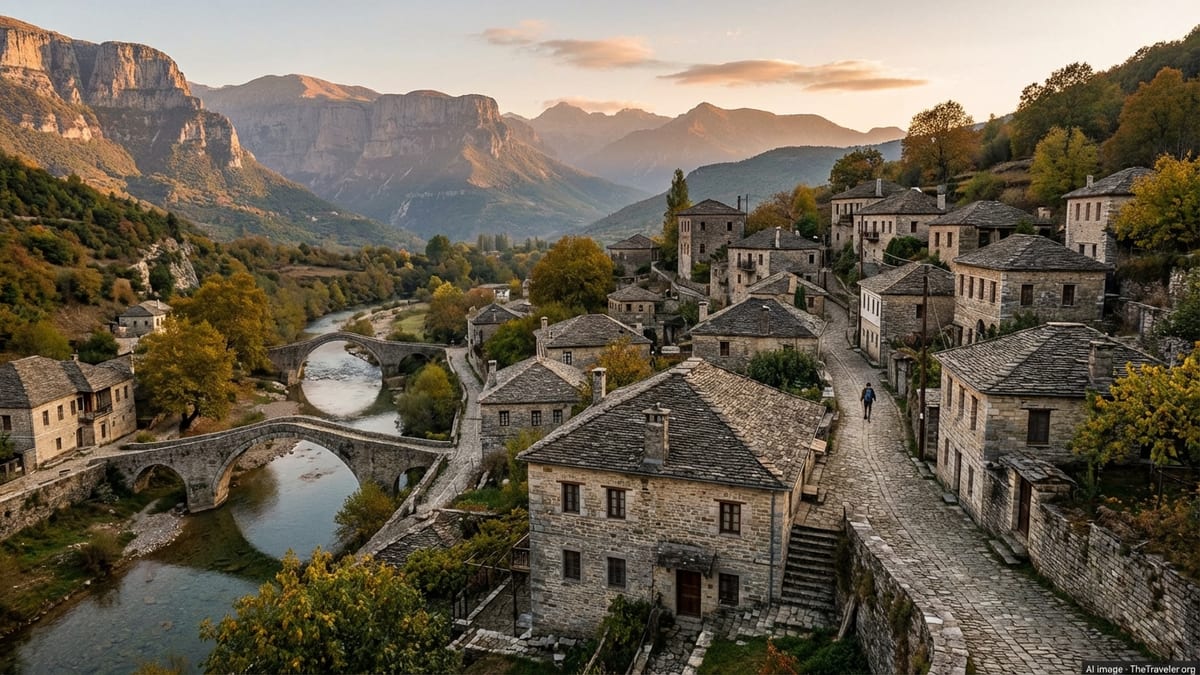
In the far northwest, near the border with Albania, the region of Epirus reveals a wilder side of Greece. Here the Pindus Mountains cut deep gorges and shelter stone-built villages known collectively as the Zagorohoria, or Zagori villages. Traditional slate roofs, arched stone bridges and cobbled lanes define the architecture, while surrounding forests and peaks offer some of the country’s best hiking. This is a corner of Greece where you are more likely to hear the bells of grazing sheep than the honk of a car horn.
One of Epirus’s greatest natural spectacles is Vikos Gorge in the Vikos–Aoos National Park. Frequently described as one of the deepest gorges in the world relative to its width, it drops sharply between limestone cliffs that reach well over 1,000 metres. Marked trails descend from villages such as Monodendri and Vikos, crossing the gorge floor and passing clear springs like the turquoise Voidomatis. Fit hikers can tackle the full-length crossing in a long day, but there are also shorter out-and-back routes to viewpoints for those preferring less demanding walks.
The village of Papigo, split into Megalo (Upper) and Mikro (Lower) Papigo, makes a charming base for exploring the area. Stone guesthouses, small cafes and mountain views create a tranquil atmosphere, particularly outside the peak of August. Local cuisine reflects the climate and terrain, with hearty pies, foraged greens and cheeses offering a distinct contrast to island fare. As with much of mountainous Greece, weather can change quickly, so visitors should come prepared with proper footwear, layers and a healthy respect for signposted trail conditions.
Beyond hiking, Epirus rewards those interested in traditional culture. Many villages host small museums or folklore collections detailing local costumes, music and crafts. In the regional capital of Ioannina, the lakeside castle district recalls Ottoman influences, while small workshops sell silverware produced using techniques the city has been known for since at least the 18th century. Combining Ioannina with a few days in Zagori gives a rounded introduction to Epirus’s urban and rural faces.
Road Trip Through the Peloponnese: Myth, Coast and Countryside
Southwest of Athens, the Peloponnese peninsula feels like a country within a country, rich in archaeological sites, sandy beaches, mountain villages and olive groves. Improved motorways linking Corinth, Tripoli and Kalamata, as well as the toll road along the Gulf of Corinth to Patras, have made self-drive itineraries easier in recent years. Distances remain manageable, and with a car you can string together coastal towns, ancient theatres and quiet inland valleys at your own pace.
The eastern Peloponnese is home to Nafplio, one of Greece’s most appealing small cities. Its Venetian fortress, seafront promenade and pastel-hued old town make it an ideal first stop after leaving Athens. Nearby, the ancient theatre of Epidaurus still hosts performances as part of the Athens Epidaurus Festival, allowing visitors to experience classical drama with remarkable acoustics in a setting of pine-clad hills. A short drive inland, the hilltop citadel of Mycenae hints at an even older era, recalling the world of Homeric legend through its cyclopean walls and royal tombs.
Further south, the Mani Peninsula, with its tower houses and rugged coastline, offers a stark, atmospheric landscape that feels a world away from busier resort areas. To the west, the region of Messinia has emerged in recent years as a destination for both beach holidays and wellness-focused retreats, helped by new resorts and improved access. Yet beyond high-end developments, traditional towns like Pylos and Koroni retain a slower, lived-in charm, backed by rolling hills planted with centuries-old olive trees.
The Peloponnese also invites active travel. Inland gorges such as Lousios and Neda attract hikers and, in places, whitewater rafters, while the slopes above villages like Kalavryta can see snow in winter and spring, supporting small ski centres. Less visited archaeological sites, from ancient Messene to Olympia, provide quieter alternatives to larger complexes closer to Athens. With careful planning, a week-long loop around the peninsula can reveal how densely packed its layers of history and landscape truly are.
Climb Mountains and Trace Myths in Northern Greece
Northern Greece stretches from the Aegean coast inland to forested peaks and lakes. Dominating many itineraries is Mount Olympus, Greece’s highest summit and the fabled home of Zeus and the gods. Today the mountain forms the heart of Olympus National Park, a protected area rich in endemic flora and fauna. Most hikers begin from the town of Litochoro, where trails lead into Enipeas Gorge and up toward refuges positioned on the flanks of the massif.
Reaching Mytikas, the highest peak at just under 3,000 metres, is typically a challenging two-day undertaking, involving long uphill climbs and a final rocky scramble that is best done with an experienced guide. However, plenty of less demanding routes offer glimpses of alpine meadows, cloud banks swirling around the cliffs and broad views over the Thermaic Gulf. Spring and early autumn usually provide the most stable conditions, though dedicated mountaineers also visit in winter with proper equipment.
Beyond Olympus, northern Greece offers further variety. The region of Macedonia combines lakeside cities such as Kastoria, known for its mansions and fur-trading history, with rural wine country and byzantine-era churches. To the east around Kavala, coastal plains meet low hills dotted with traditional villages, and ferries connect to islands while nearby inland routes lead to monasteries, waterfalls and lesser-known archaeological sites. Travellers who venture away from main highways often find family-run guesthouses and tavernas where local products, from smoked meats to regional wines, dominate menus.
The cultural hub of Thessaloniki, although coastal, functions for many visitors as a gateway to the wider north. Its seafront promenade, Ottoman-era monuments and thriving food scene make it worth at least a couple of nights. From here, it is feasible to plan side trips to ancient sites such as Vergina, to mountain towns in Halkidiki’s hinterland, or to national parks that preserve wetlands visited by migratory birds. The contrasts between urban energy and rural quiet are particularly clear in this part of Greece.
Unwind in Vineyard Country and Rural Guesthouses
Mainland Greece is increasingly recognised for its wine regions and agritourism stays, many of which remain under the radar compared with island destinations. Around Nemea in the northeastern Peloponnese, vineyards stretch across rolling hills that produce some of the country’s best-known red wines, often based on the agiorgitiko grape. Small wineries welcome visitors for tastings, usually by appointment, offering a chance to learn about local terroir and winemaking traditions that date back to antiquity.
Central Greece and northern regions have their own wine stories. Near Thessaloniki, producers experiment with both indigenous and international varieties, while in mountainous areas vines often share slopes with fruit orchards and grazing land. Visiting outside the height of summer can be especially rewarding, with harvest activities in early autumn giving a sense of the rural year’s rhythm. Many estates have added guest rooms or partner with nearby guesthouses, helping support local economies beyond coastal tourism.
Rural guesthouses and small inns across the mainland frequently occupy restored stone houses or farm buildings, blending comfort with a sense of place. Breakfasts might feature homemade jams, local honey and cheeses, or pies filled with seasonal greens. In regions like Zagori or the Peloponnese interior, hosts often double as guides, recommending walking routes, introducing guests to nearby artisans or arranging cooking classes that highlight family recipes. Stays like these slow the pace of travel and deepen understanding of how landscapes, food and tradition interconnect in everyday Greek life.
Responsible travel choices can help preserve what makes mainland Greece so attractive. Choosing locally owned accommodation and restaurants, travelling in shoulder seasons where possible, and respecting trail etiquette and village customs all contribute to keeping smaller communities vibrant. The rewards are considerable: more personal interactions, quieter sites and a stronger sense of connection to the places you pass through.
The Takeaway
Exploring Greece beyond its islands opens up a country of mountain ridges, river gorges, sanctuaries and working towns that rarely appear on postcard racks. Mainland routes reveal how deeply history is woven into the terrain, from oracle stones and cliff-top monasteries to battle-scarred fortresses and roadside chapels. They also show a modern Greece that is resilient, creative and closely tied to the land, whether through vineyards, grazing slopes or urban neighbourhoods reinventing old industrial spaces.
For travellers willing to trade crowded beaches for varied landscapes and slower rhythms, the mainland offers rewards in every season. A few days in Athens followed by time in Delphi, Meteora, Epirus, the Peloponnese or northern highlands can transform a Greek holiday into a journey through millennia and across distinct cultures. The key is to approach these regions with curiosity, flexibility and respect, allowing room for unscripted encounters alongside the headline sights.
FAQ
Q1. Is mainland Greece worth visiting if I have already seen the islands?
Mainland Greece offers a very different experience from the islands, with mountains, gorges, traditional villages, vineyards and major archaeological sites that provide deeper historical and cultural context.
Q2. When is the best time of year to explore mainland Greece?
Spring and autumn are usually the most comfortable, with milder temperatures, fewer crowds and good conditions for hiking and sightseeing, though winter and summer also have specific regional appeal.
Q3. Do I need a car to see the top sights beyond the islands?
A car gives the most flexibility, especially for regions like the Peloponnese, Epirus and rural northern Greece, but many key sites can also be reached by a combination of trains, buses and organised day tours.
Q4. Is hiking in places like Vikos Gorge and Mount Olympus suitable for beginners?
Both areas offer a range of routes; beginners can choose shorter, well-marked trails or guided walks, while longer gorge crossings and summit attempts require good fitness, proper gear and, ideally, experienced guidance.
Q5. How many days should I plan for a Peloponnese road trip?
Four to seven days allows time to combine Nafplio, Epidaurus, Mycenae and parts of the Mani or Messinia, though two weeks or more lets you explore at a gentler pace and include additional inland sites.
Q6. Are the monasteries at Meteora still active religious sites?
Yes, several monasteries at Meteora remain active, with resident monastic communities, regular services and visiting hours for the public, so modest dress and respectful behaviour are important.
Q7. Can I visit Delphi as a day trip from Athens?
Delphi is commonly visited as a long day trip, but staying overnight nearby allows for quieter visits at the beginning or end of the day and more time in the museum and surrounding landscape.
Q8. Is mainland Greece expensive compared with the islands?
Costs vary, but many inland regions and smaller towns are often more affordable than the most popular islands, especially for accommodation and meals in local tavernas.
Q9. Do I need to book accommodation in advance in mountain regions?
In busy periods such as August, major holidays and some weekends, advance booking is wise in popular villages, while in shoulder seasons you may find more flexibility but should still secure key nights ahead.
Q10. Is English widely spoken in mainland Greece outside major cities?
English is commonly spoken in tourist-facing businesses across much of the mainland, though in smaller villages you may encounter fewer speakers, making a few basic Greek phrases and gestures especially helpful.