

Connecticut’s shoreline along Long Island Sound is compact but remarkably varied, mixing deep maritime history with salt marsh views, sandy state beaches and town greens that look lifted from a New England postcard. From the storied shipbuilding heritage of Mystic to the family friendly sands of Madison and Niantic, the state’s coastal towns reward unhurried exploration, especially in the shoulder seasons of late spring and early fall when the air is crisp and the crowds thin. This guide highlights some of the top towns and stretches of coast to consider for your next Connecticut escape, whether you are planning a weekend road trip or a longer stay along the water.
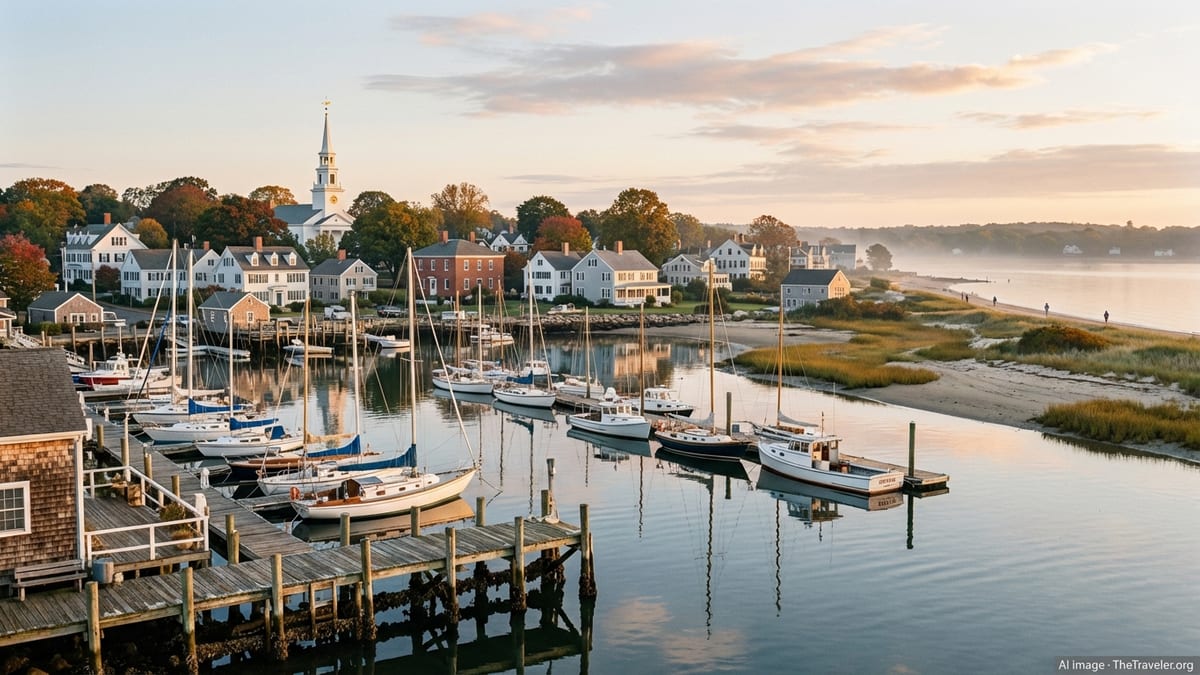
Mystic and Stonington: Classic Maritime Connecticut
On the far eastern edge of Connecticut’s coast, Mystic has become one of New England’s best known small maritime towns, thanks in part to its historic shipbuilding roots and its walkable riverfront. The Mystic Seaport Museum recreates a 19th century seafaring village with historic vessels and waterfront buildings, while the nearby aquarium and downtown drawbridge area add family friendly appeal. Strolling the streets on either side of the Mystic River, visitors find bakeries, independent shops and a working harbor that keeps the town feeling like a real community rather than a set piece.
Just to the south, Stonington Borough sits on a narrow peninsula that reaches into the Sound, with Water Street lined by closely preserved historic homes, small galleries and cafés. Strict local preservation efforts mean the village still reads as a largely 19th century streetscape, with stone walls, clapboard houses and shade trees framing harbor views. Small in scale but rich in character, it tends to attract travelers who value walkability and atmosphere over big resort infrastructure.
These neighboring communities work well as a combined base, with Mystic offering major attractions and dining options and Stonington delivering quieter evening strolls and a more residential feel. Both are within a short drive of small local beaches and boat launches, and many visitors choose shoulder season dates to enjoy the waterfront without peak summer congestion. Whether you are boarding a harbor cruise, watching the downtown drawbridge lift or simply reading by the water’s edge, the area delivers the archetypal coastal Connecticut experience.
Niantic and East Lyme: Boardwalks and Harbors
Farther west along the shoreline, Niantic in the town of East Lyme feels tailor made for low key summer days and off season walks. The village hugs the shore of Niantic Bay, with a mile long waterfront boardwalk that parallels the beach and offers uninterrupted views of the Sound and passing boats. The path combines stretches of sand and paved promenade, making it suitable for casual walkers, runners and families pushing strollers who want an easy, scenic route beside the water.
Across the tracks from the boardwalk, Main Street runs roughly parallel to the coast and hosts a cluster of small restaurants, cafés and quirky shops, including extensive secondhand book dealers that have become a regional draw. This arrangement keeps the downtown compact and easy to explore on foot, with frequent sightlines back toward the harbor and the bay. Several small public beaches in and around Niantic give visitors options for swimming and sunbathing in season, while nearby parks offer picnic spots and playgrounds.
Because Niantic sits between larger hubs like New London and Mystic, it works well as a quieter overnight base for travelers who want easy access to broader attractions but prefer to return in the evening to a village scale environment. In spring and early fall, the boardwalk is often populated more by locals on daily walks than by vacation crowds, and sunrise or sunset along this stretch of coast can feel particularly serene. For road trippers following the shoreline, Niantic offers a natural pause point that combines simple pleasures with practical amenities.
Old Saybrook and Westbrook: Where River Meets Sound
At the mouth of the Connecticut River, Old Saybrook occupies a pivotal point where fresh water meets the open waters of Long Island Sound. The town center sits a short distance from the shoreline, with an old fashioned Main Street that mixes historic buildings, small shops and casual dining. Closer to the water, quiet neighborhoods, marinas and small beaches spread out along coves and points, creating a patchwork of river and Sound views that feel distinct from more straight line coastal towns.
Old Saybrook’s position at the river’s end gives it a long association with navigation and trade, and remnants of that history remain in landmarks such as the Saybrook Breakwater Light and preserved historic homes. Visitors today tend to split their time between simple beachgoing, browsing in town and exploring the lower river valley by car or boat. It is an area that rewards a relaxed pace, where the main activity might simply be watching the light change over the marshes and channels.
Just to the west, Westbrook is a smaller community that fronts directly on Long Island Sound, with a handful of public beaches and a sheltered harbor area. The atmosphere here leans even more toward a classic small beach town, with marinas, waterfront lodging and easy access to the sand. Because it sits between larger cities, Westbrook gives travelers the option to retreat from busier stretches of coastline while remaining within reach of bigger cultural offerings. Together, Old Saybrook and Westbrook make a natural pair for visitors who want both river scenery and traditional shoreline relaxation.
Madison and Guilford: Greens, History and Long Beaches
Madison occupies a central stretch of the Connecticut shoreline and has long been regarded as one of the state’s quintessential beach towns. The community’s centerpiece natural attraction is Hammonasset Beach State Park, the largest shoreline park in Connecticut, with more than two miles of sandy coastline, extensive marshlands and walking trails. The park accommodates swimmers, kayakers, bird watchers and campers, and while it can be busy in midsummer, it offers ample space to spread out compared with many smaller beaches.
A short drive from the park, Madison’s traditional town green is framed by shops and restaurants that create a classic New England backdrop. Recent national travel coverage has described Madison as a picture perfect coastal community, a characterization that reflects both its manicured streets and its mix of longstanding local businesses with more contemporary dining options. For many families from nearby cities, the combination of beaches, a walkable center and community events makes Madison a recurring summer choice.
Neighboring Guilford shares some of these qualities while retaining its own distinctive identity. Its large, historic town green is ringed by churches, houses and small businesses, and the town has invested in preserving older buildings that give the center a settled, traditional appearance. Historic sites, including one of the state’s oldest stone houses open to the public, add depth for visitors interested in early colonial history. Along the shore, a mix of small beaches, rocky outcrops and views toward island clusters create varied scenery, and quieter side roads lead to boat launches and small parks.
Taken together, Madison and Guilford form a particularly rewarding segment of any coastal drive, especially in autumn when nearby marshes and trees pick up color. Travelers can spend a morning walking one town’s green and side streets, then head to the shoreline in the other for an afternoon by the water. The two towns demonstrate how Connecticut’s coast blends beach culture with an unusually strong sense of historic town life.
Branford and the Thimble Islands: Harbors and Island Views
Closer to New Haven, Branford spreads along the shore with a mix of village centers, residential neighborhoods and tidal inlets. The town green, located slightly inland, anchors a traditional downtown with brick storefronts and civic buildings, while several distinct shoreline districts offer access to the water. One of the best known is Stony Creek, a small harbor village that serves as the jumping off point for boat tours among the Thimble Islands, a scattered archipelago of rocky islets topped with trees and, in some cases, cottages.
The scenery around Branford changes quickly over short distances, shifting from sheltered coves and salt marshes to views across open water. Route 146, which winds through portions of town, has become a favored coastal drive, especially in fall when the marsh grasses and nearby woods turn golden and red. Stops along the way allow visitors to watch small boats exiting narrow channels or to pause at water’s edge for photographs and short walks. For many travelers, Branford represents the moment when the landscape feels fully coastal after leaving inland sections of Interstate 95.
While Branford lacks a single marquee attraction on the scale of Mystic Seaport or Hammonasset Beach, it repays exploration by car, bicycle or kayak. Harborfront parks, small local beaches and waterside trails create a network of modest but appealing public spaces. In summer, kayakers and paddleboarders are a frequent sight in sheltered areas, while shoulder seasons see more local walkers along the town’s greens and waterfront paths. For visitors with time to look beyond headline destinations, Branford offers a textured, lived in portrait of everyday shoreline Connecticut.
New London and Groton: Working Waterfronts and Naval History
East of the Connecticut River, the paired cities of New London and Groton showcase a more industrial and institutional side of the state’s relationship with the sea. New London has long been an active port and continues to function as a transportation and cultural hub, with ferries, train service and a compact downtown that mixes historic architecture with newer development. Along the shoreline, public parks and beaches such as a well known oceanfront park give visitors access to broad sandy expanses, a long boardwalk and traditional amusements in season.
Across the Thames River, Groton’s identity is closely linked to submarine construction and naval history. The city is home to a major submarine base and a preserved early nuclear powered submarine, which together create a strong military presence and a museum draw. At the same time, Groton includes residential shoreline communities and public beaches that offer a softer side of the waterfront. Families visiting the region often blend time at the beach with museum visits that help explain the area’s strategic maritime role.
New London and Groton may not fit the classic image of a small, quiet coastal village, but they play an essential role in the broader story of Connecticut’s coast. Their working harbors, shipyards and rail lines underscore just how central the sea has been to the state’s economy and culture. For travelers, spending a day here provides an instructive contrast to the more purely recreational shoreline towns and rounds out an understanding of the region as a whole.
The Takeaway
Connecticut’s coastal towns reveal their character most clearly when you slow down. The state’s shoreline is short compared with those of larger neighbors, yet it contains a striking range of experiences, from the meticulously preserved village streets of Stonington and Guilford to the broad sands of Hammonasset Beach and the informal boardwalk of Niantic. Layered onto this scenery are centuries of maritime and river history, active working ports and contemporary communities that continue to evolve while retaining deep local roots.
For travelers, this means there is no single right way to approach the coast. Some visitors will be happiest immersing themselves in one town for several days, returning to the same coffee shop and stretch of beach, while others may prefer a loosely planned road trip that strings together multiple stops from Mystic to Branford. Whatever your style, consider traveling in the shoulder seasons when traffic eases and local rhythms become more visible. With thoughtful planning and an openness to detours, Connecticut’s shoreline delivers both familiar New England images and quieter discoveries that stay with you long after the trip ends.
FAQ
Q1. When is the best time of year to visit Connecticut’s coastal towns?
The most pleasant periods are late May through June and September into early October, when air and water are relatively mild and crowds are thinner than in midsummer.
Q2. Are Connecticut’s beaches sandy or mostly rocky?
Many public beaches, especially at Hammonasset Beach State Park and larger town parks, offer broad sandy stretches, while some smaller access points and coves are a mix of sand, pebbles and rock.
Q3. Do I need a car to explore the Connecticut shoreline effectively?
A car provides the most flexibility, since many of the most attractive coastal areas and small town centers sit a short distance off the main rail line and are easiest to link by road.
Q4. Which coastal town is best for families with young children?
Madison, Niantic and Old Saybrook are especially popular with families, thanks to relatively gentle beaches, nearby playgrounds, easy parking and low rise, small scale town centers.
Q5. Is Mystic very crowded in summer?
Mystic can be busy in July and August, particularly around the seaport museum and downtown drawbridge, so many visitors aim for weekdays or shoulder season dates to enjoy a calmer atmosphere.
Q6. Can I visit multiple shoreline towns in a single weekend?
Yes, the distances are short enough that you can comfortably connect two or three neighboring towns, such as Madison, Guilford and Branford, over a long weekend without feeling rushed.
Q7. Are there good options for travelers who prefer quieter, less commercial areas?
Smaller communities like Westbrook, certain neighborhoods in Branford and sections of Old Saybrook tend to feel more residential and low key than the busiest resort areas.
Q8. How cold is the water along the Connecticut coast?
Water temperatures are generally cool in late spring, warmest in late July and August, and turn brisk again by early fall, so many swimmers favor the height of summer for longer swims.
Q9. Is the Connecticut shoreline suitable for biking?
Many towns offer relatively flat side roads and short coastal loops, though infrastructure varies, so cyclists often combine low traffic local streets with designated paths where available.
Q10. How many days should I plan for a first visit to the Connecticut coast?
A long weekend of three to four days allows time to experience at least one major attraction, such as Mystic Seaport or Hammonasset Beach, plus unstructured hours exploring nearby towns.