

More news on this day
As aviation enthusiasts search for the best vantage points to capture jetliners up close, three major U.S. hubs are standing out as planespotting powerhouses: Miami International, New York’s John F. Kennedy and Dallas Fort Worth, each offering distinctive views, heavy traffic and dedicated spaces that are drawing travelers with cameras as eagerly as those with carry-ons.
Get the latest news straight to your inbox!
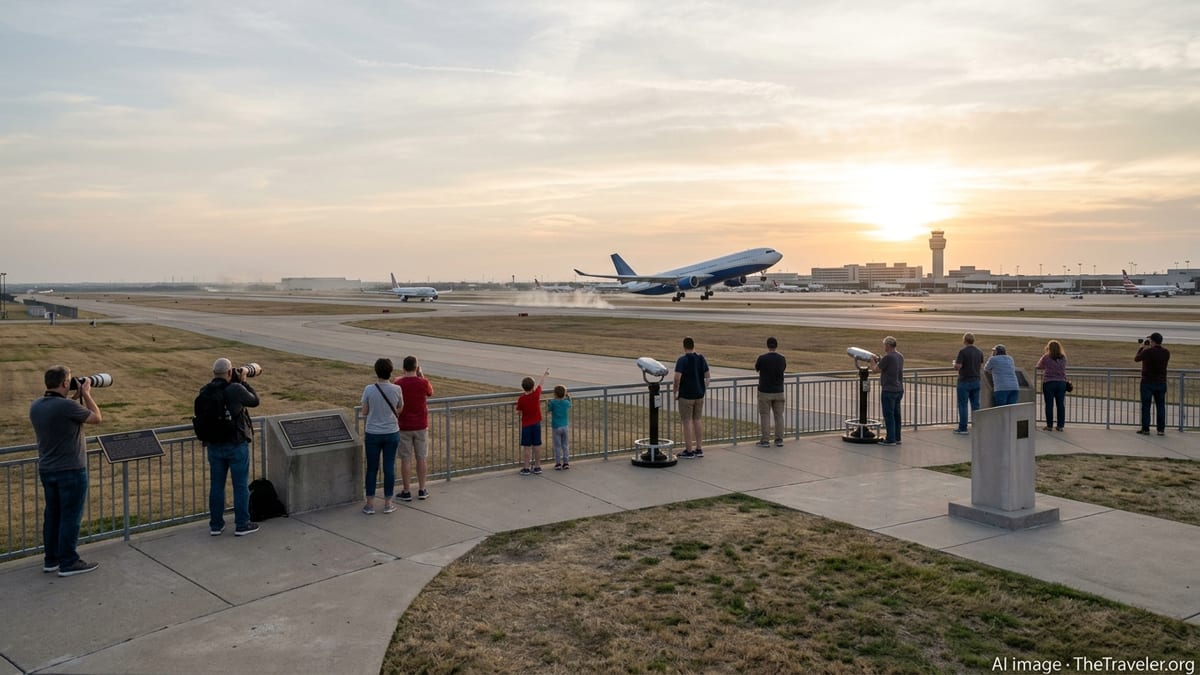
Why Planespotting Is Taking Off at Major U.S. Hubs
Planespotting, once a niche pursuit centered around perimeter roads and parking lots, is increasingly entering the mainstream of aviation-focused travel. Growing online communities, live-streaming channels and detailed spotting guides have helped turn airports themselves into destinations, especially at the country’s busiest hubs.
Recent rankings of U.S. airports for aircraft variety and traffic highlight Miami International (MIA), Dallas Fort Worth (DFW) and New York John F. Kennedy (JFK) among the top locations for enthusiasts seeking nonstop action and diverse fleets. These hubs combine high passenger volumes with extensive international links, which translates into a steady parade of widebodies, cargo freighters and regional workhorses throughout the day.
For travelers planning routes through the United States, this shift means layovers and overnight connections can double as prime opportunities to experience aviation from the outside. With a bit of planning, a long connection in one of these cities can include time at a dedicated observation area, nearby park or publicly accessible roadside location that offers close views of aircraft movements.
At the same time, airports and local authorities are gradually recognizing the value of enthusiasts as ambassadors. Official observation decks, curated aviation exhibits and clear information on safe viewing spots are becoming more visible, with Dallas Fort Worth’s Founders’ Plaza and online spotting guides around JFK and MIA serving as prominent examples.
Miami International: Gateway to Latin America and Cargo Giant
Miami International Airport has long marketed itself as a gateway to Latin America, and publicly available passenger and cargo statistics underscore that role. The airport handled tens of millions of passengers annually before the pandemic and continues to rank among the busiest U.S. gateways for international traffic, particularly to Central and South America, as well as the Caribbean.
For planespotters, that translates into an unusually rich mix of airlines and aircraft types. Reports and enthusiast guides describe lineups that can include U.S. legacy carriers, Latin American flag airlines, low-cost operators and a large contingent of cargo carriers using widebody freighters. This variety makes MIA a draw for photographers looking to capture liveries and aircraft models that may be rare elsewhere in the United States.
Seasoned observers often position themselves along roads near the cargo and maintenance areas or at open vantage points by the runway approaches, where aircraft can pass at relatively low altitude. Independent spotting guides for Miami list several such locations, noting that traffic patterns and lighting conditions influence which side of the airfield is most rewarding at a given time of day.
The airport itself has also leaned into its aviation identity with public exhibits on flight and local aviation history. Dedicated displays and curated spaces within the terminals reflect Miami’s longstanding relationship with air travel, adding an additional layer of interest for visitors moving between airside and landside areas.
JFK: International Heavy Metal Over New York
New York’s John F. Kennedy International Airport is frequently cited by enthusiast publications as one of the premier global airports for viewing large widebody aircraft. As one of the primary U.S. gateways for transatlantic and long-haul international routes, JFK sees a steady stream of so-called “heavy” aircraft from European, Middle Eastern, African and Asian carriers alongside the major U.S. airlines.
Publicly available spotting guides for JFK map out a series of off-airport vantage points around the field, each suited to specific runway configurations. Grassy mounds near local sports fields, parking areas along Rockaway Turnpike and waterfront locations in nearby neighborhoods are repeatedly highlighted as preferred spots when particular runways are in use. From these vantage points, enthusiasts can photograph arrivals and departures with clear views and relatively unobstructed sightlines.
The variety at JFK goes beyond aircraft size. On a typical day, traffic can include everything from domestic narrowbody jets and regional aircraft to flagship long-haul services operated by Airbus A380s, Boeing 777s, 787s and A350s. Cargo movements, charter flights and seasonal operations add to the mix, making the airport attractive for those seeking a comprehensive sampling of global commercial aviation in a compact geographic area.
Travelers hoping to incorporate planespotting into a JFK itinerary generally benefit from checking runway usage trends and local community advice before heading out. Many of the recommended spots are in residential or commercial districts that welcome visitors who are respectful of parking rules, local businesses and shared public spaces.
Dallas Fort Worth: Founders’ Plaza Returns as a Crowdpuller
In North Texas, Dallas Fort Worth International Airport has reasserted its position as a leading U.S. planespotting destination with the reopening of Founders’ Plaza, its dedicated observation area. Located on the northern side of the airfield, the plaza offers sweeping views of aircraft operations and has become a favored gathering point for aviation fans, families and transiting travelers.
Information published by the airport describes Founders’ Plaza as an open-air observation site with seating, picnic tables and telescopes, along with displays outlining the history and development of DFW. Loudspeakers relay live air traffic control communications from the tower, allowing visitors to listen as pilots are cleared for takeoff and landing on the runways in front of them. The facility is typically open during daytime hours, with extended access occasionally noted during special events.
Regional media coverage in early 2026 highlighted the plaza’s return after a period of renovation, noting updated amenities and renewed interest from local communities. Enthusiast discussions and recent photographic reports indicate that the location provides strong views of domestic and international widebody traffic, including long-haul services operated by large aircraft such as the Airbus A380 on certain routes.
Beyond Founders’ Plaza, informal viewing points near nearby roads and business parks remain popular when wind conditions shift runway use away from the observation area’s immediate line of sight. However, travelers are generally encouraged to prioritize official facilities like the plaza, which offer parking, signage and clearly designated viewing zones designed with visitors in mind.
How Travelers Can Build Planespotting Into Their Itineraries
For travelers passing through Miami, New York or Dallas, incorporating planespotting into a journey often starts with scheduling. Late afternoons and early evenings are commonly favored for both lighting and traffic volume, while morning hours can be productive for cargo operations and long-haul arrivals. Checking typical peak times and seasonal schedules can help maximize the likelihood of seeing a wide variety of aircraft.
Layovers of four hours or longer at these hubs may offer sufficient time to exit the terminal, reach an observation area and return through security, although individual circumstances and security wait times vary. Many visitors opt instead to stay landside before check-in or after arrival, particularly at DFW’s Founders’ Plaza, which is located outside the secured area and accessible by car from the surrounding highway network.
Preparation matters as well. Enthusiast communities recommend bringing telephoto lenses for photography, along with headphones for listening to publicly relayed air traffic control where available, such as at Founders’ Plaza. Sun protection, water and awareness of local weather conditions are also emphasized, especially in summer months at exposed locations in Miami and North Texas.
Most importantly, experienced spotters stress the value of respecting posted signs, staying within designated public areas and remaining mindful of airport security rules. As more airports acknowledge and accommodate aviation enthusiasts, Miami International, JFK and Dallas Fort Worth are emerging as prominent examples of how major hubs can welcome travelers who are as interested in watching aircraft depart as in boarding them.