

More news on this day
Severe storms and tornado warnings sweeping across parts of the Midwest, South and Northeast sparked another day of disruption for U.S. air travelers on March 9, with major carriers including American, Delta, Southwest and United canceling 168 flights and delaying more than 2,500 nationwide as weather alerts affected key hubs from Dallas and Chicago to St. Louis and New York.
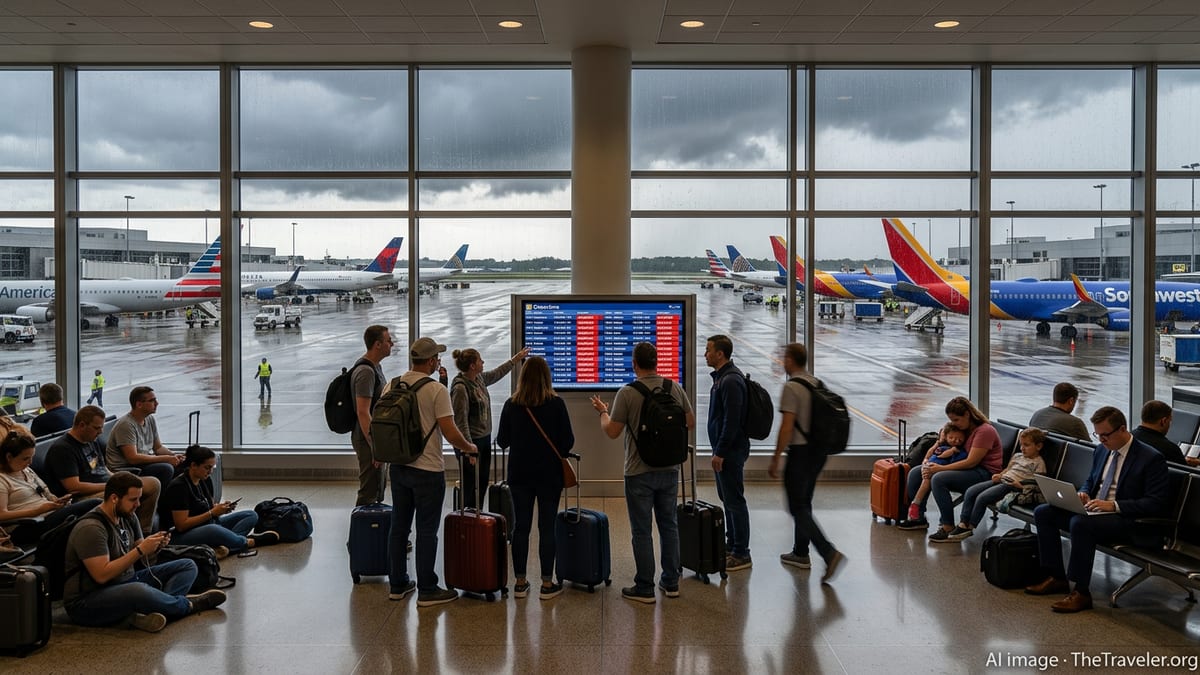
Storm System and Tornado Warnings Disrupt Major Flight Corridors
Meteorologists said a fast-moving line of strong thunderstorms capable of producing tornadoes, large hail and damaging winds marched across heavily traveled air corridors on Sunday, prompting multiple tornado warnings and ground delays around major metropolitan areas. While some alerts were relatively short lived, they forced air traffic controllers to temporarily halt arrivals and departures or reroute planes away from the most intense cells.
Cities including Dallas, Chicago, St. Louis and parts of the New York metropolitan area were periodically under severe thunderstorm and tornado warnings during peak travel periods. Airspace restrictions and rapidly shifting storm tracks meant controllers had to increase the spacing between aircraft, sharply reducing the number of flights that could land or take off in a given hour and creating a cascade of delays across the system.
Flight-tracking data indicated that by late afternoon roughly 168 flights within, to or from the United States had been canceled and about 2,579 were delayed, with the brunt of the impact focused on large hub airports. Though the totals were below some of the worst historic meltdowns, the localized intensity of the storms and the number of major airports affected turned what might have been routine weather disruption into a day of widespread travel headaches.
American, Delta, Southwest and United Bear Brunt of Disruptions
The bulk of cancellations and delays hit the country’s largest carriers, whose tightly scheduled hub-and-spoke networks are particularly sensitive to weather that simultaneously affects multiple regions. American Airlines, Delta Air Lines, Southwest Airlines and United Airlines each reported pockets of cancellations along with broader waves of rolling delays as aircraft and crews fell out of position.
At Dallas Fort Worth International Airport, a critical hub for American, intermittent lightning and storm warnings prompted ramp closures that halted ground operations and left aircraft waiting for gates. Travelers reported sitting on aircraft for extended periods while storms passed, only to find their onward connections canceled or significantly delayed once they reached the terminal.
In Chicago, where both O’Hare and Midway are key nodes for United and Southwest respectively, severe weather in the wider Great Lakes region led to ground delay programs designed to meter arrivals into already congested airspace. Those restrictions reverberated across airline networks, affecting flights as far away as the West Coast and the Southeast when aircraft that were scheduled to pass through Chicago were held or rerouted.
Delta, which relies heavily on its hubs in Atlanta and the Upper Midwest, and United, with major operations in Chicago and Newark, were also forced to thin schedules and extend connection times as dispatchers worked to weave aircraft around lines of storms while staying ahead of crew duty-time limits.
Travelers Face Long Lines, Missed Connections and Limited Rebooking Options
For passengers, the statistics translated into hours-long waits at check-in counters and customer service desks, snaking security and rebooking lines, and nights spent in terminals after missed connections. With tornado warnings and lightning halting ramp activity at various points in the day, many travelers found themselves stuck on aircraft waiting for ground crews to be cleared to operate safely.
Full flights and high spring demand meant rebooking options were scarce on some routes, particularly into and out of large hubs where frequency is normally an asset. As cancellations accumulated, remaining flights quickly sold out, leaving some passengers facing multiday delays or circuitous routings through secondary cities in order to reach their destinations.
Airlines encouraged customers whose plans were flexible to postpone nonessential travel, and several issued weather waivers allowing changes without additional fees for itineraries touching the hardest-hit airports. Even so, the combination of heavy load factors and disrupted aircraft rotations limited how quickly carriers could absorb displaced passengers.
Airlines and Regulators Emphasize Safety as First Priority
Airlines and federal aviation officials stressed that the decisions to halt departures, divert flights or suspend ramp operations during tornado warnings and severe thunderstorms were driven by safety considerations. Under Federal Aviation Administration procedures, controllers are required to keep aircraft clear of the most hazardous cells and may order ground stops when storms or low visibility make it unsafe to maintain normal traffic levels.
Industry analysts noted that while passengers often perceive cancellations as worse than delays, weather events involving possible tornadoes leave carriers with little choice. When fast-changing conditions threaten both airborne and ground operations, airlines may opt to cancel flights in advance rather than risk having aircraft and passengers stranded on tarmacs if storms intensify or warnings are extended.
Consumer advocates pointed out that because the disruptions stemmed from severe weather and air traffic control constraints, airlines are generally not required under current U.S. rules to provide hotel rooms or meal vouchers. Travelers whose flights were canceled, however, remain entitled to refunds if they choose not to travel, regardless of the reason for the cancellation.
More Volatile Weather Highlights Fragility of Peak Travel Networks
The latest round of storm-related turmoil underscores how vulnerable the U.S. air travel system remains to bouts of disruptive weather, particularly in seasons when severe thunderstorms and tornadoes are more frequent. With airlines operating at high load factors and with limited spare aircraft and crew capacity, even a few hours of halted operations at a handful of major hubs can ripple nationwide within a single travel day.
Operational experts say that while carriers have invested heavily in forecasting tools and real-time rerouting technology, the basic constraints of airspace and airport capacity mean that some disruption is inevitable when tornado warnings, intense storm lines or low ceilings coincide with peak travel periods. In such conditions, airlines, airports and the FAA are largely focused on clearing backlogs safely rather than maintaining published schedules.
As Sunday’s severe weather system moves away and alerts expire, airlines are expected to gradually restore normal operations, but residual delays and scattered cancellations are likely to persist into Monday as networks reset. For travelers with flights in the coming days, industry guidance remains consistent: monitor flight status closely, allow extra time at the airport and, if possible, build flexibility into itineraries during periods when volatile spring weather is in the forecast.