

More news on this day
Thousands of travelers at Toronto Pearson International Airport faced another day of gridlock on February 24 as at least 68 flights were cancelled and 155 more delayed, disrupting journeys across Canada, the United States, Mexico, China, Qatar and other key international routes.
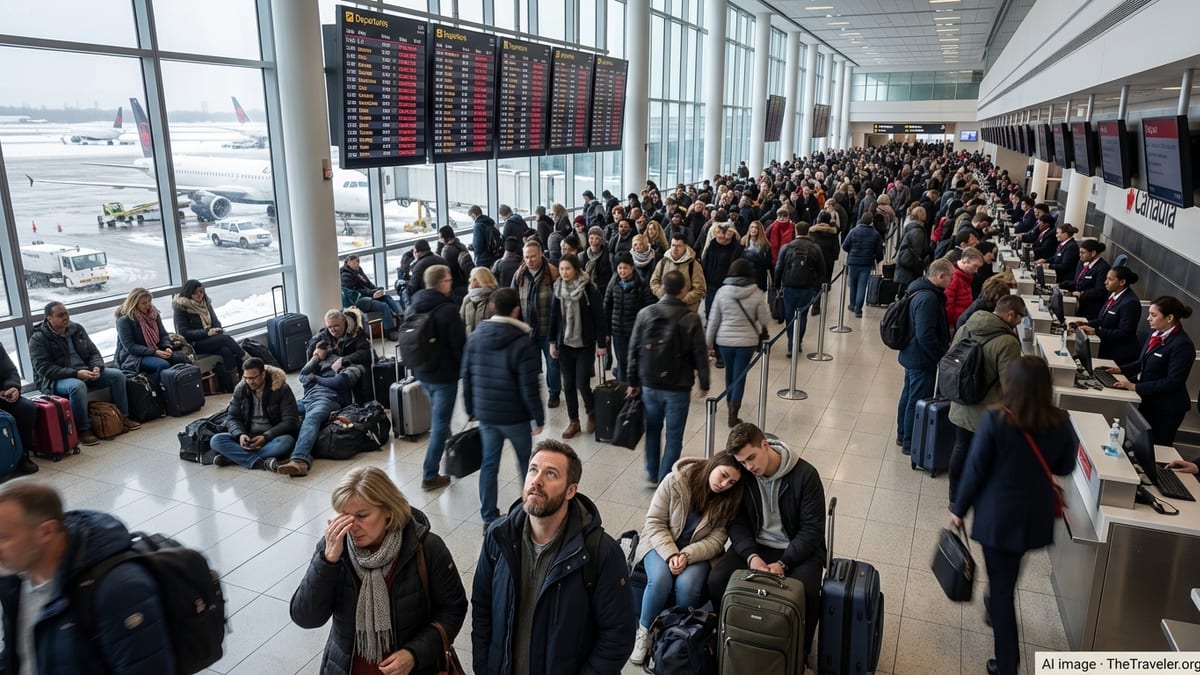
Passengers Stranded as Disruptions Mount Across Key Routes
Long queues, crowded seating areas and departure boards filled with red alerts defined the scene at Toronto Pearson on Tuesday, as passengers scrambled to rebook itineraries or secure overnight accommodation. Flights operated by Air Canada, WestJet, Porter Airlines, Piedmont, Air China and several other carriers were among those affected, with cancellations and rolling delays hitting both departures and arrivals.
Travelers reported being stuck on board aircraft awaiting de‑icing, standing in line for hours to speak with agents, and facing limited rebooking options as seats quickly filled across the network. Many passengers bound for sun destinations in Mexico and the Caribbean, as well as business travelers heading to major U.S. hubs such as Chicago and New York, saw their plans abruptly upended.
International operations were also squeezed. Services to and from major Asian and Middle Eastern gateways, including flights involving China and Qatar, were delayed or cancelled as aircraft and crews failed to arrive on schedule. Even where flights remained on the board, departure times were frequently pushed back in 30 to 60 minute increments, creating uncertainty for passengers with onward connections.
Airport staff urged travelers to remain at home or in their hotels until receiving confirmation that flights were operating, underscoring the strain on terminal facilities and the difficulty of managing crowds during prolonged disruption.
Winter Storm Fallout Ripples Into Canada’s Busiest Hub
The turmoil at Pearson is part of a wider North American aviation meltdown triggered by a powerful winter storm system that has pounded the northeastern United States and parts of eastern Canada since the weekend. The storm led to thousands of cancellations and delays across major U.S. airports, particularly in New York, Boston and Philadelphia, with knock‑on effects spreading throughout airline networks.
Airlines rely on tight rotations of aircraft and crews that pass through key hubs. When storms shut down or sharply curtail operations at those hubs, the impact can be felt days later in distant cities, including Toronto. Planes that were scheduled to arrive from the U.S. Northeast, and then continue on to destinations in Canada, Mexico, Europe or Asia, never made it to their next legs, leaving gaps in the schedule that were difficult to fill at short notice.
Even as conditions in parts of the United States started to improve on Tuesday, carriers were still working to reposition planes and reset crew schedules. That meant Pearson’s operations remained constrained despite clearer weather locally, with some flights cancelled preemptively and others delayed as airlines tried to re‑stitch their networks together.
Industry analysts noted that the recovery from large‑scale weather events is rarely immediate. Midweek travelers often inherit the residual disruption from weekend storms, particularly on heavily trafficked transborder routes connecting Canadian cities to the dense corridor of airports along the U.S. East Coast.
Major Carriers Under Pressure at Toronto Pearson
Canada’s largest airlines bore the brunt of Tuesday’s disruption at Toronto Pearson, with Air Canada and WestJet accounting for a significant share of the 68 cancellations and 155 new delays. Regional partner operations and low‑cost affiliates, including services marketed by Jazz and flights branded under various partner agreements, added further complexity to the rebooking picture.
Porter Airlines, which has been expanding from its traditional base at Billy Bishop Toronto City Airport into jet operations at Pearson, also faced multiple delayed services, particularly on short‑haul routes to Ottawa, Montreal and select U.S. cities. U.S. regional carrier Piedmont, operating under a major American network, saw its Pearson‑linked schedules disrupted as feeder flights to northeastern hubs were curtailed or significantly delayed.
On the long‑haul side, Air China and other international carriers serving Toronto reported delayed or rescheduled departures, with aircraft arriving late from Asia due to congestion and weather‑related slowdowns at connecting airports. Some passengers on intercontinental itineraries found themselves stuck midway through their journeys, as missed connections cascaded through multi‑segment tickets.
Airlines deployed additional staff at customer service counters and urged travelers to use mobile apps and online tools to rebook or request refunds where eligible. However, high call volumes and limited seat availability meant many passengers still struggled to find acceptable alternatives, especially those traveling in groups or on time‑sensitive trips.
Travelers Confront Long Lines, Limited Options and Rising Costs
Inside the terminals, the human impact of the disruption was easy to see. Families traveling with young children camped out near power outlets, business travelers took video calls from crowded gate areas, and international visitors navigated language barriers while trying to understand their rights and options.
With hotel rooms near the airport in high demand, some stranded passengers reported steep last‑minute prices or sold‑out properties. Others opted to stay overnight in the terminal rather than risk losing their place in rebooking queues or missing early morning departures. Food courts and concessions remained busy throughout the day as travelers waited for updates.
Consumer advocates reiterated that compensation and care obligations differ depending on whether delays and cancellations are caused by factors within an airline’s control or by weather. In many storm‑related cases, carriers are not required to provide financial compensation, though they may still offer meal vouchers, hotel discounts or flexible rebooking options as a goodwill gesture.
Passengers were encouraged to keep all receipts related to extra expenses, such as meals and accommodation, and to review the terms of their tickets and any travel insurance. Credit card travel protections can sometimes cover additional costs when journeys are disrupted, but conditions and coverage limits vary.
What Impacted Travelers Should Do Next
For those with upcoming flights through Toronto Pearson, airlines and airport officials advised checking flight status frequently on carrier websites or mobile apps before leaving for the airport. Schedules were continuing to evolve through Tuesday evening, with potential for further adjustments into Wednesday as airlines worked through the backlog.
Experts recommended that passengers traveling to the United States, Mexico, China, Qatar and other long‑haul destinations build in additional buffer time for connections and consider alternative routings where possible. Travelers starting their journeys at smaller regional airports were urged to be particularly cautious, as limited frequencies and fewer spare aircraft can make disruptions harder to absorb.
Those already stranded at Pearson were advised to stay in close contact with their airline, monitor gate information screens and listen for announcements, as last‑minute aircraft and crew availability can sometimes open up new options. Flexibility on routing, departure times and even destination airports within the same region can improve the chances of securing a seat.
While operations are expected to gradually stabilize as the broader North American aviation network recovers from the latest winter storm, industry observers warned that similar episodes could recur before the season ends. For travelers, that means carefully planning around potential weather disruptions and using every available tool to stay informed when conditions begin to deteriorate.