

More news on this day
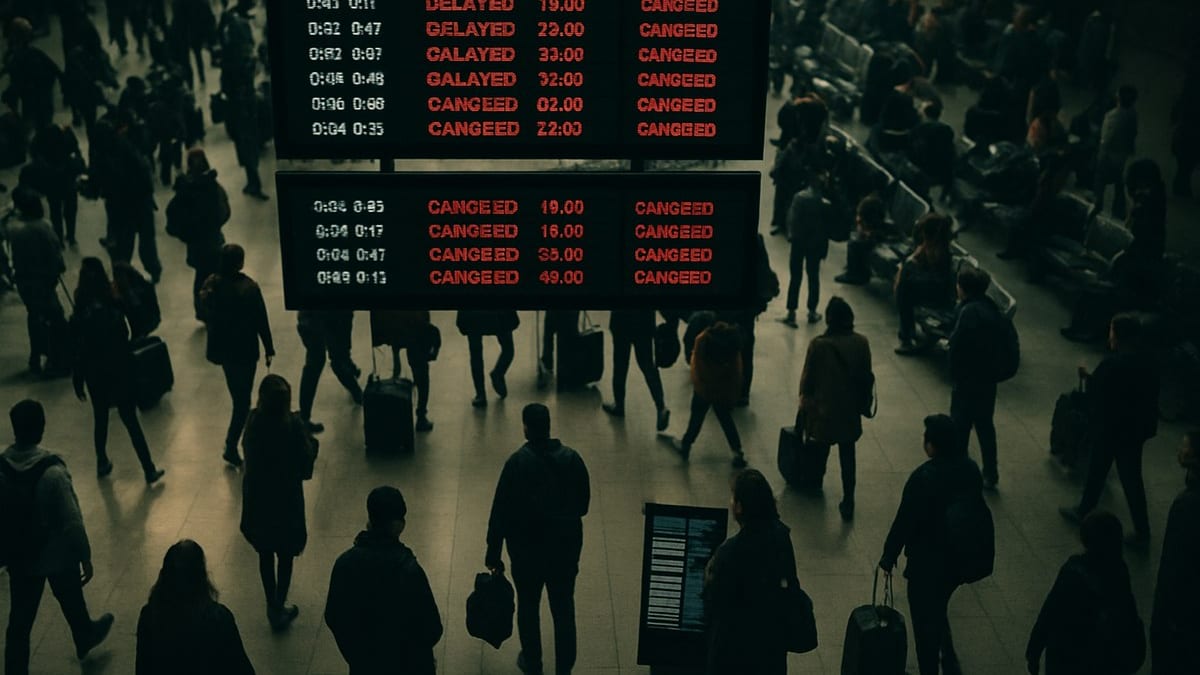
Persistent delays at Toronto Pearson International Airport in early April 2026 are disrupting schedules across Canada and the United States, as weather volatility and operational bottlenecks squeeze already fragile airline networks.
Get the latest news straight to your inbox!
Stormy Start to April Brings Prolonged Disruptions
A late season mix of snow, freezing rain and strong winds sweeping across southern Ontario and eastern Canada has repeatedly slowed operations at Toronto Pearson, Canada’s busiest airport. Publicly available flight tracking data and industry tallies show disruption spikes on several days in the first half of April, with Toronto often recording the country’s highest number of delayed departures.
Reports compiled for April 3 indicate that storm cells moving over the Greater Toronto Area contributed to more than 260 delays and over two dozen cancellations at Pearson, as arrivals were briefly restricted and aircraft were held on the ground awaiting safer conditions. Similar weather patterns around April 5 and April 6 combined with icy runways and low visibility to trigger hundreds more schedule changes across multiple Canadian hubs, with Toronto again a focal point of the turbulence.
Even as the most intense winter weather passed, lingering gusty winds and intermittent precipitation continued to affect ground handling and deicing operations at Pearson. Aviation observers note that in such conditions, delays typically cascade throughout the day, with early morning disruptions complicating crew rotations and aircraft positioning for later flights.
The result has been a delay heavy environment where relatively few flights are cancelled outright, but a large share of departures and arrivals operate significantly behind schedule. This pattern has stretched airline and airport resources and created longer than usual queues at check in, security and boarding gates.
Knock On Effects Across Canadian and U.S. Networks
The impact of Toronto’s April delays extends well beyond the Greater Toronto Area. As a primary hub for domestic and transborder services, schedule disruptions at Pearson have sent ripples through airports across Canada and the United States, affecting both point to point and connecting journeys.
Operational summaries for April 8 describe one of the sharpest recent spikes, with more than 160 delays and close to 20 cancellations linked to Toronto Pearson. Carriers affected included major Canadian airlines and several international partners, with flights to Western Canada, Atlantic Canada, key U.S. gateways and European hubs all experiencing schedule changes.
Travel focused outlets tracking daily performance at Pearson report that the pattern has continued into the second week of April. On April 9 and April 12, Toronto again logged dozens of delayed departures and a smaller number of cancellations, touching routes to cities such as Vancouver, Calgary, Winnipeg and Halifax, as well as transborder destinations including Chicago, New York area airports and several U.S. leisure markets.
Each late departure from Toronto can translate into missed or compressed connection windows at onward hubs, particularly for itineraries that combine domestic segments with U.S. or international flights. Airlines have been juggling aircraft swaps and rebooking efforts to keep passengers moving, but the repeated waves of disruption have left many travelers facing extended layovers or same day itinerary changes.
Airlines Juggle Weather, Air Traffic and Operational Strain
Airlines serving Toronto Pearson in April have been contending with a combination of meteorological and operational challenges. Published coverage highlights winter weather as the primary trigger on several of the worst affected days, but notes that air traffic control initiatives, ground congestion and broader resource constraints have contributed to the scale and persistence of delays.
In early April, a nationwide weather system forced carriers to slow arrivals and departures at multiple Canadian airports, including Montreal, Vancouver and Calgary. When coupled with Toronto’s own local conditions, this created a complex environment for network planners trying to keep aircraft and crews in the right place at the right time. Shortages of spare aircraft and tight turnaround schedules have amplified the knock on effects when a single rotation is disrupted.
Operational data summarized by travel industry analysts suggest that some airlines have experienced concentrated clusters of delays at Pearson, particularly on high frequency domestic and Canada U.S. routes. While outright cancellations remain comparatively limited on many days, late running aircraft have compressed turnaround times and increased the risk of further slippage as the day progresses.
Observers note that spring is already a challenging period for airlines in northern climates, as residual winter weather intersects with rising seasonal demand. The April 2026 pattern at Toronto Pearson fits this profile, with carriers managing heavier passenger volumes just as storms and wind events continue to interrupt normal operations.
Passengers Face Long Lines, Missed Connections and Limited Options
For travelers passing through Toronto Pearson, the April disruption has translated into practical challenges at nearly every stage of the journey. According to publicly available accounts and travel industry reporting, many passengers have encountered long check in and security lines, crowded gate areas and extended waits at baggage carousels.
Missed connections have been a particular issue for those relying on tight transfer windows between domestic Canadian segments and transborder or overseas flights. With Toronto functioning as a key connection point, late arriving feeder flights can easily put onward departures out of reach, especially during peak evening banks to the United States and Europe.
Rebooking options have also been constrained at times, as airlines operate with high load factors on many April services. Some passengers have been shifted to later departures the same day, while others have faced overnight stays or rerouting through alternative hubs in Canada or the United States. Travel commentators advise that retaining boarding passes, receipts and confirmation emails is essential for navigating refund, voucher or hotel options where they are offered.
Despite the frustrations, available information indicates that most affected flights have ultimately operated, albeit behind schedule. However, the cumulative stress of repeated delays has added to a perception among many travelers that Toronto Pearson remains a challenging airport during periods of adverse weather or system strain.
What Travelers Can Expect for the Remainder of April
Looking ahead to the rest of April 2026, analysts tracking Canadian aviation trends expect conditions at Toronto Pearson to remain sensitive to further bouts of unsettled weather. Historical patterns suggest that winter conditions can linger in southern Ontario well into spring, and this year’s storm activity has already shown an ability to disrupt operations across multiple days.
Travel publications recommend that anyone scheduled to fly via Pearson this month build additional time into travel plans, particularly for journeys involving connections to the United States or other international destinations. Early morning departures are often less exposed to knock on delays from earlier disruptions, although they can still be affected by overnight weather and deicing requirements.
Passengers are also advised to monitor flight status closely in the 24 hours before departure and again on the day of travel, as schedules can change at short notice when weather systems move quickly or when air traffic initiatives are put in place. Selecting longer connection windows where possible, and familiarizing oneself with airline policies on rebooking and accommodation, can provide a buffer against the most disruptive scenarios.
For now, the April 2026 experience at Toronto Pearson underscores how a combination of late season storms and operational tightness can quickly cascade into widespread disruption across Canadian and U.S. routes. As airlines and airport operators work through the remainder of the month, the focus will remain on stabilizing schedules and restoring confidence among travelers who depend on Pearson as a critical link in the North American air travel network.